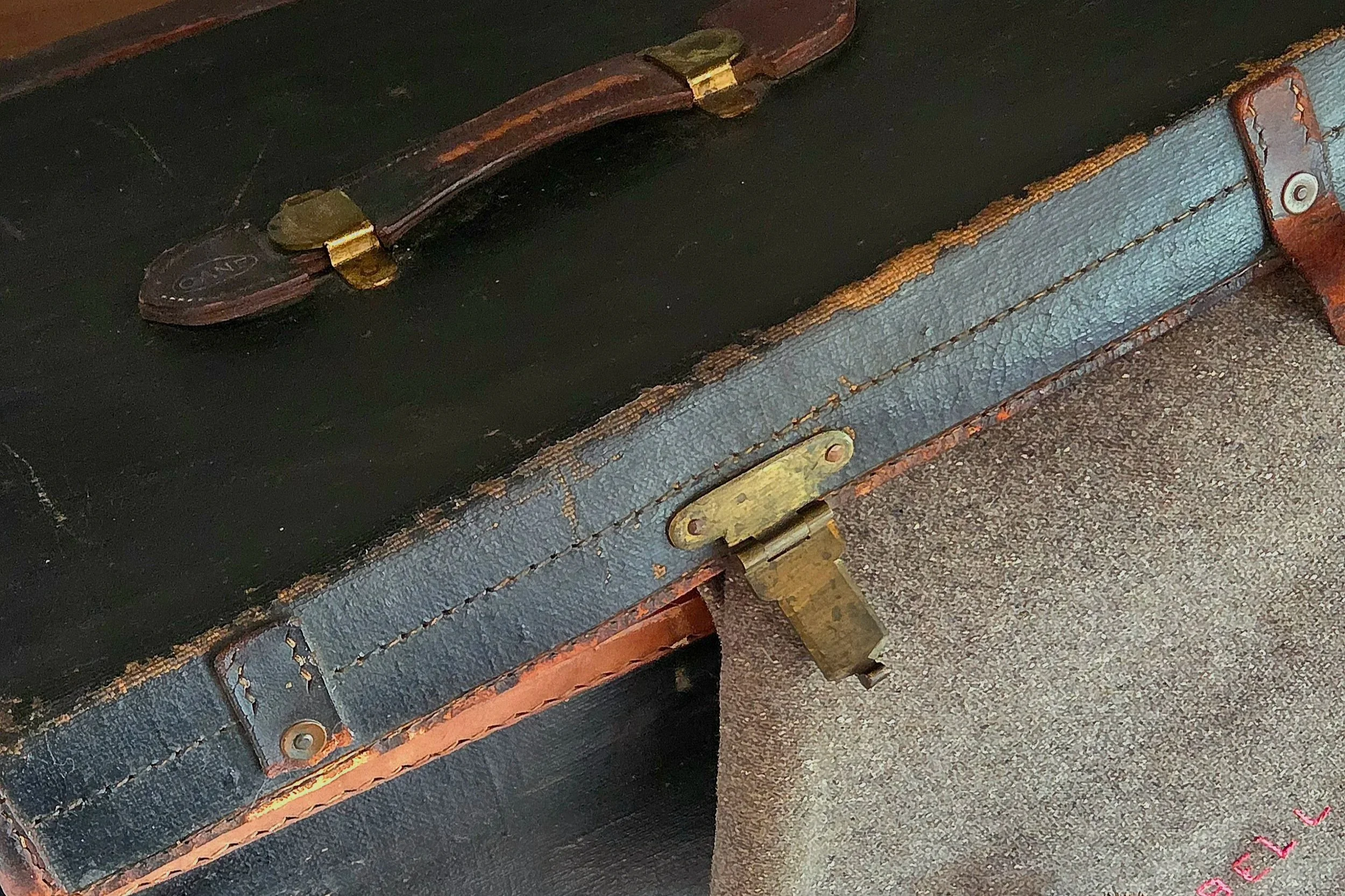
Rhythm & Movement
Utility, movement, and the rhythms of everyday life
Curatorial Approach
Rhythm & Movement explores the ways everyday life is shaped by movement, repetition, work, and changing routines. The collection brings together objects connected to childhood, travel, industrial production, domestic life, and the passage of time.
Each piece carries traces of movement through its original use: a Welsh steamer trunk made for travel, a water cooler jug associated with the daily rhythms of work and shared spaces, and an industrial textile spool once part of the repetitive movement of a factory. Victorian chromolithographs remind us not only of the seasons and activities of childhood they illustrate, but also of turning pages and the physical variations found across published editions. A midcentury camp blanket marked with a surname offers another kind of evidence—a personal object carried into outdoor life and perhaps across wider geographies.
Together, these objects consider the many rhythms that organize human life, and the ways objects preserve traces of movement, work, and use long after their original circumstances have changed. Their next chapters may be quieter ones, but the evidence of the lives they have already accompanied remains part of what makes them meaningful.
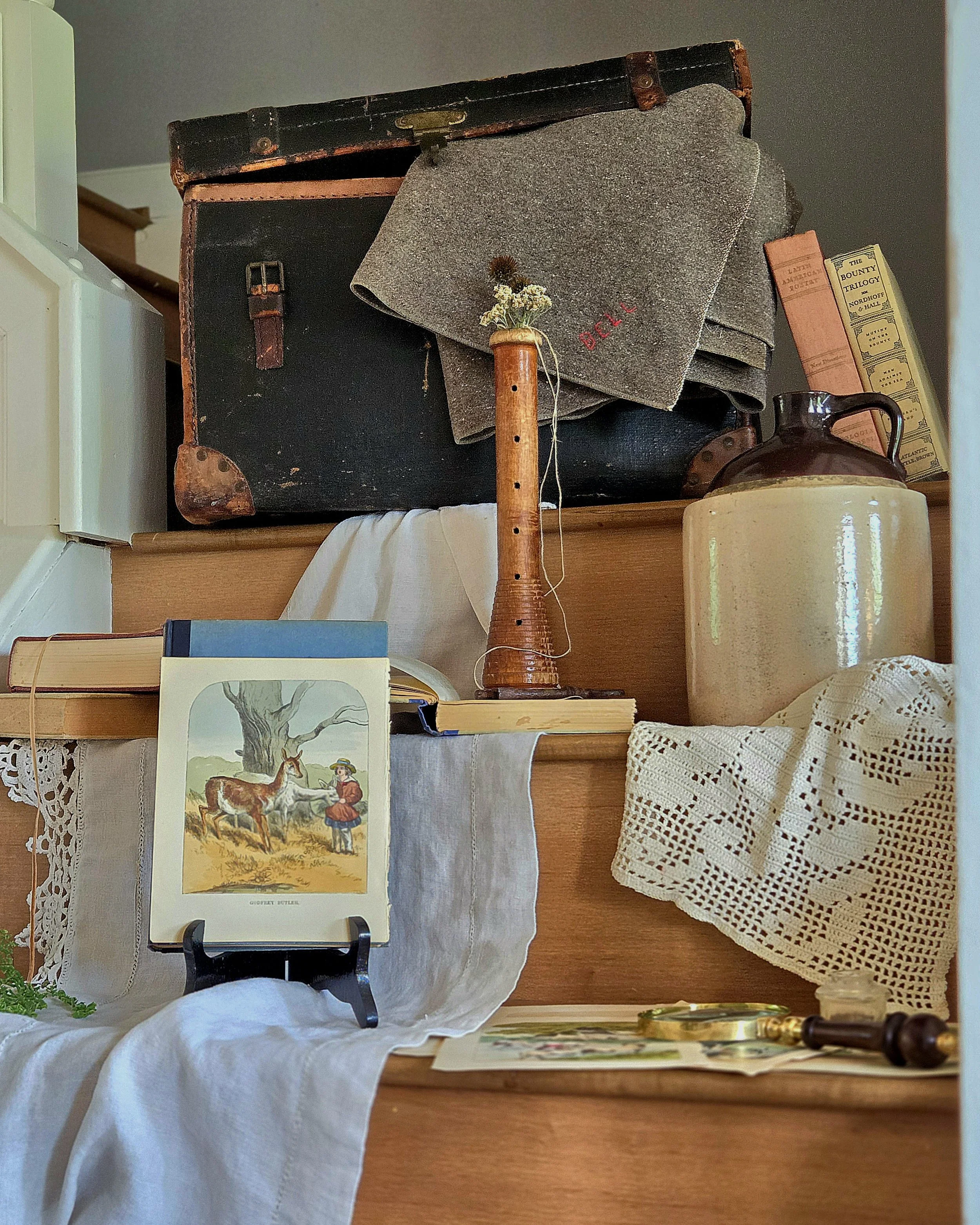
Rhythm & Movement
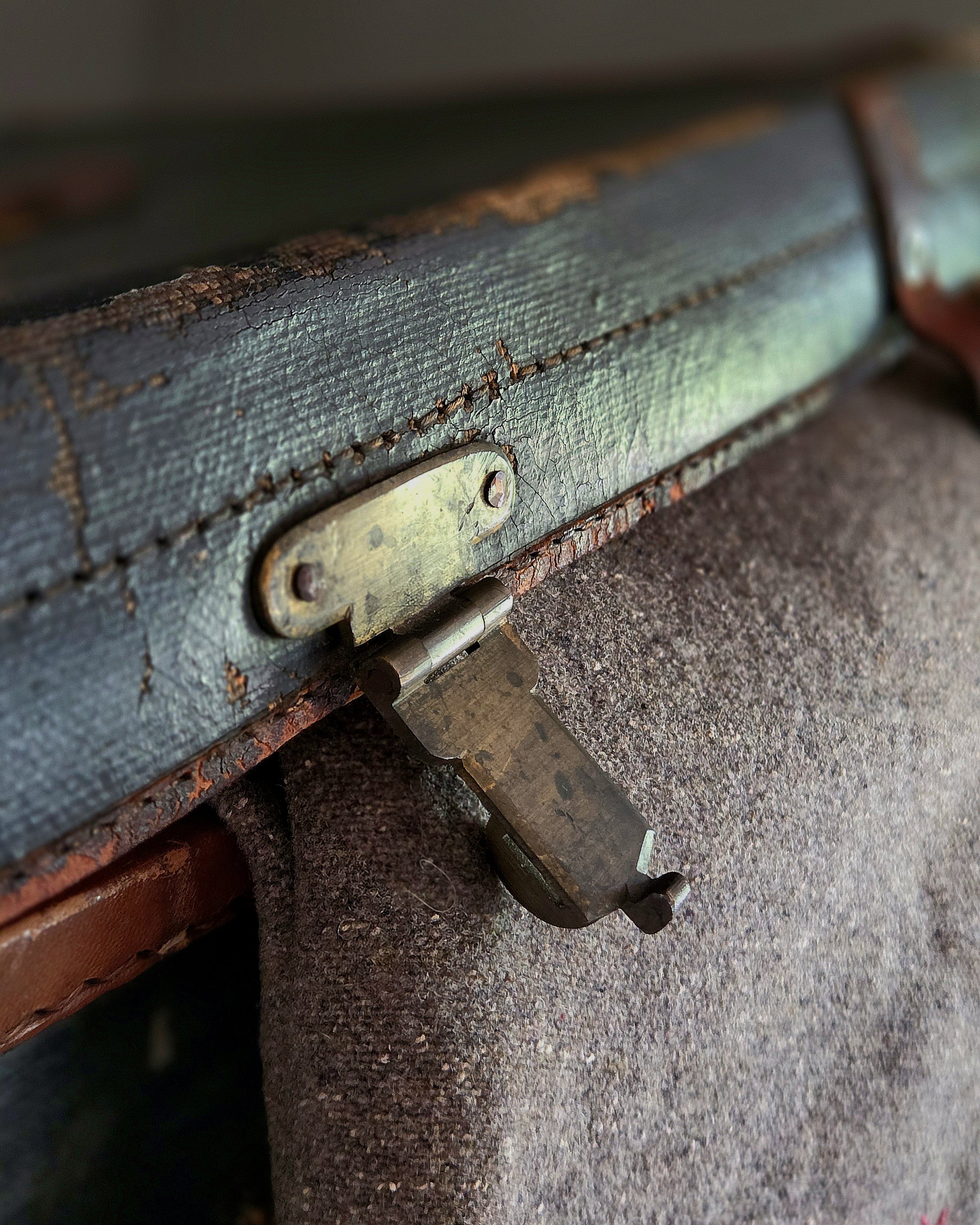
Victorian steamer trunk, ca. 1980-1900
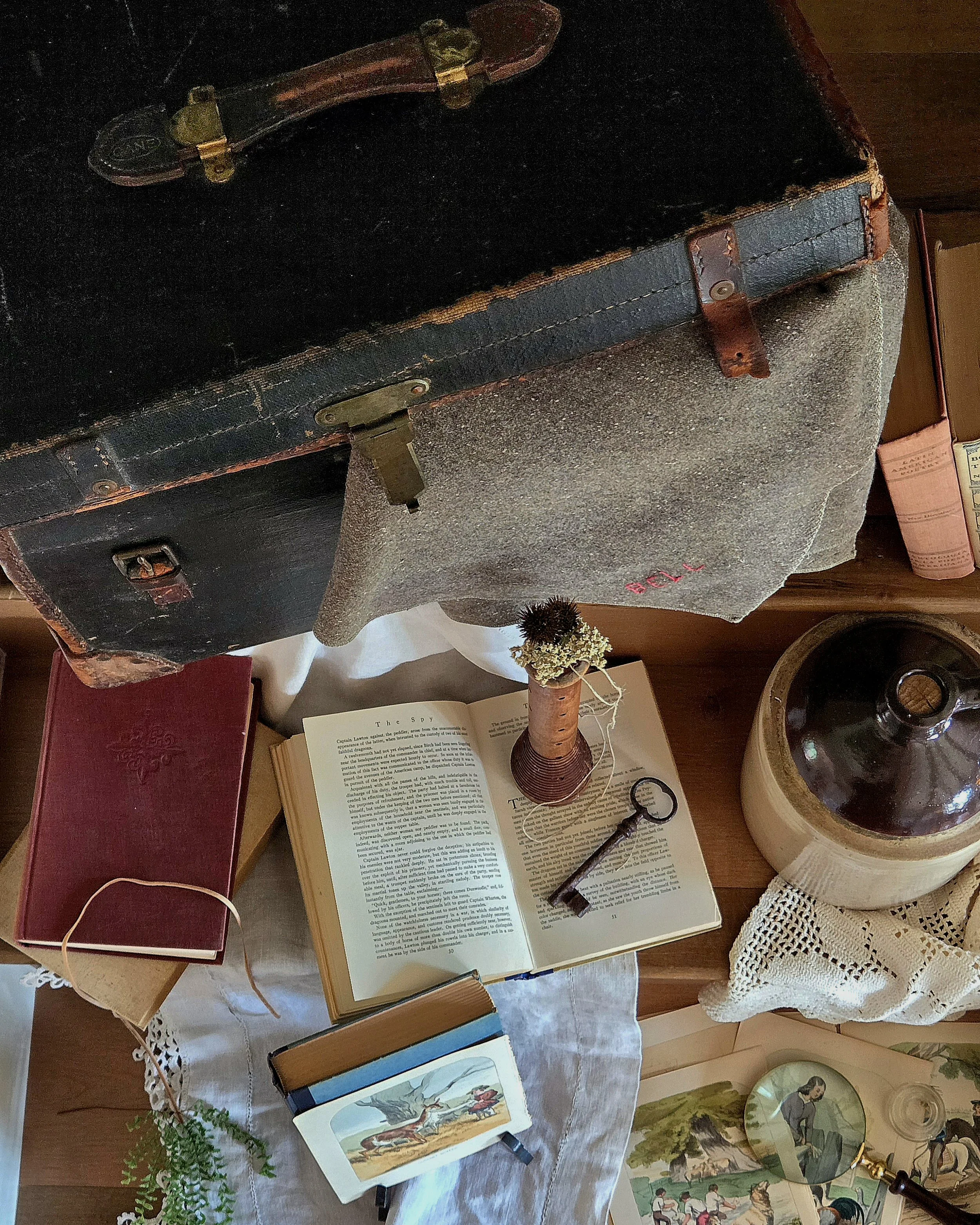
Childhood, travel, industrial production, domestic life, and the passage of time
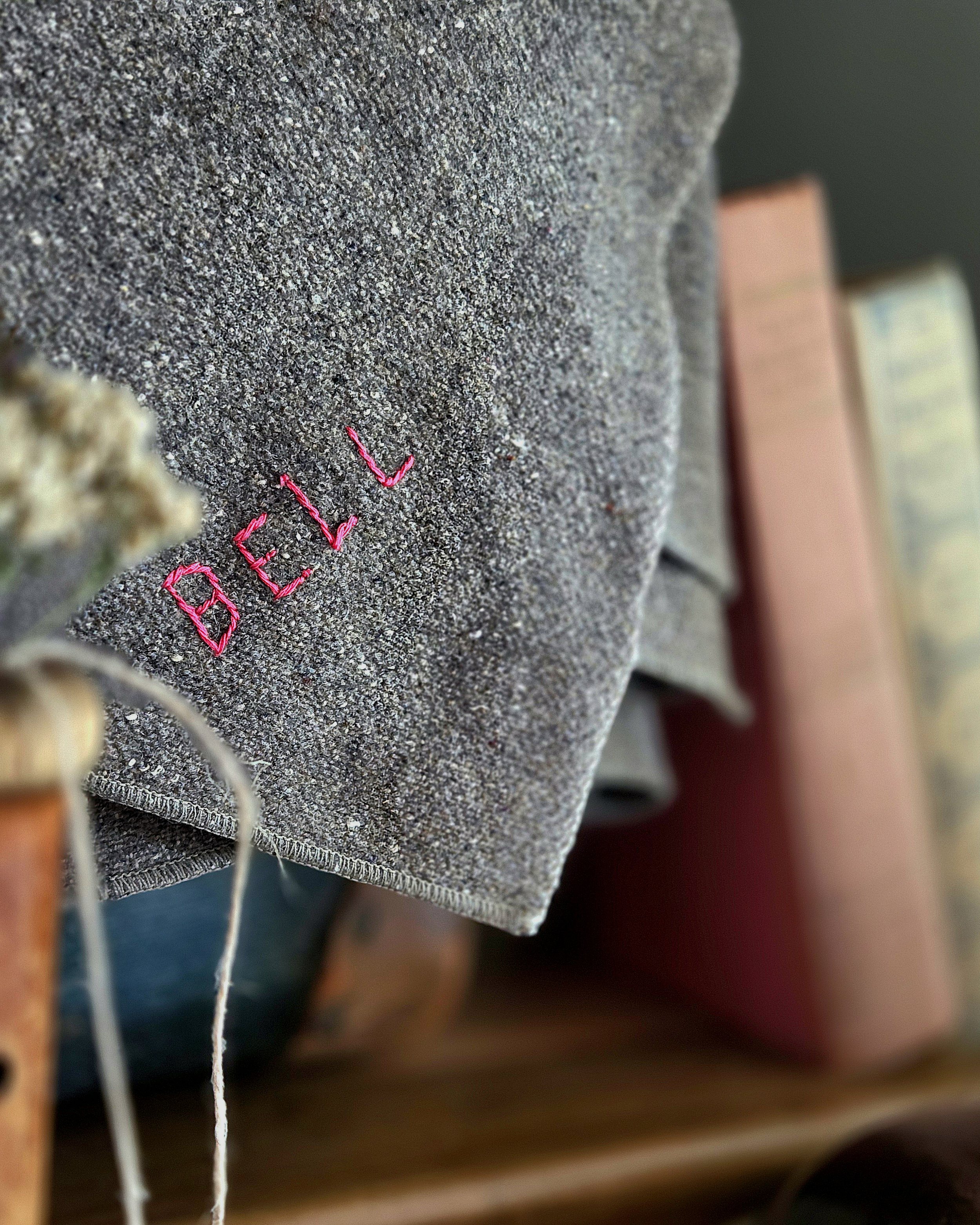
Embroidered surname on a wool camp blanket
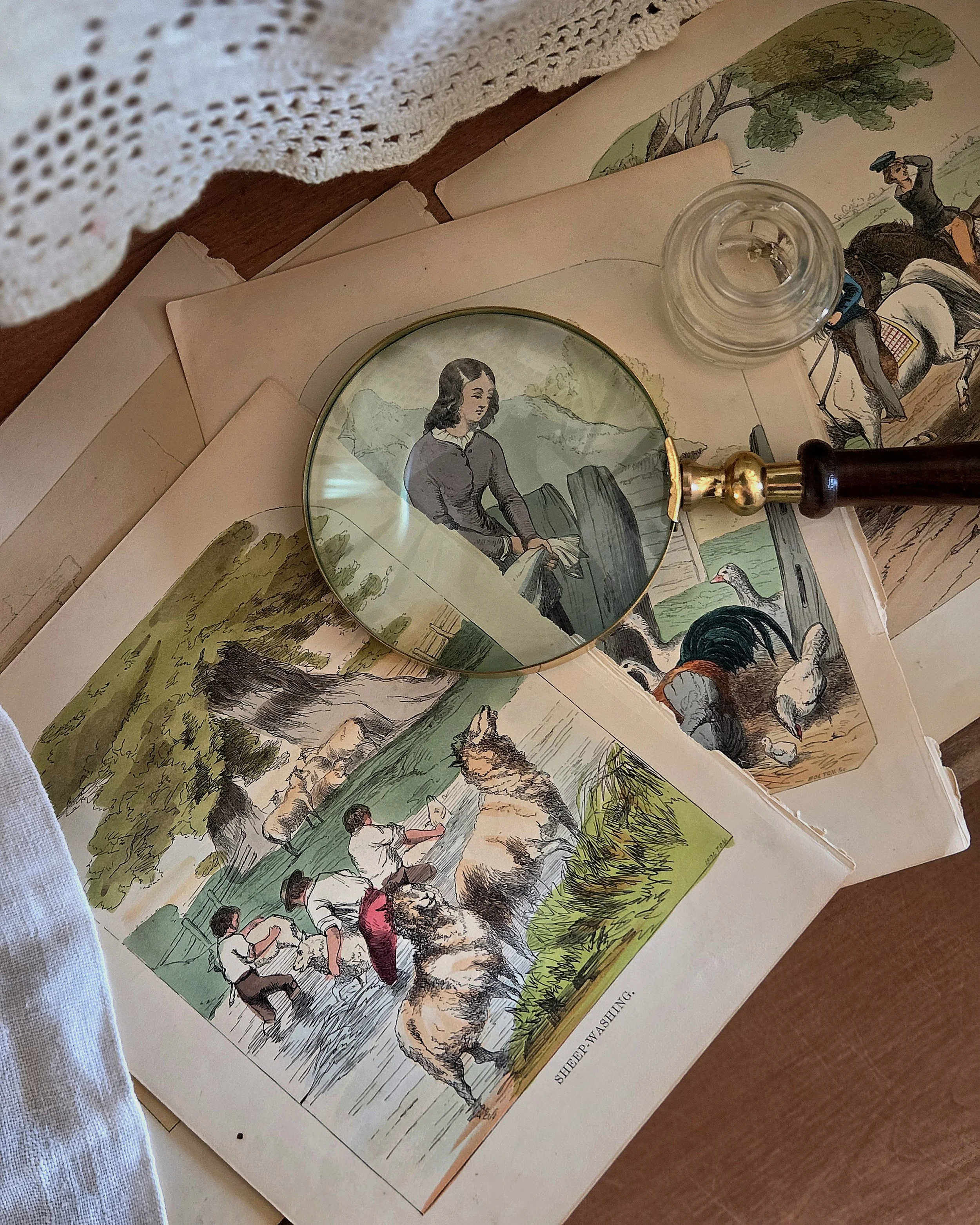
Victorian chromolithograph prints by Thomas Bolton
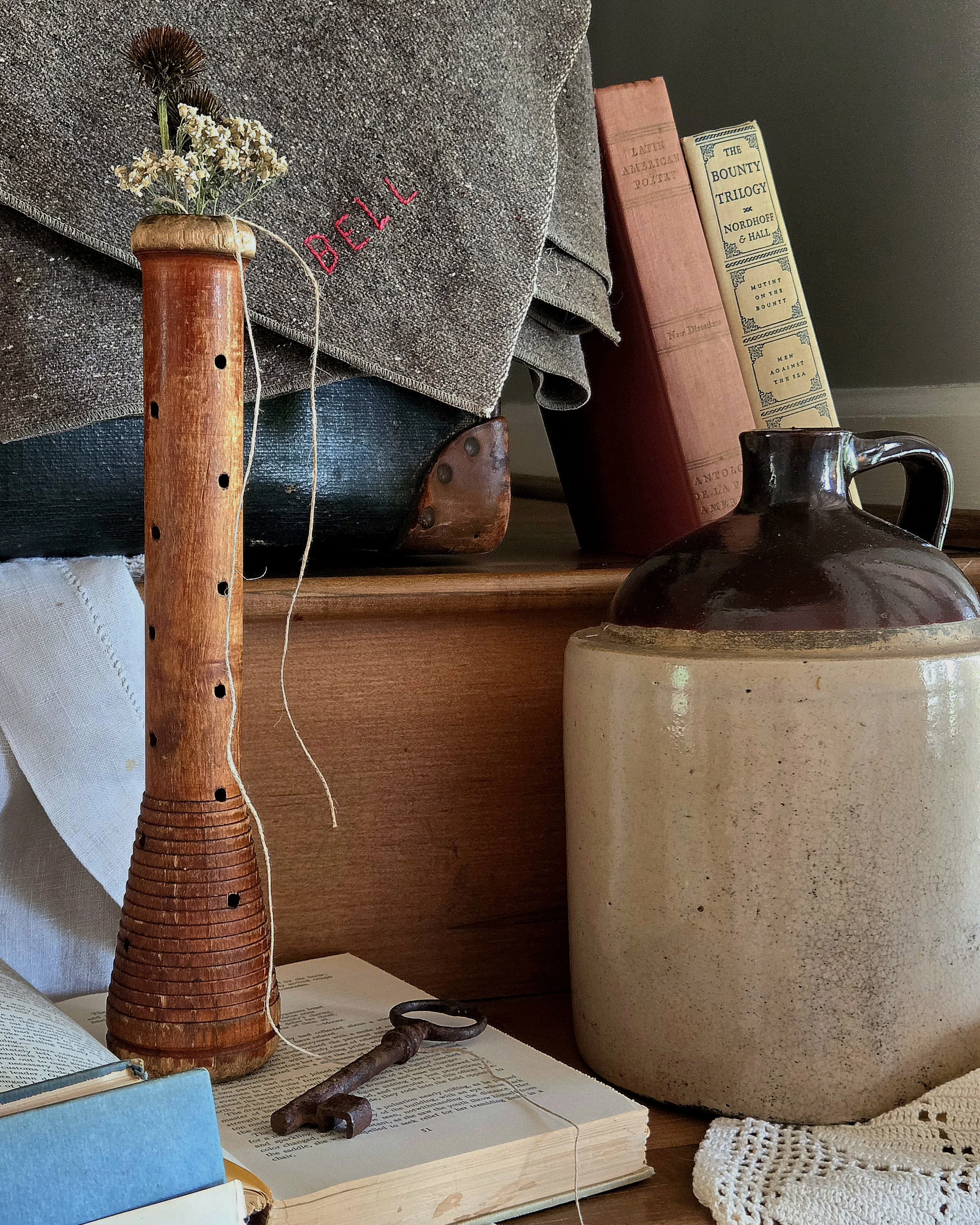
Industrial bobbing & stoneware water jug
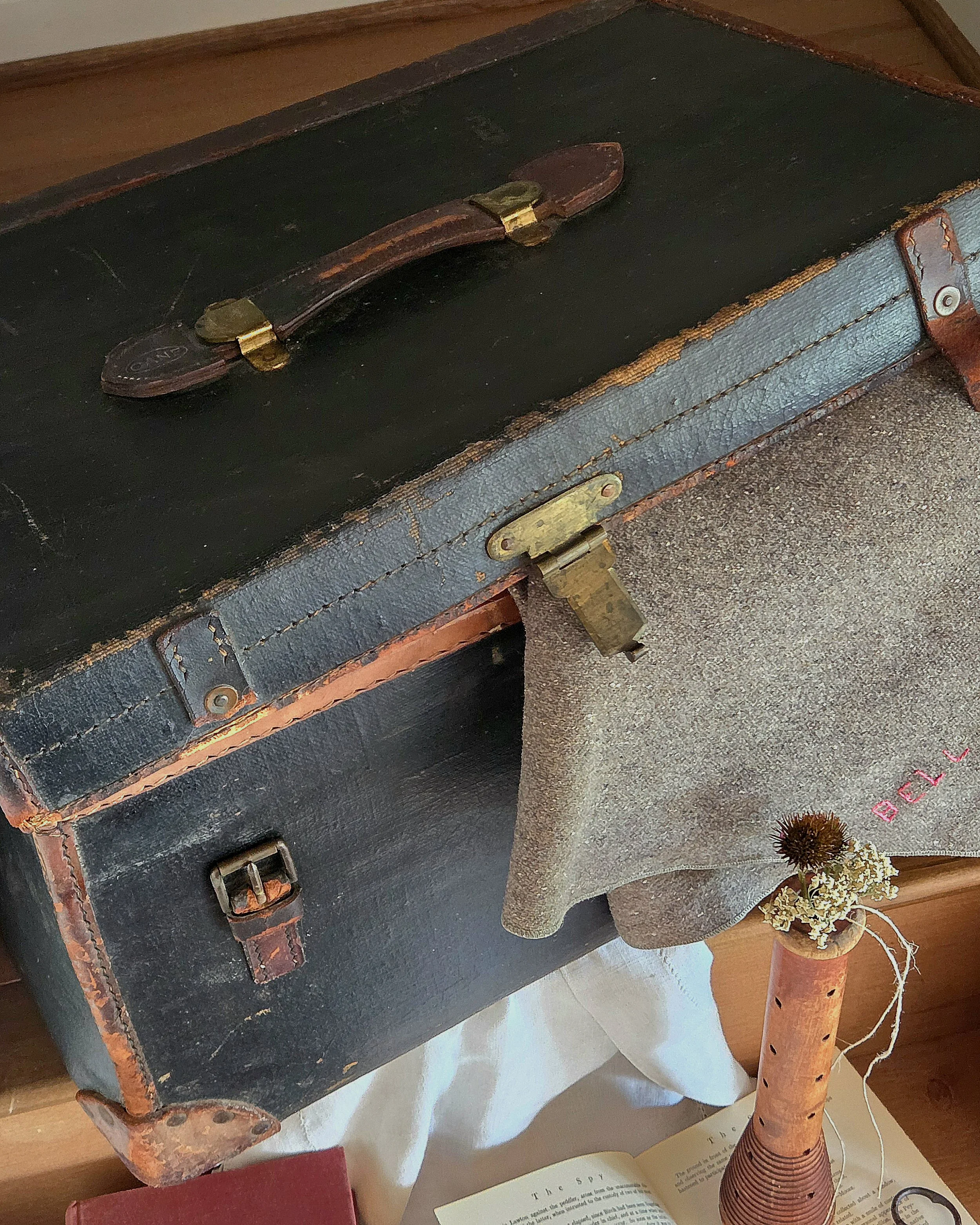
This trunk traveled from Liverpool to Philadelphia at the turn of the century
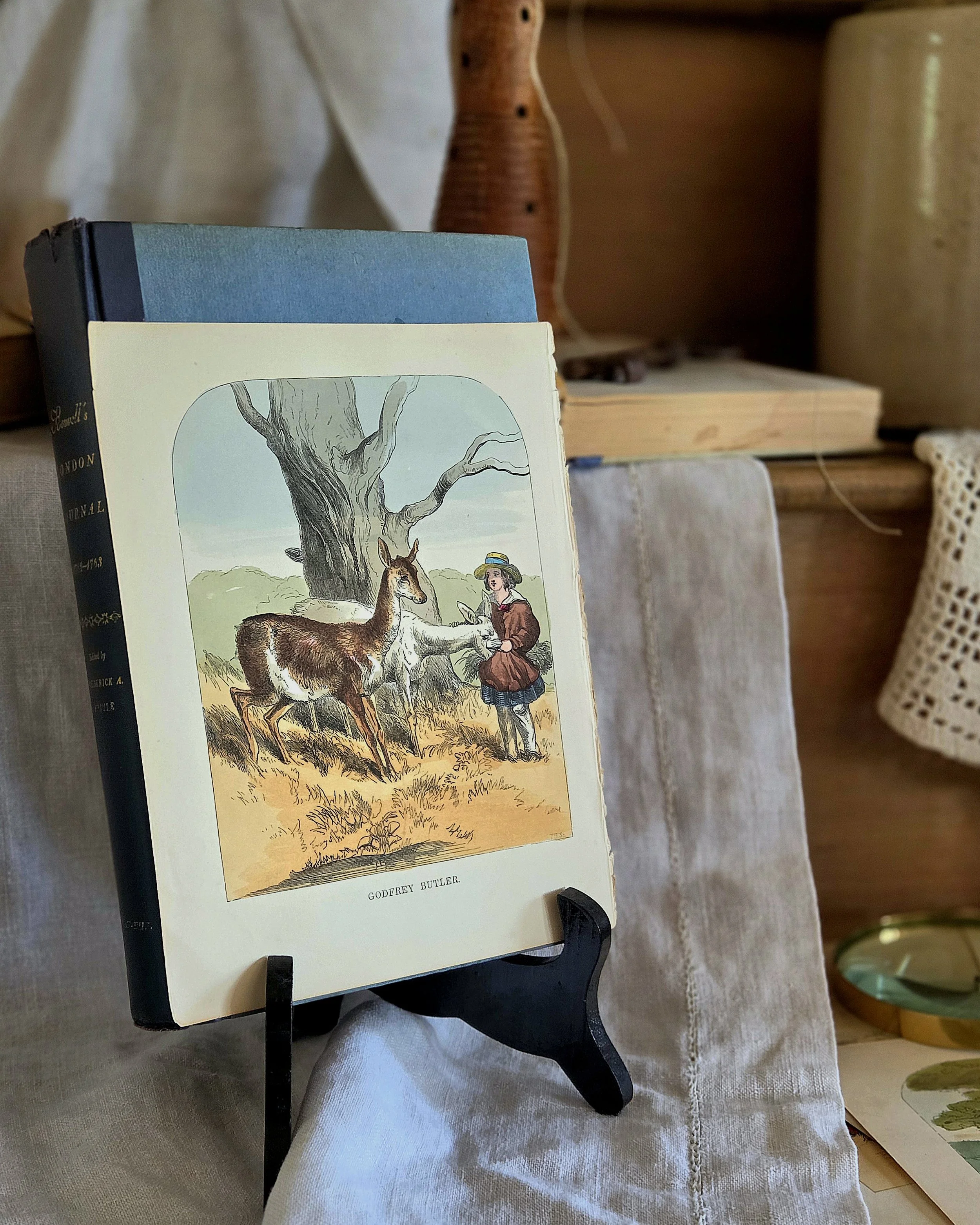
Godfrey Butler print
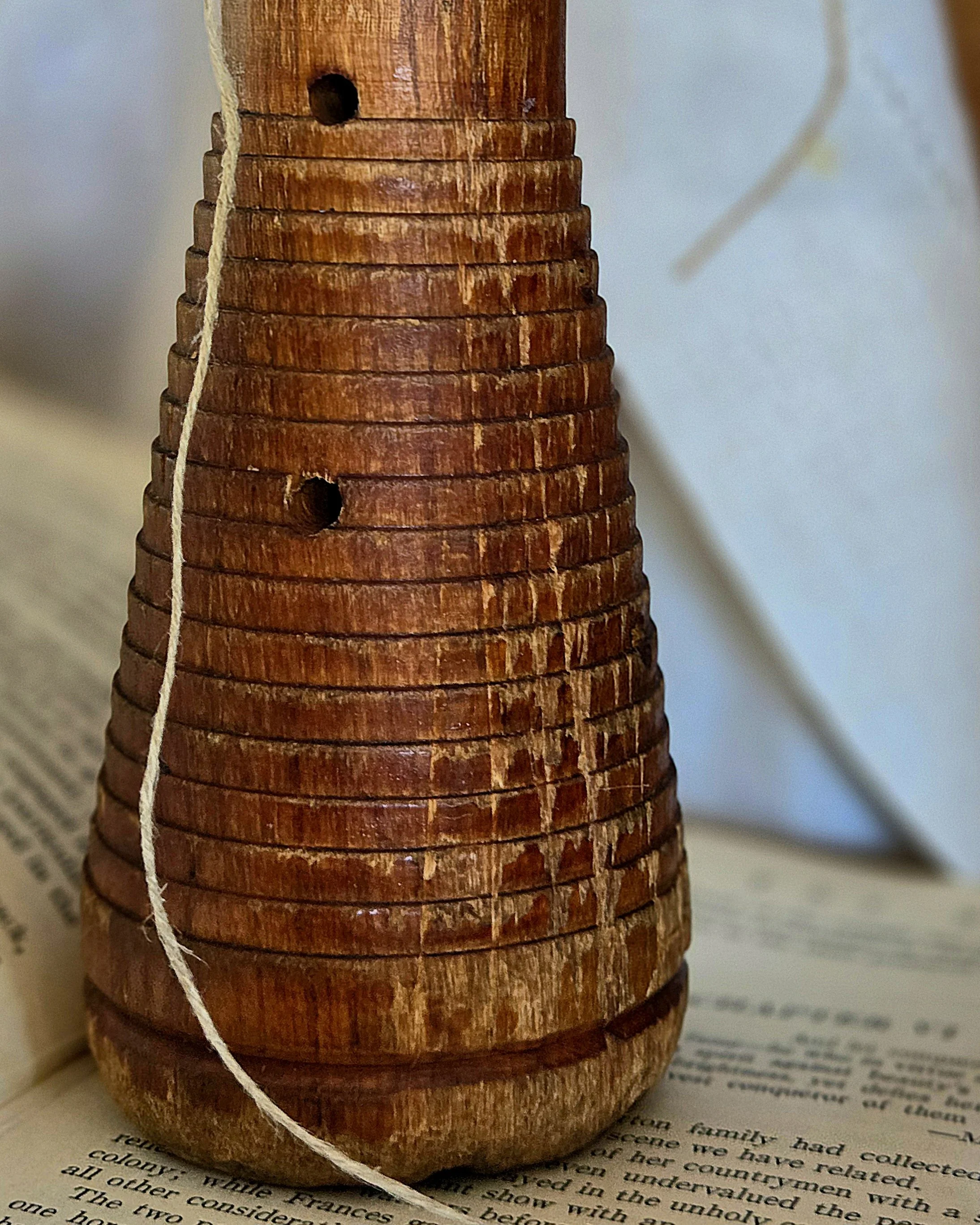
Industrial bobbin detail
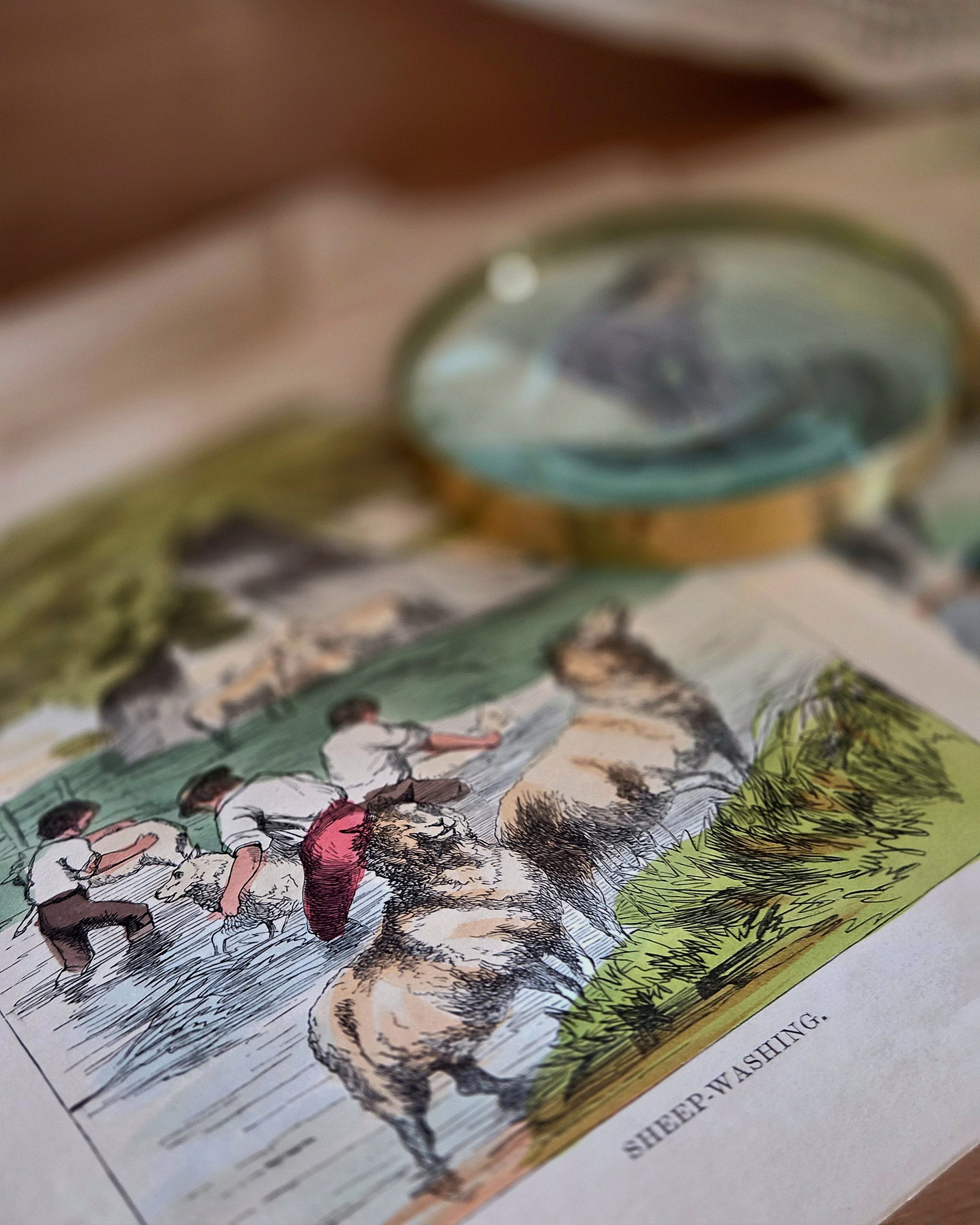
Sheep-washing print
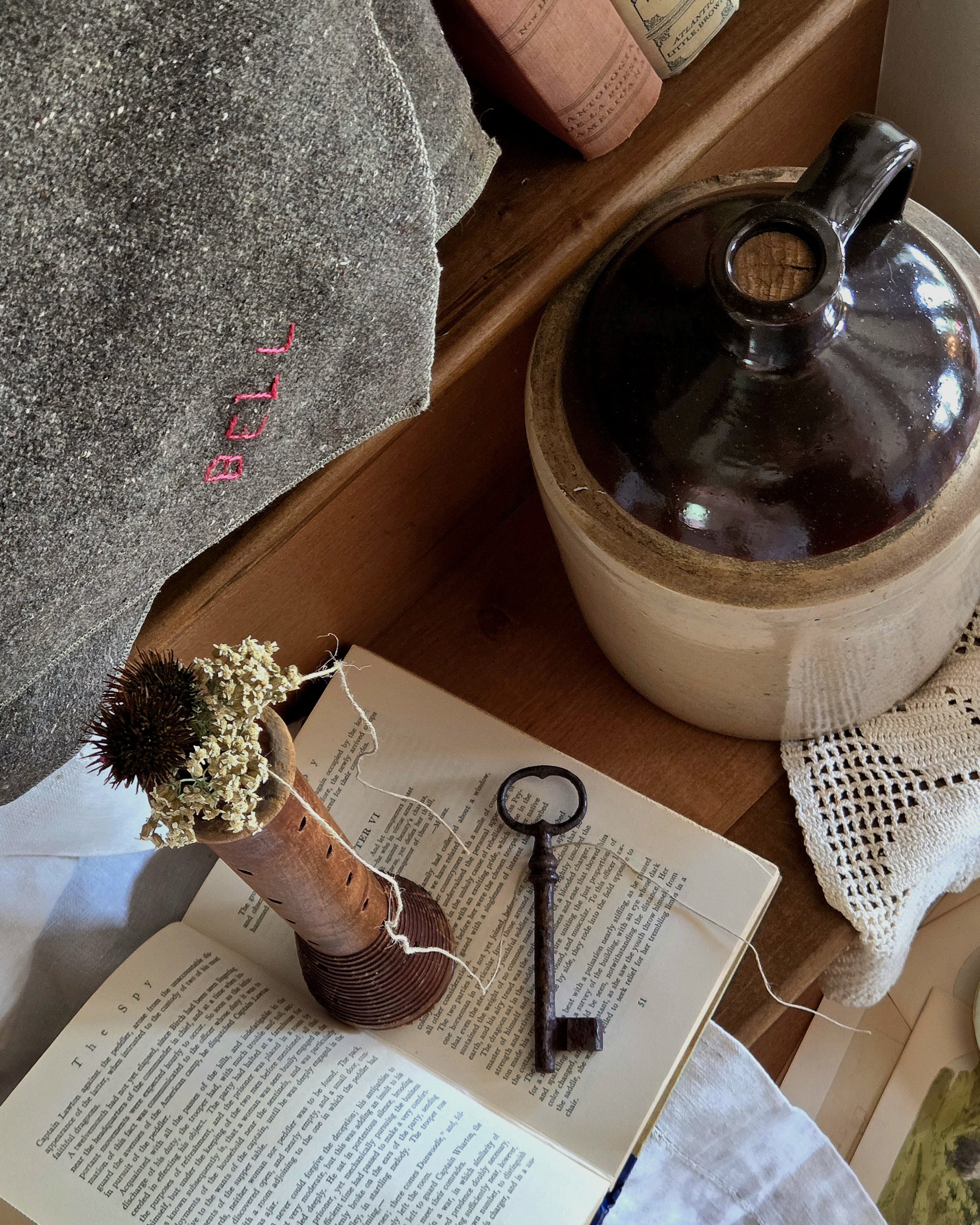
The stoneware water jug maintains its original cork
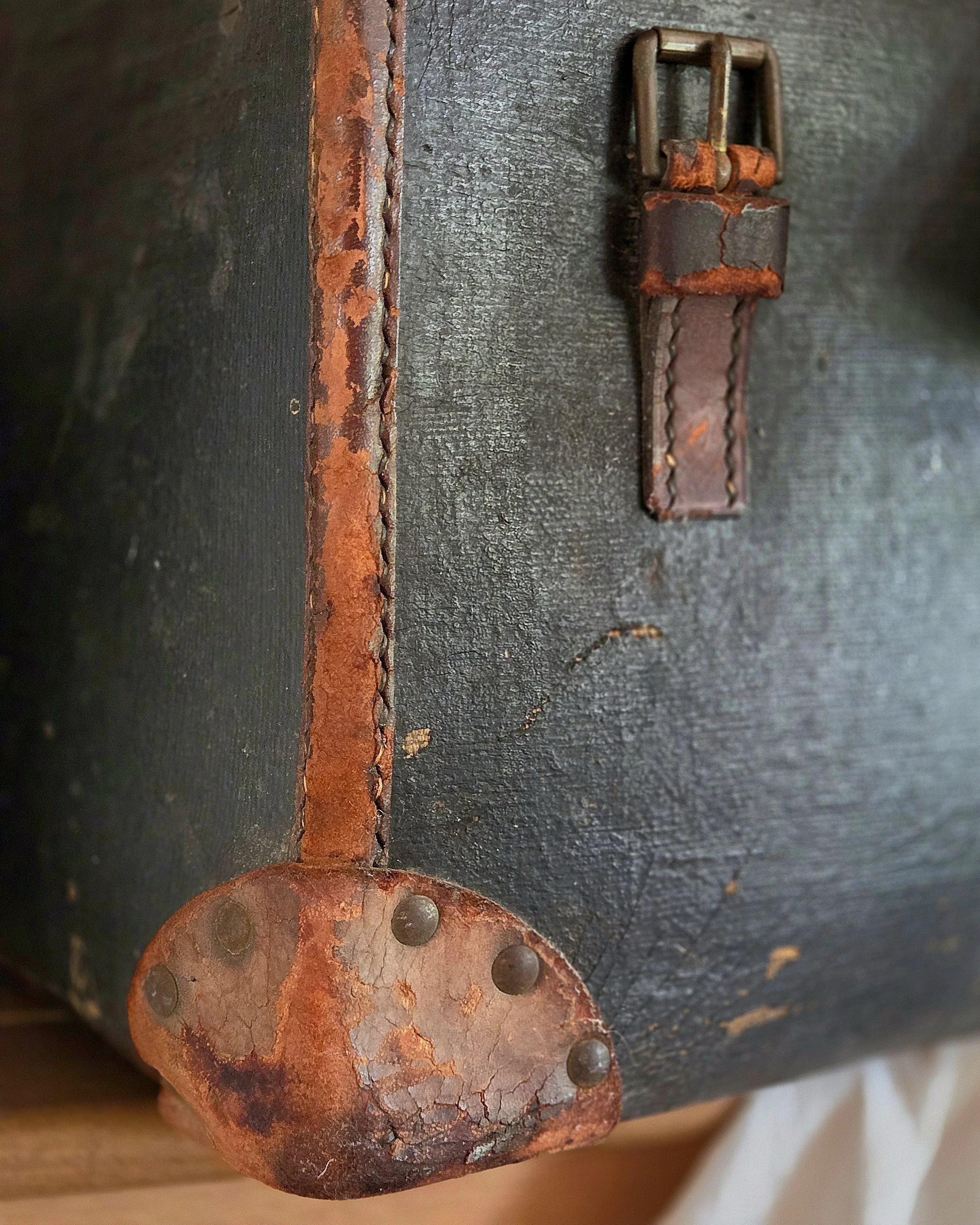
Details such as reinforced corners illustrate the high-end finishings of the trunk