This 15th-century medieval Manises tile preserves the artistry of one of Spain's most significant ceramic traditions, offering a rare glimpse into the decorative environments of the fifteenth century.
Created in Valencia's historic ceramic center of Manises, this hand-crafted tile reflects the Hispano-Moresque tradition that shaped medieval Iberian ceramics through centuries of artistic exchange. Tiles such as this were originally installed in groups across palace interiors, religious spaces, and other architectural settings, creating flowing geometric patterns across floors and walls.
The design features a cobalt blue eight-pointed star within a diamond framework, surrounded by stylized Gothic floral motifs. The crisp contrast of blue and white, the rhythmic geometry, and the botanical details reveal a decorative language that continued to influence Spanish ceramics for centuries.
Visible traces of the manufacturing process remain on the surface, including two kiln spur marks, known as "gallo" scars, created when tiles were stacked during firing. The uneven pooling of the white tin glaze, subtle oxidation marks, and visible brushwork preserve the handmade character of this historic ceramic.
The reverse was stabilized with conservation plaster at an earlier time, including a small reconstructed area in a corner that is not visible from the front. This careful stabilization allows the tile to be safely displayed while preserving its surviving historic material.
Today, this architectural fragment can be appreciated as both a work of medieval craftsmanship and a continuation of a visual tradition that still resonates in Spanish decorative arts.
Details
Date: ca. 1450–1500
Origin: Manises, Valencia, Spain
Medium: Hand-painted tin-glazed earthenware ceramic tile
Tradition: Hispano-Moresque / Valencian Ceramics
Measurements: 5.5 x 5.5 x .75 inches
Care
Handle carefully. Display indoors and avoid prolonged exposure to moisture or temperature fluctuations.
Condition
This historic ceramic fragment has been carefully stabilized for display. Age-related surface variations, glaze irregularities, kiln marks, and minor wear are part of the object's history and reflect the handmade process of its creation.
This 15th-century medieval Manises tile preserves the artistry of one of Spain's most significant ceramic traditions, offering a rare glimpse into the decorative environments of the fifteenth century.
Created in Valencia's historic ceramic center of Manises, this hand-crafted tile reflects the Hispano-Moresque tradition that shaped medieval Iberian ceramics through centuries of artistic exchange. Tiles such as this were originally installed in groups across palace interiors, religious spaces, and other architectural settings, creating flowing geometric patterns across floors and walls.
The design features a cobalt blue eight-pointed star within a diamond framework, surrounded by stylized Gothic floral motifs. The crisp contrast of blue and white, the rhythmic geometry, and the botanical details reveal a decorative language that continued to influence Spanish ceramics for centuries.
Visible traces of the manufacturing process remain on the surface, including two kiln spur marks, known as "gallo" scars, created when tiles were stacked during firing. The uneven pooling of the white tin glaze, subtle oxidation marks, and visible brushwork preserve the handmade character of this historic ceramic.
The reverse was stabilized with conservation plaster at an earlier time, including a small reconstructed area in a corner that is not visible from the front. This careful stabilization allows the tile to be safely displayed while preserving its surviving historic material.
Today, this architectural fragment can be appreciated as both a work of medieval craftsmanship and a continuation of a visual tradition that still resonates in Spanish decorative arts.
Details
Date: ca. 1450–1500
Origin: Manises, Valencia, Spain
Medium: Hand-painted tin-glazed earthenware ceramic tile
Tradition: Hispano-Moresque / Valencian Ceramics
Measurements: 5.5 x 5.5 x .75 inches
Care
Handle carefully. Display indoors and avoid prolonged exposure to moisture or temperature fluctuations.
Condition
This historic ceramic fragment has been carefully stabilized for display. Age-related surface variations, glaze irregularities, kiln marks, and minor wear are part of the object's history and reflect the handmade process of its creation.
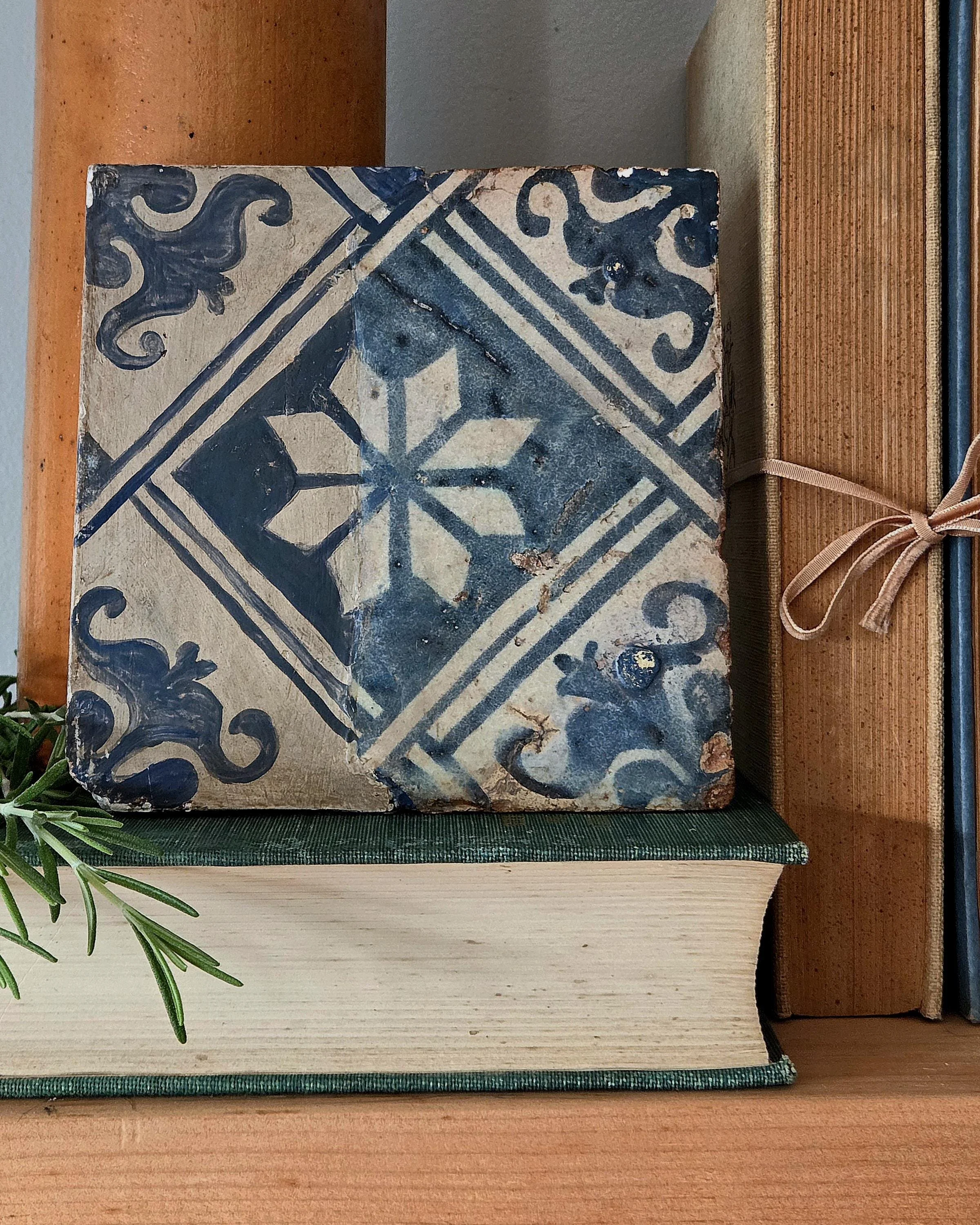 Image 1 of 14
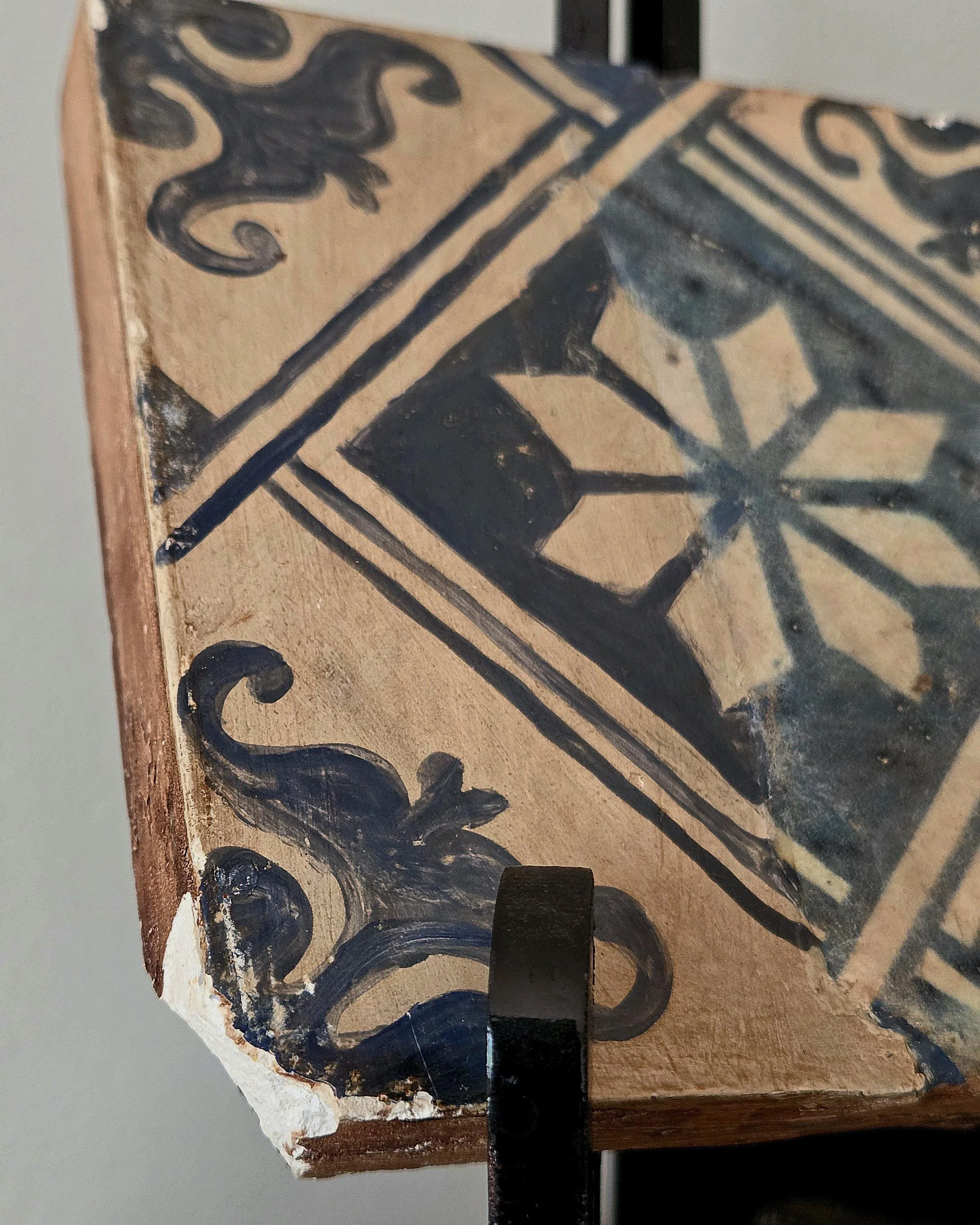 Image 2 of 14
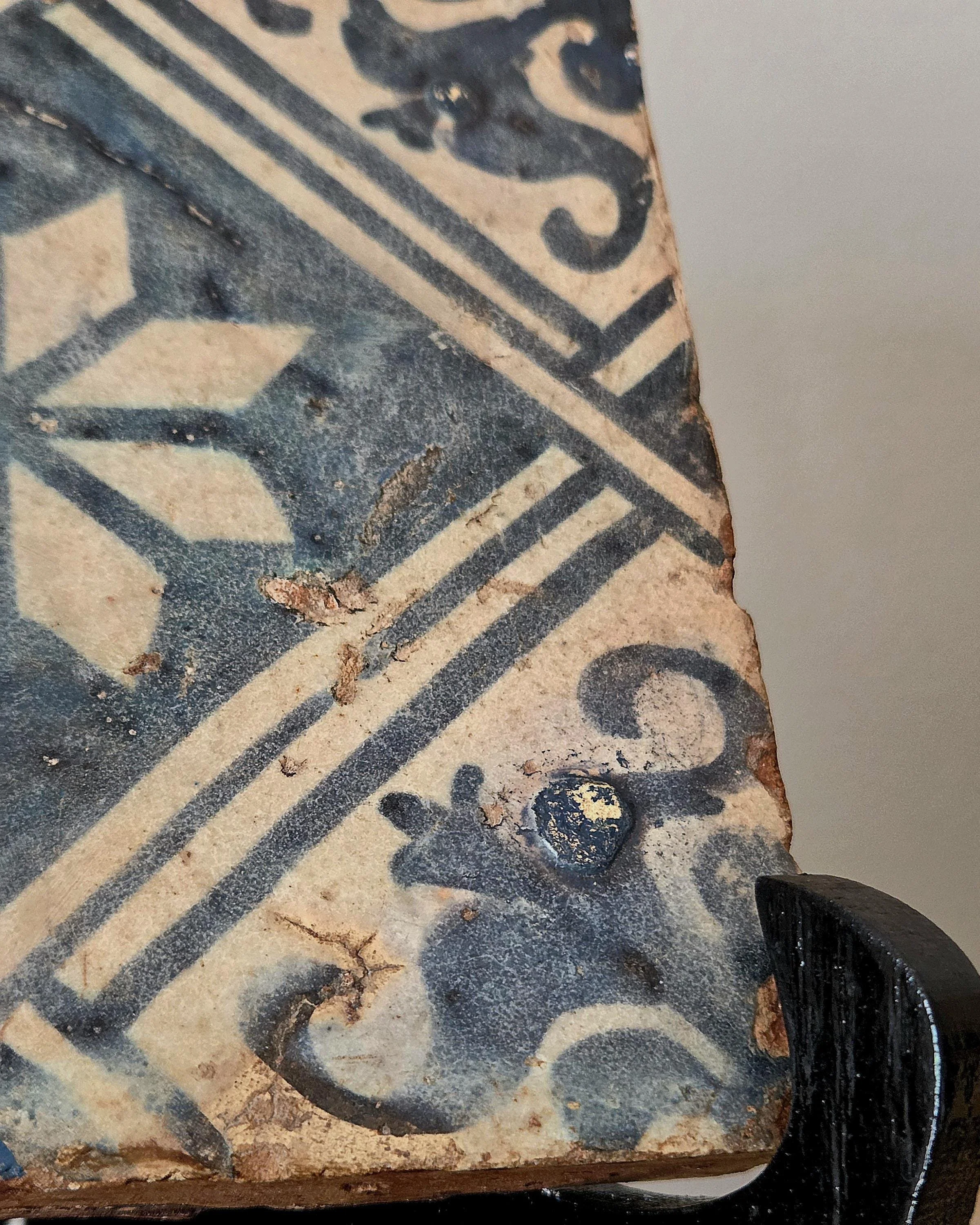 Image 3 of 14
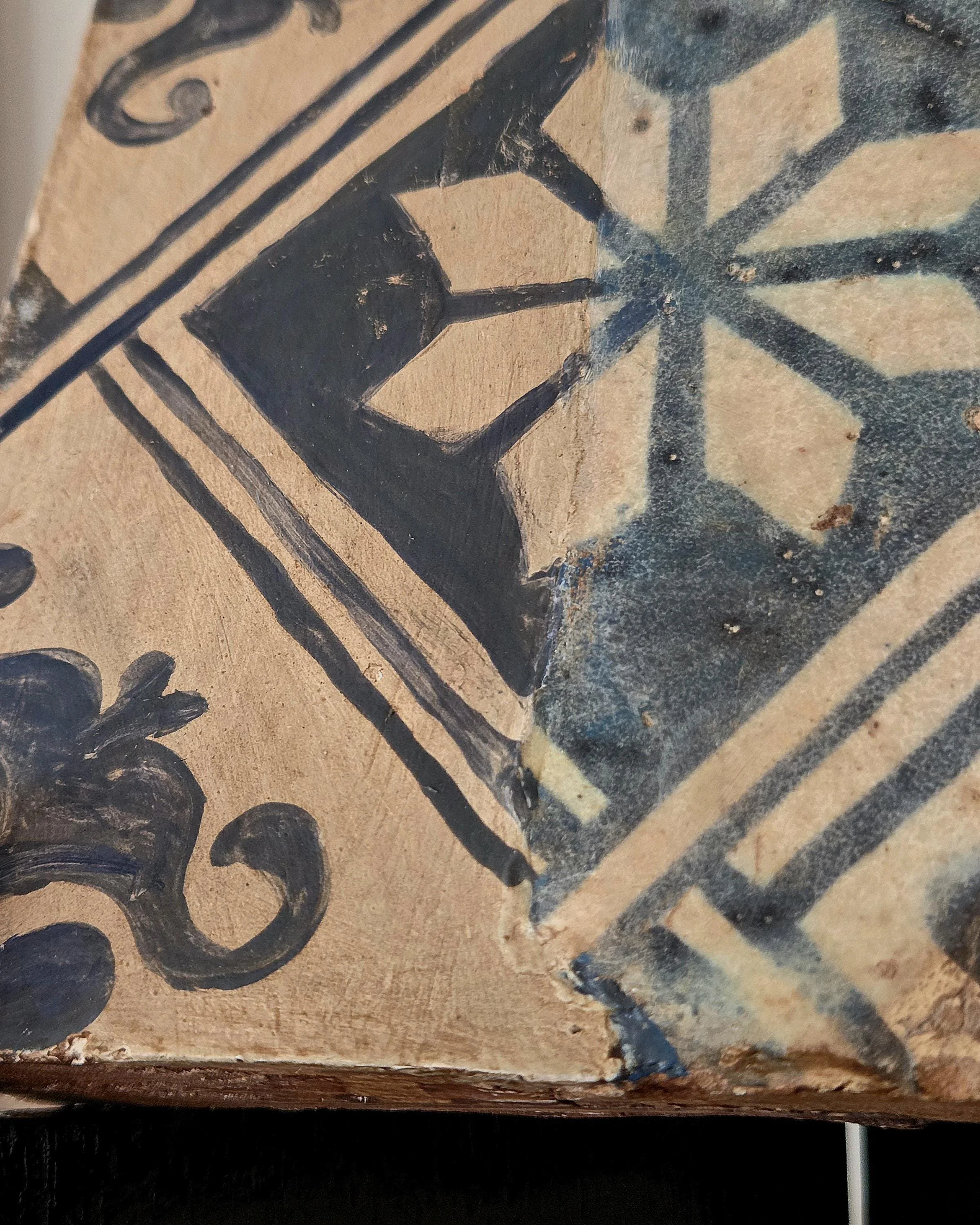 Image 4 of 14
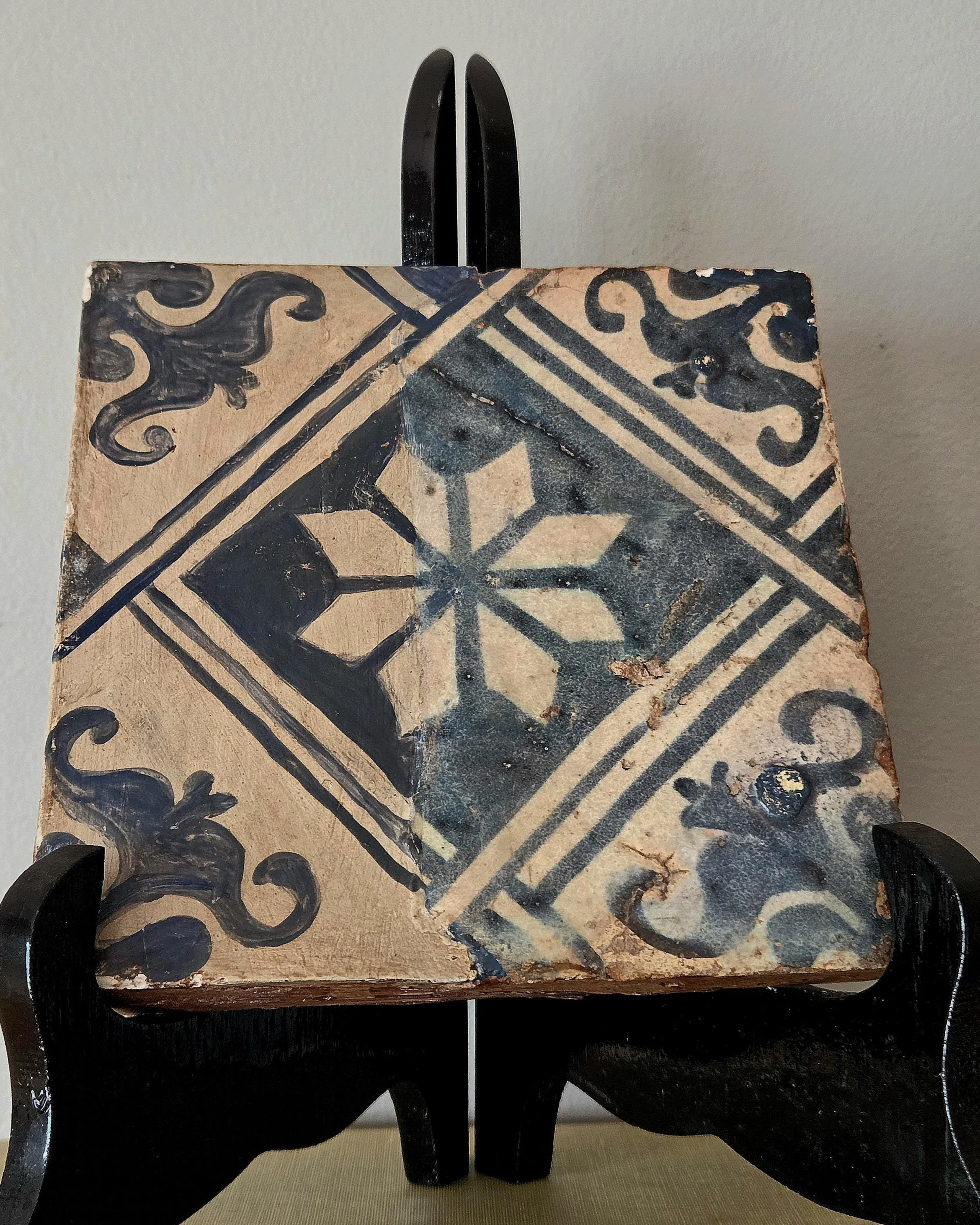 Image 5 of 14
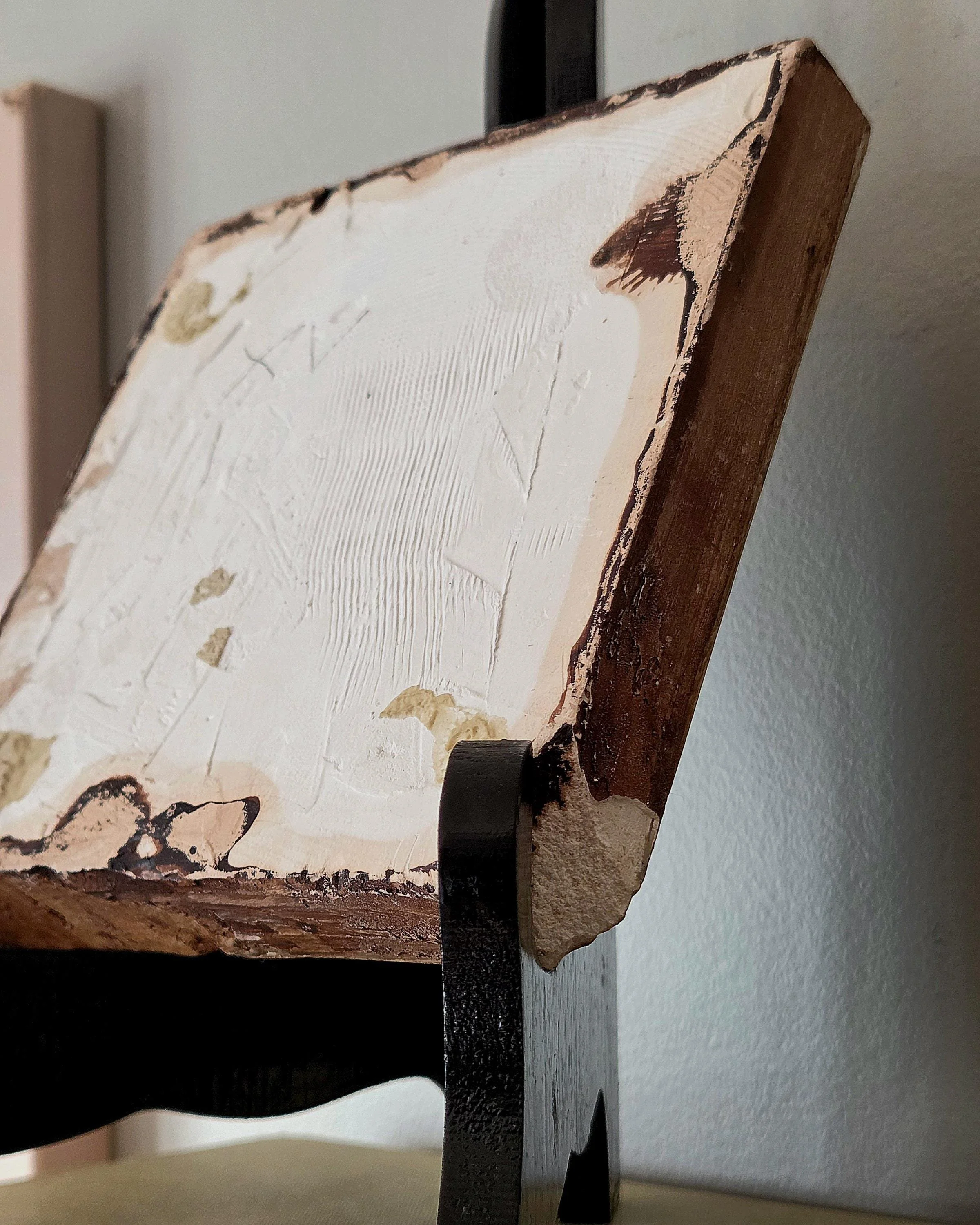 Image 6 of 14
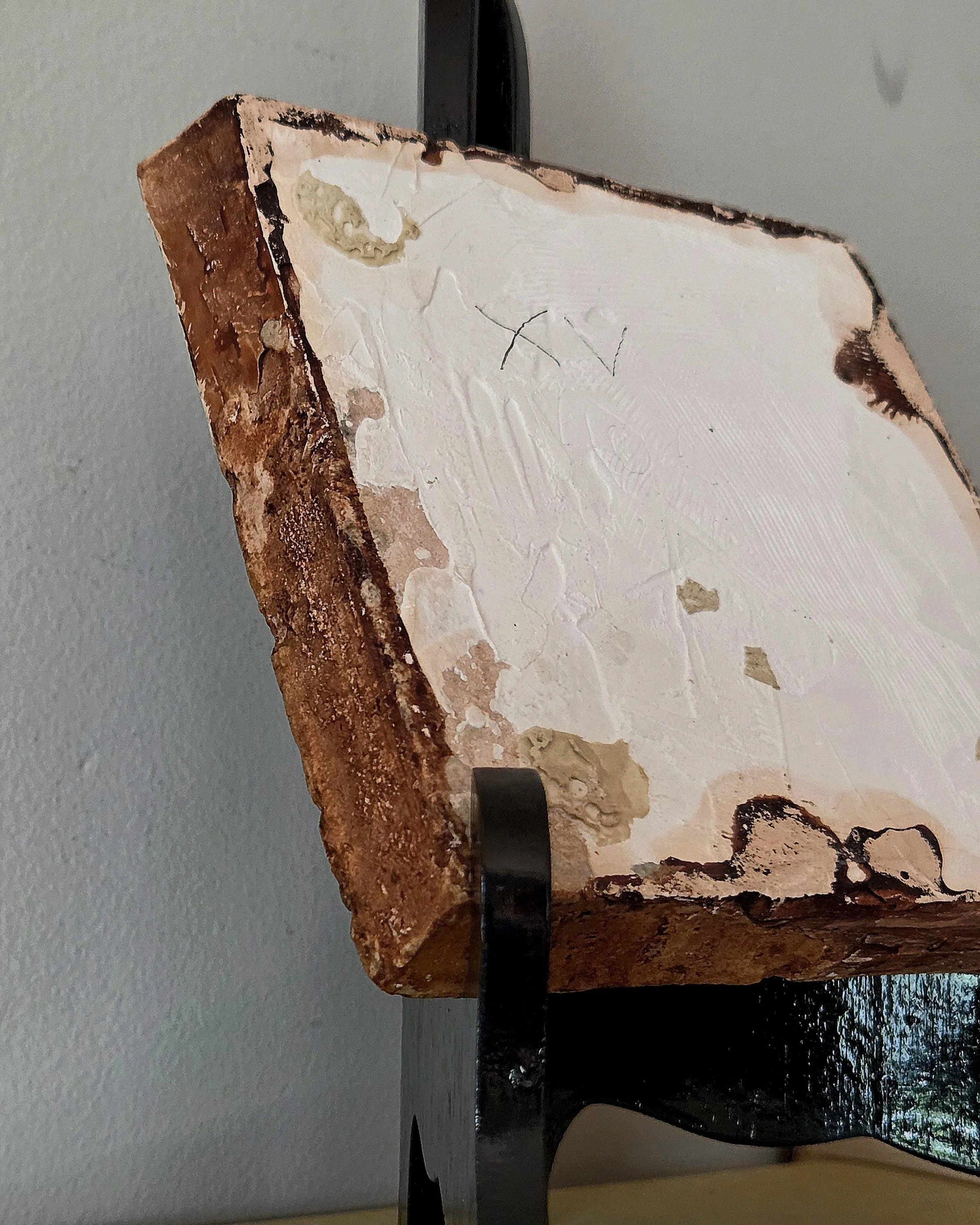 Image 7 of 14
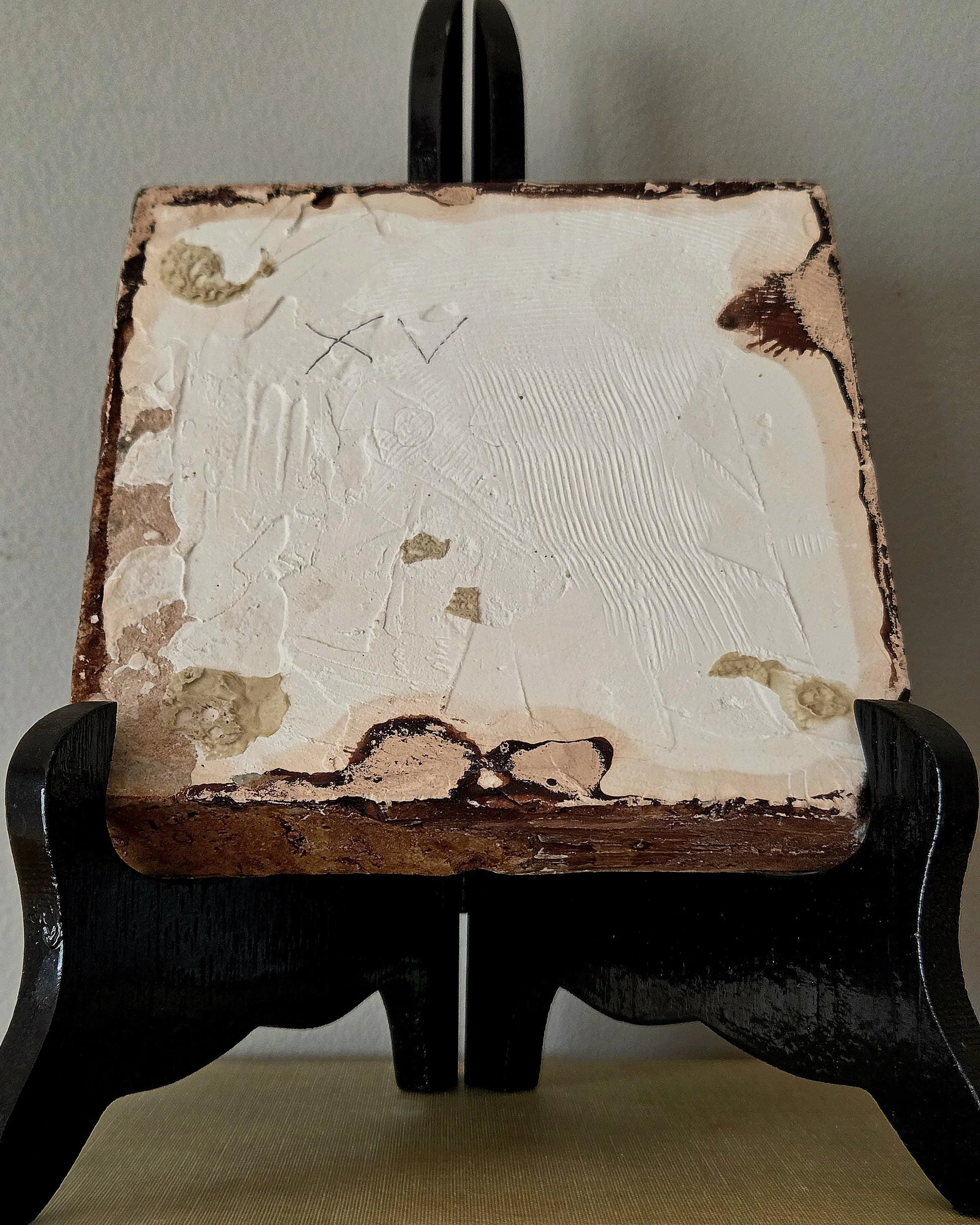 Image 8 of 14
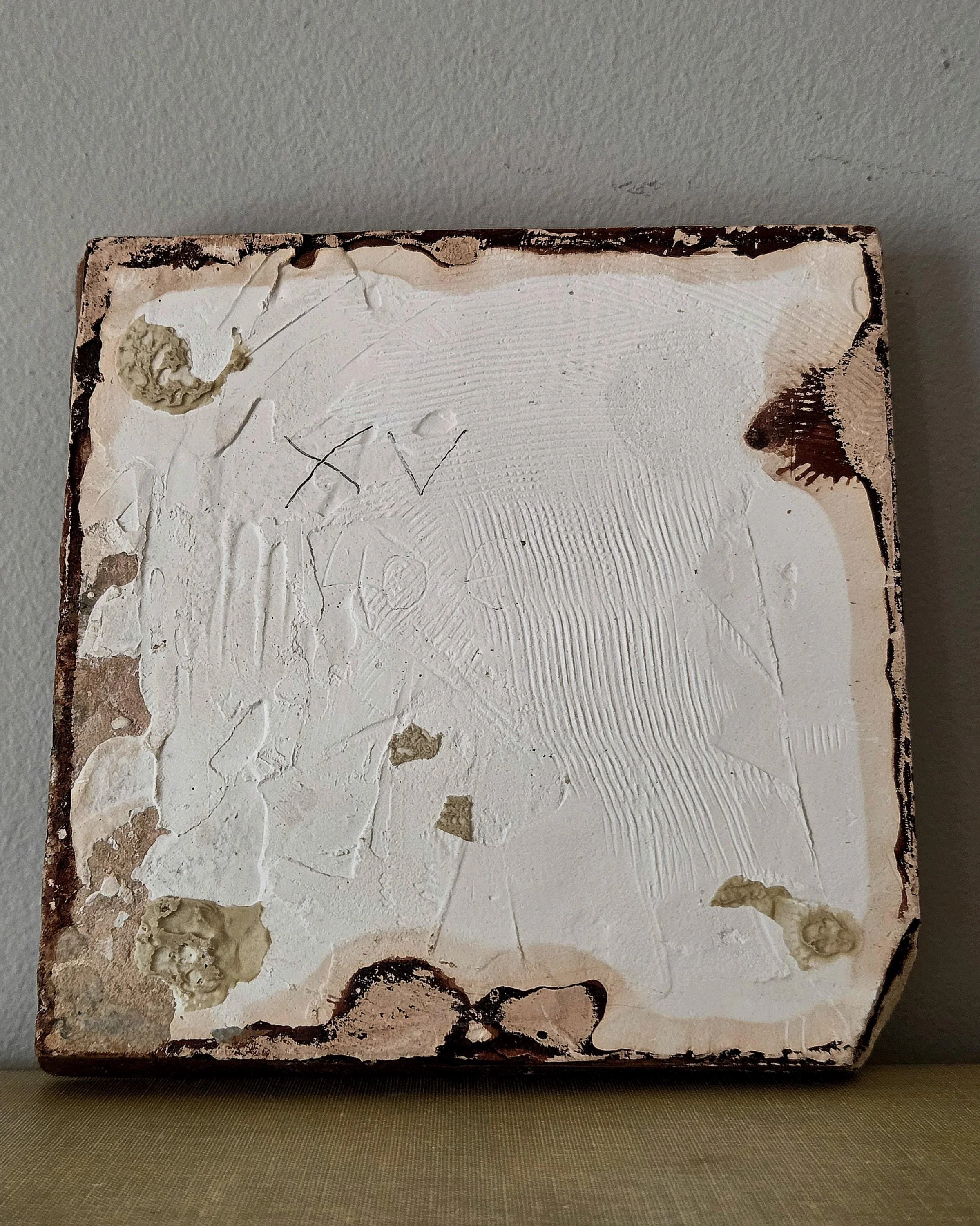 Image 9 of 14
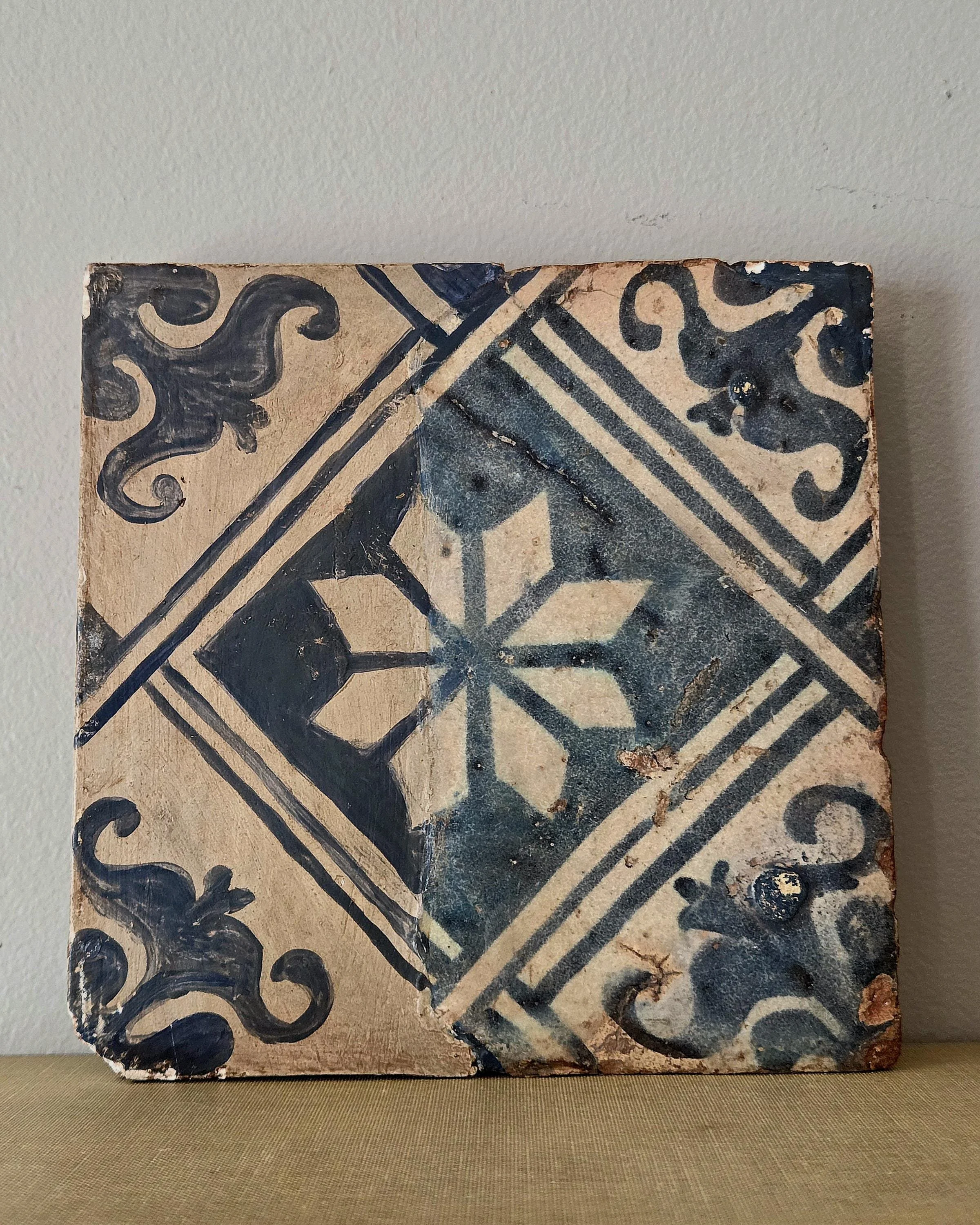 Image 10 of 14
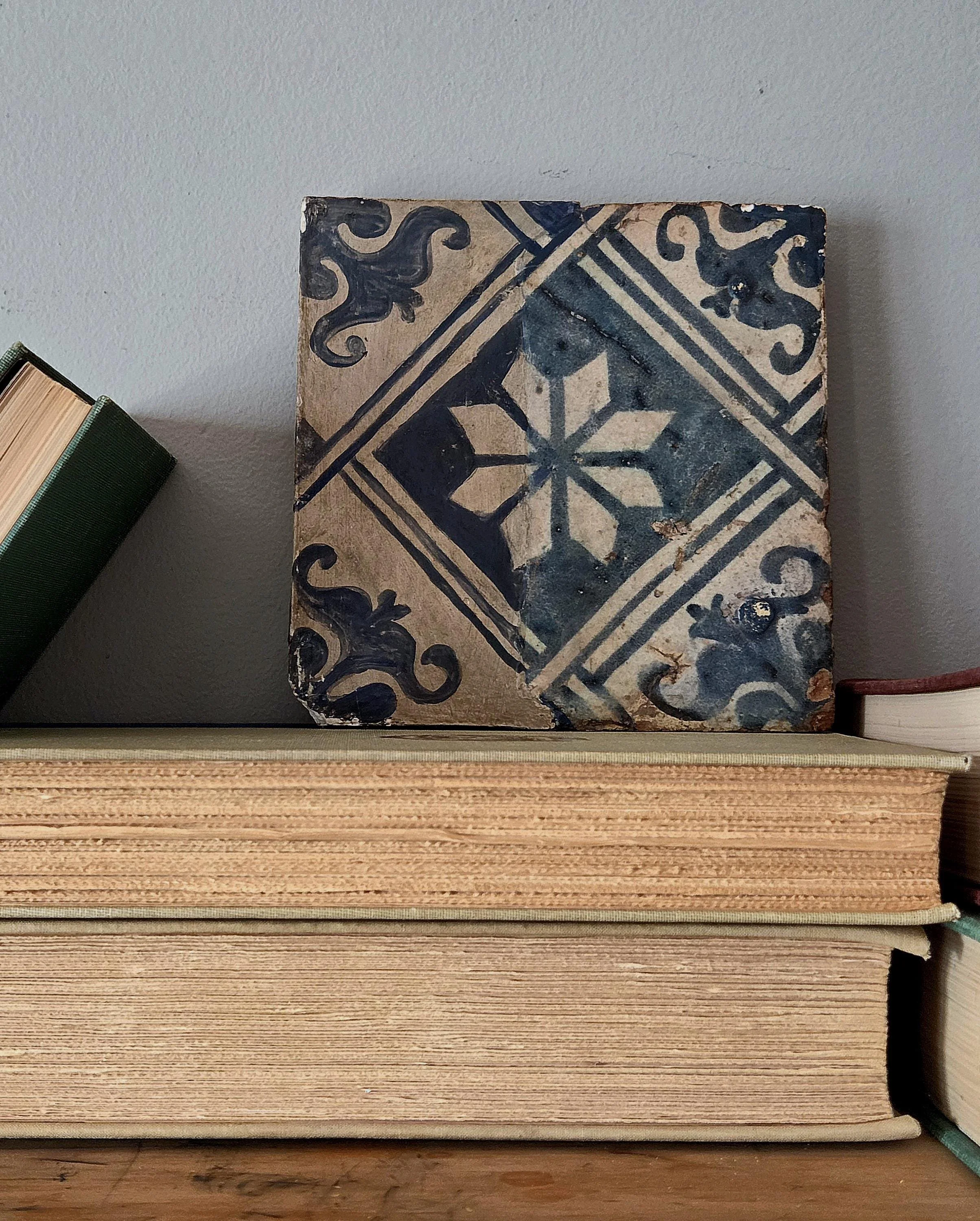 Image 11 of 14
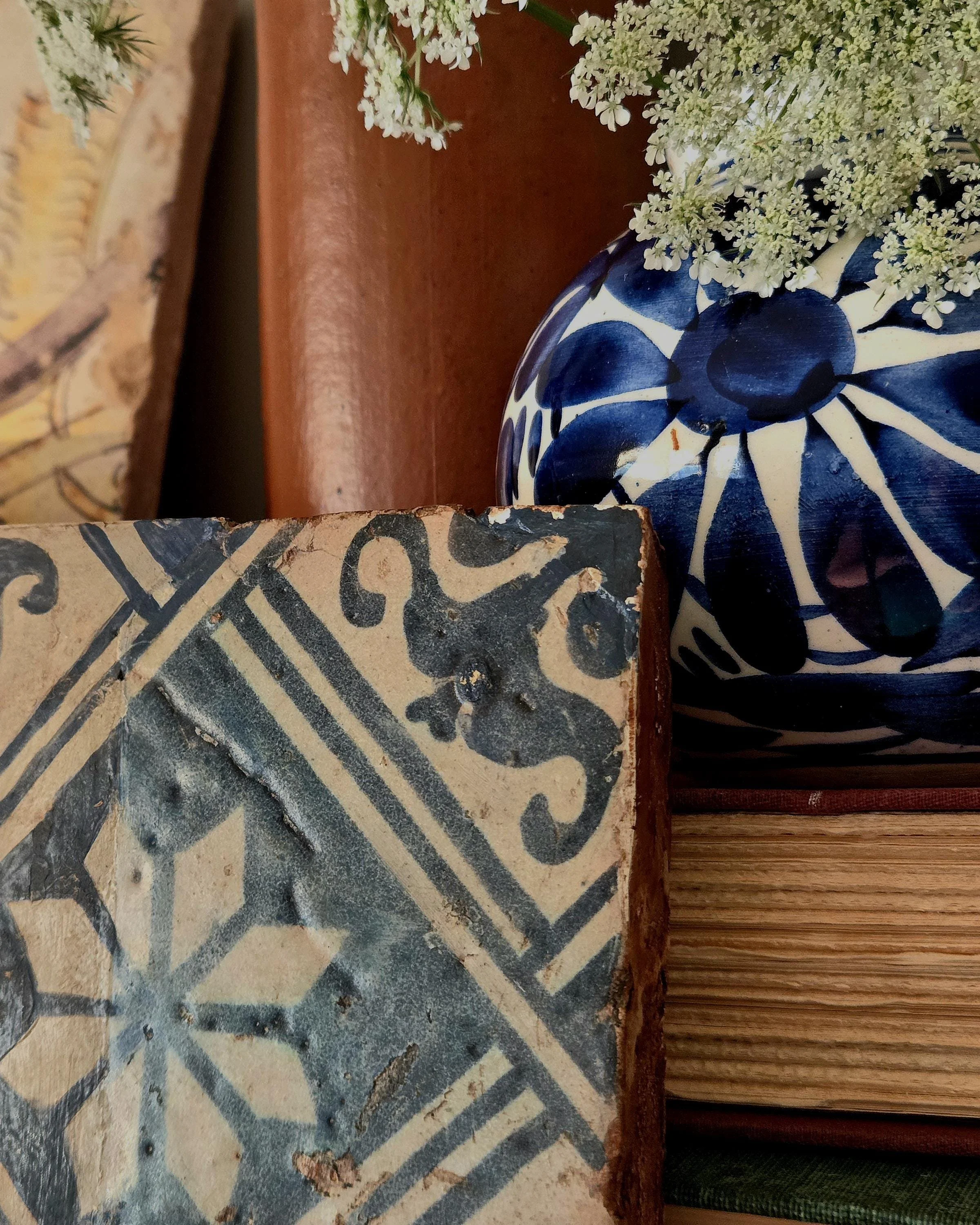 Image 12 of 14
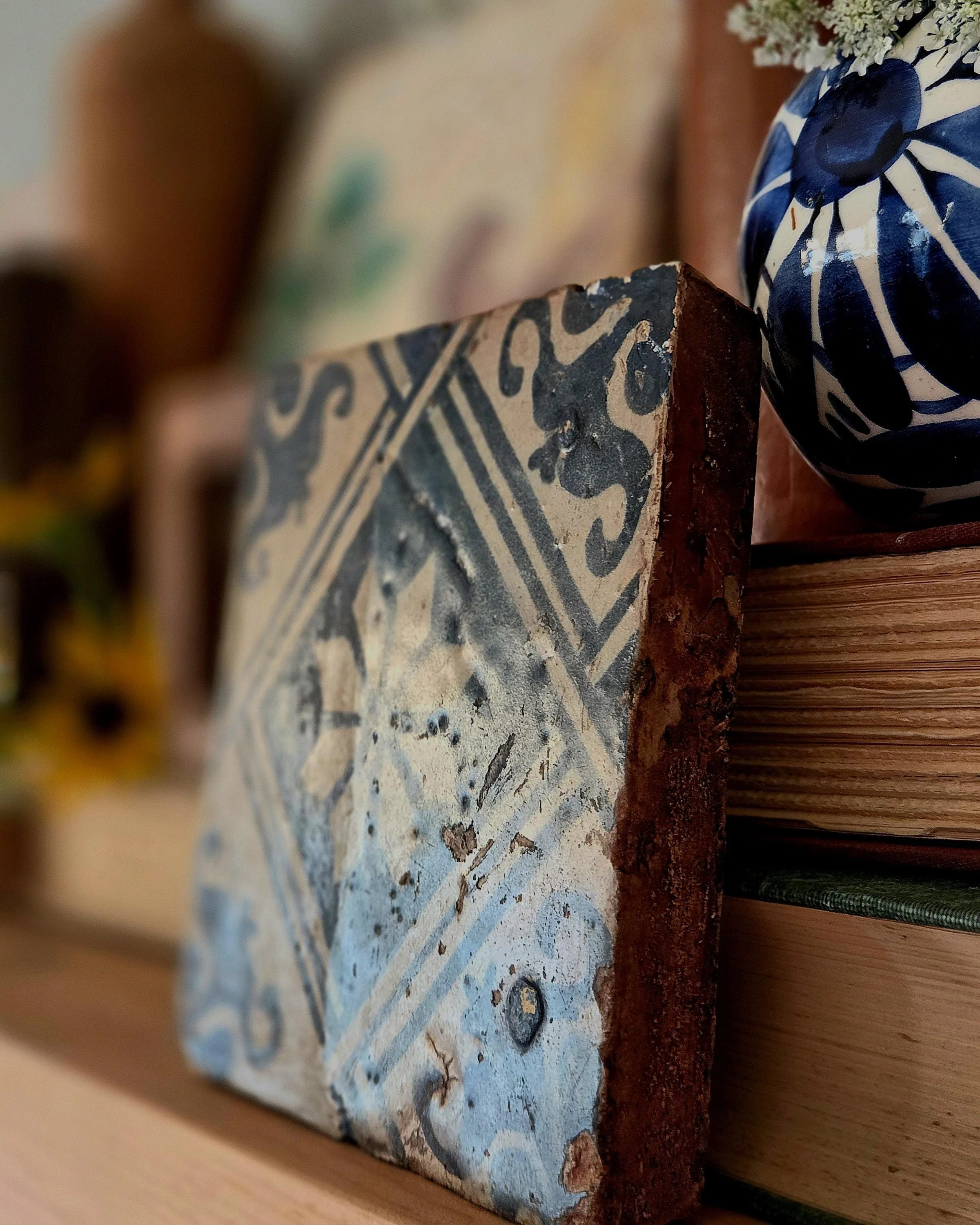 Image 13 of 14
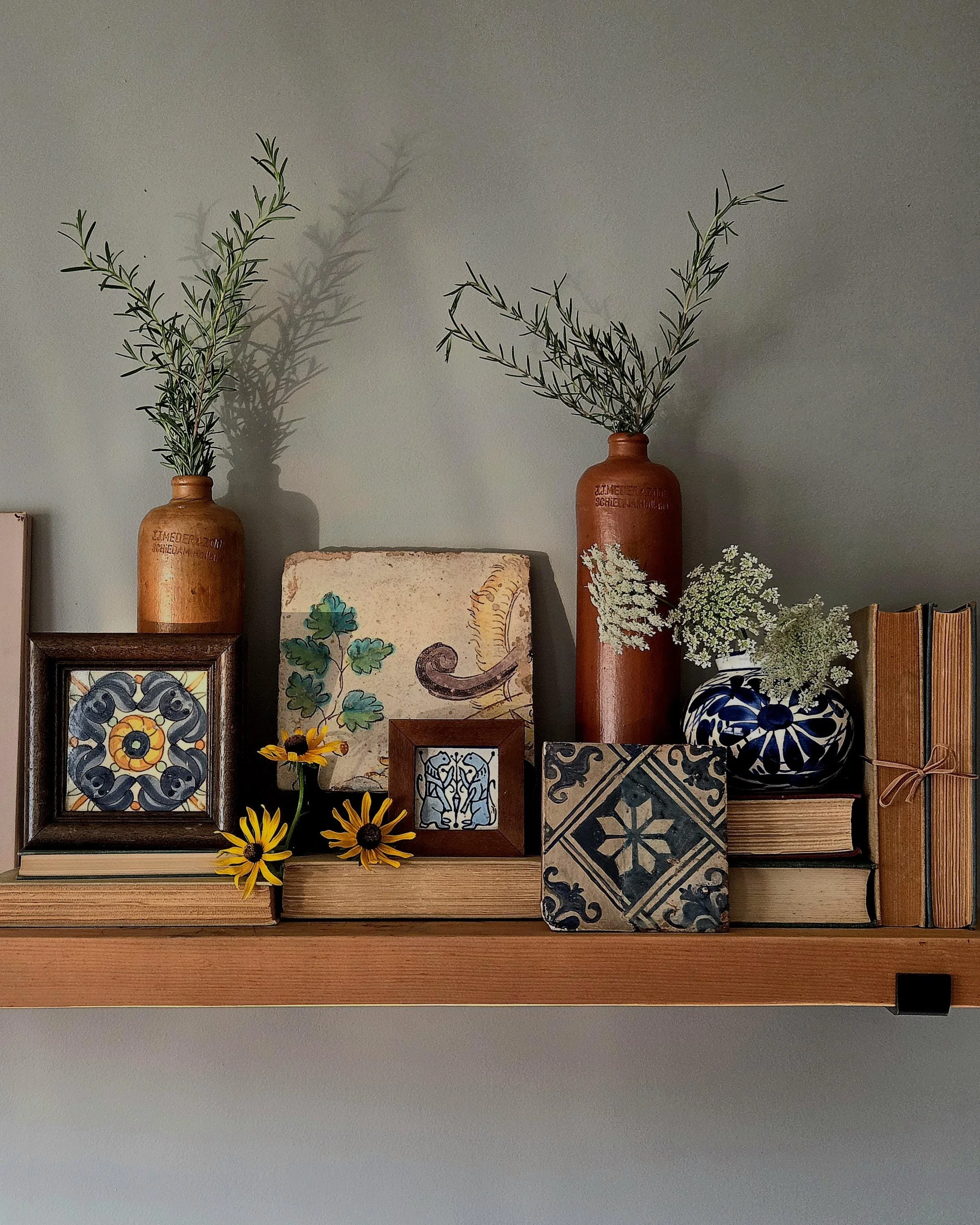 Image 14 of 14