This rare parcel gilded skeleton key offers a glimpse into the relationship between craftsmanship, security, and presentation in eighteenth-century domestic interiors.
Dating to approximately ca. 1770–1800, this hand-forged iron key was created for a traditional warded lock system, combining practical function with an unexpected level of decorative refinement. Unlike ordinary household hardware, this key was partially gilded—its visible presentation side finished with a subtle layer of gold that would have caught the light when the door was approached and opened.
Known as parcel gilding, this technique was often used when only certain portions of an object required decoration, allowing artisans to highlight specific surfaces while preserving the strength and practicality of the underlying material. The faint golden sheen remains visible across one side of the key, revealing the intentional distinction between the side meant to be seen and the side designed primarily for function.
The key also preserves evidence of traditional locksmithing, including a hand-filed warded bit shaped to correspond with a specific lock mechanism. The combination of wrought iron construction, precision filing, and mercury fire-gilding reflects the skill required to transform a utilitarian household object into something both functional and decorative.
Today, this historic key can be displayed as a small architectural artifact—an object that speaks to the care once given to even the most overlooked details of the home. It would bring character to a writing desk, bookshelf, entryway vignette, shadowbox display, or collection of historic objects with visible craftsmanship.
Details
Date: ca. 1770–1800
Origin: Valencia, Spain (acquired)
Medium: Hand-forged iron with parcel mercury fire-gilding
Form: Warded skeleton key
Measurements: 4.5 inches long
Care
Handle carefully. Preserve the remaining gilding and aged surface. Avoid polishing, abrasive cleaners, or chemical treatments, which may damage the historic finish. Display indoors and avoid prolonged exposure to moisture.
Condition
This historic skeleton key has age-appropriate wear, including surface oxidation and areas of diminished gilding consistent with centuries of handling and use. The remaining gold finish and handmade details are part of the object's history and contribute to its rarity and character.
This rare parcel gilded skeleton key offers a glimpse into the relationship between craftsmanship, security, and presentation in eighteenth-century domestic interiors.
Dating to approximately ca. 1770–1800, this hand-forged iron key was created for a traditional warded lock system, combining practical function with an unexpected level of decorative refinement. Unlike ordinary household hardware, this key was partially gilded—its visible presentation side finished with a subtle layer of gold that would have caught the light when the door was approached and opened.
Known as parcel gilding, this technique was often used when only certain portions of an object required decoration, allowing artisans to highlight specific surfaces while preserving the strength and practicality of the underlying material. The faint golden sheen remains visible across one side of the key, revealing the intentional distinction between the side meant to be seen and the side designed primarily for function.
The key also preserves evidence of traditional locksmithing, including a hand-filed warded bit shaped to correspond with a specific lock mechanism. The combination of wrought iron construction, precision filing, and mercury fire-gilding reflects the skill required to transform a utilitarian household object into something both functional and decorative.
Today, this historic key can be displayed as a small architectural artifact—an object that speaks to the care once given to even the most overlooked details of the home. It would bring character to a writing desk, bookshelf, entryway vignette, shadowbox display, or collection of historic objects with visible craftsmanship.
Details
Date: ca. 1770–1800
Origin: Valencia, Spain (acquired)
Medium: Hand-forged iron with parcel mercury fire-gilding
Form: Warded skeleton key
Measurements: 4.5 inches long
Care
Handle carefully. Preserve the remaining gilding and aged surface. Avoid polishing, abrasive cleaners, or chemical treatments, which may damage the historic finish. Display indoors and avoid prolonged exposure to moisture.
Condition
This historic skeleton key has age-appropriate wear, including surface oxidation and areas of diminished gilding consistent with centuries of handling and use. The remaining gold finish and handmade details are part of the object's history and contribute to its rarity and character.
 Image 1 of 13
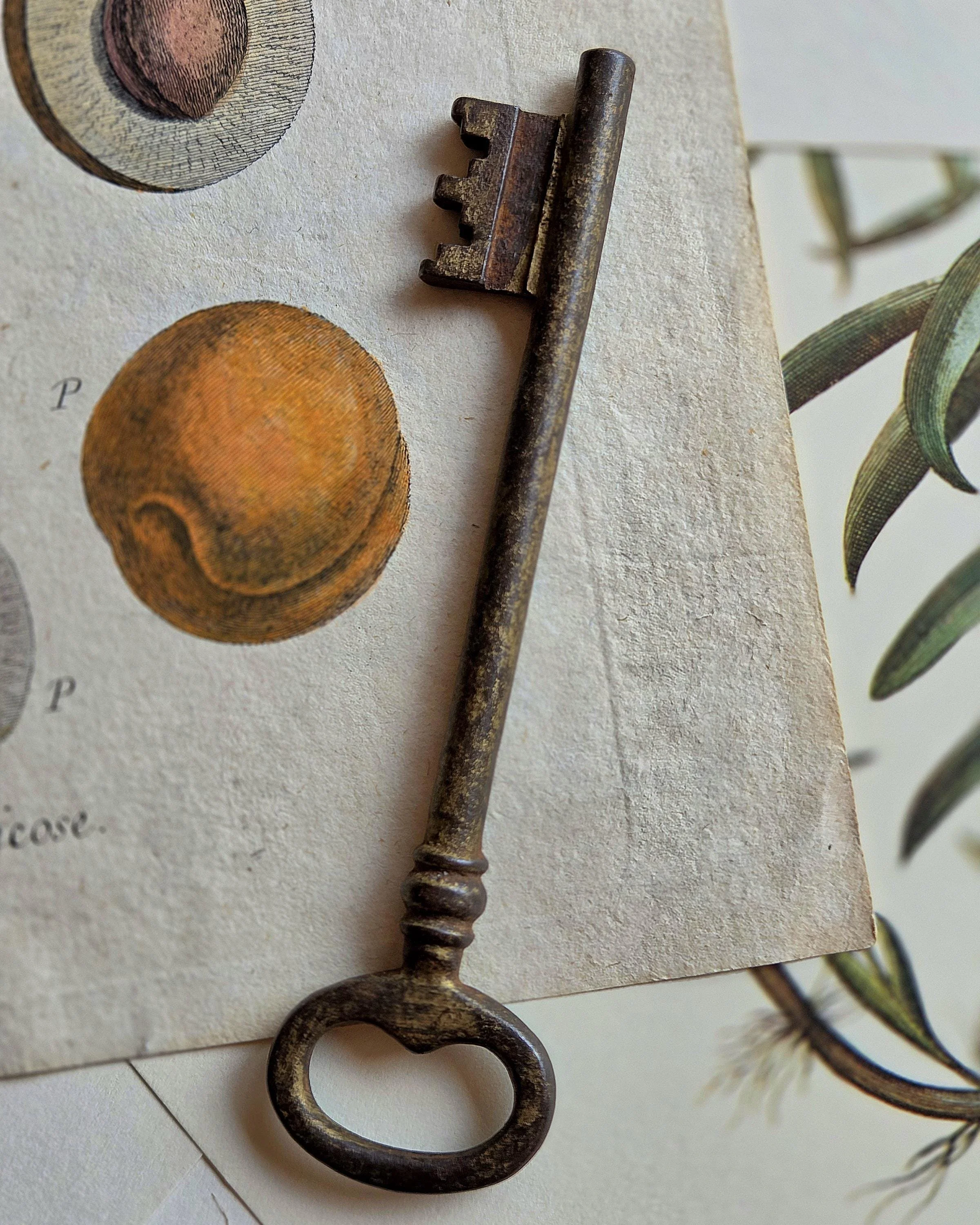 Image 2 of 13
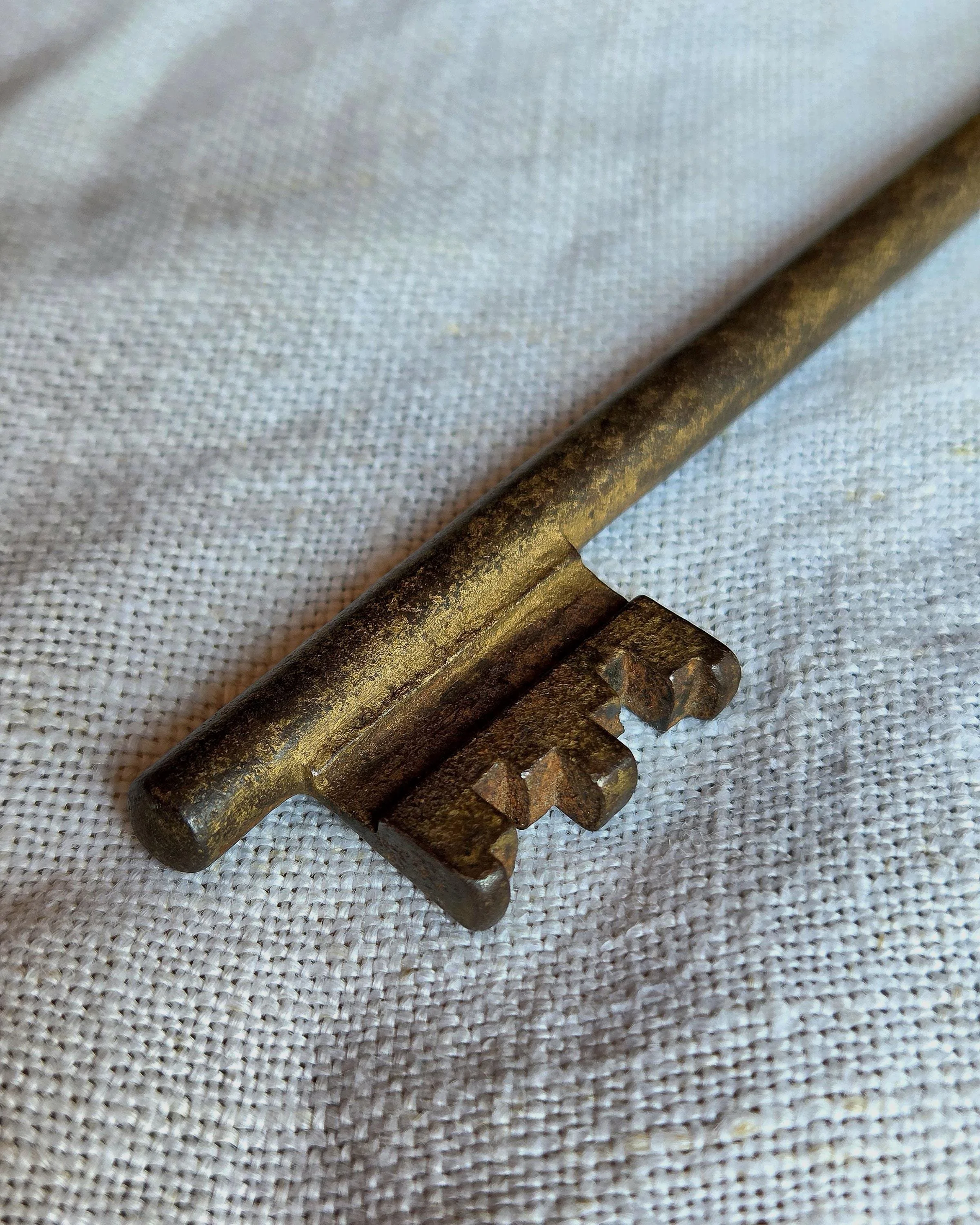 Image 3 of 13
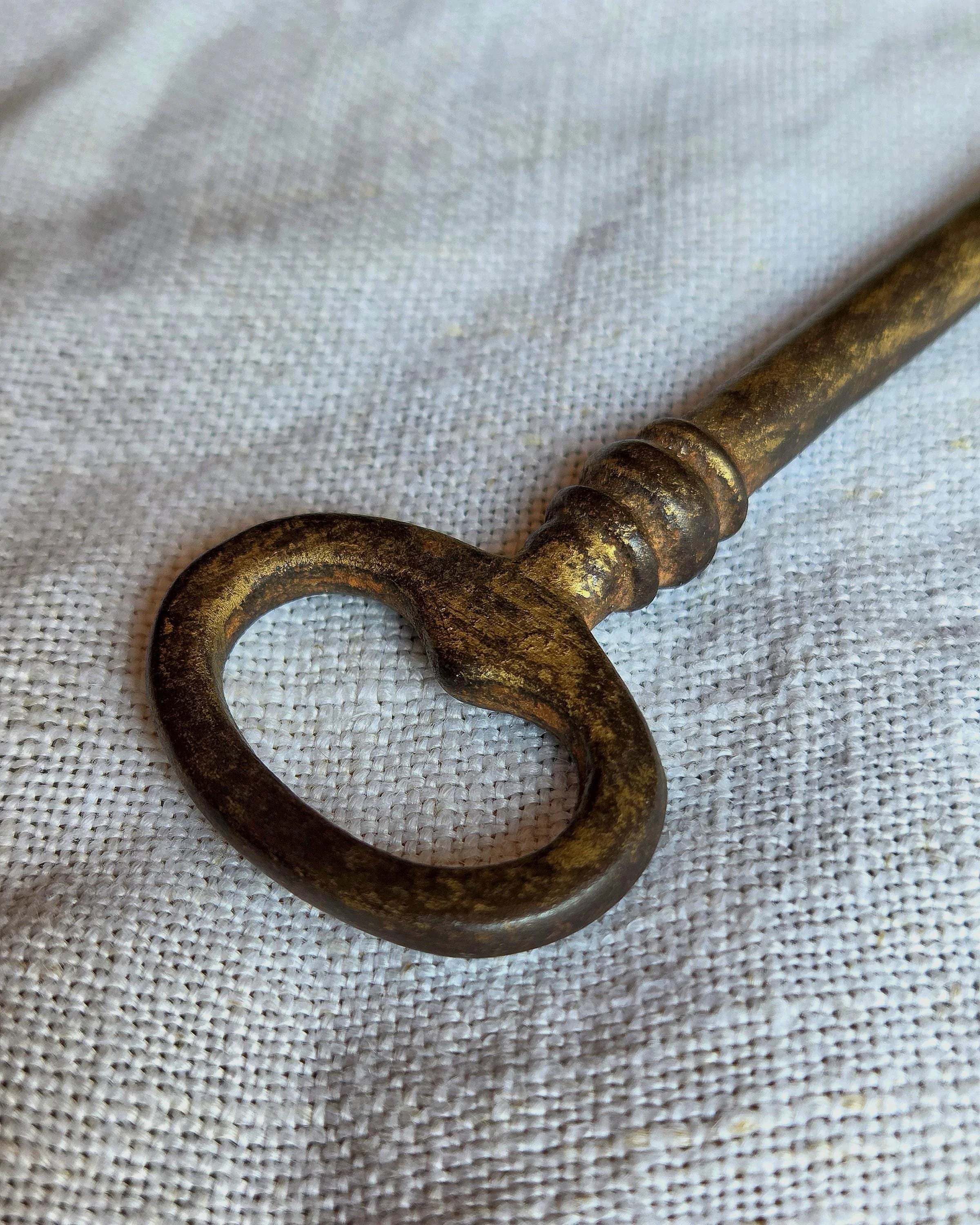 Image 4 of 13
 Image 5 of 13
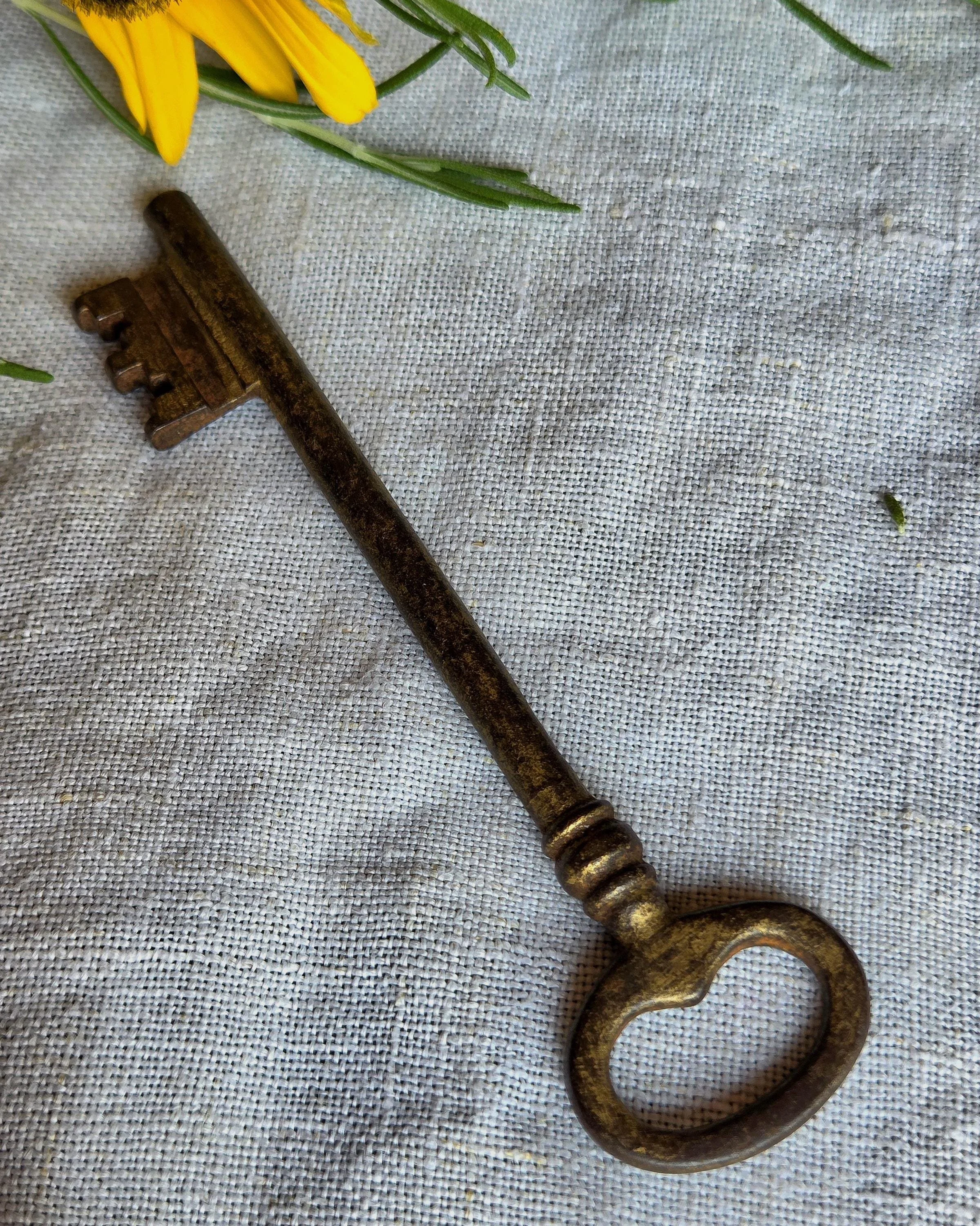 Image 6 of 13
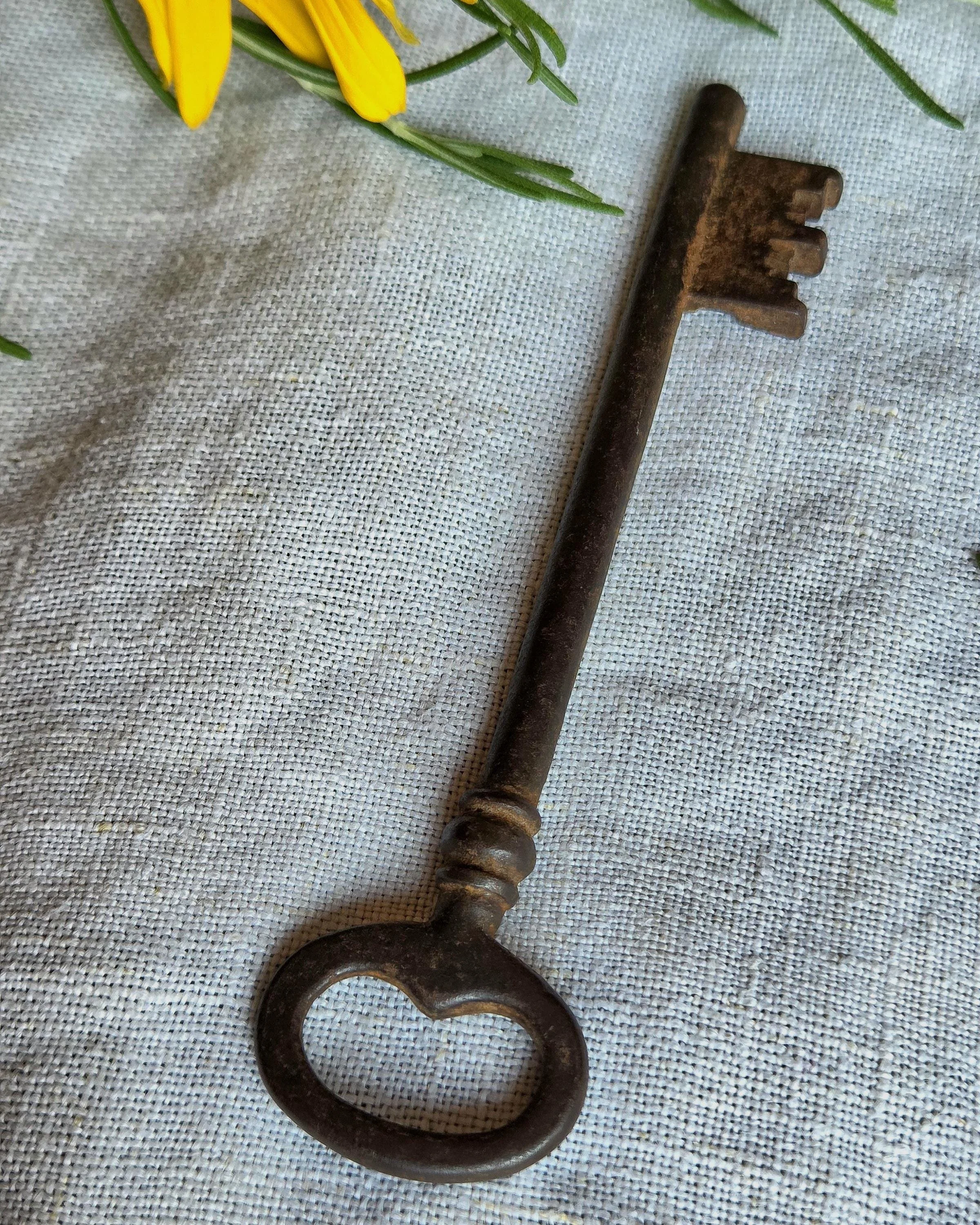 Image 7 of 13
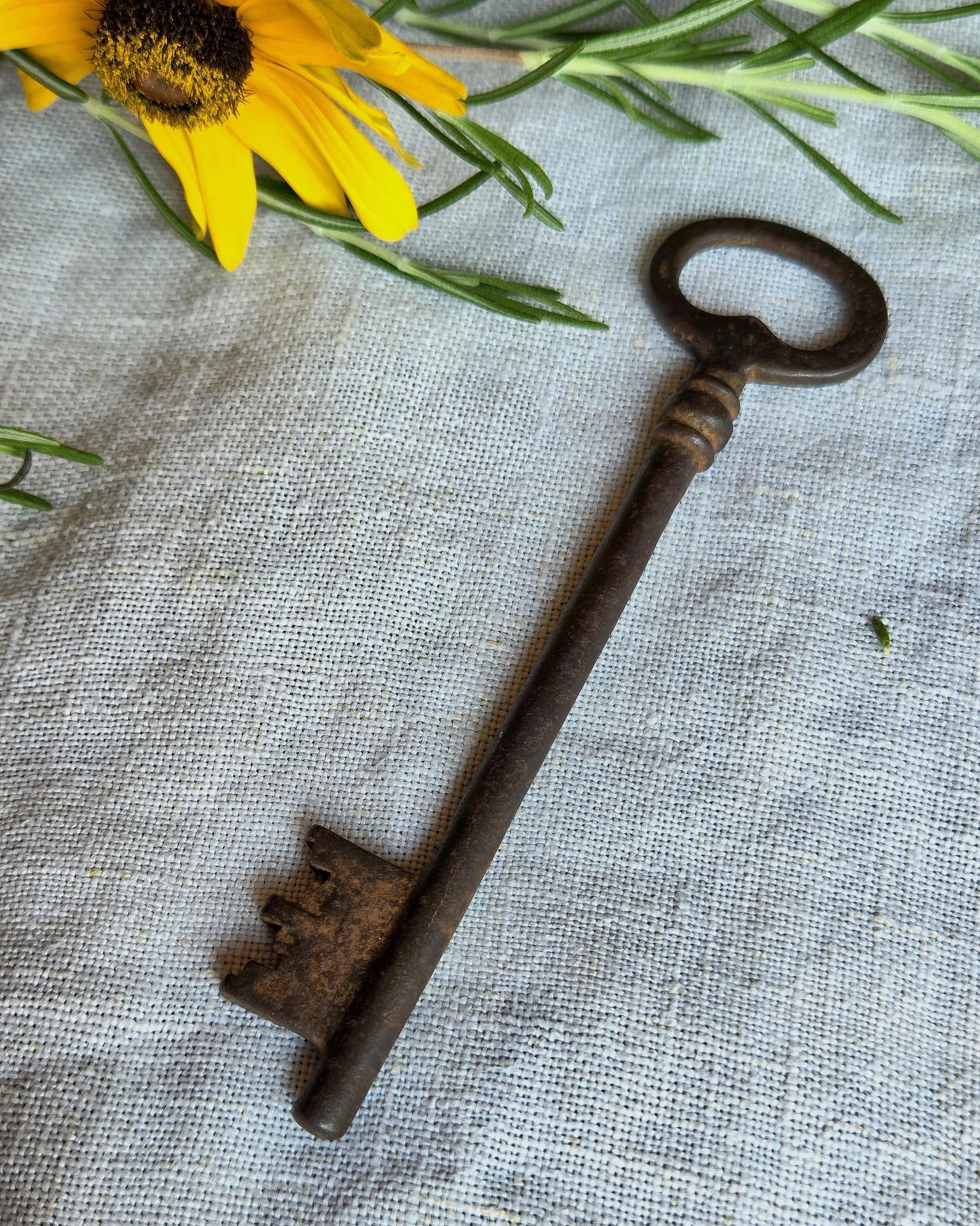 Image 8 of 13
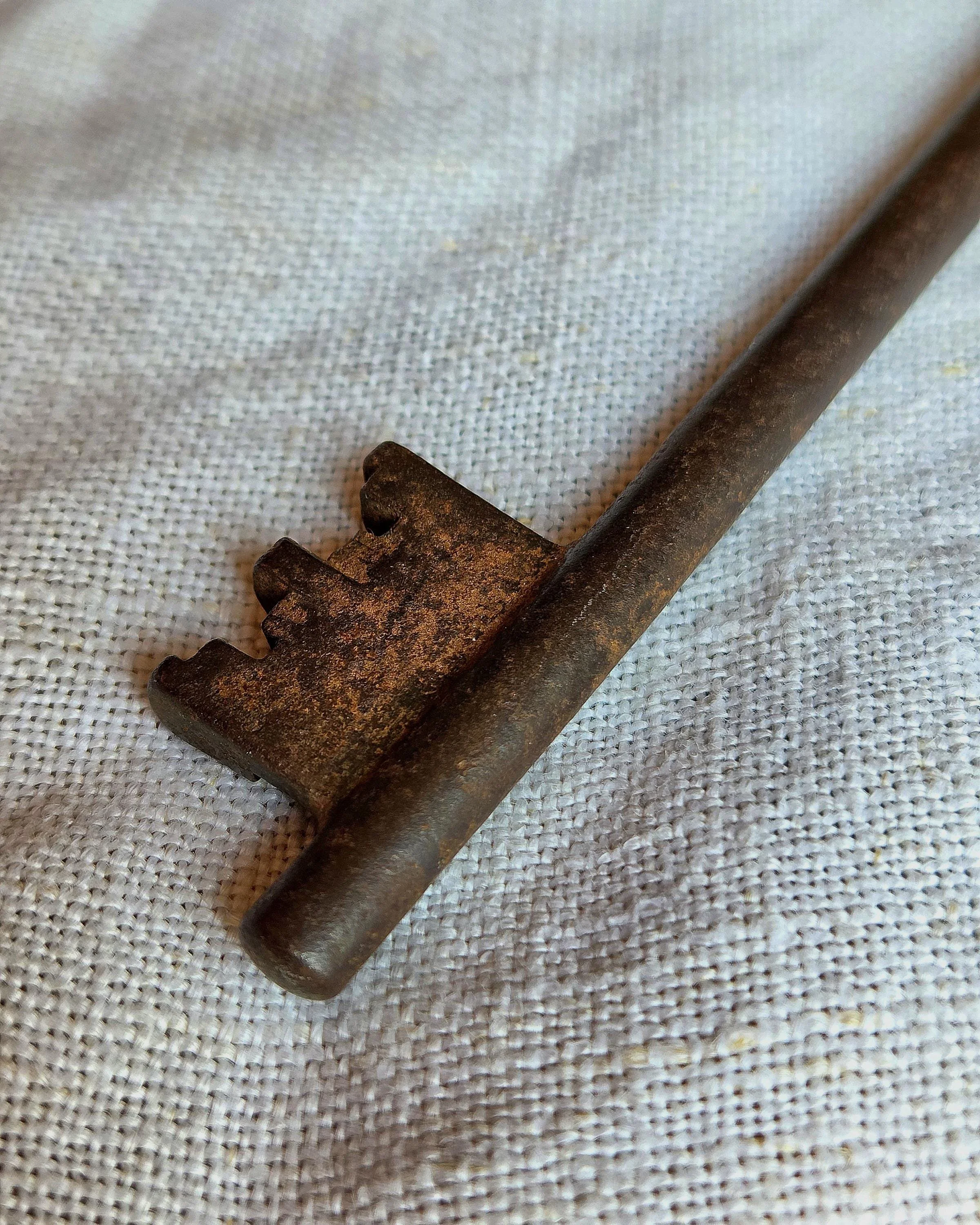 Image 9 of 13
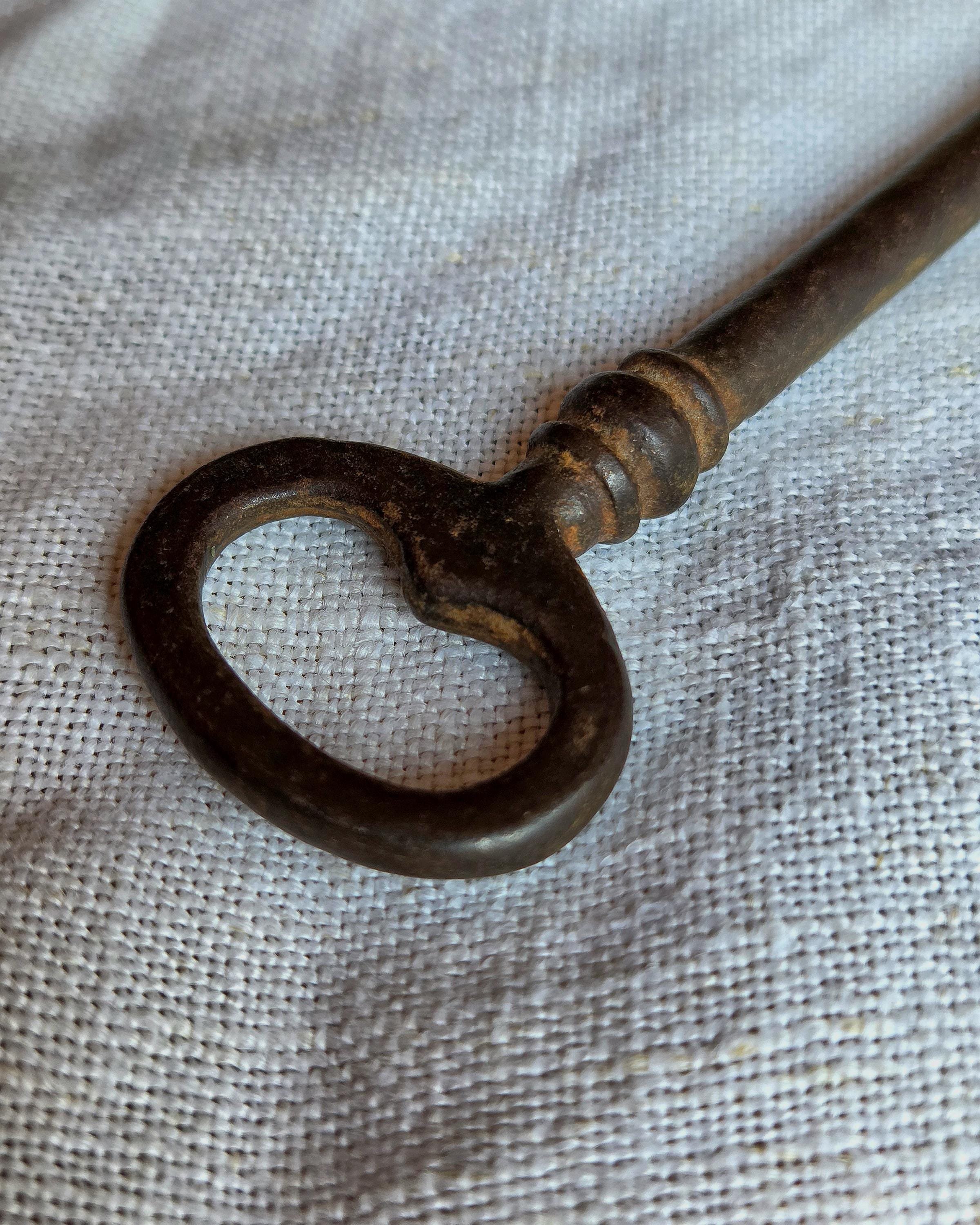 Image 10 of 13
 Image 11 of 13
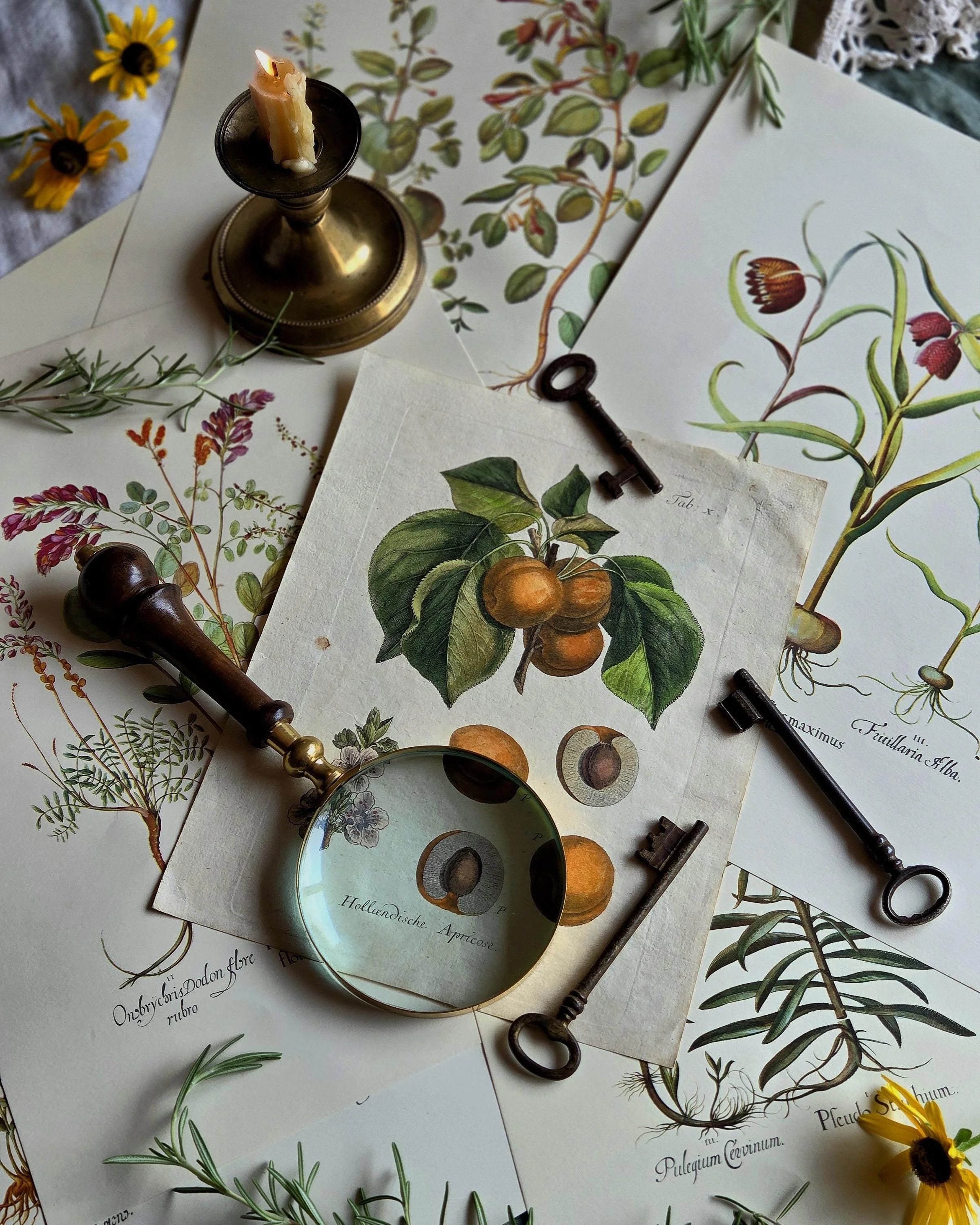 Image 12 of 13
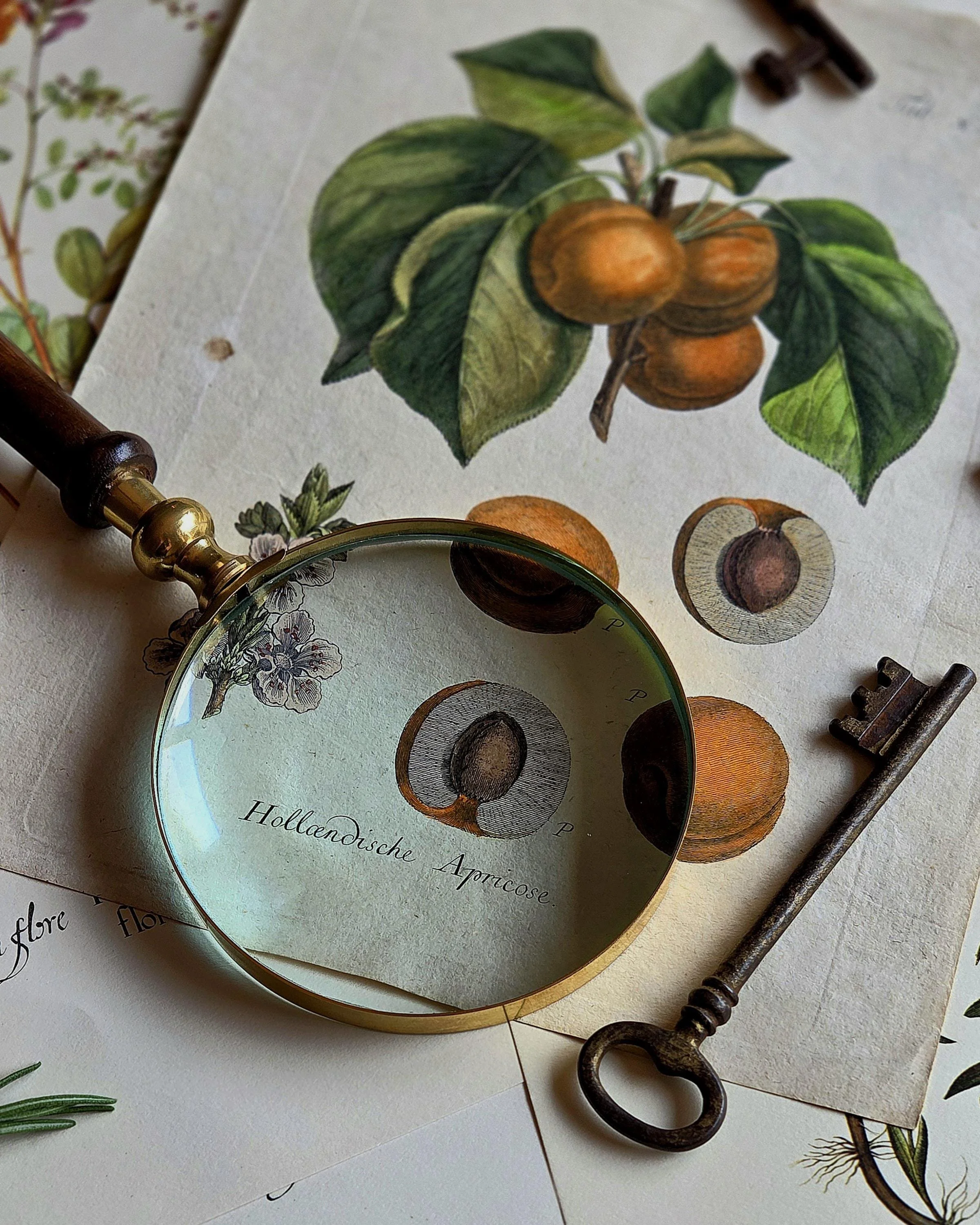 Image 13 of 13