A piece shaped by daily life and made to be used. This 18th-century Spanish cantaro-style pitcher was sourced in Madrid and reflects the beauty of traditional household pottery from the nearby Toledo region. Crafted from iron-rich clay and finished with a warm "melado" honey glaze, the vessel has an organic flowing glaze pattern that captures the handmade character of Spanish folk ceramics.
Dating to ca. 1750-90, this pitcher was created as a practical household object to carry and serve everyday necessities such as water or oil. Its generous form, sturdy handle, and practical decorative treatment speak to a time when useful objects were also expressions of local craftsmanship and place.
The flowing honey glaze, sometimes called a "spilled" glaze, reflects the handmade process behind these utilitarian vessels. Produced to meet the demands of growing Spanish cities—including Madrid during the reign of King Charles III—potters often held the vessel by hand and quickly dipped it into glaze before firing. On this example, three subtle fingerprint impressions remain visible, preserving traces of the maker's touch more than two centuries later. By the end of the eighteenth century, changing tastes and the rise of industrially produced ceramics began to replace many traditional forms like this one.
Today, this pitcher begins another chapter. While its original purpose may have been carrying water or oil, it remains a beautiful object for everyday life—ready to hold flowers, sit on a kitchen shelf, or bring the warmth of historic craftsmanship into a collected home.
Rare & Respair is drawn to objects that carry visible evidence of human hands, use, and care. The small variations in glaze, the marks of making, and the traces of time are what allow each piece to continue telling its story.
Details
Origin: Spain (Toledo-region folk pottery tradition)
Date: ca. 1750-90
Material: Glazed earthenware
Technique: Iron-rich clay with traditional melado honey glaze
Measurements: 7 x 5.5 inches (including handle)
Care
This antique ceramic vessel has been gently cleaned and prepared for its next chapter. To preserve the integrity of the historic ceramic, we recommend displaying flowers in a separate container placed inside the pitcher rather than filling the pitcher directly with water. Dust gently with a soft cloth or brush. Avoid harsh cleaners or prolonged exposure to moisture. Never submerge completely in water.
Condition
This piece is antique and has the expected marks of age and use. It remains in very good condition with one small, non-structural chip to the bottom.
Please review all photographs carefully, as they are considered part of the description.
A piece shaped by daily life and made to be used. This 18th-century Spanish cantaro-style pitcher was sourced in Madrid and reflects the beauty of traditional household pottery from the nearby Toledo region. Crafted from iron-rich clay and finished with a warm "melado" honey glaze, the vessel has an organic flowing glaze pattern that captures the handmade character of Spanish folk ceramics.
Dating to ca. 1750-90, this pitcher was created as a practical household object to carry and serve everyday necessities such as water or oil. Its generous form, sturdy handle, and practical decorative treatment speak to a time when useful objects were also expressions of local craftsmanship and place.
The flowing honey glaze, sometimes called a "spilled" glaze, reflects the handmade process behind these utilitarian vessels. Produced to meet the demands of growing Spanish cities—including Madrid during the reign of King Charles III—potters often held the vessel by hand and quickly dipped it into glaze before firing. On this example, three subtle fingerprint impressions remain visible, preserving traces of the maker's touch more than two centuries later. By the end of the eighteenth century, changing tastes and the rise of industrially produced ceramics began to replace many traditional forms like this one.
Today, this pitcher begins another chapter. While its original purpose may have been carrying water or oil, it remains a beautiful object for everyday life—ready to hold flowers, sit on a kitchen shelf, or bring the warmth of historic craftsmanship into a collected home.
Rare & Respair is drawn to objects that carry visible evidence of human hands, use, and care. The small variations in glaze, the marks of making, and the traces of time are what allow each piece to continue telling its story.
Details
Origin: Spain (Toledo-region folk pottery tradition)
Date: ca. 1750-90
Material: Glazed earthenware
Technique: Iron-rich clay with traditional melado honey glaze
Measurements: 7 x 5.5 inches (including handle)
Care
This antique ceramic vessel has been gently cleaned and prepared for its next chapter. To preserve the integrity of the historic ceramic, we recommend displaying flowers in a separate container placed inside the pitcher rather than filling the pitcher directly with water. Dust gently with a soft cloth or brush. Avoid harsh cleaners or prolonged exposure to moisture. Never submerge completely in water.
Condition
This piece is antique and has the expected marks of age and use. It remains in very good condition with one small, non-structural chip to the bottom.
Please review all photographs carefully, as they are considered part of the description.
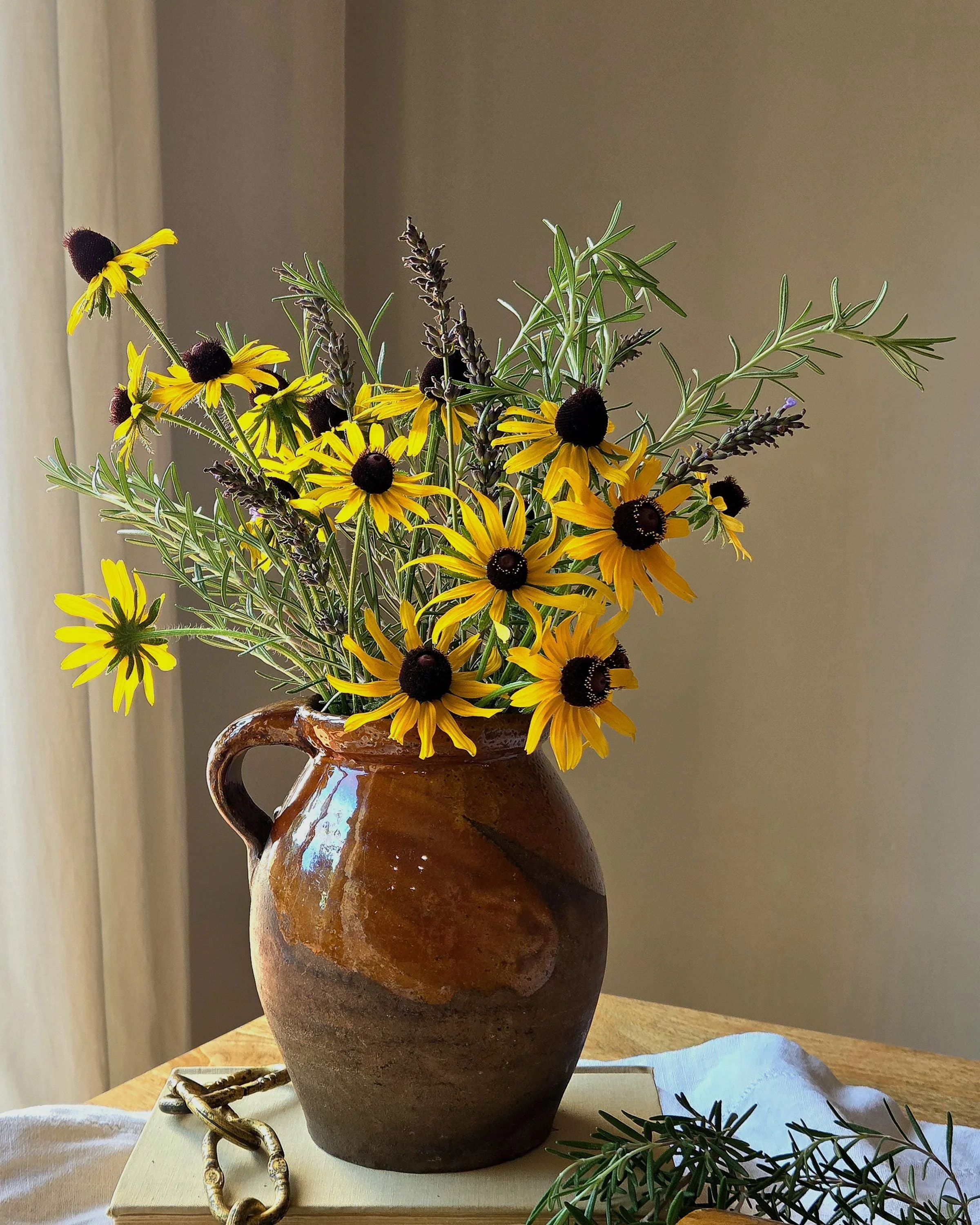 Image 1 of 17
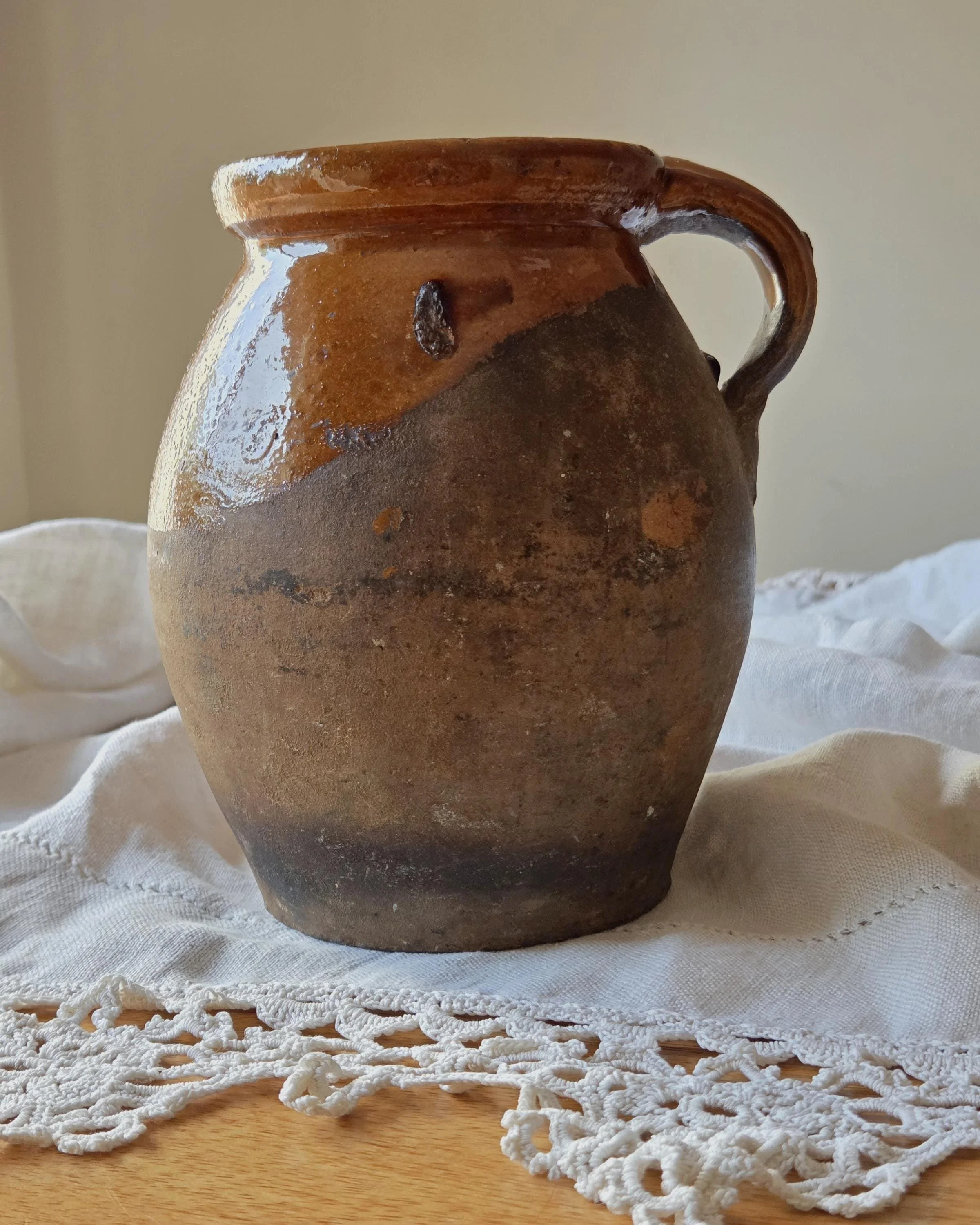 Image 2 of 17
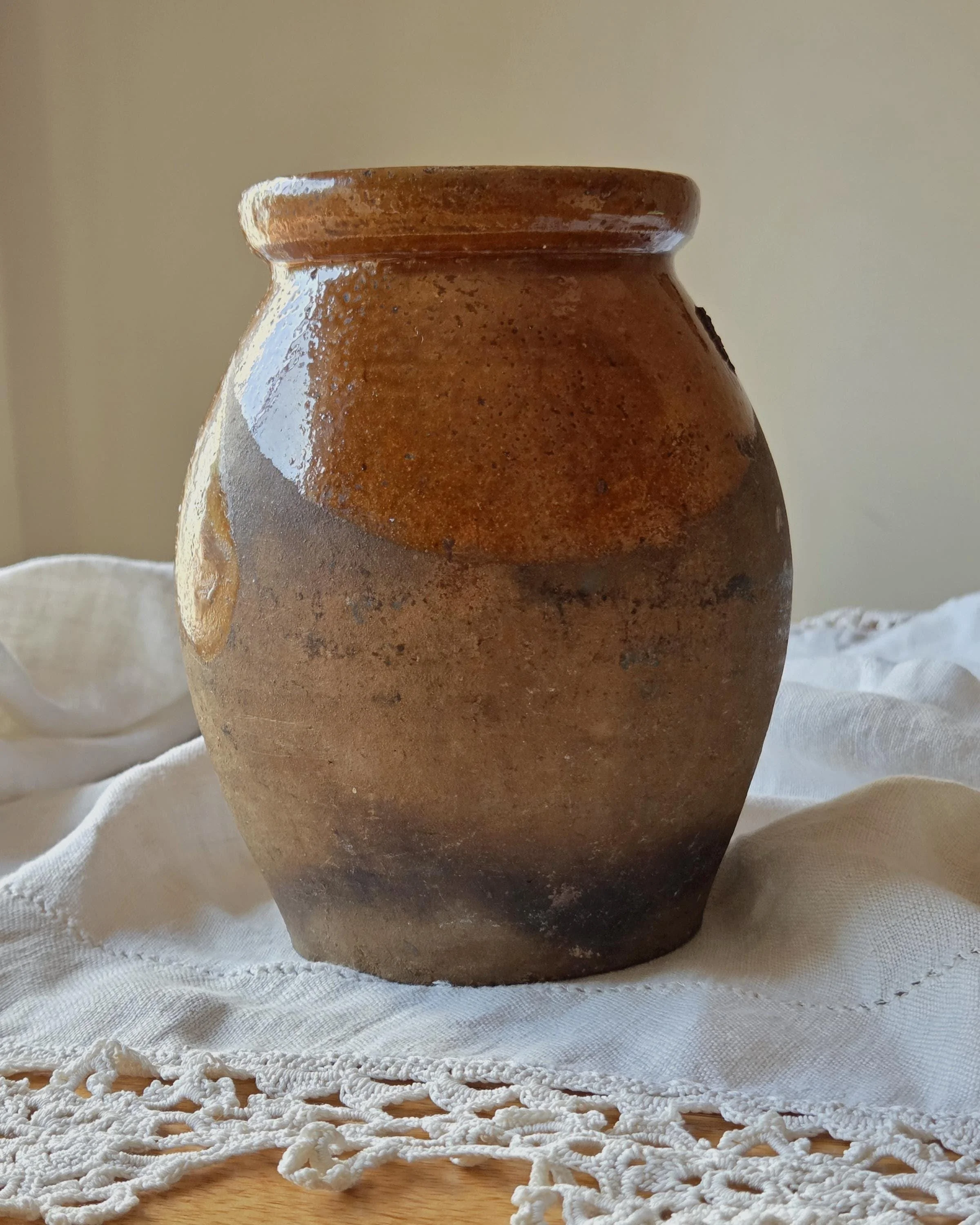 Image 3 of 17
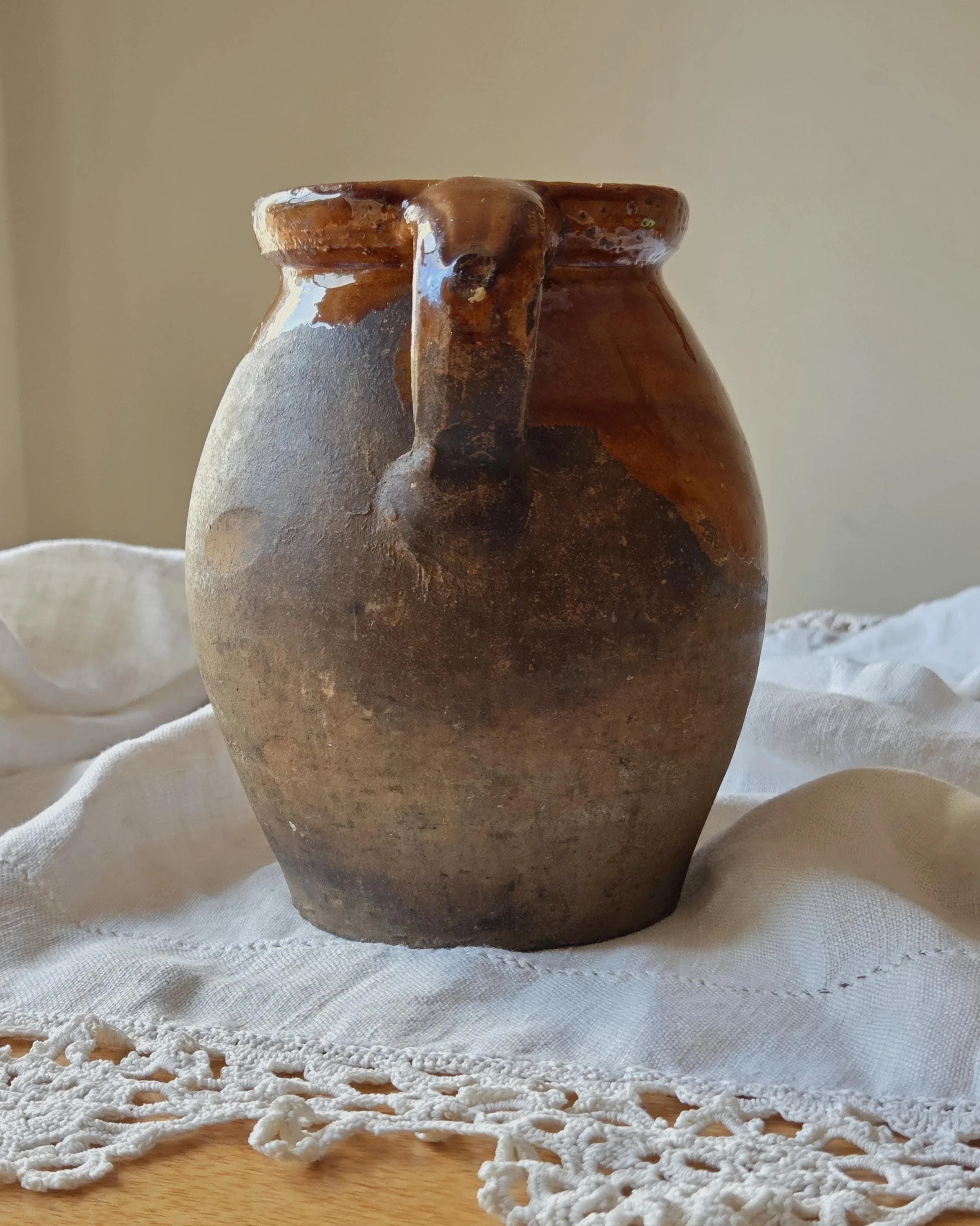 Image 4 of 17
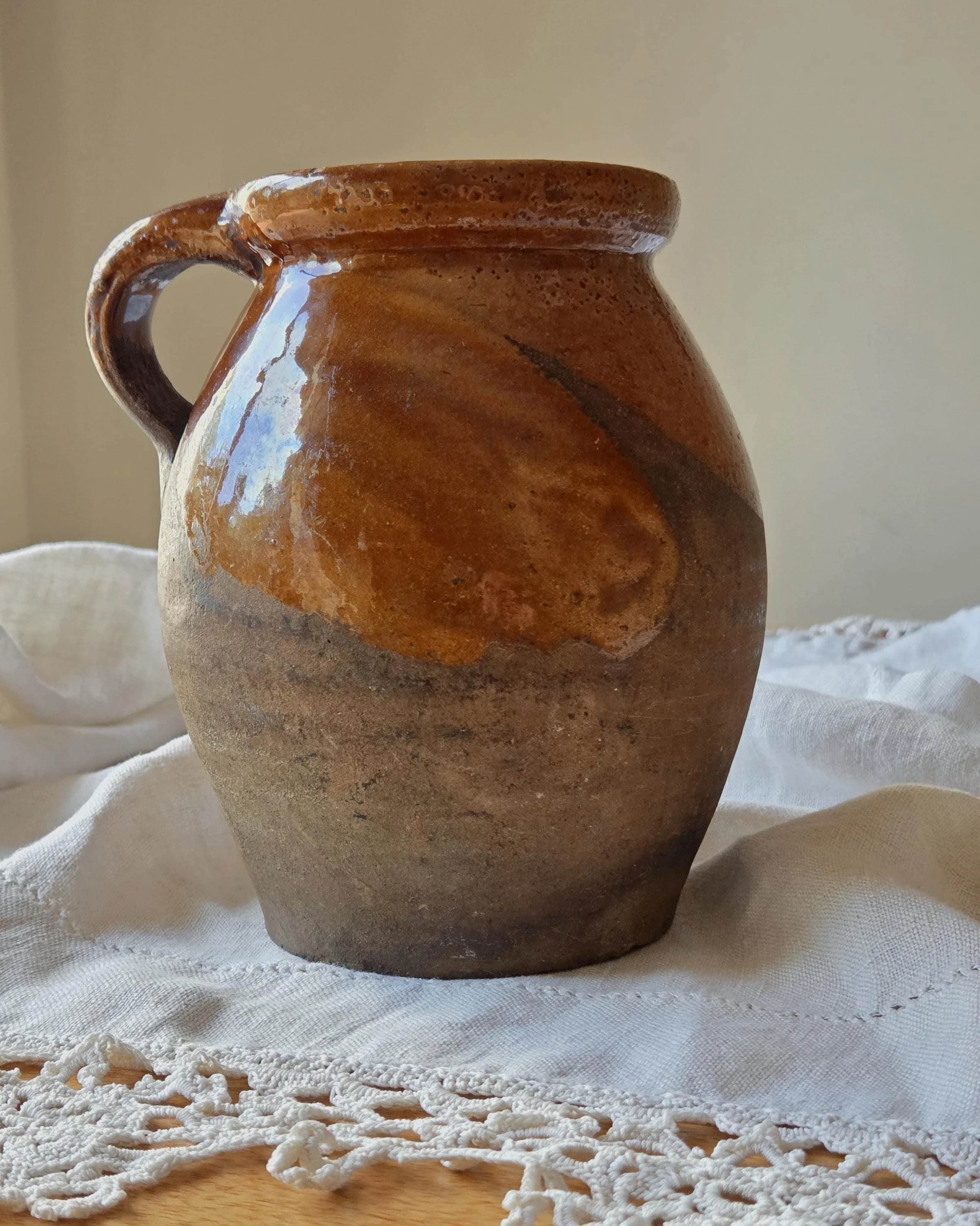 Image 5 of 17
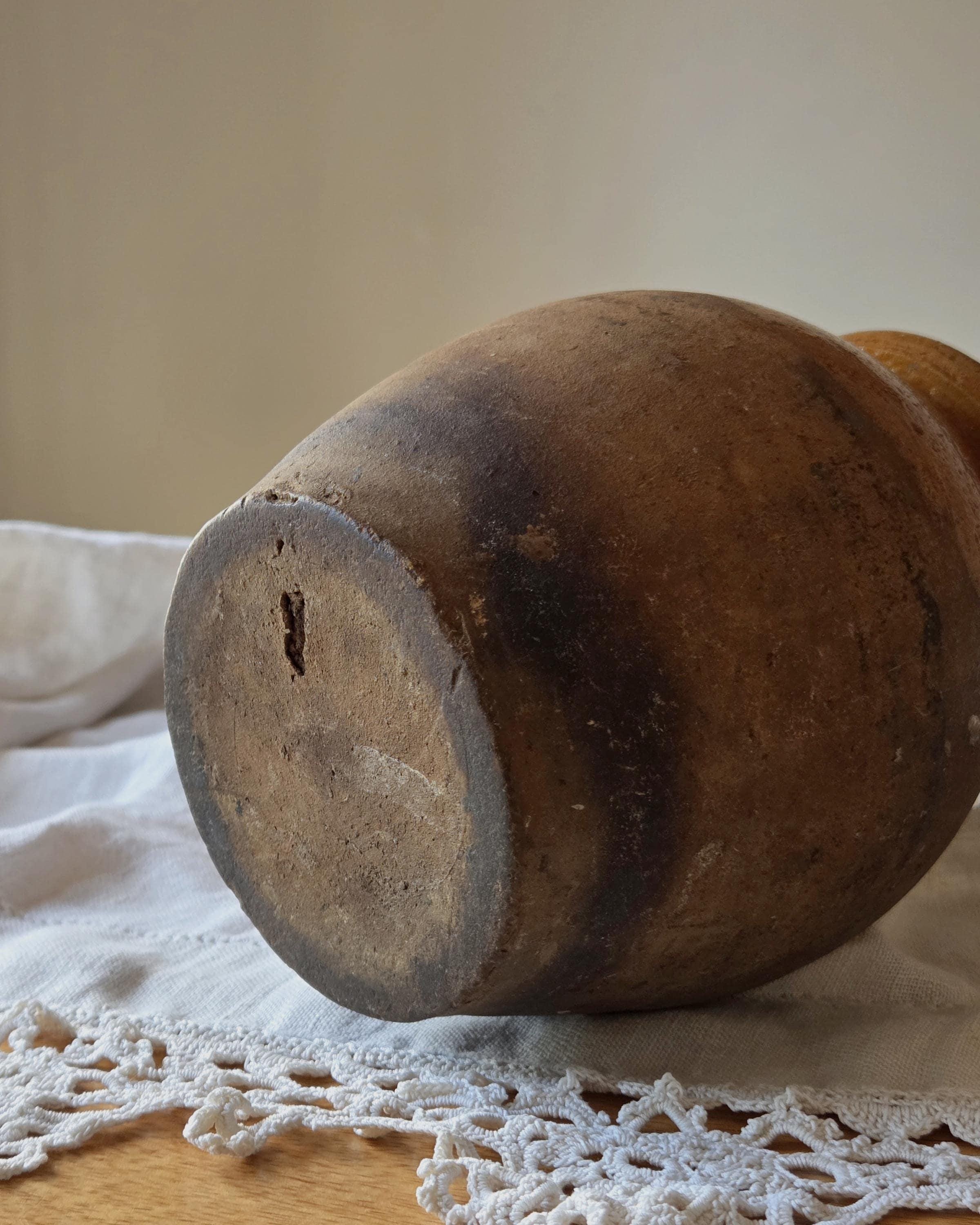 Image 6 of 17
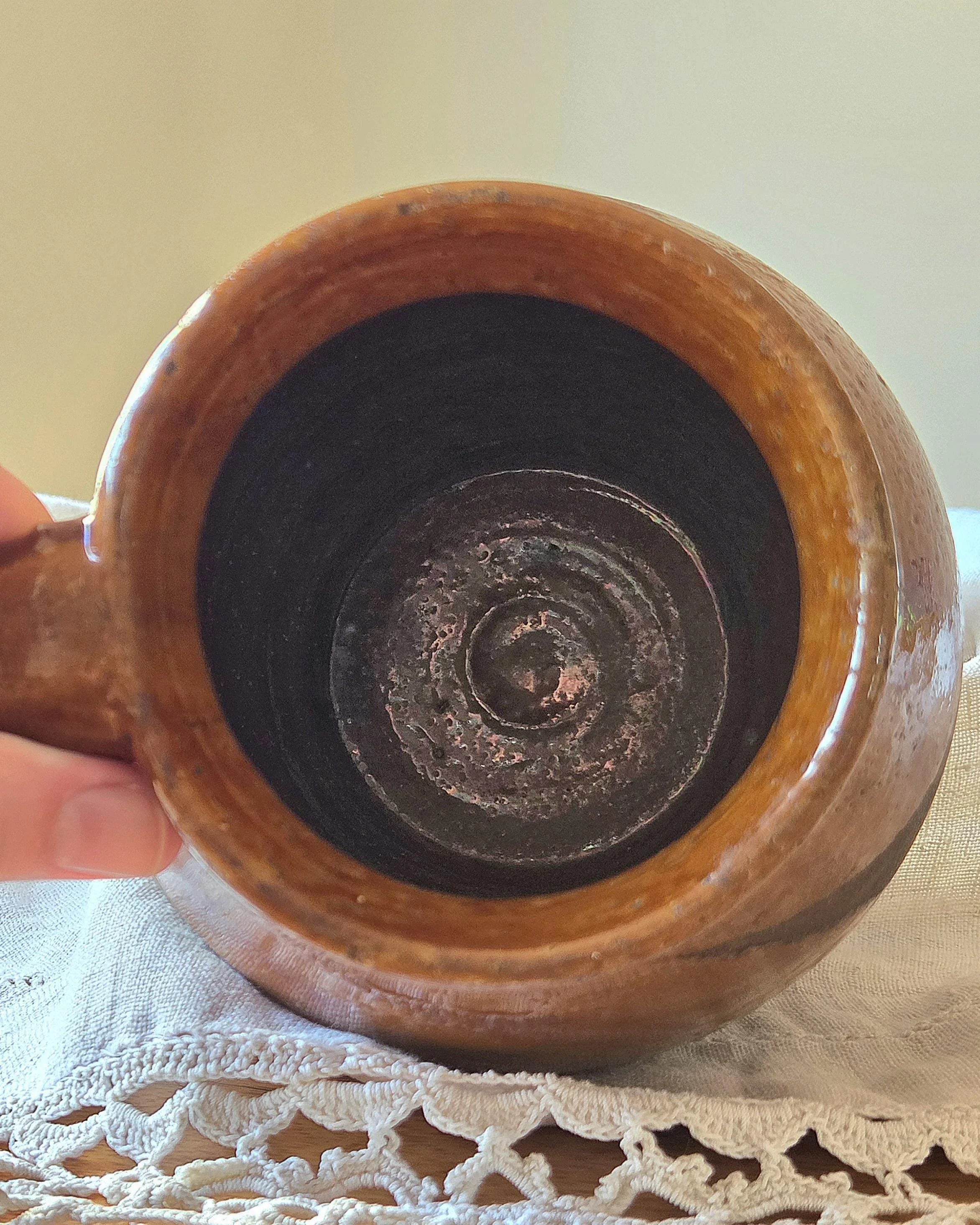 Image 7 of 17
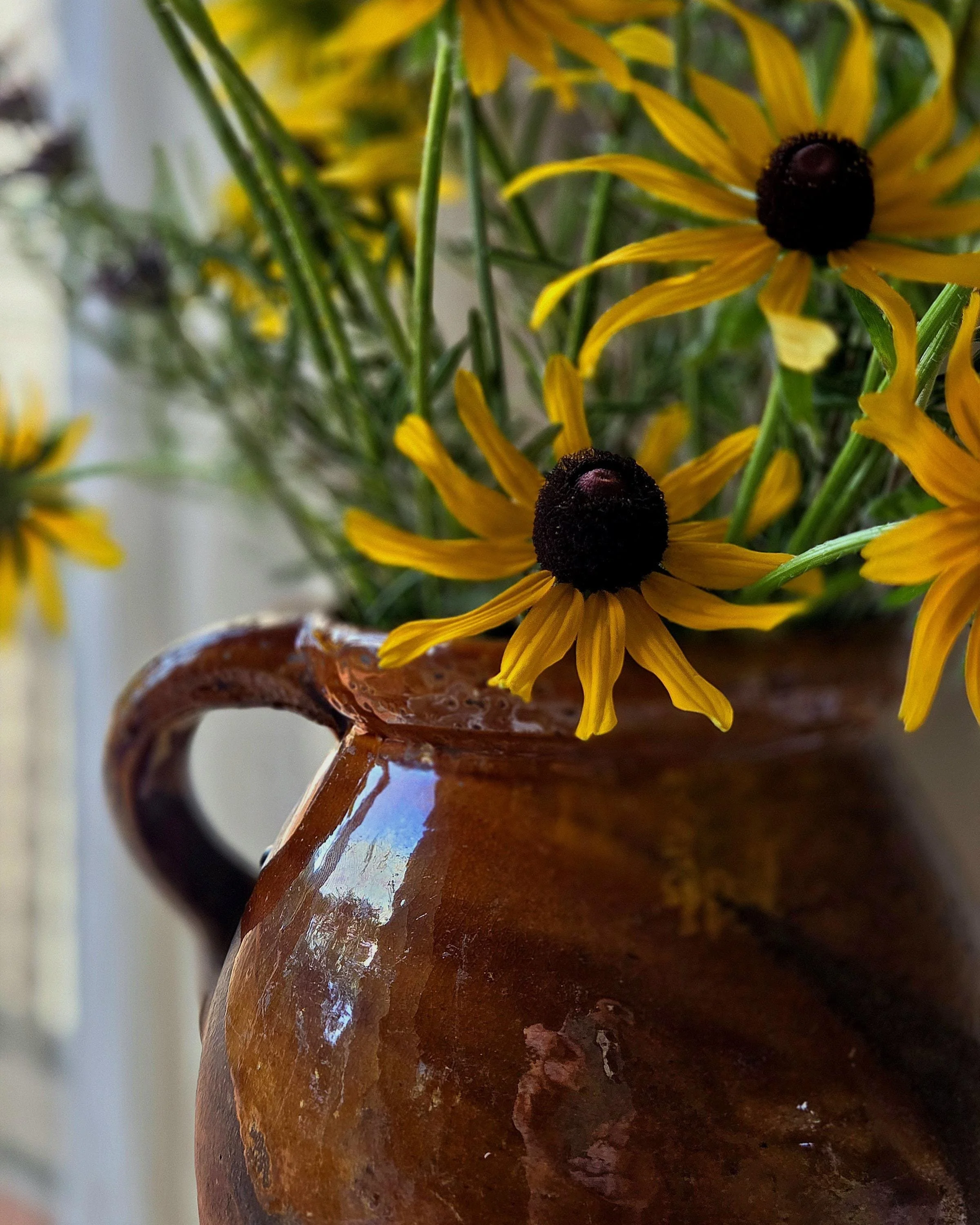 Image 8 of 17
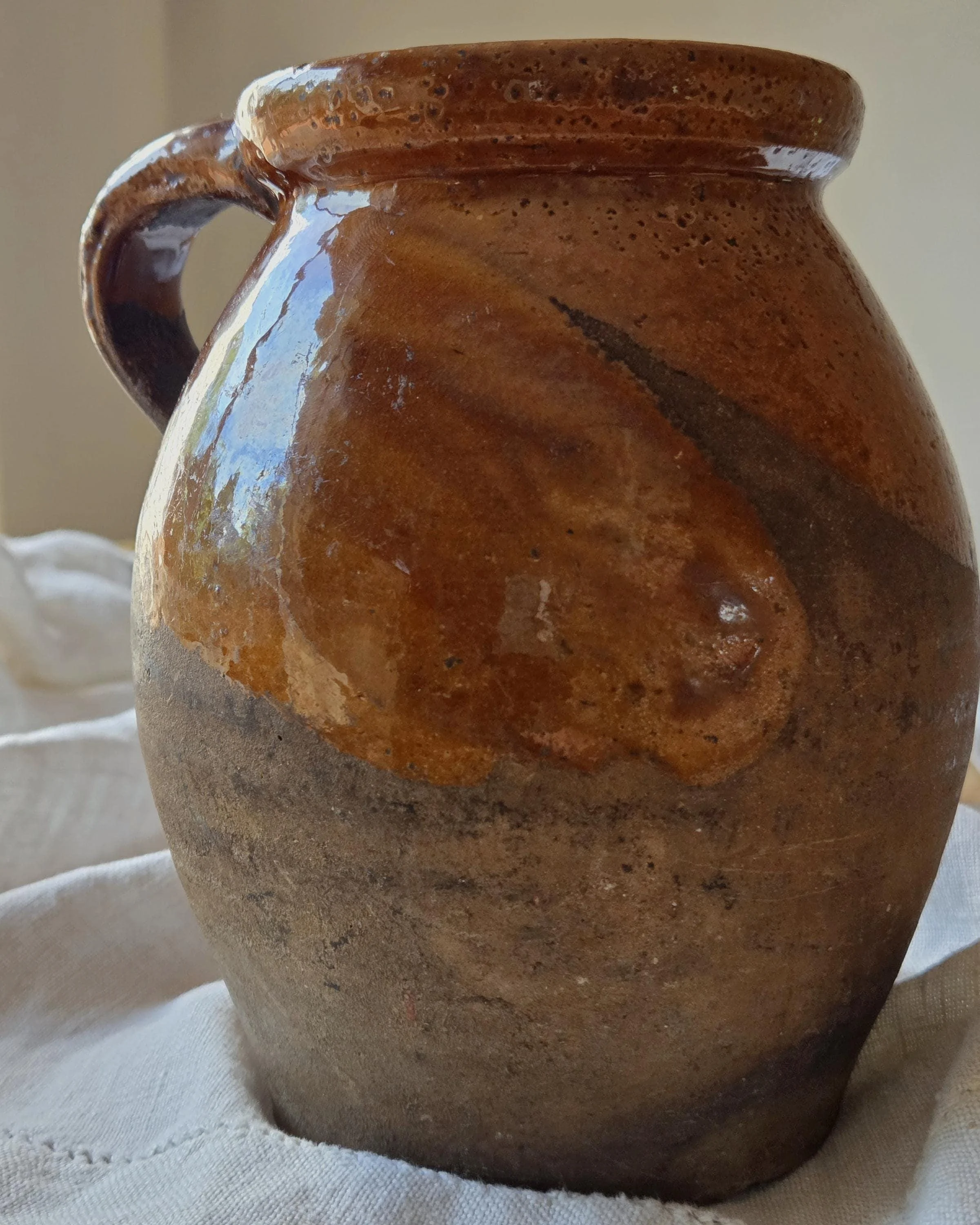 Image 9 of 17
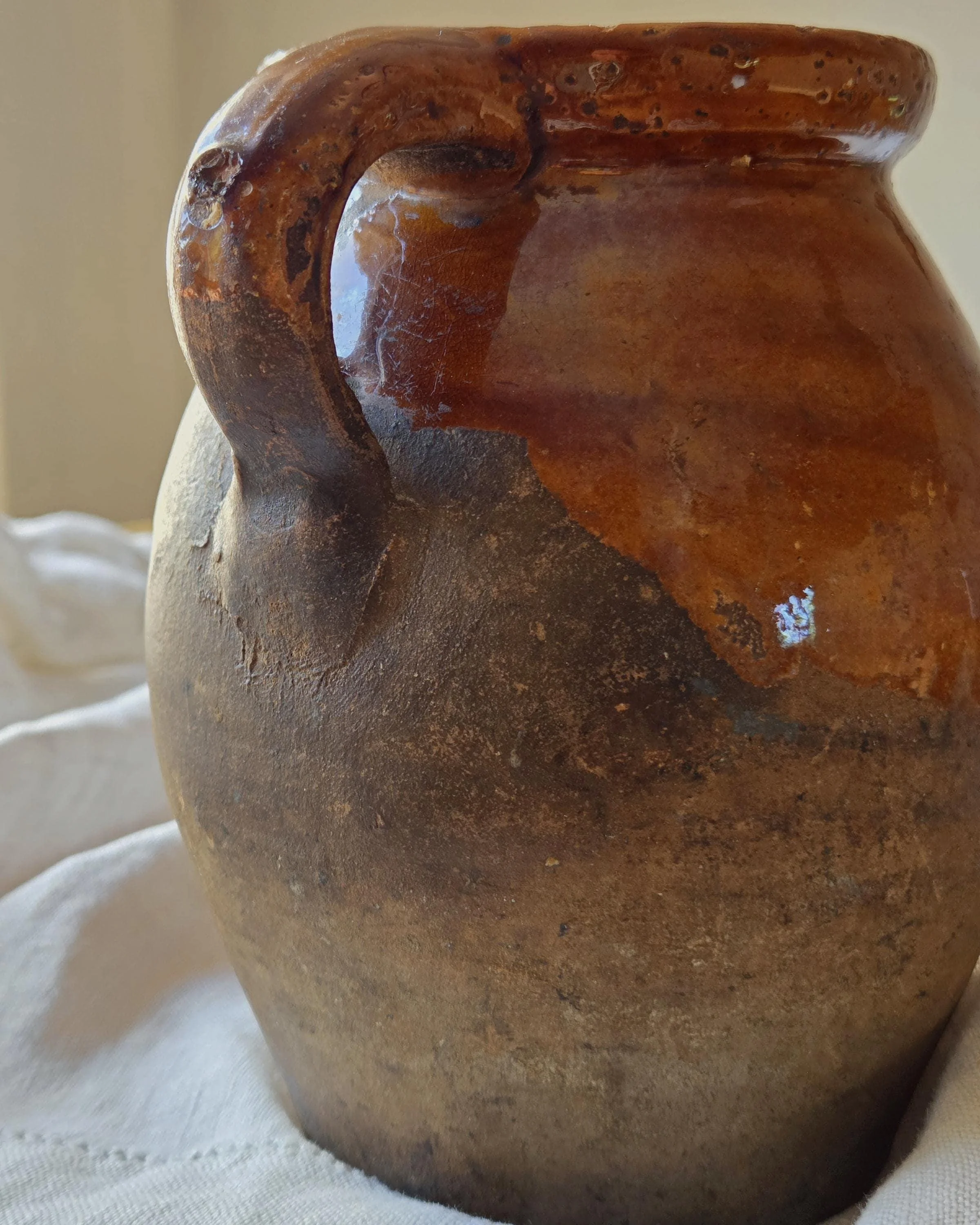 Image 10 of 17
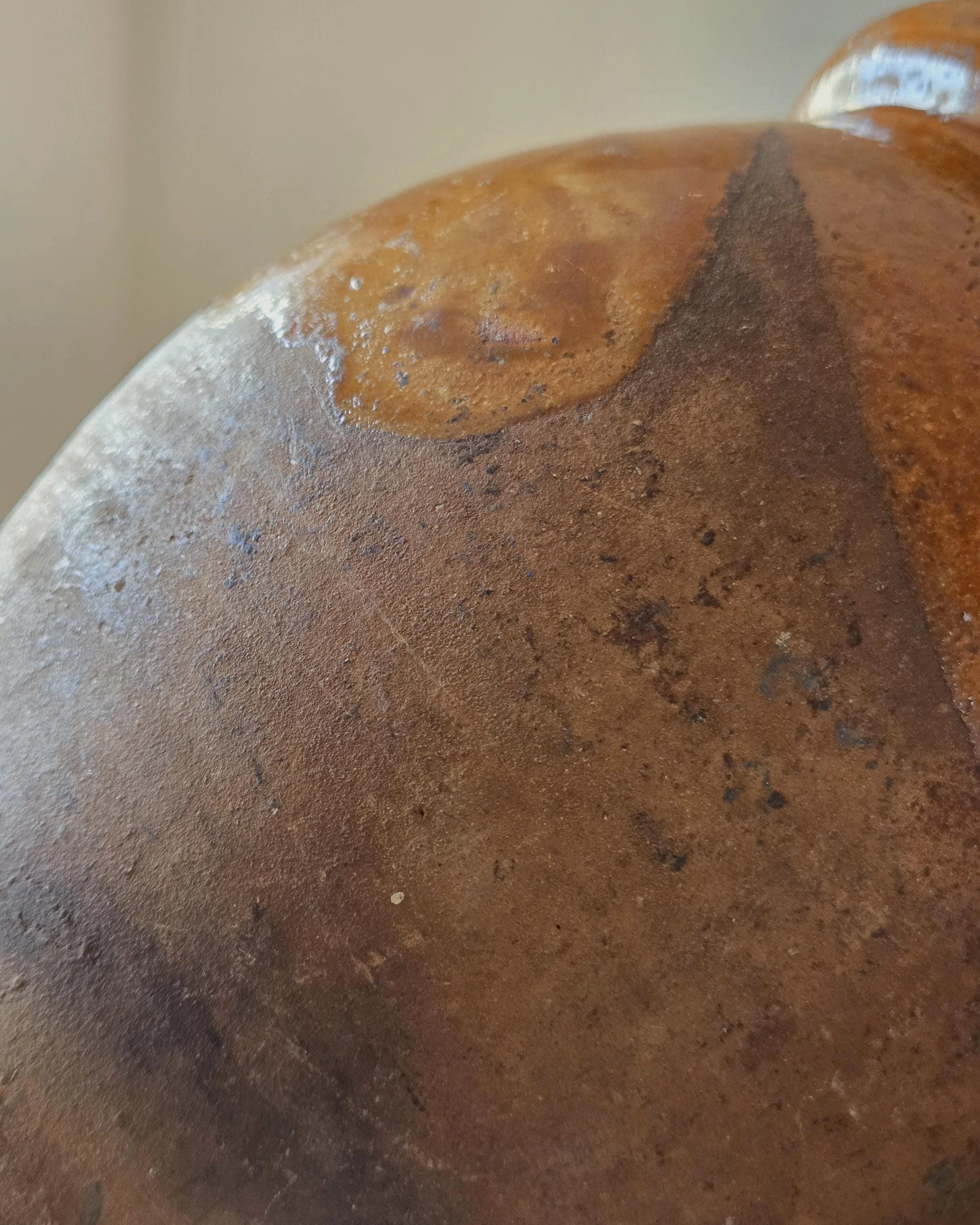 Image 11 of 17
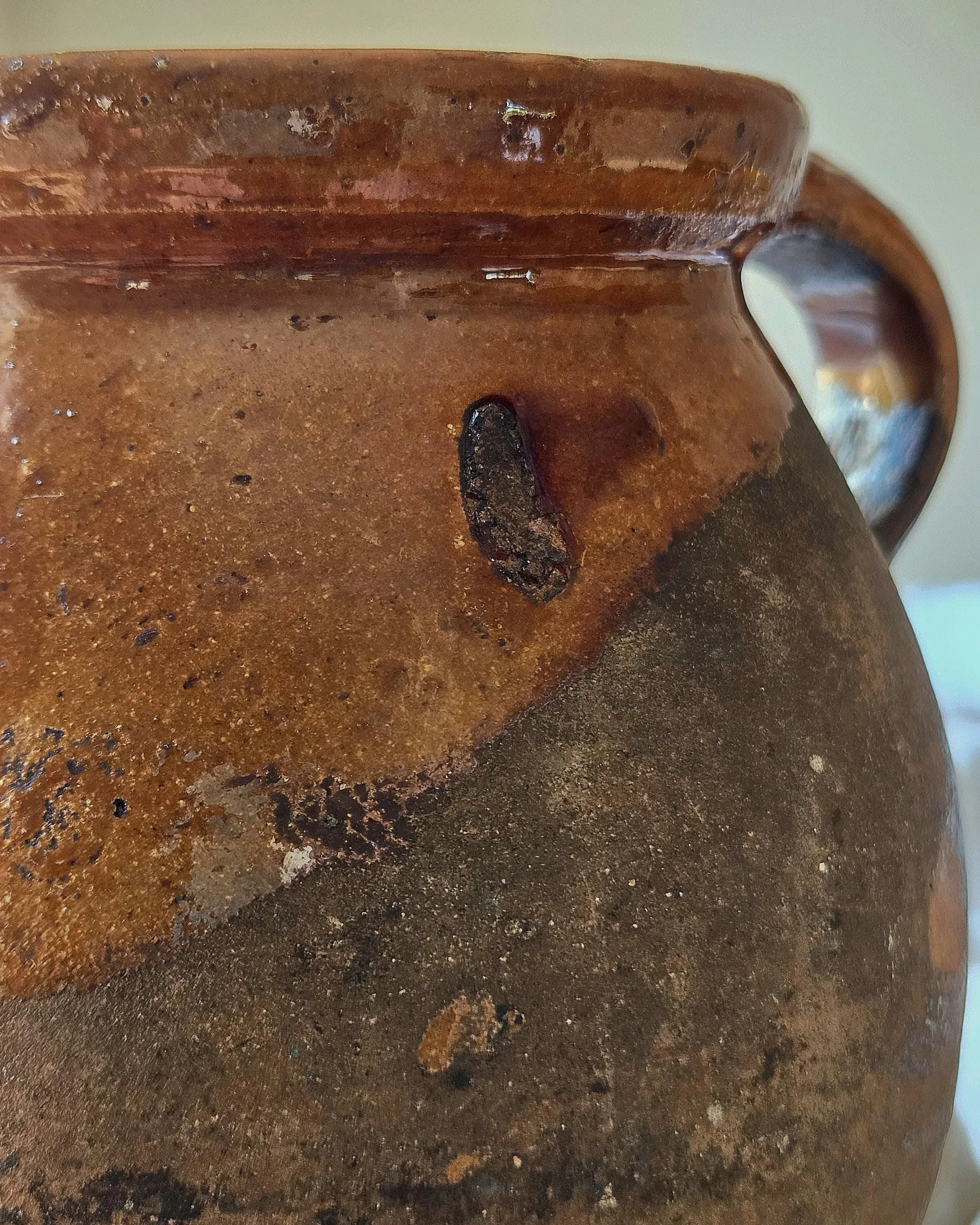 Image 12 of 17
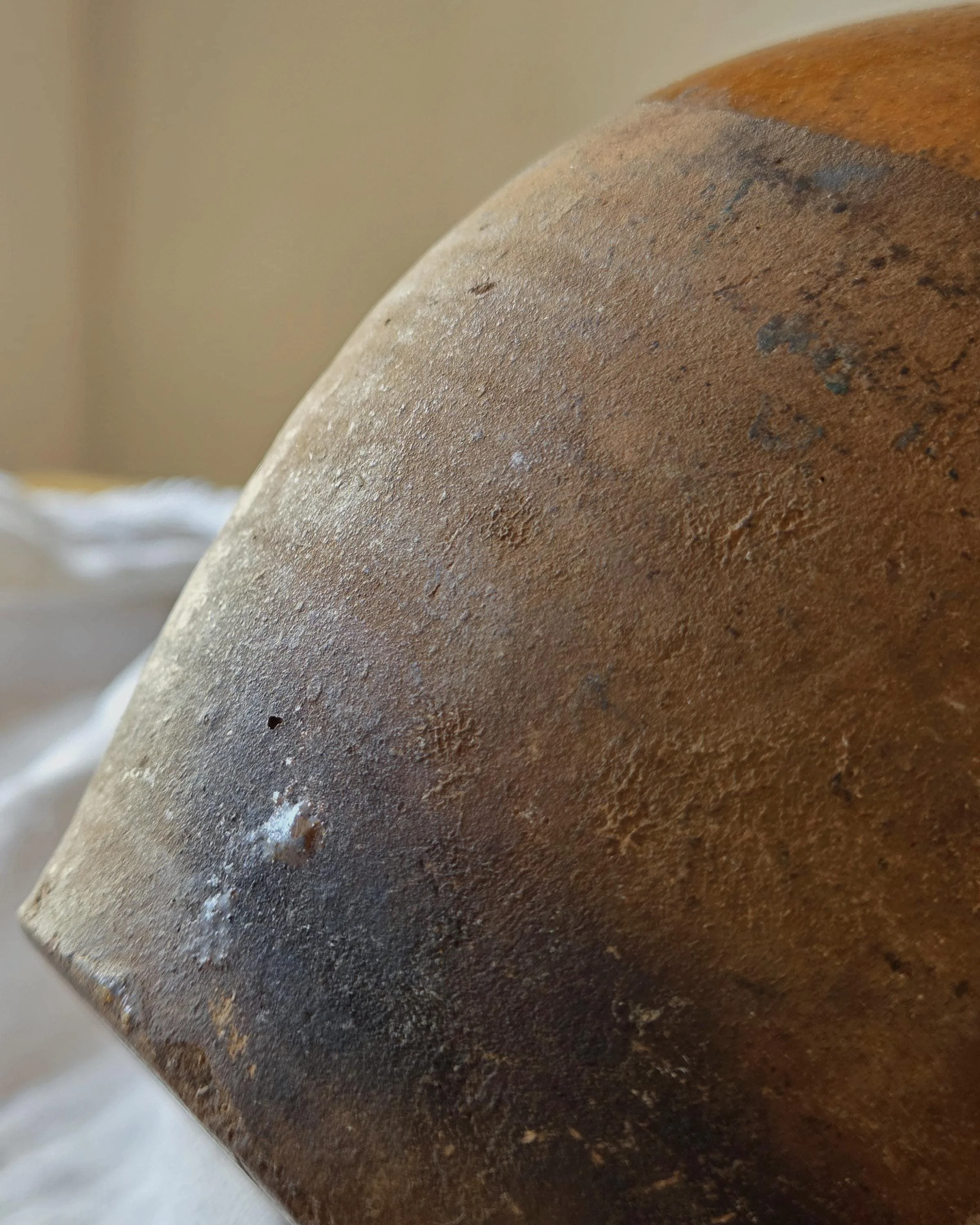 Image 13 of 17
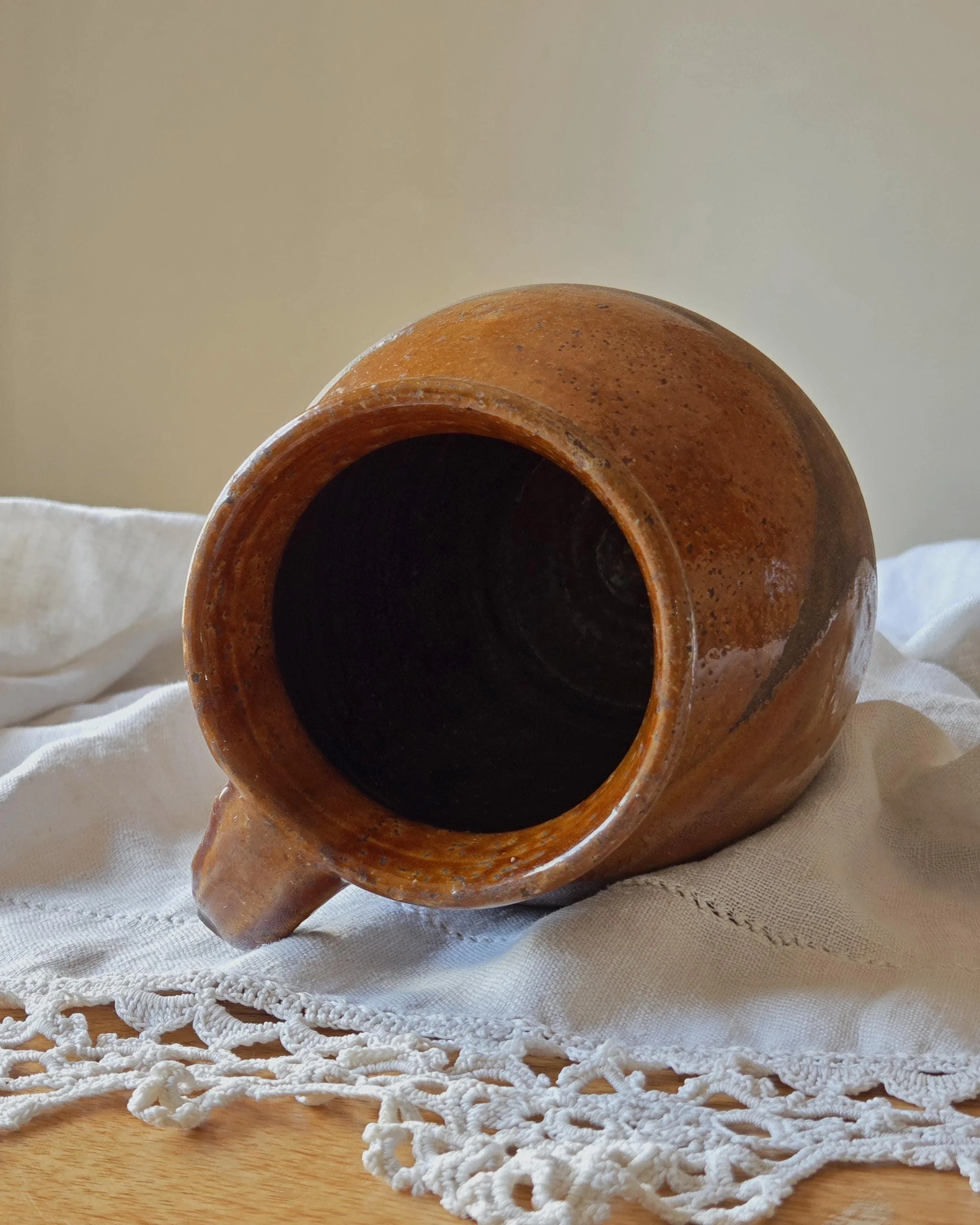 Image 14 of 17
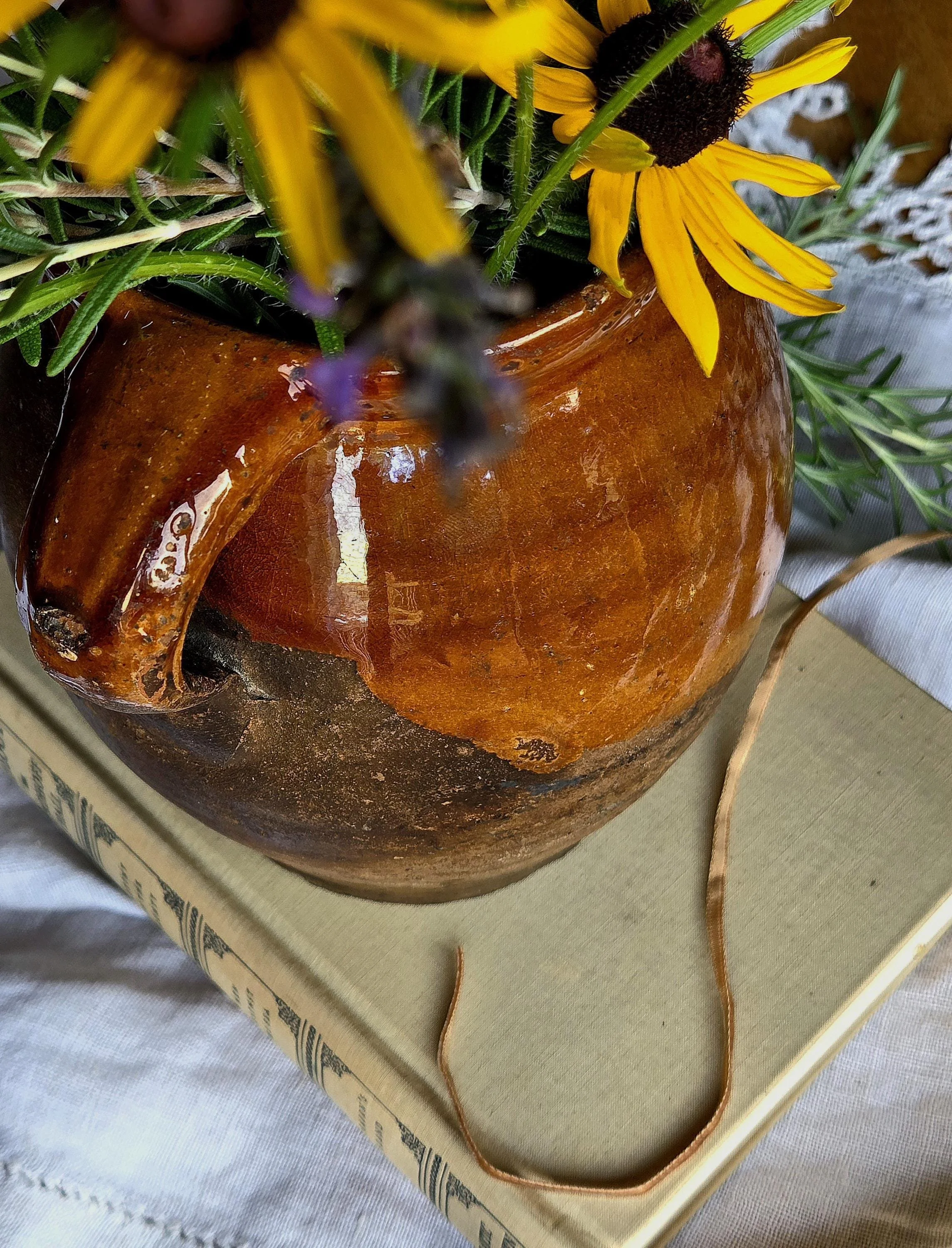 Image 15 of 17
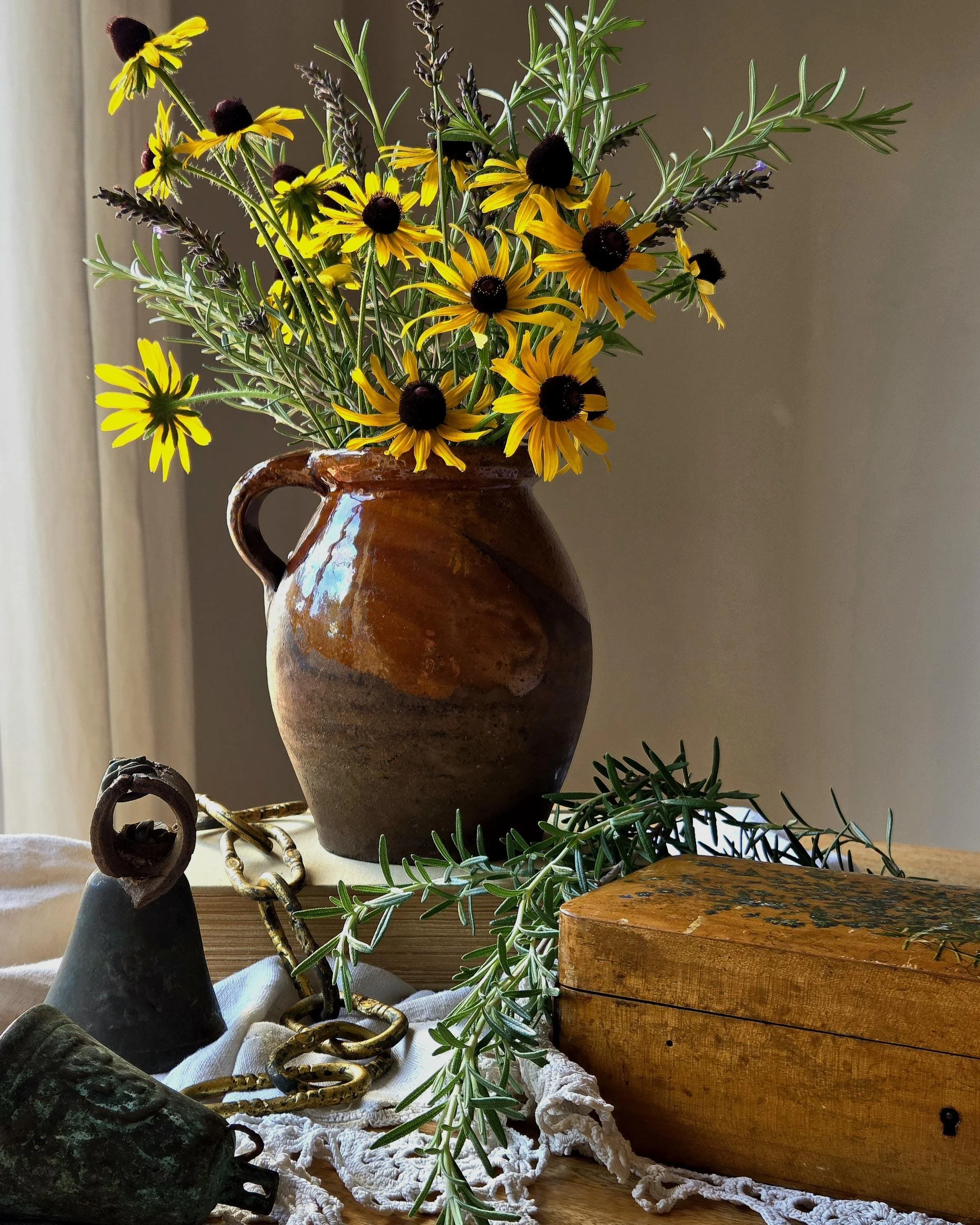 Image 16 of 17
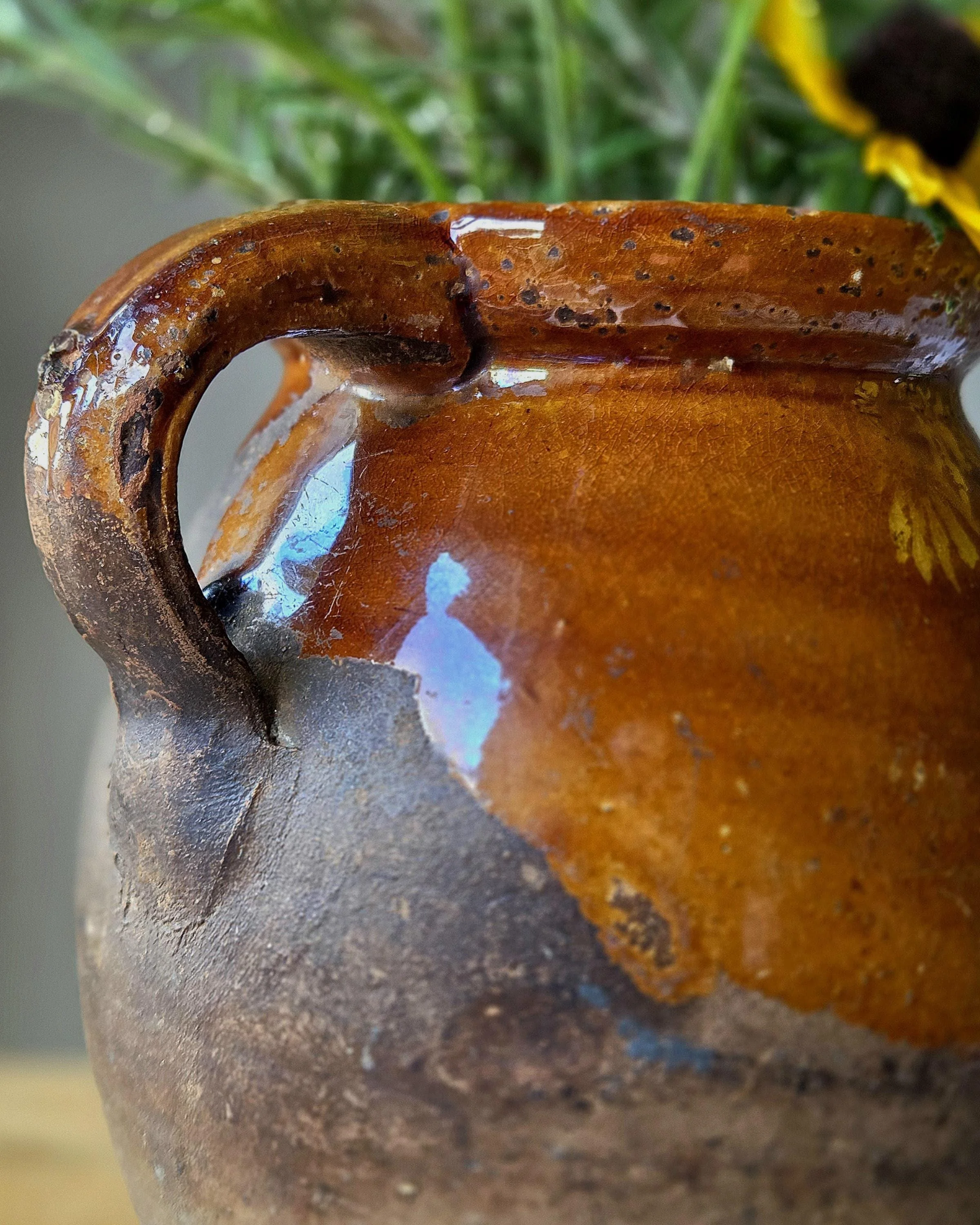 Image 17 of 17