This framed antique tile from Valencia preserves a fragment of the richly decorated interiors that once adorned historic Spanish homes and religious spaces.
Created in Valencia during the eighteenth century, this hand-painted polychrome tile reflects the region's long tradition of architectural ceramics. The composition centers on a warm yellow rosette or marigold surrounded by stylized cobalt blue floral motifs, with accents of orange and pale green. The use of antimony-based yellow pigments became increasingly characteristic in Spanish ceramics during the mid-eighteenth century, adding a distinctive brightness to decorative tilework of the period.
Originally, tiles such as this were rarely intended to stand alone. They formed part of larger painted compositions that flowed across walls, creating immersive decorative environments in domestic interiors, courtyards, kitchens, and ecclesiastical settings. Preserved here as a single fragment, the tile offers a glimpse into the craftsmanship and visual language of those lost environments.
The tile was later professionally framed by "Sala Derenzi Exposiciones," whose label remains attached to the reverse. The dark hardwood frame and integrated hanging hardware allow this historic ceramic fragment to be displayed as a work of art in its own right—a new chapter in the life of an object that has already traveled through multiple eras.
Details
Date: ca. 1750–1780
Origin: Valencia, Spain
Medium: Hand-painted polychrome tin-glazed ceramic tile
Frame: Dark hardwood frame by Sala Derenzi Exposiciones
Measurements: 6.5 x 6.5 x 1.25 inches
Care
Dust gently with a soft cloth. Avoid harsh cleaners on the ceramic surface or prolonged exposure to moisture.
Condition
This historic ceramic fragment is in very good condition for its age, with light age-appropriate wear consistent with its history. The tile and frame have been carefully preserved, allowing the original painted decoration to remain the focus.
This framed antique tile from Valencia preserves a fragment of the richly decorated interiors that once adorned historic Spanish homes and religious spaces.
Created in Valencia during the eighteenth century, this hand-painted polychrome tile reflects the region's long tradition of architectural ceramics. The composition centers on a warm yellow rosette or marigold surrounded by stylized cobalt blue floral motifs, with accents of orange and pale green. The use of antimony-based yellow pigments became increasingly characteristic in Spanish ceramics during the mid-eighteenth century, adding a distinctive brightness to decorative tilework of the period.
Originally, tiles such as this were rarely intended to stand alone. They formed part of larger painted compositions that flowed across walls, creating immersive decorative environments in domestic interiors, courtyards, kitchens, and ecclesiastical settings. Preserved here as a single fragment, the tile offers a glimpse into the craftsmanship and visual language of those lost environments.
The tile was later professionally framed by "Sala Derenzi Exposiciones," whose label remains attached to the reverse. The dark hardwood frame and integrated hanging hardware allow this historic ceramic fragment to be displayed as a work of art in its own right—a new chapter in the life of an object that has already traveled through multiple eras.
Details
Date: ca. 1750–1780
Origin: Valencia, Spain
Medium: Hand-painted polychrome tin-glazed ceramic tile
Frame: Dark hardwood frame by Sala Derenzi Exposiciones
Measurements: 6.5 x 6.5 x 1.25 inches
Care
Dust gently with a soft cloth. Avoid harsh cleaners on the ceramic surface or prolonged exposure to moisture.
Condition
This historic ceramic fragment is in very good condition for its age, with light age-appropriate wear consistent with its history. The tile and frame have been carefully preserved, allowing the original painted decoration to remain the focus.
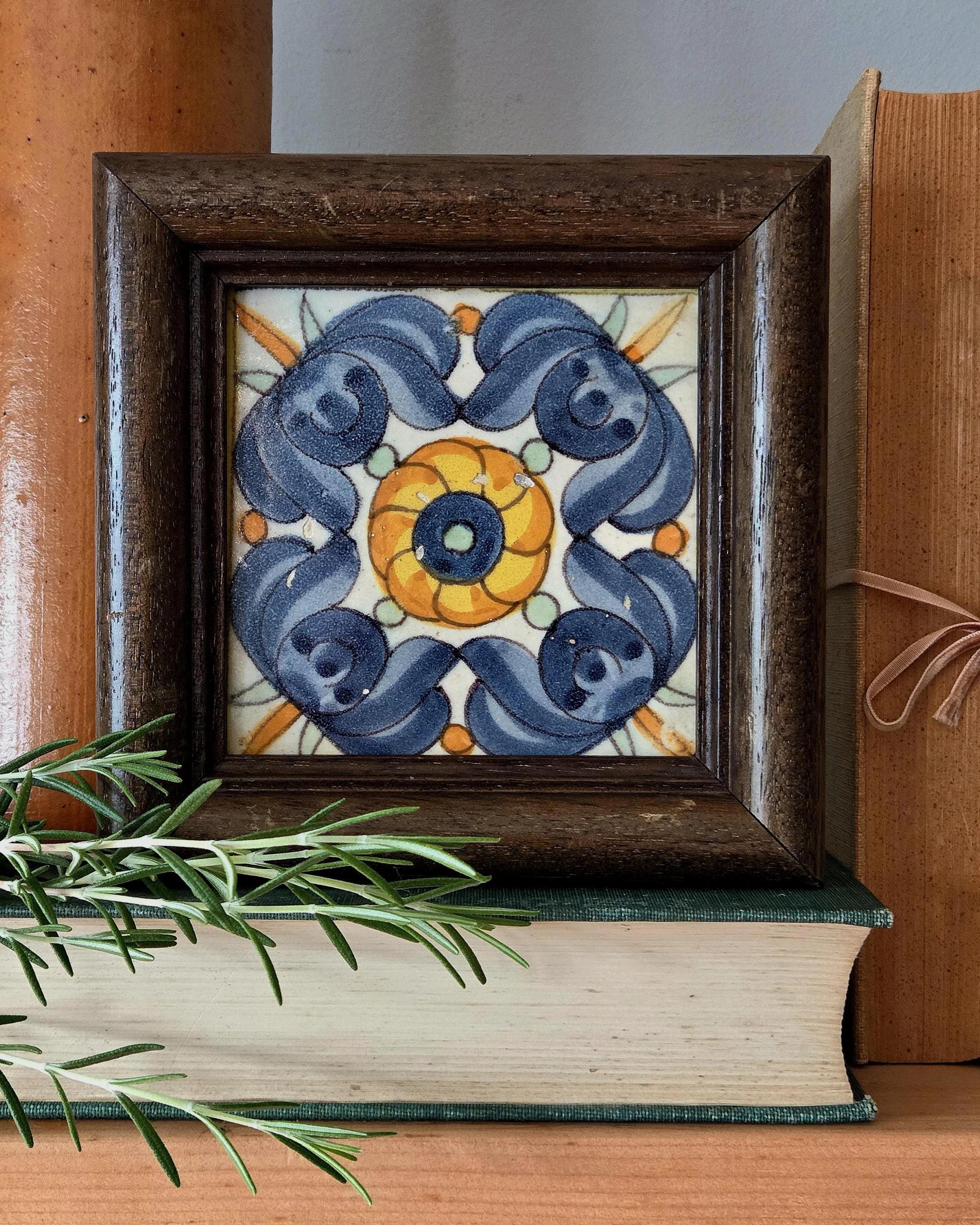 Image 1 of 12
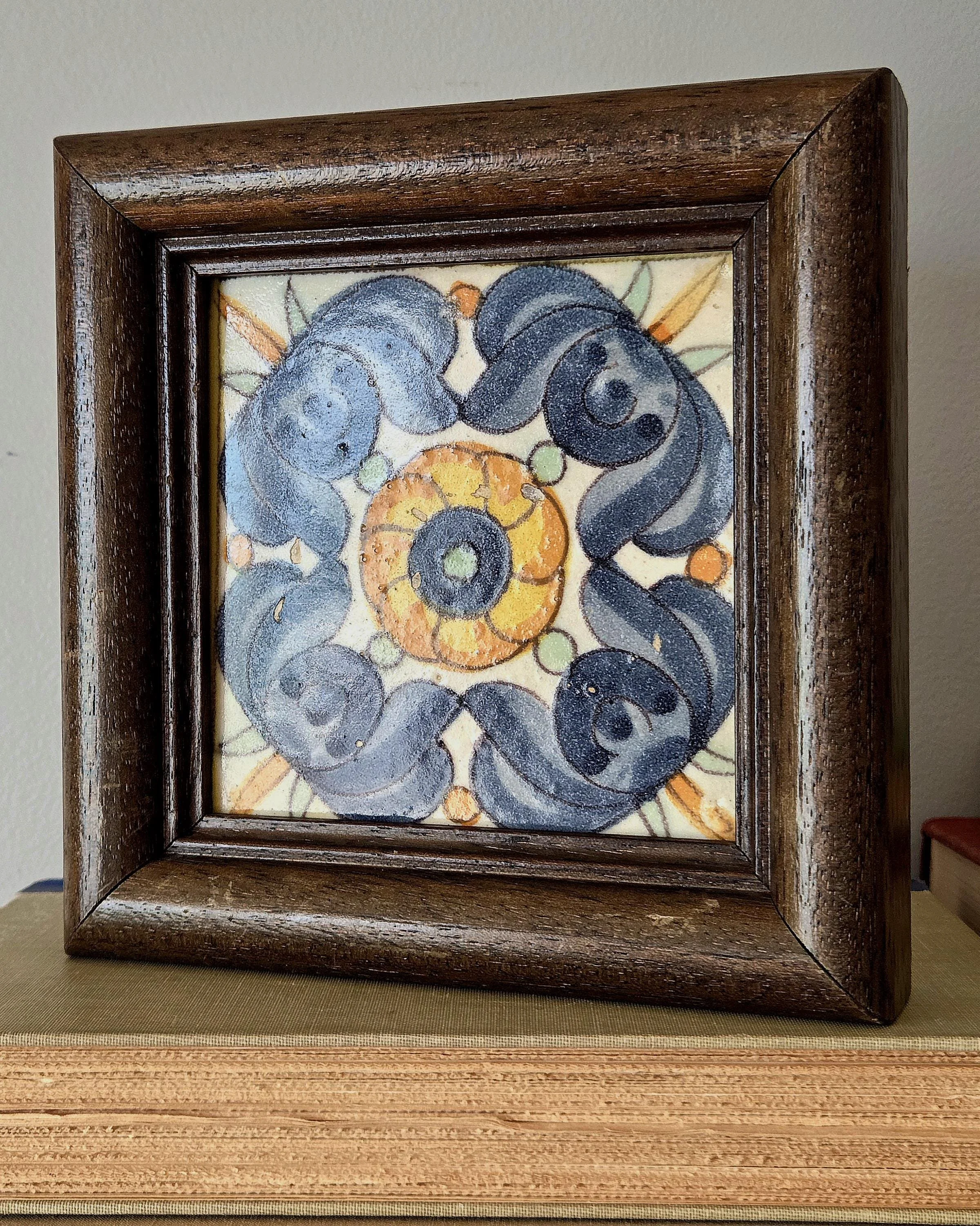 Image 2 of 12
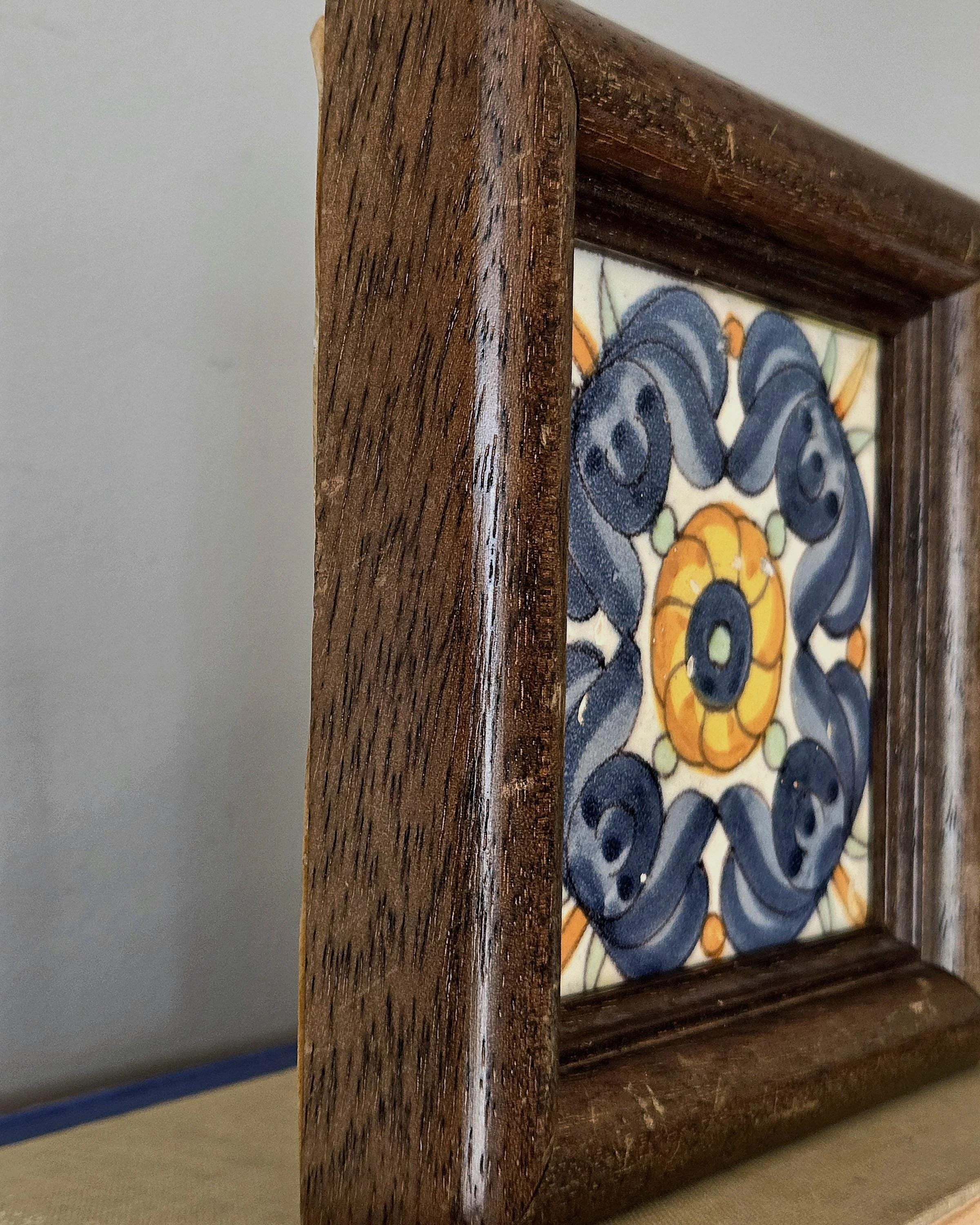 Image 3 of 12
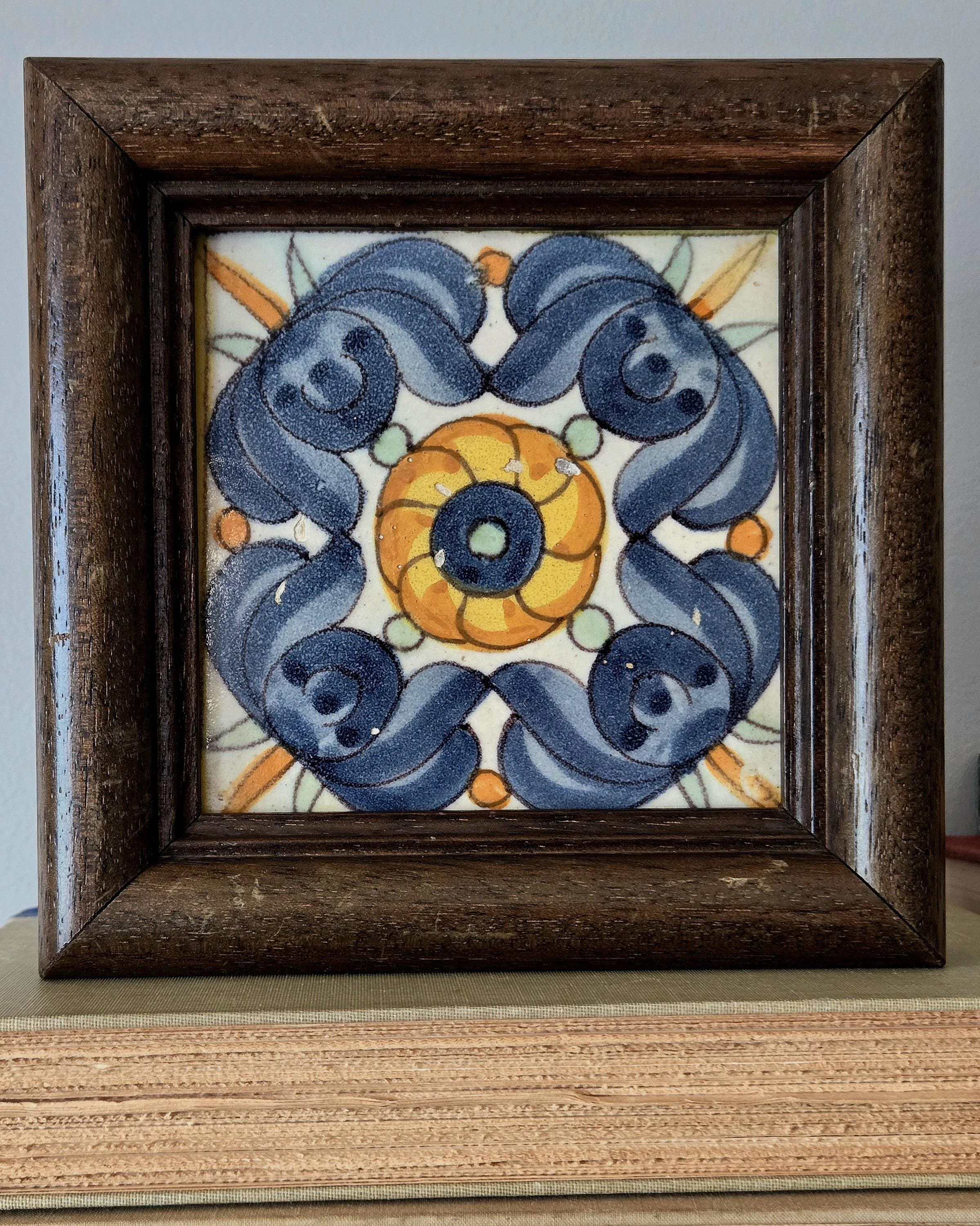 Image 4 of 12
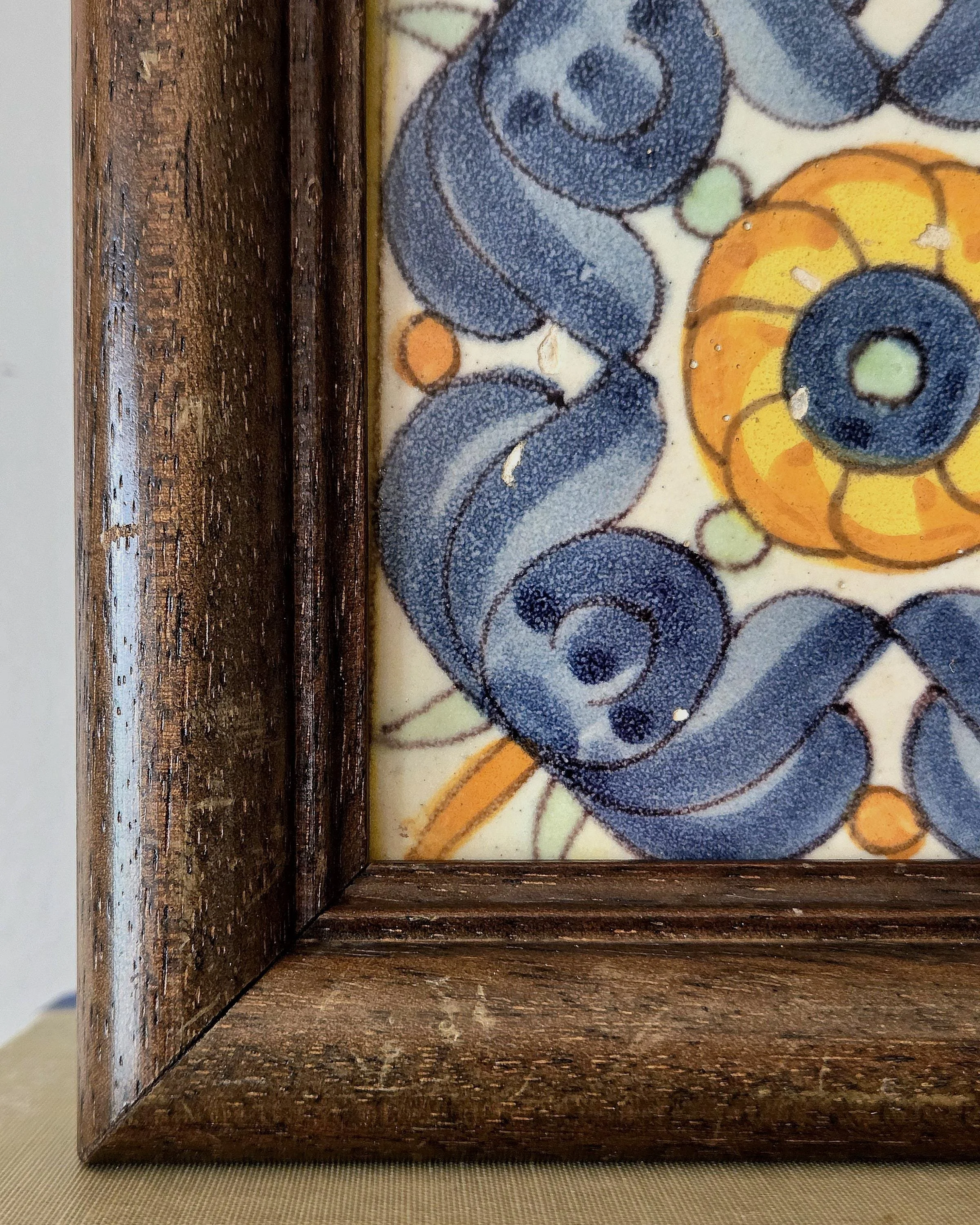 Image 5 of 12
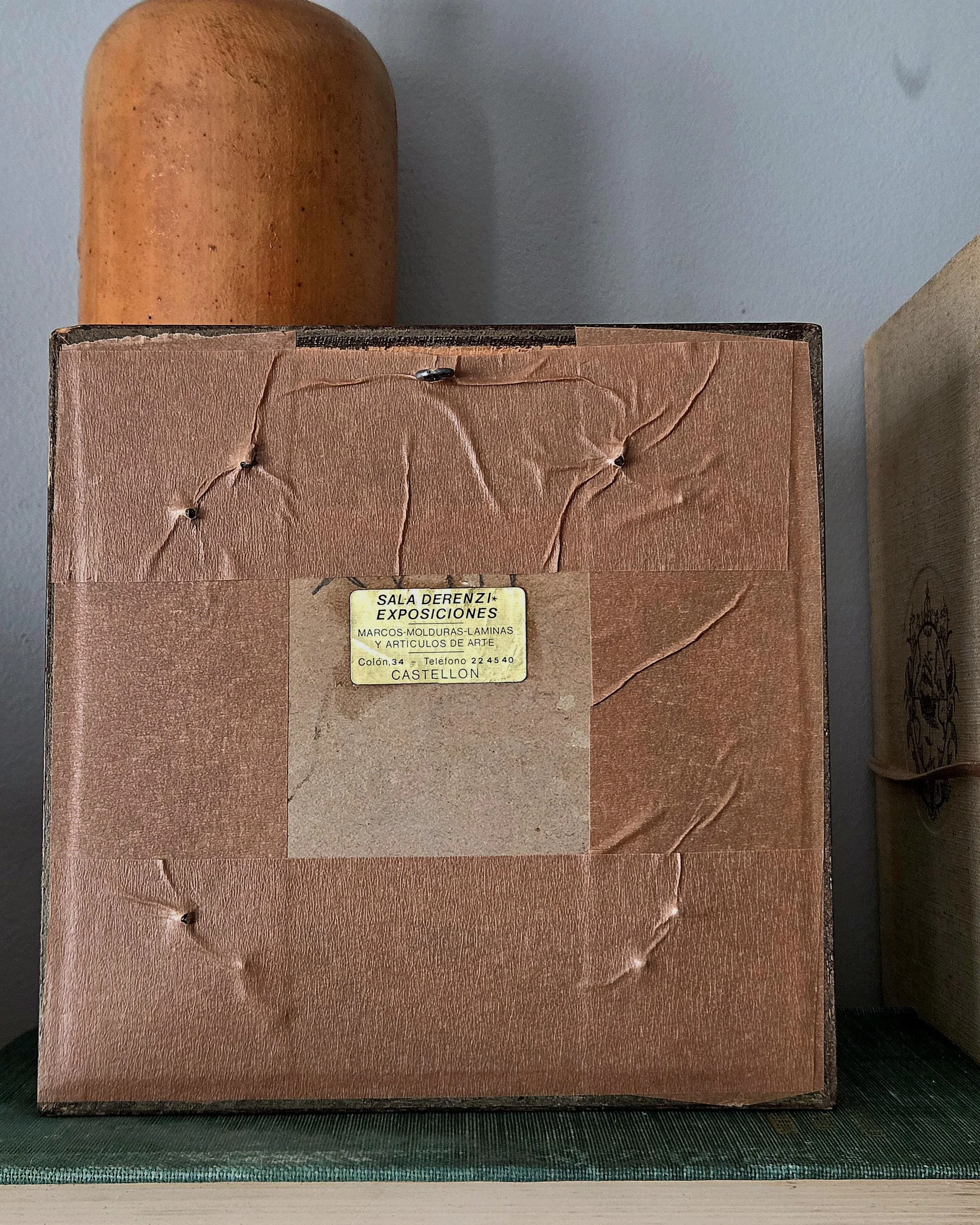 Image 6 of 12
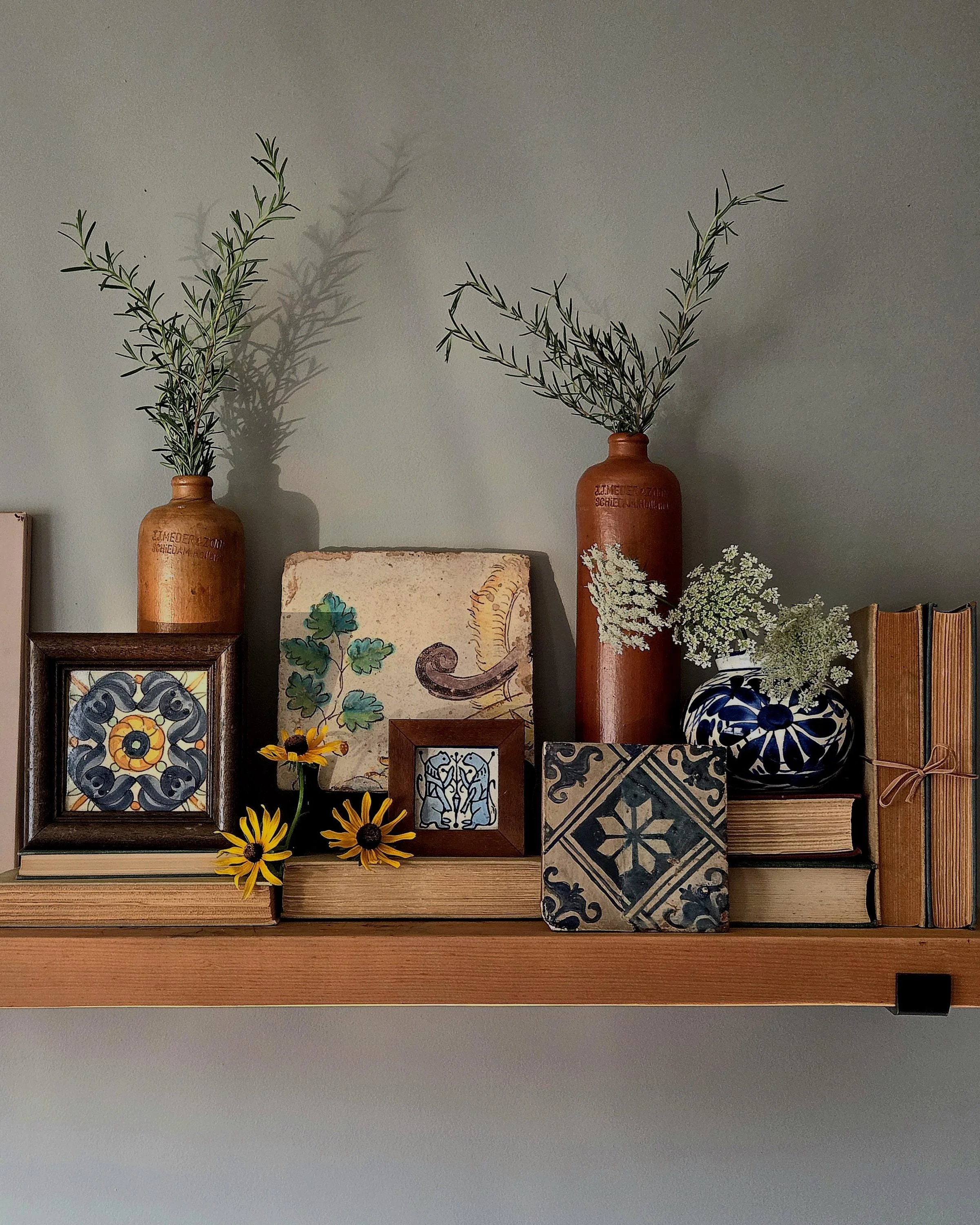 Image 7 of 12
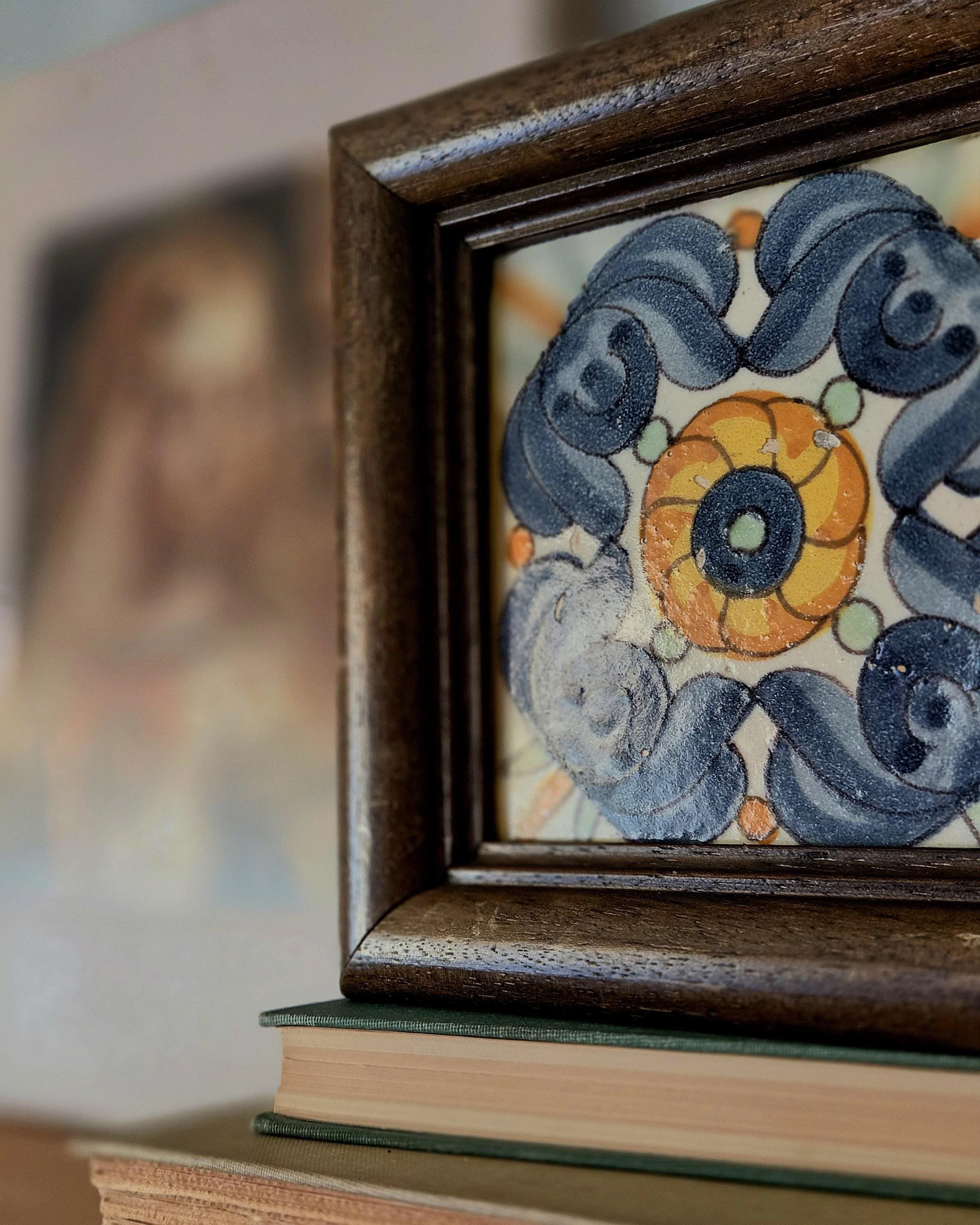 Image 8 of 12
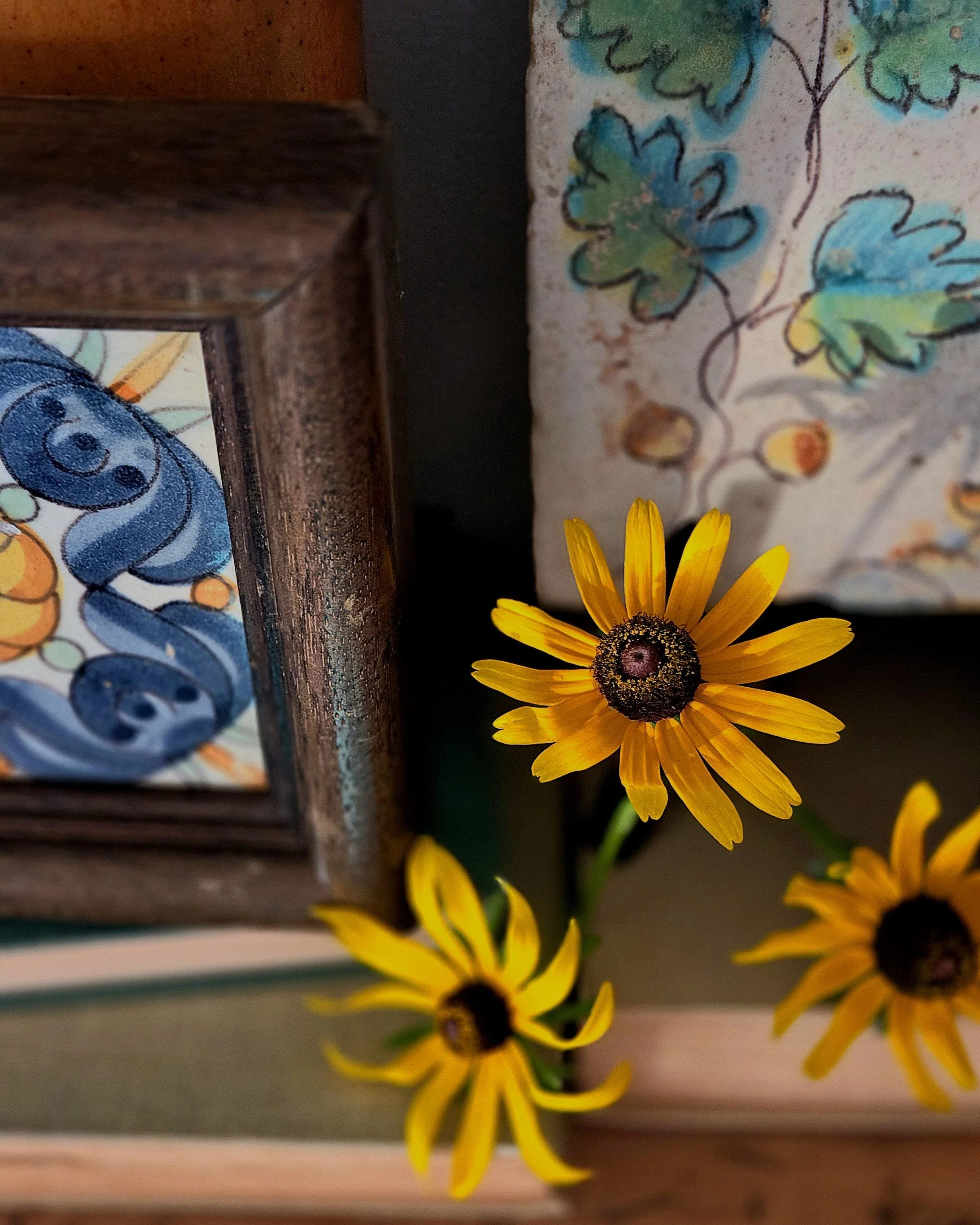 Image 9 of 12
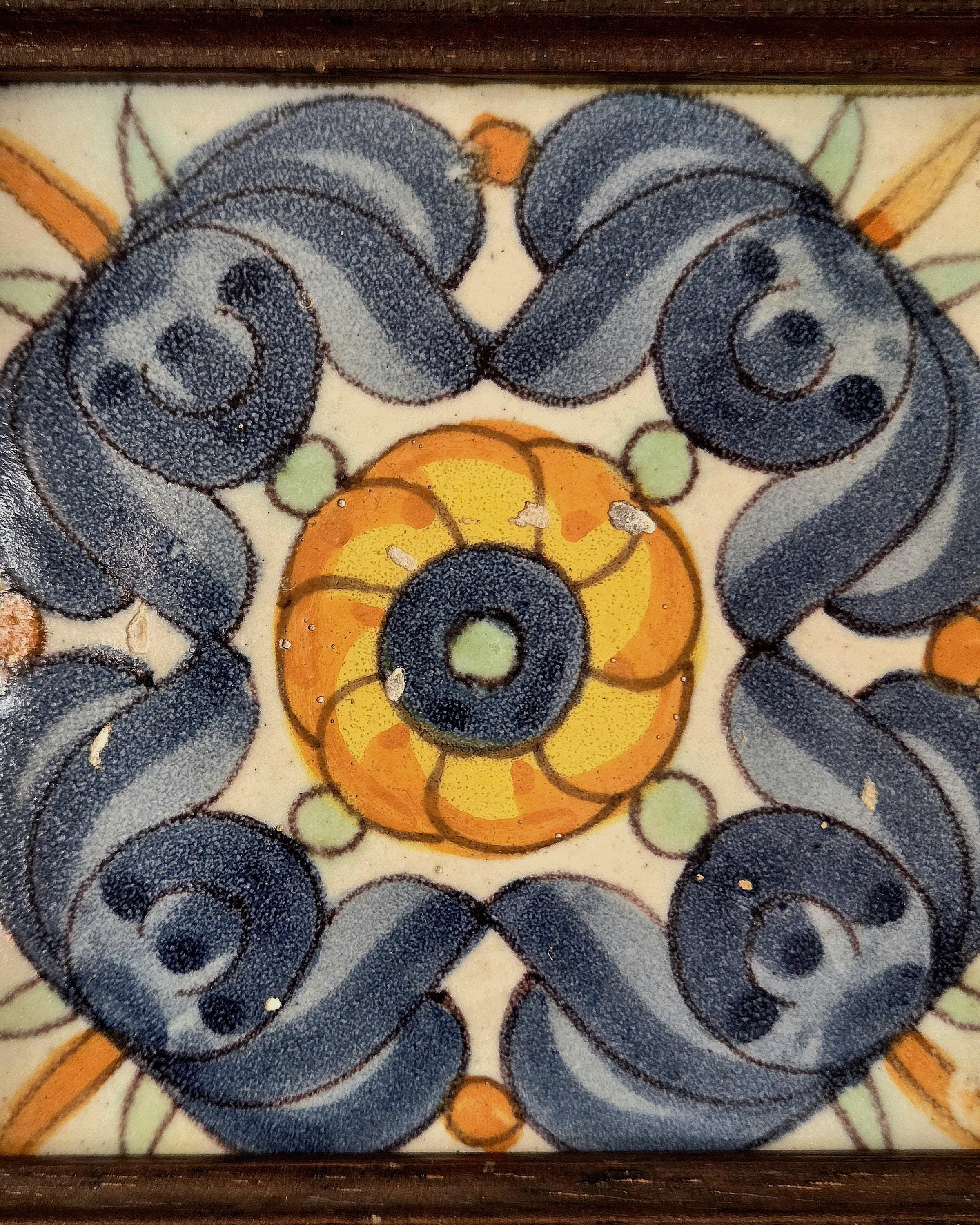 Image 10 of 12
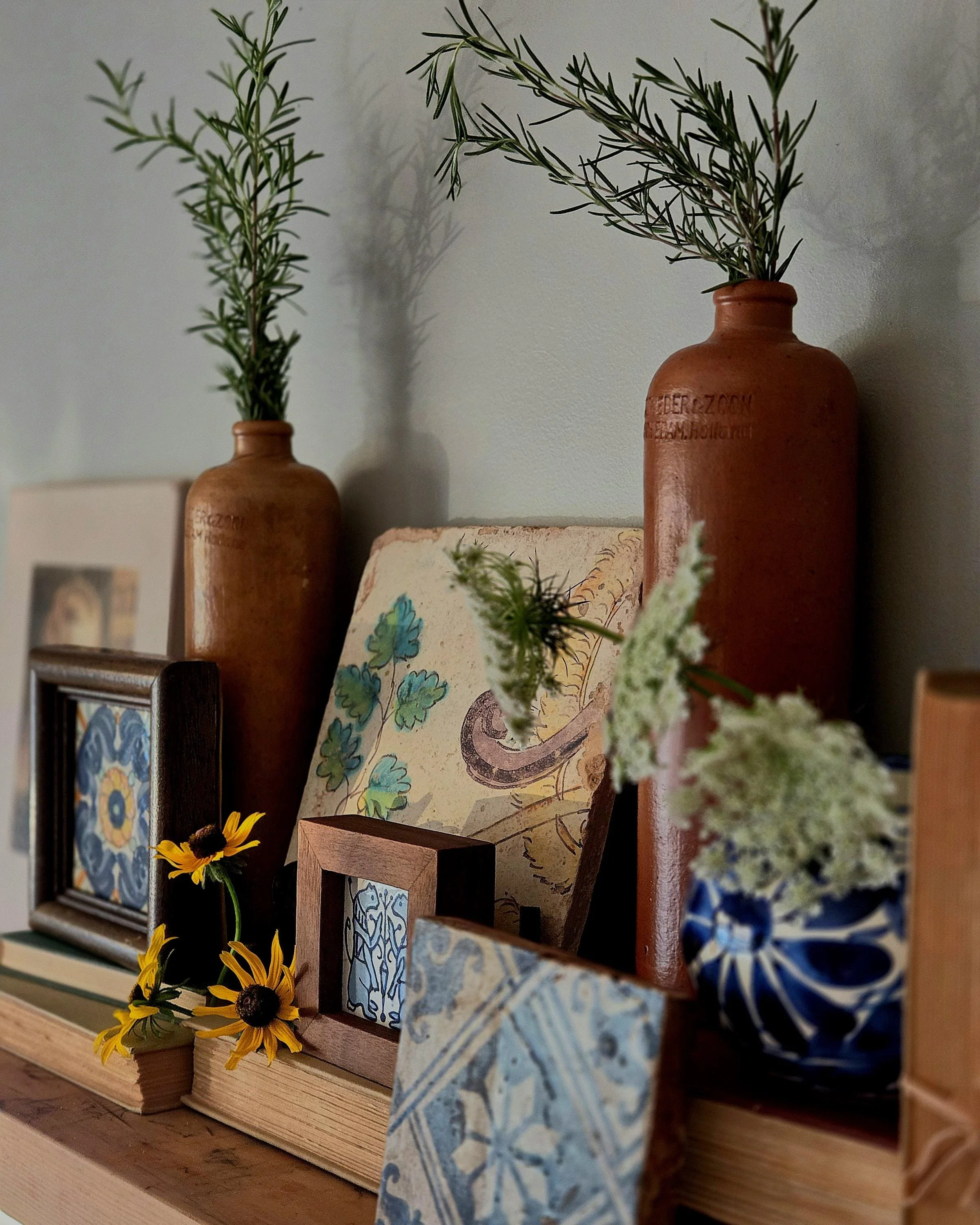 Image 11 of 12
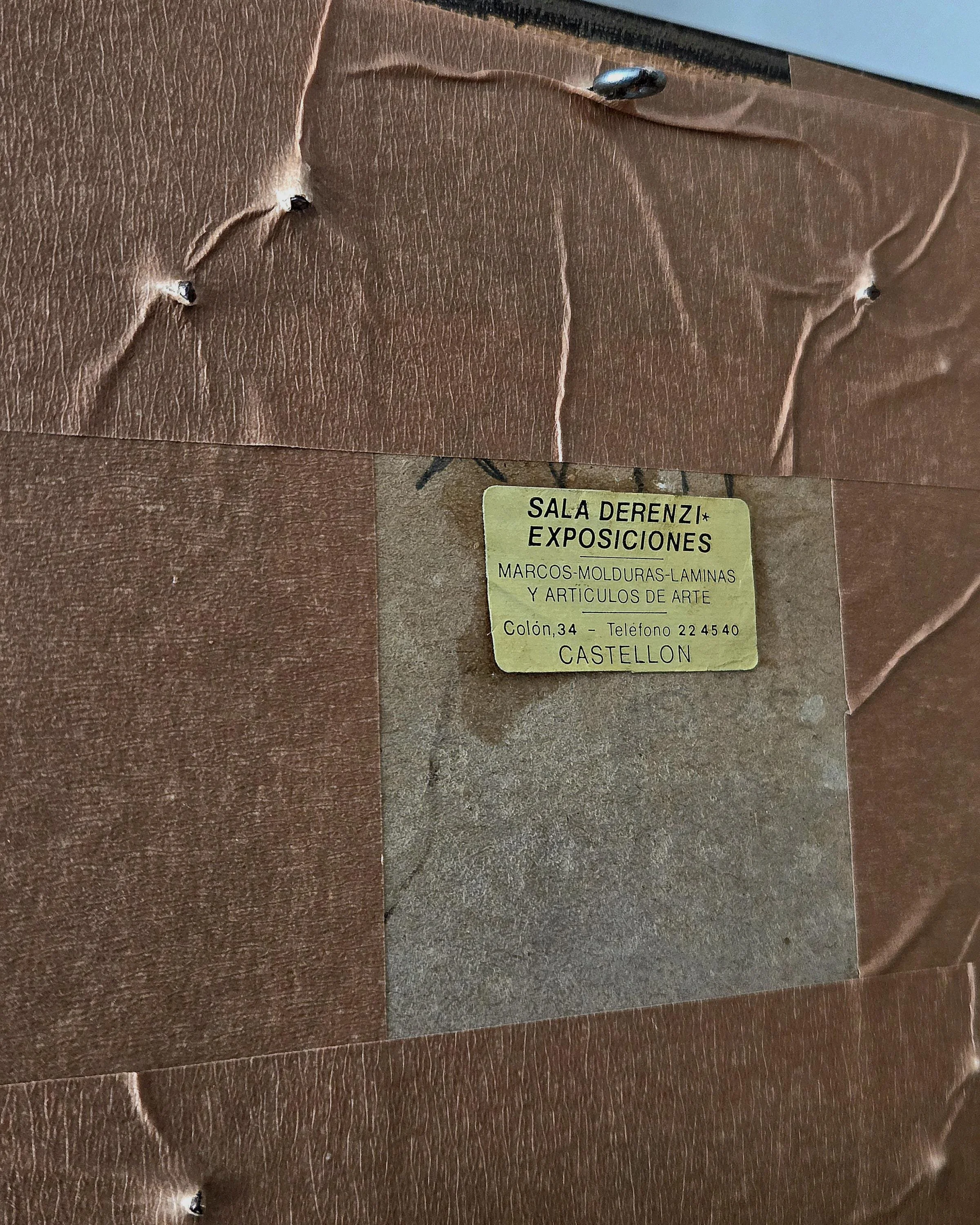 Image 12 of 12