This antique 18th century wrought iron skeleton key offers a glimpse into the craftsmanship of eighteenth-century domestic interiors, when even everyday architectural hardware was shaped by hand and designed to endure.
Dating to ca. 1775–1800, this hand-forged key was created for a traditional warded lock system, a type of mechanism commonly used for doors, cabinets, and other secure spaces before the development of modern locking technology. Unlike later manufactured examples, the key preserves the marks of individual craftsmanship, including a hand-filed warded bit shaped specifically to operate a corresponding lock.
The decorative details reveal the changing tastes of the late eighteenth century. The oval loop handle and baluster collar reflect a style popular during the final quarter of the century, combining practical function with understated ornament. The absence of gilding or decorative finishes allows the beauty of the wrought iron itself to remain the focus—the material, workmanship, and evidence of use telling the story.
Today, this historic key can be displayed as a small architectural artifact, adding texture and history to a bookshelf, shadow box display, writing desk, entryway, or collected interior. Whether paired with antique books, maps, ceramics, or other objects with visible age, it serves as a reminder that even the smallest household objects can carry the imprint of the hands that made and used them.
Details
Date: ca. 1775–1800
Origin: Valencia, Spain (acquired)
Medium: Hand-forged wrought iron
Form: Warded skeleton key
Measurements: 4.75 inches long
Care
Handle carefully. Preserve the natural aged surface and avoid abrasive cleaning or polishing, which may remove the historic patina. Display indoors and avoid prolonged exposure to moisture.
Condition
This historic wrought iron key has age-appropriate wear, surface oxidation, and irregularities consistent with hand-forged construction and centuries of use. The original form and decorative details remain intact. These variations are part of the object's history and contribute to its authentic character.
This antique 18th century wrought iron skeleton key offers a glimpse into the craftsmanship of eighteenth-century domestic interiors, when even everyday architectural hardware was shaped by hand and designed to endure.
Dating to ca. 1775–1800, this hand-forged key was created for a traditional warded lock system, a type of mechanism commonly used for doors, cabinets, and other secure spaces before the development of modern locking technology. Unlike later manufactured examples, the key preserves the marks of individual craftsmanship, including a hand-filed warded bit shaped specifically to operate a corresponding lock.
The decorative details reveal the changing tastes of the late eighteenth century. The oval loop handle and baluster collar reflect a style popular during the final quarter of the century, combining practical function with understated ornament. The absence of gilding or decorative finishes allows the beauty of the wrought iron itself to remain the focus—the material, workmanship, and evidence of use telling the story.
Today, this historic key can be displayed as a small architectural artifact, adding texture and history to a bookshelf, shadow box display, writing desk, entryway, or collected interior. Whether paired with antique books, maps, ceramics, or other objects with visible age, it serves as a reminder that even the smallest household objects can carry the imprint of the hands that made and used them.
Details
Date: ca. 1775–1800
Origin: Valencia, Spain (acquired)
Medium: Hand-forged wrought iron
Form: Warded skeleton key
Measurements: 4.75 inches long
Care
Handle carefully. Preserve the natural aged surface and avoid abrasive cleaning or polishing, which may remove the historic patina. Display indoors and avoid prolonged exposure to moisture.
Condition
This historic wrought iron key has age-appropriate wear, surface oxidation, and irregularities consistent with hand-forged construction and centuries of use. The original form and decorative details remain intact. These variations are part of the object's history and contribute to its authentic character.
 Image 1 of 12
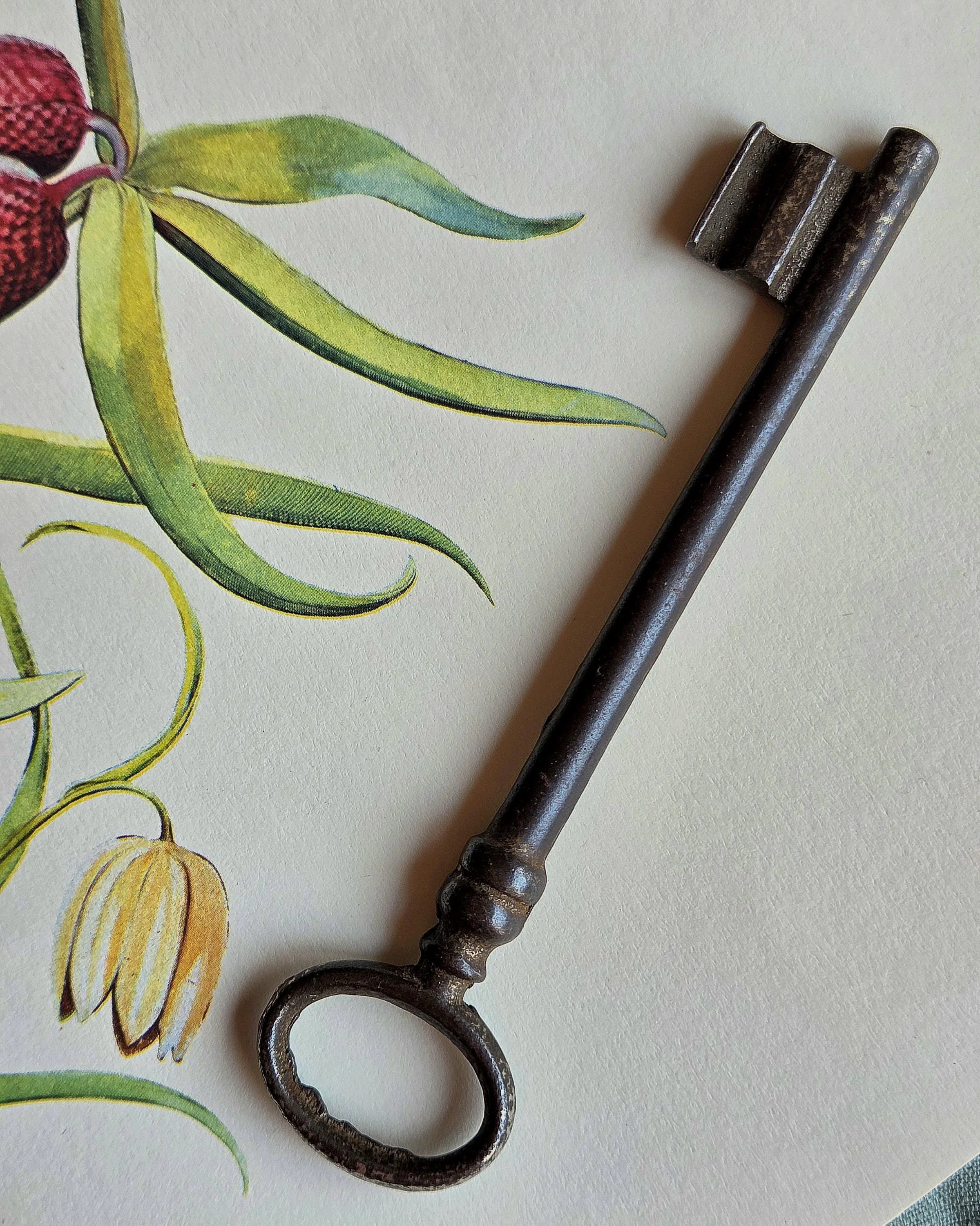 Image 2 of 12
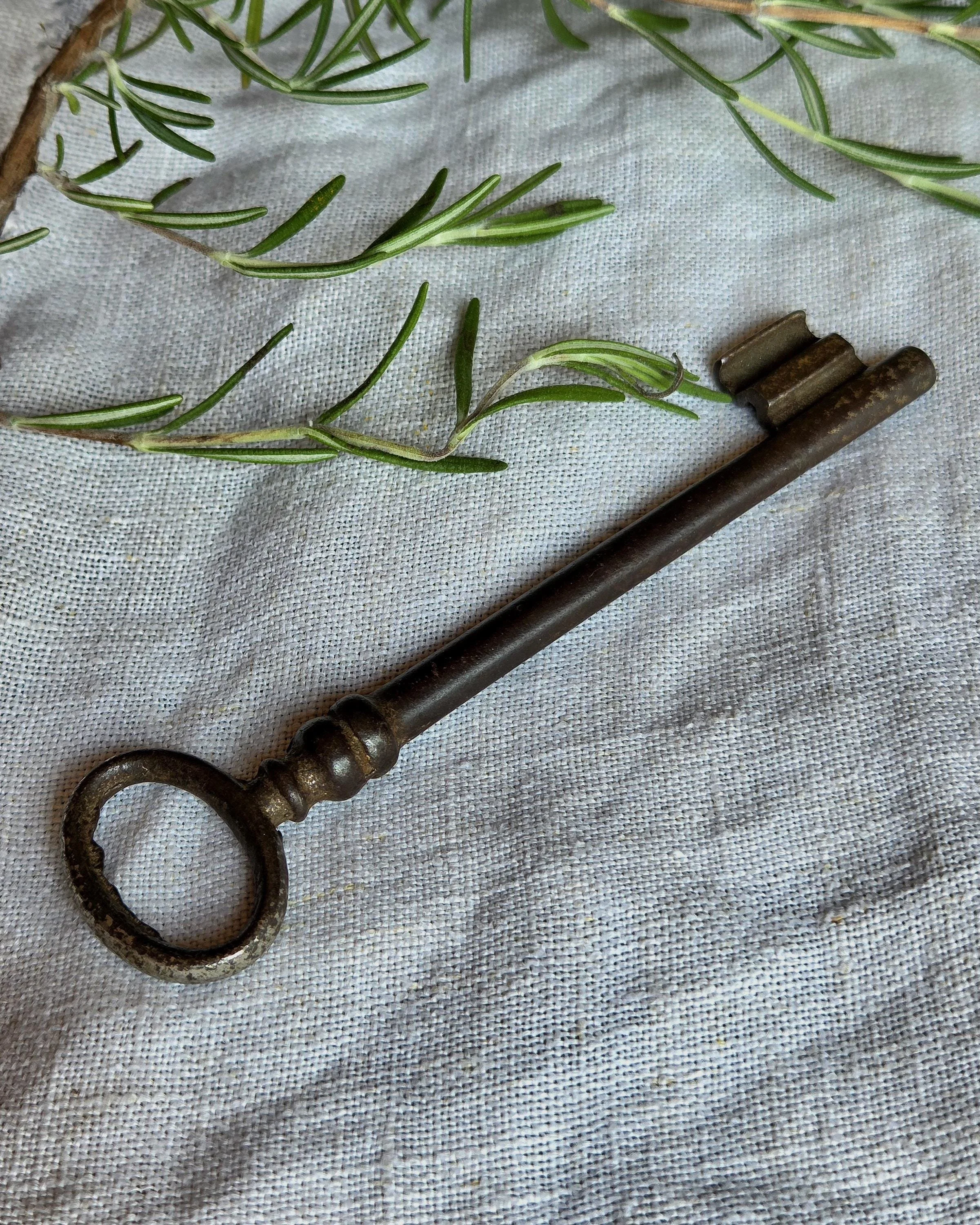 Image 3 of 12
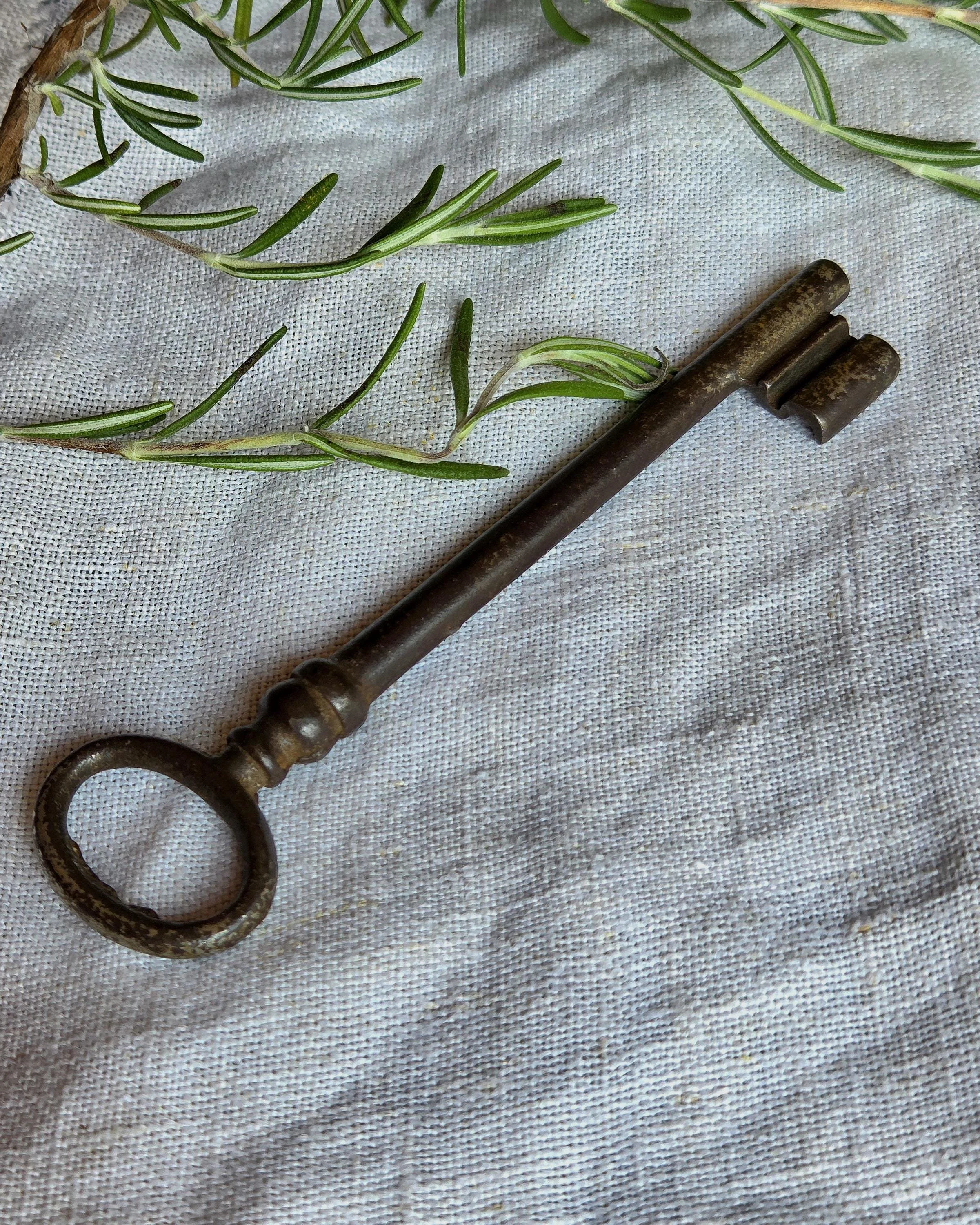 Image 4 of 12
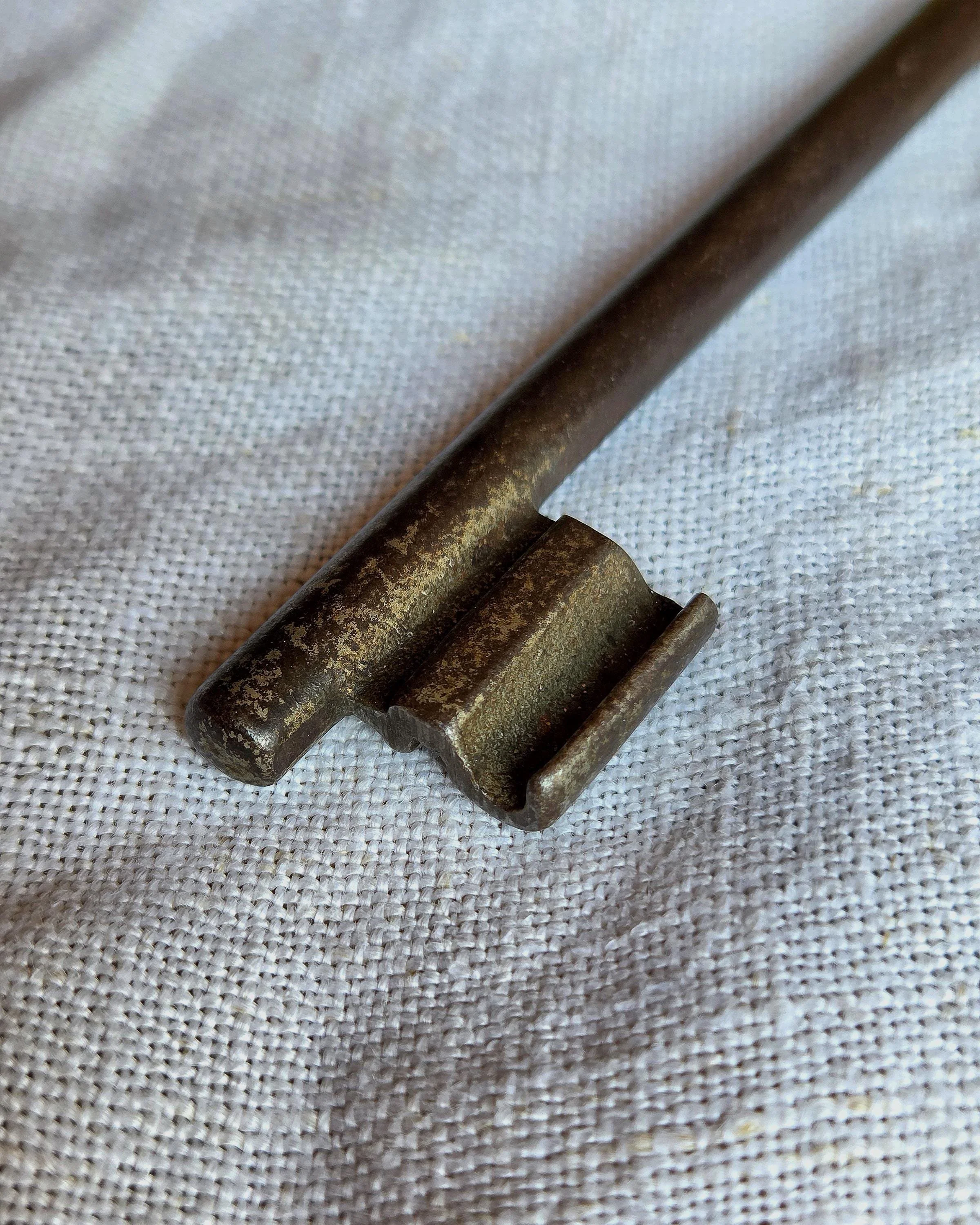 Image 5 of 12
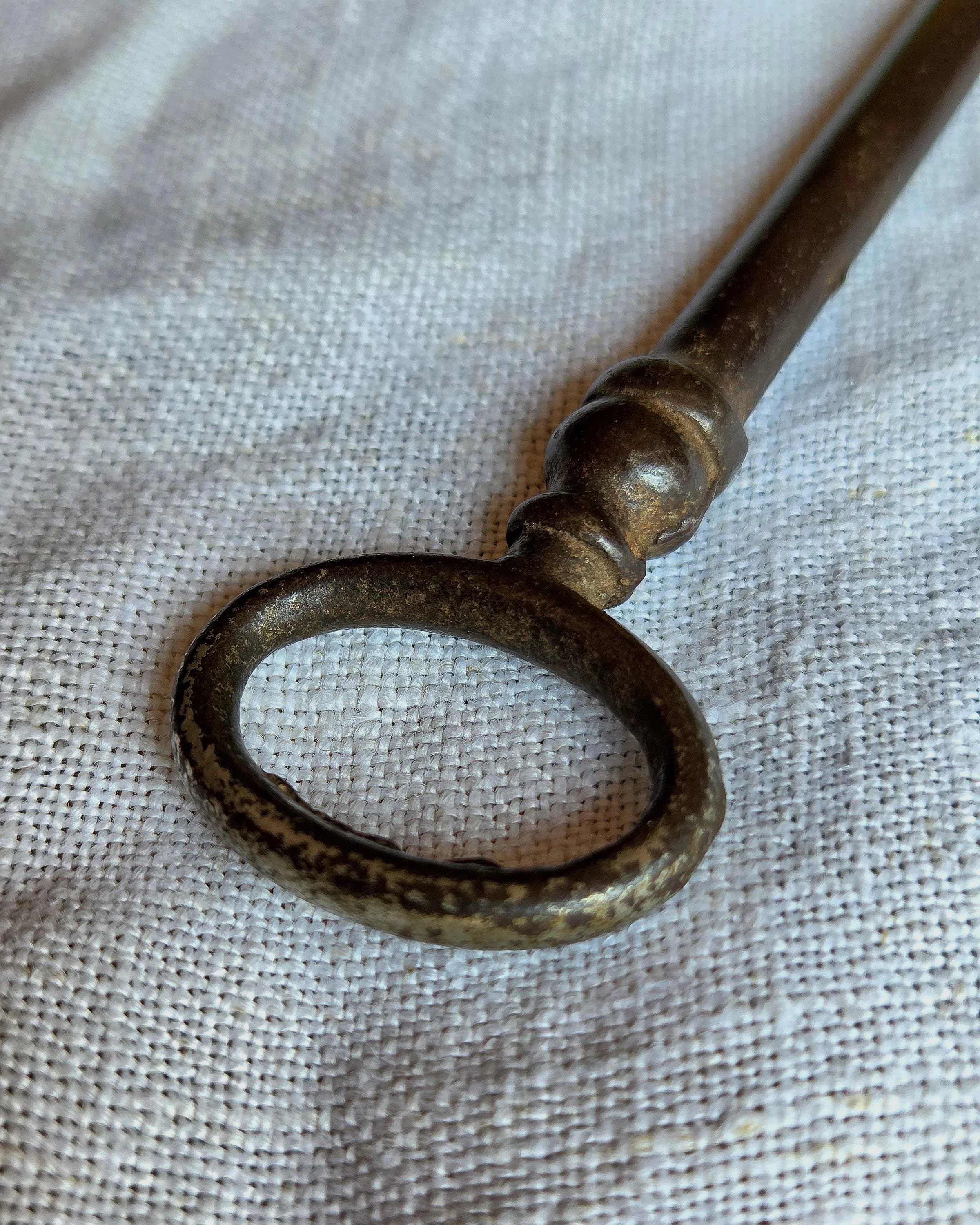 Image 6 of 12
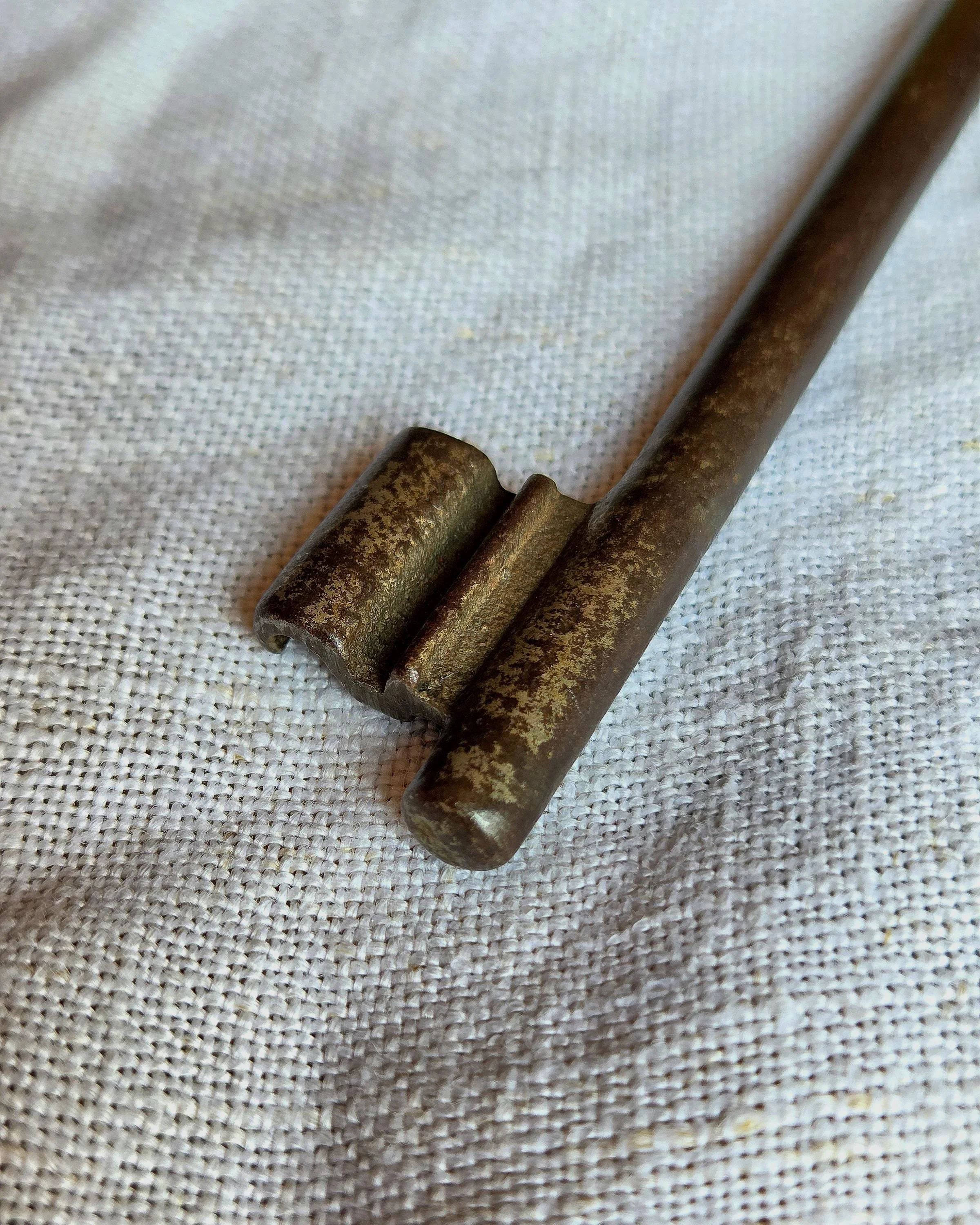 Image 7 of 12
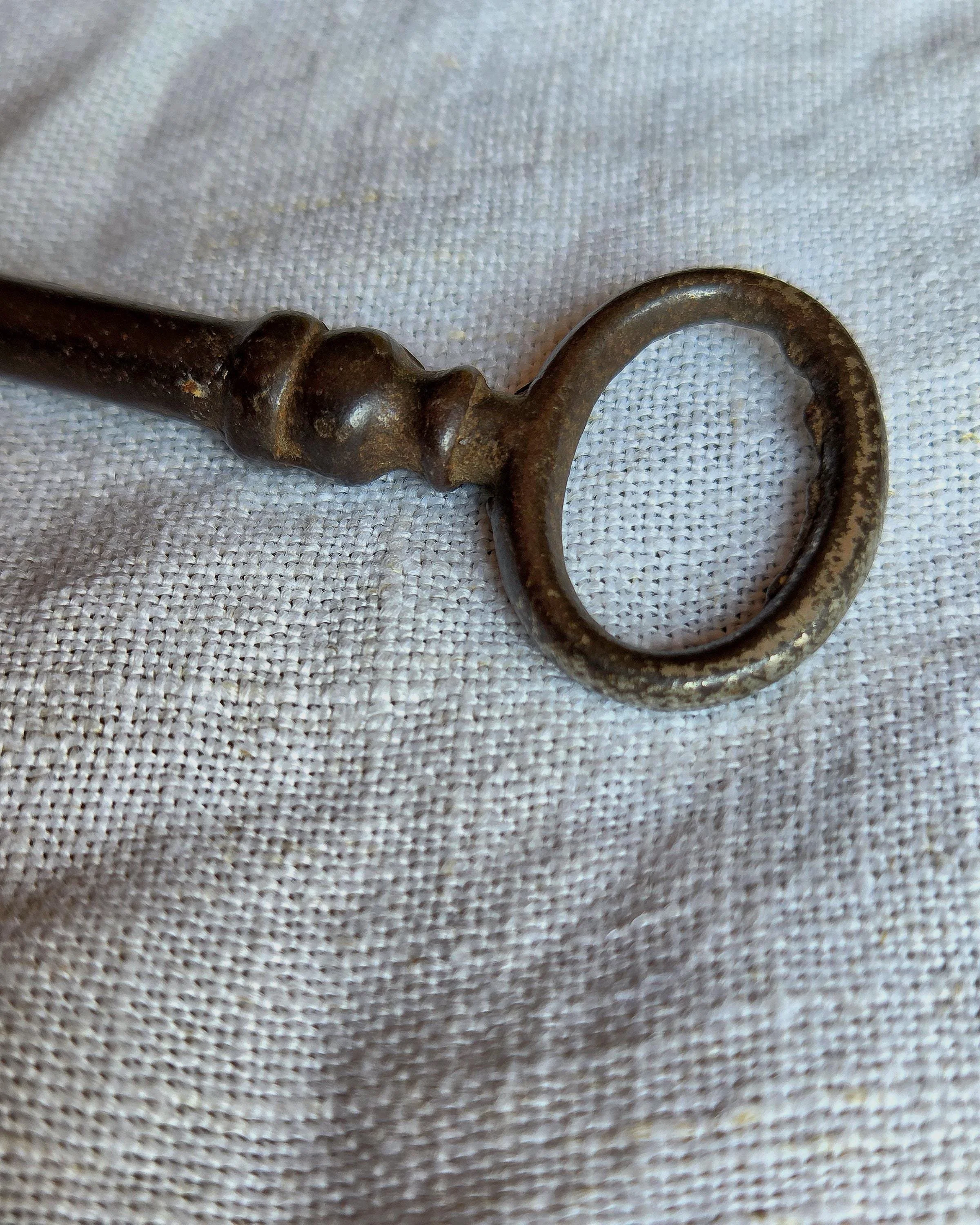 Image 8 of 12
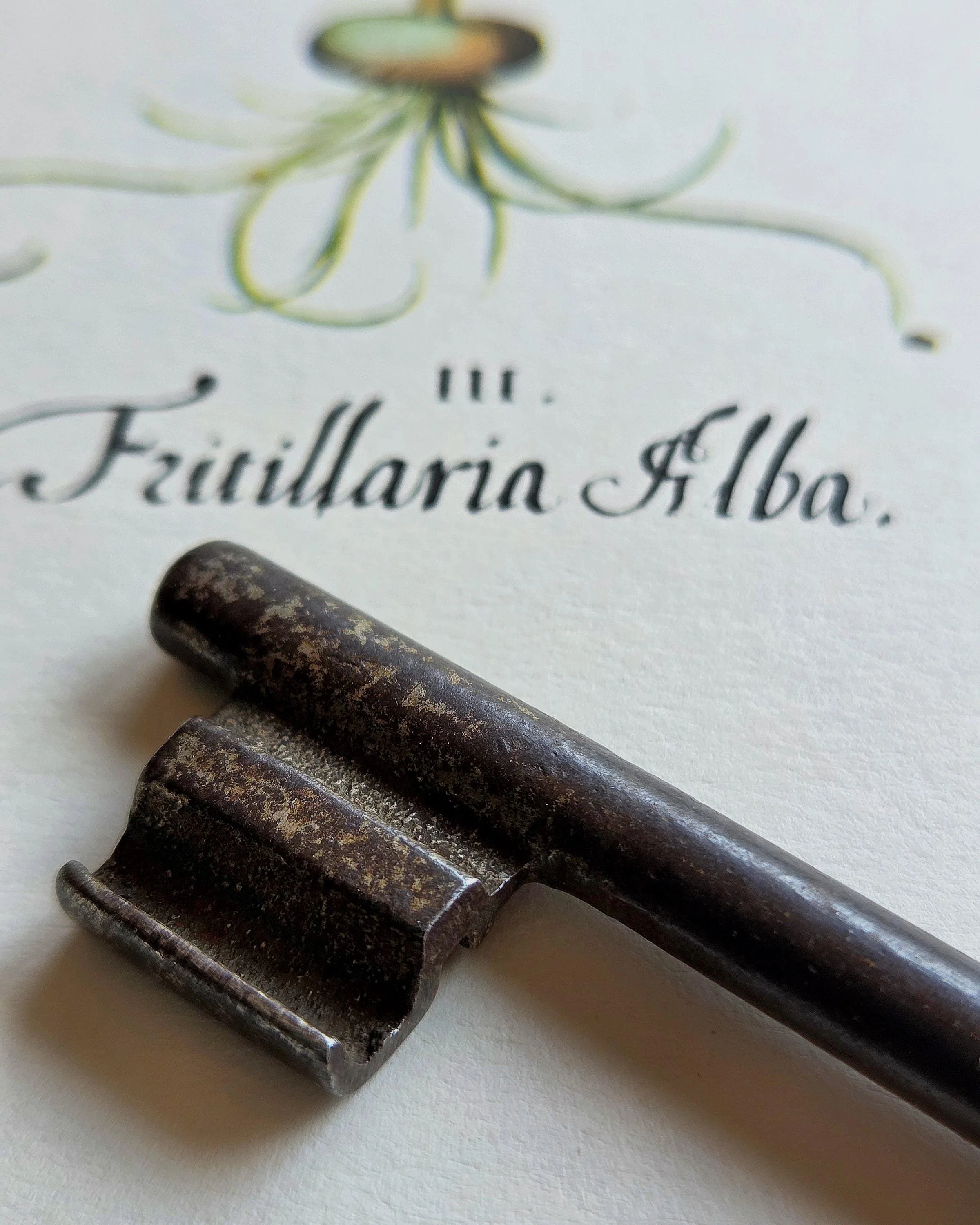 Image 9 of 12
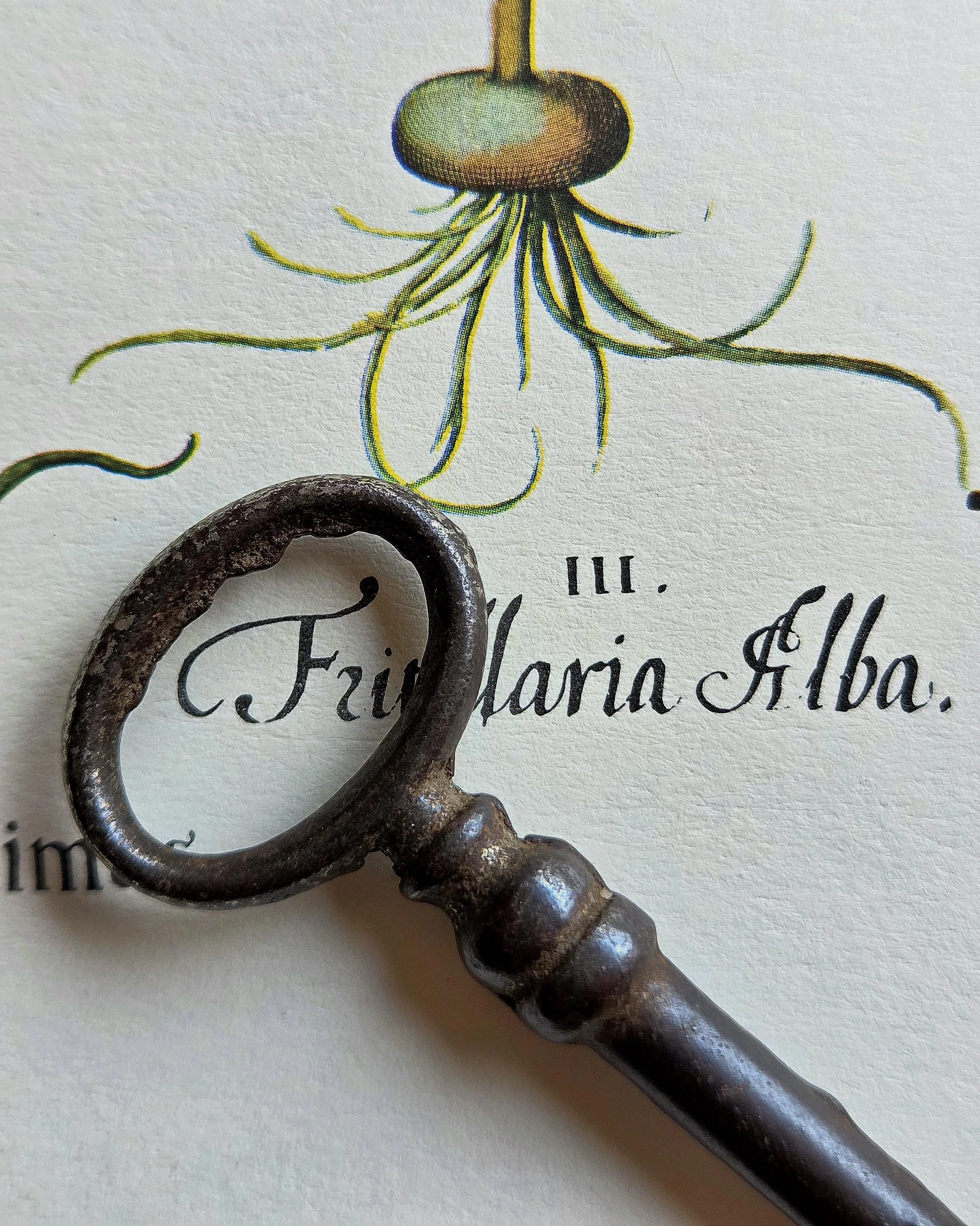 Image 10 of 12
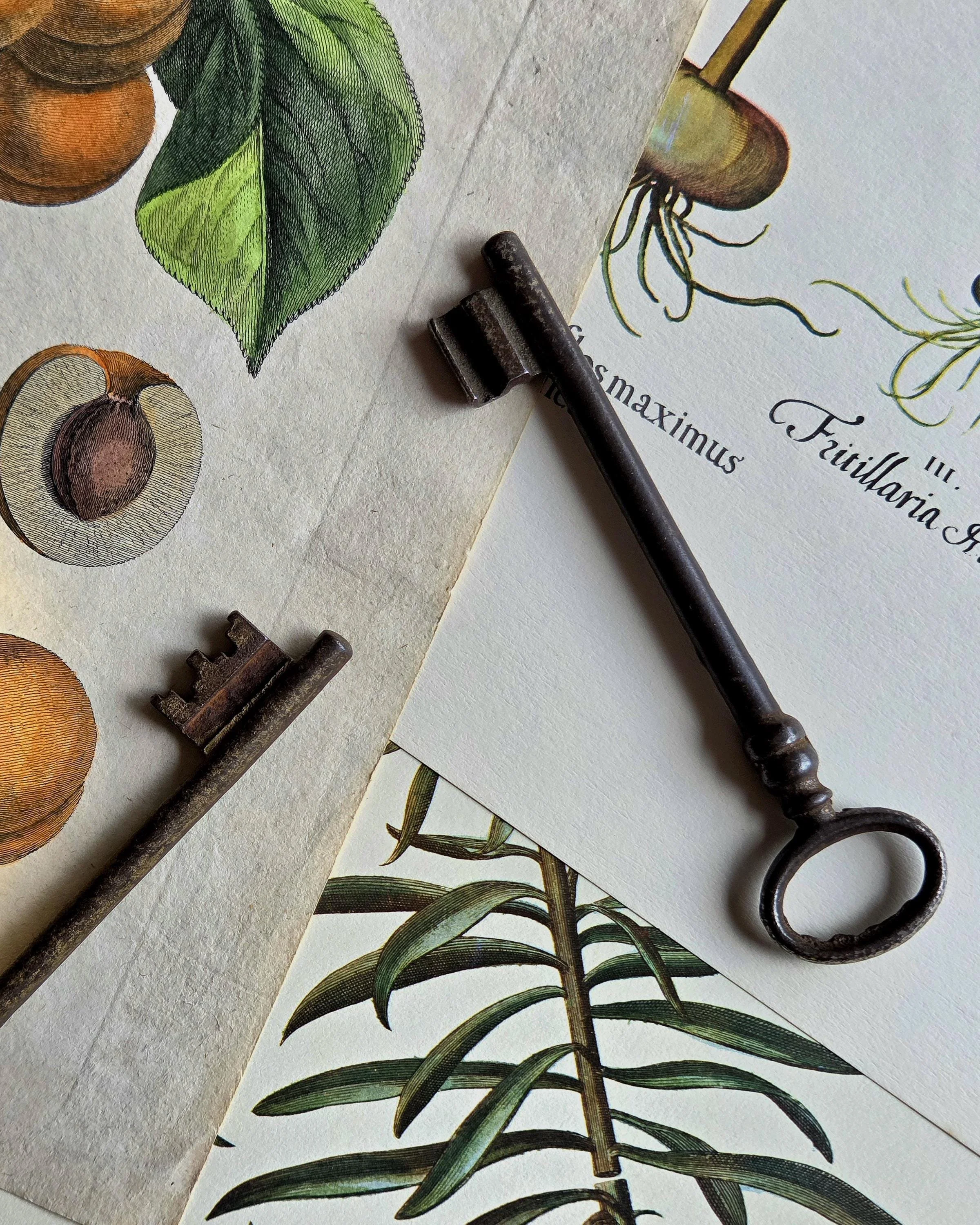 Image 11 of 12
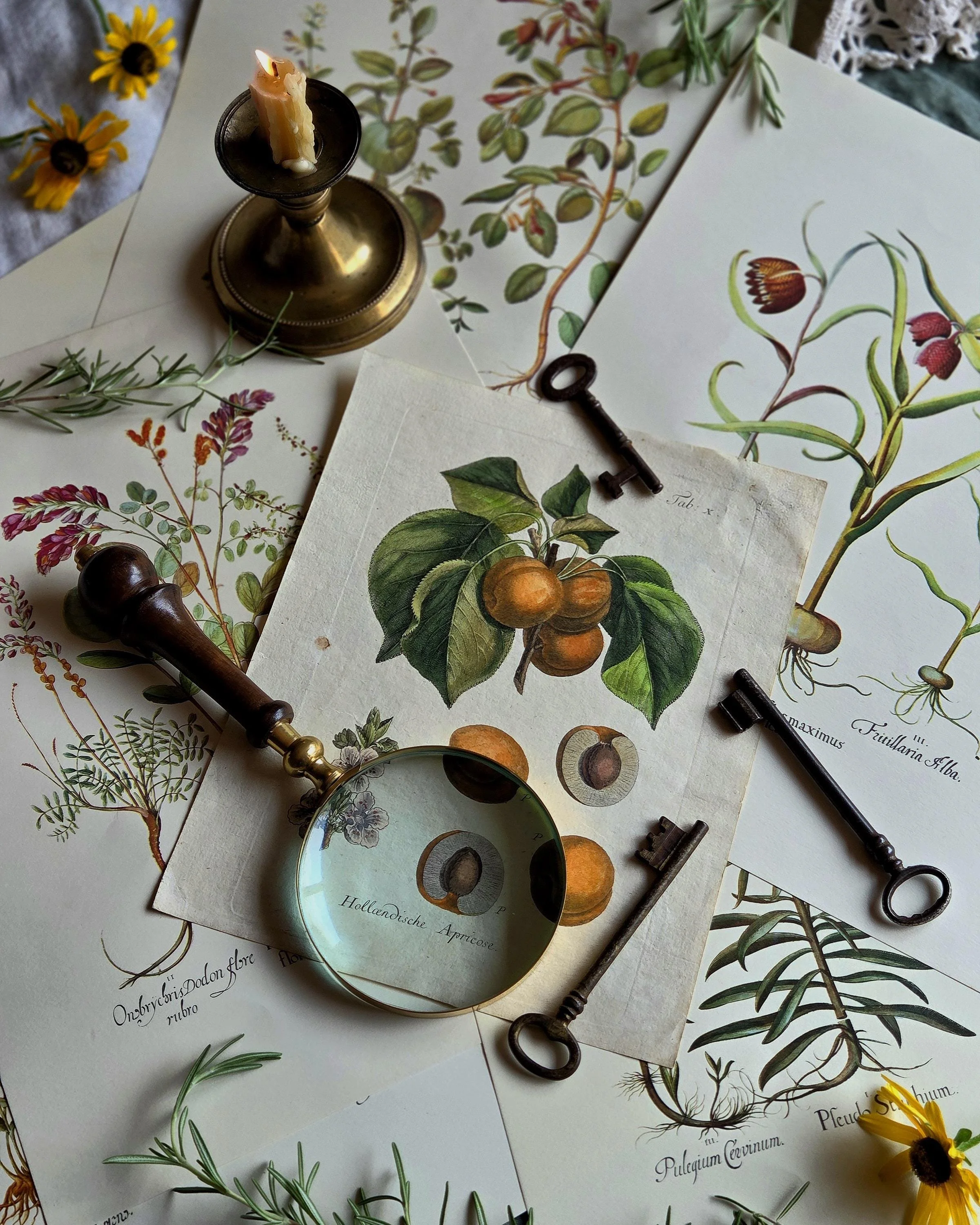 Image 12 of 12