This antique bobbin is a beautifully worn example of the specialized industrial wooden machinery once used in American and Canadian textile production.
Dating to approximately 1900–1920s, this substantial turned-wood form was designed to hold roving, or loosely twisted textile fiber, before it was spun into finished yarn or thread. Also known as a speeder bobbin or roving spindle, bobbins like this were fitted into high-speed spinning and twisting machinery, where their carefully shaped construction helped keep the fiber stable as it moved through the production process.
The distinctive "beehive" form is both structural and practical. Its ribbed, conical base provided stability during operation, while the six small drilled holes descending along each side appear to have allowed steam, moisture, or chemical conditioning agents to reach the fibers during textile processing. The brass-lined opening in the base and surrounding grooves were designed to secure the bobbin to its machinery.
The surface preserves the marks of its working life. Warm reddish-brown wood is deeply patinated, with striations and areas of wear consistent with years of contact with oil, grease, and mechanical clamps. The smaller end is painted red, likely serving as a practical factory classification mark for identifying fiber type, machine compatibility, or stage of production.
The bobbin was likely made from a durable hardwood such as American beech, a material well suited to the repeated friction, impact, and vibration of textile machinery. Its precise manufacturing origin is unknown, but its form is consistent with textile-industry equipment produced in the northeastern United States and southeastern Canada during the early twentieth century.
Today, its tall, narrow silhouette makes it particularly versatile as a decorative object. The central opening can accommodate dried botanicals or a taper candle, while the substantial turned form works beautifully on its own or as part of a rustic, primitive, industrial, or utilitarian-inspired grouping.
DETAILS
Date: ca. 1900–1920s
Origin: likely North American
Material: Turned hardwood with brass fitting and painted detail
Type: Industrial Textile Bobbin / Speeder Bobbin / Roving Spindle
Features: Ribbed "beehive" base, drilled side openings, brass-lined machinery fitting, red painted end
Measurements: 12 inches tall × 2.5 inches diameter at base
Style: Industrial Decor, Primitive Decor, Rustic Decor, Early American, Folk-Inspired Decor, Textile History, Sculptural Object
CARE
Dust gently with a soft, dry cloth. Avoid soaking or using harsh cleaning products, as these may disturb the aged wood surface, patina, or remaining paint. If displaying with botanicals, use only completely dry plant material.
CONDITION NOTE
This antique industrial bobbin retains a warm, aged patina and numerous surface marks consistent with decades of use in a working textile environment. The wood displays striations, abrasions, discoloration, and accumulated wear, while the red paint at the smaller end is worn and uneven. The brass-lined machinery opening also shows age and oxidation. These marks are part of the object's industrial history and character. Please examine the listing photographs carefully for condition and surface detail.
This antique bobbin is a beautifully worn example of the specialized industrial wooden machinery once used in American and Canadian textile production.
Dating to approximately 1900–1920s, this substantial turned-wood form was designed to hold roving, or loosely twisted textile fiber, before it was spun into finished yarn or thread. Also known as a speeder bobbin or roving spindle, bobbins like this were fitted into high-speed spinning and twisting machinery, where their carefully shaped construction helped keep the fiber stable as it moved through the production process.
The distinctive "beehive" form is both structural and practical. Its ribbed, conical base provided stability during operation, while the six small drilled holes descending along each side appear to have allowed steam, moisture, or chemical conditioning agents to reach the fibers during textile processing. The brass-lined opening in the base and surrounding grooves were designed to secure the bobbin to its machinery.
The surface preserves the marks of its working life. Warm reddish-brown wood is deeply patinated, with striations and areas of wear consistent with years of contact with oil, grease, and mechanical clamps. The smaller end is painted red, likely serving as a practical factory classification mark for identifying fiber type, machine compatibility, or stage of production.
The bobbin was likely made from a durable hardwood such as American beech, a material well suited to the repeated friction, impact, and vibration of textile machinery. Its precise manufacturing origin is unknown, but its form is consistent with textile-industry equipment produced in the northeastern United States and southeastern Canada during the early twentieth century.
Today, its tall, narrow silhouette makes it particularly versatile as a decorative object. The central opening can accommodate dried botanicals or a taper candle, while the substantial turned form works beautifully on its own or as part of a rustic, primitive, industrial, or utilitarian-inspired grouping.
DETAILS
Date: ca. 1900–1920s
Origin: likely North American
Material: Turned hardwood with brass fitting and painted detail
Type: Industrial Textile Bobbin / Speeder Bobbin / Roving Spindle
Features: Ribbed "beehive" base, drilled side openings, brass-lined machinery fitting, red painted end
Measurements: 12 inches tall × 2.5 inches diameter at base
Style: Industrial Decor, Primitive Decor, Rustic Decor, Early American, Folk-Inspired Decor, Textile History, Sculptural Object
CARE
Dust gently with a soft, dry cloth. Avoid soaking or using harsh cleaning products, as these may disturb the aged wood surface, patina, or remaining paint. If displaying with botanicals, use only completely dry plant material.
CONDITION NOTE
This antique industrial bobbin retains a warm, aged patina and numerous surface marks consistent with decades of use in a working textile environment. The wood displays striations, abrasions, discoloration, and accumulated wear, while the red paint at the smaller end is worn and uneven. The brass-lined machinery opening also shows age and oxidation. These marks are part of the object's industrial history and character. Please examine the listing photographs carefully for condition and surface detail.
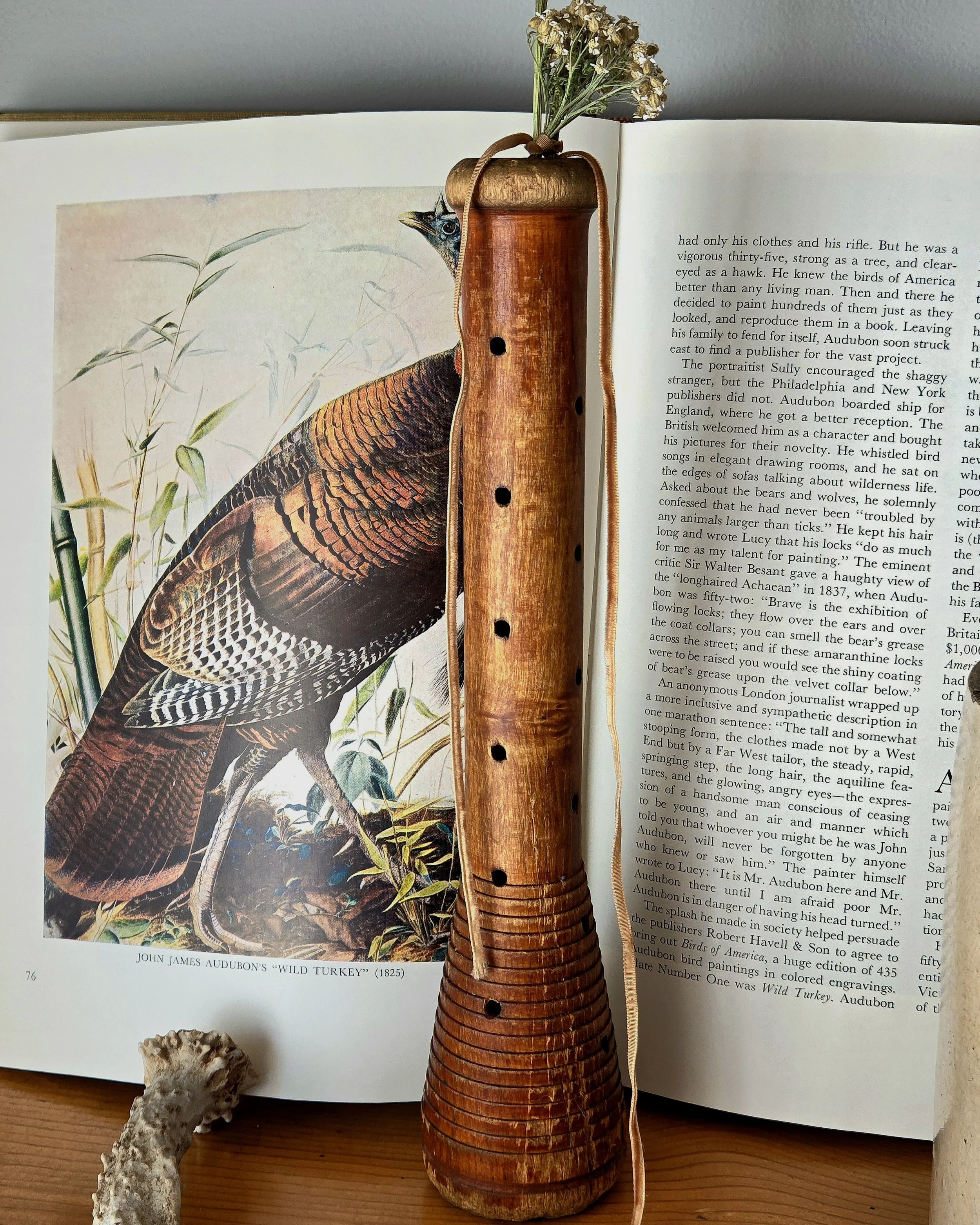 Image 1 of 9
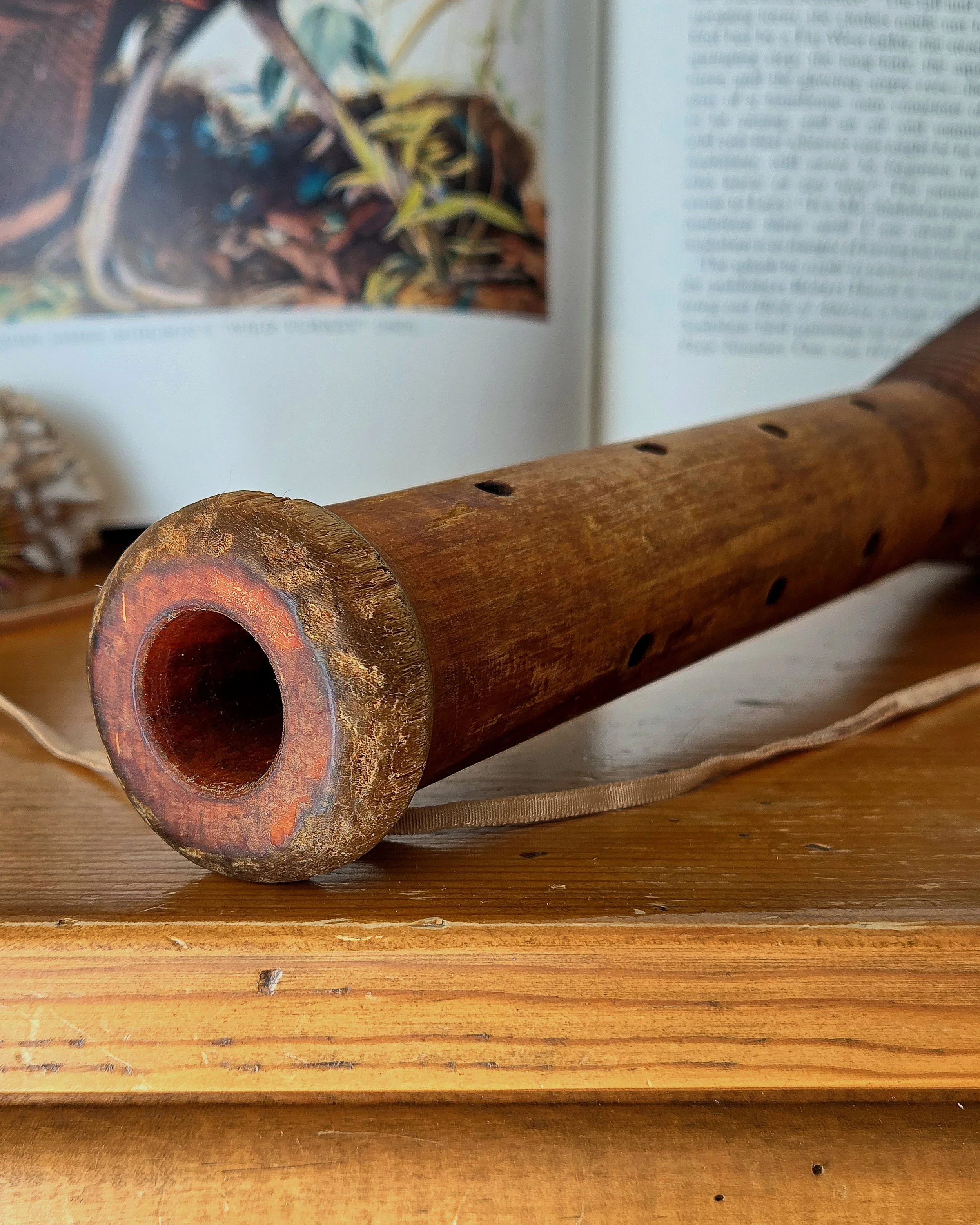 Image 2 of 9
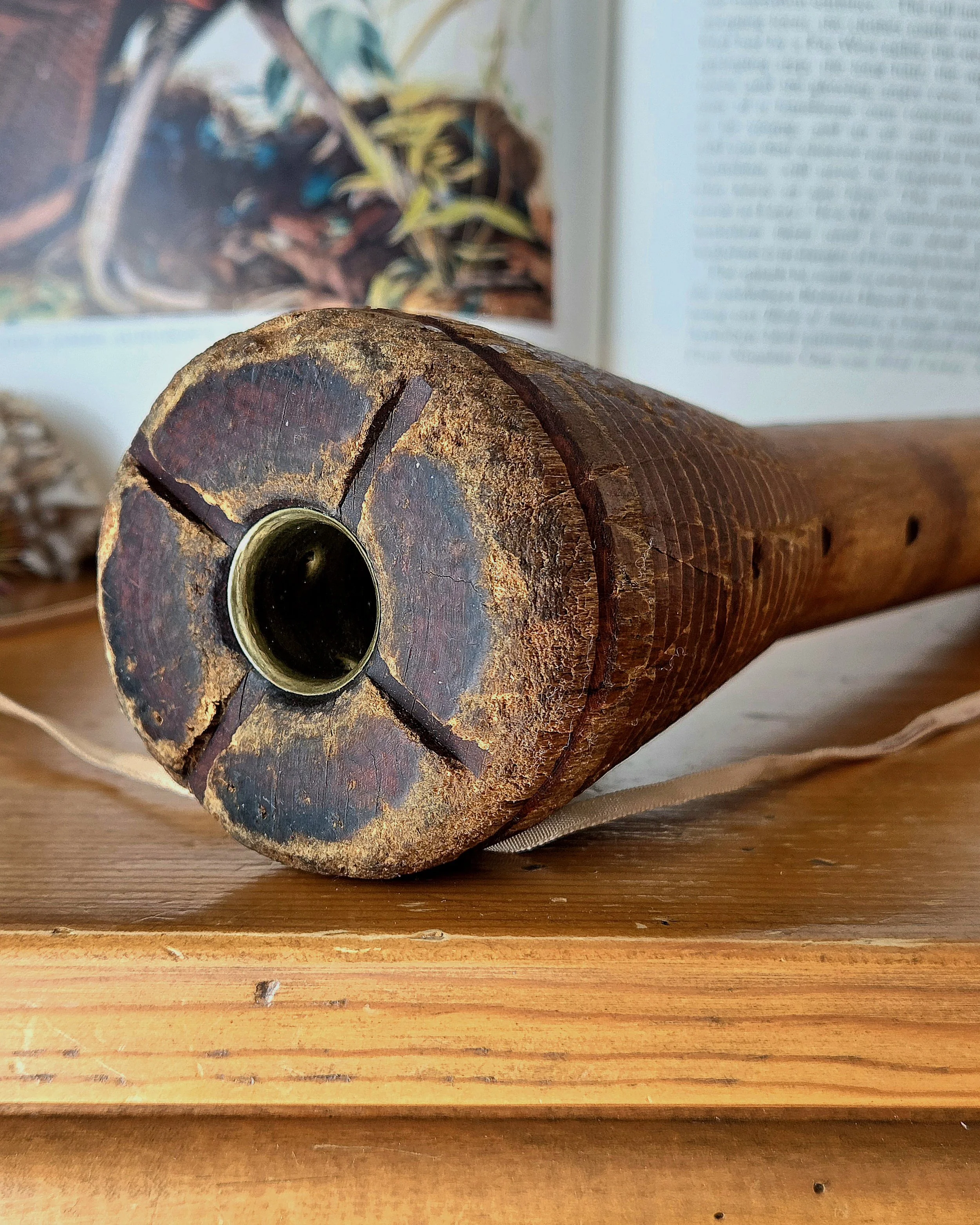 Image 3 of 9
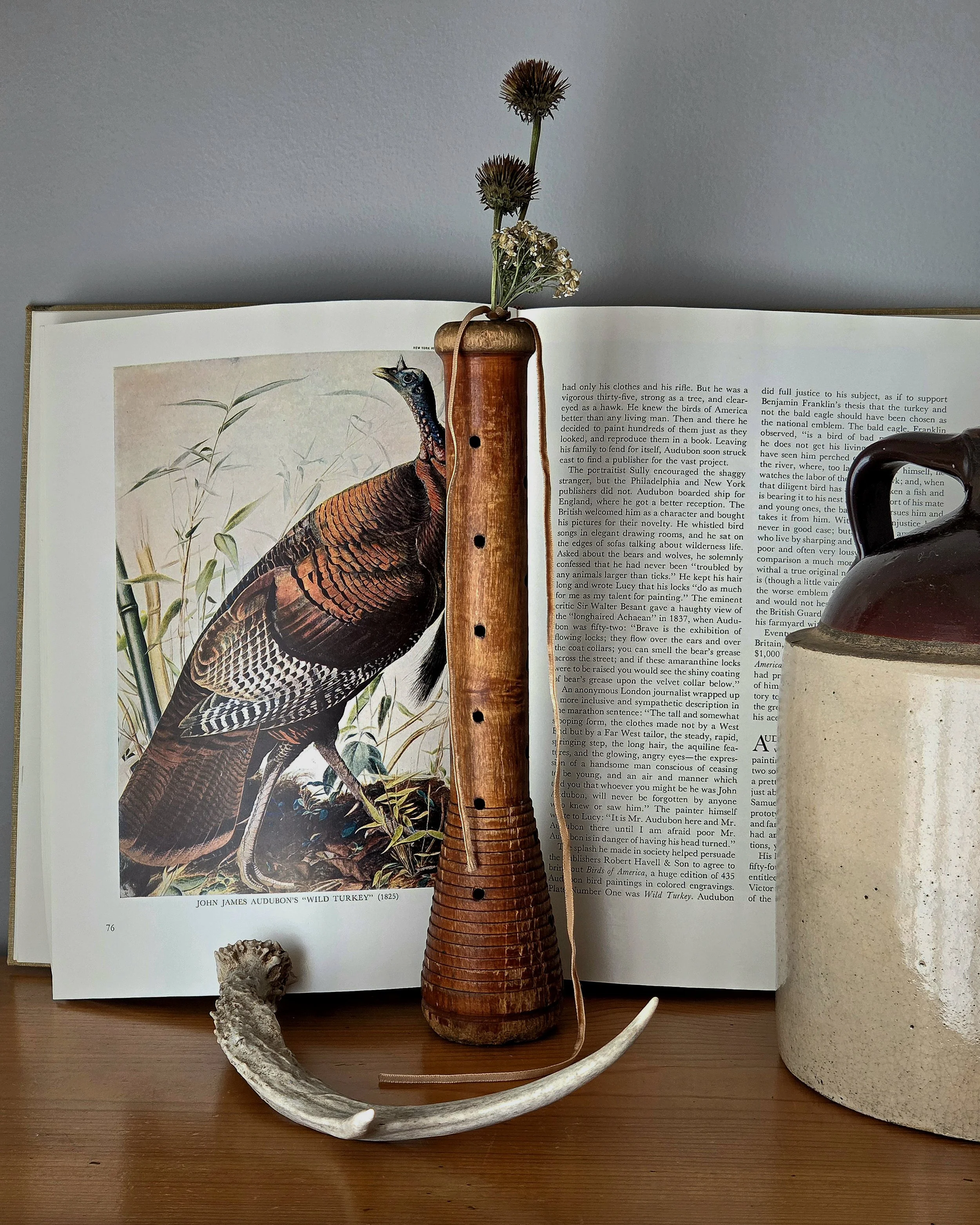 Image 4 of 9
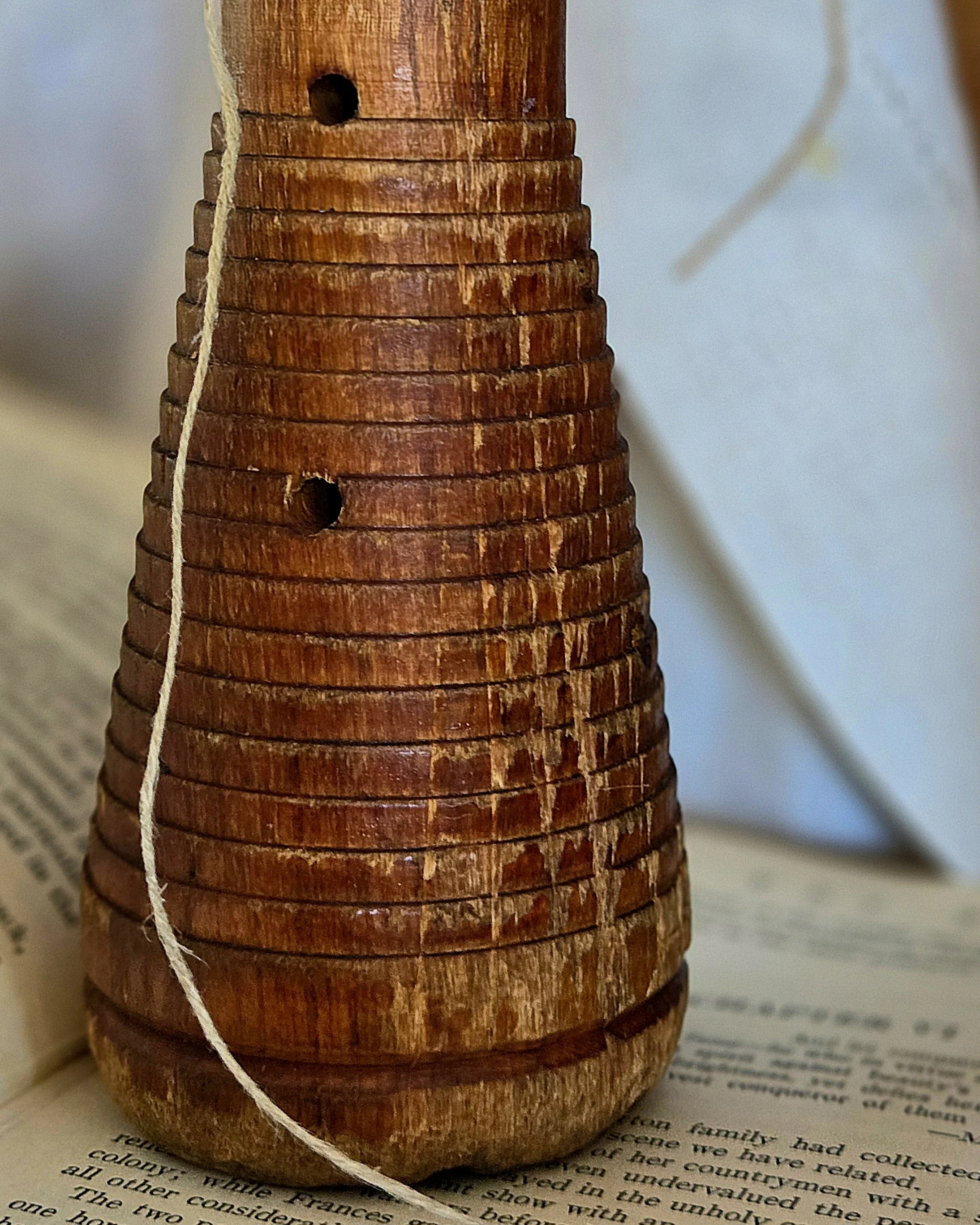 Image 5 of 9
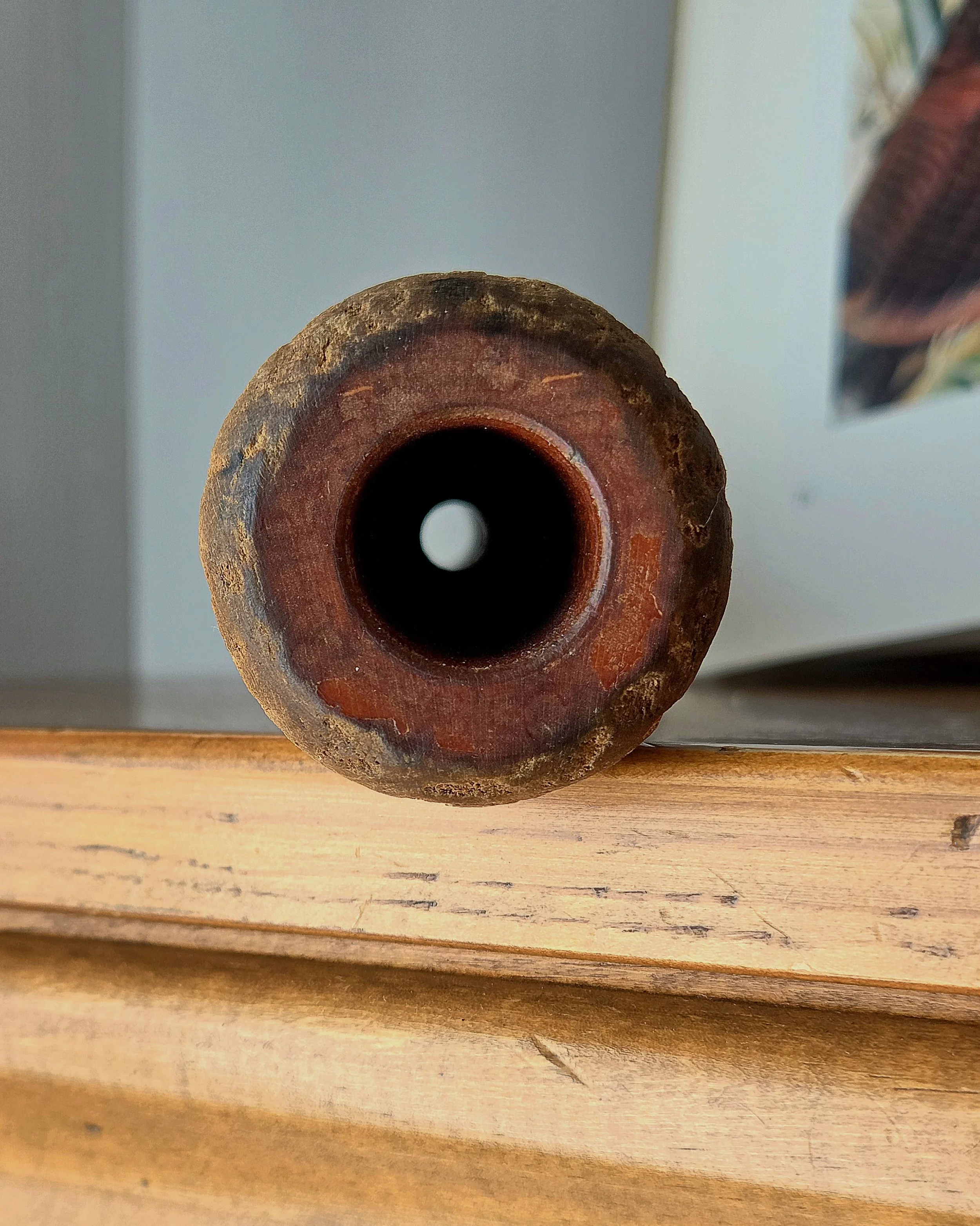 Image 6 of 9
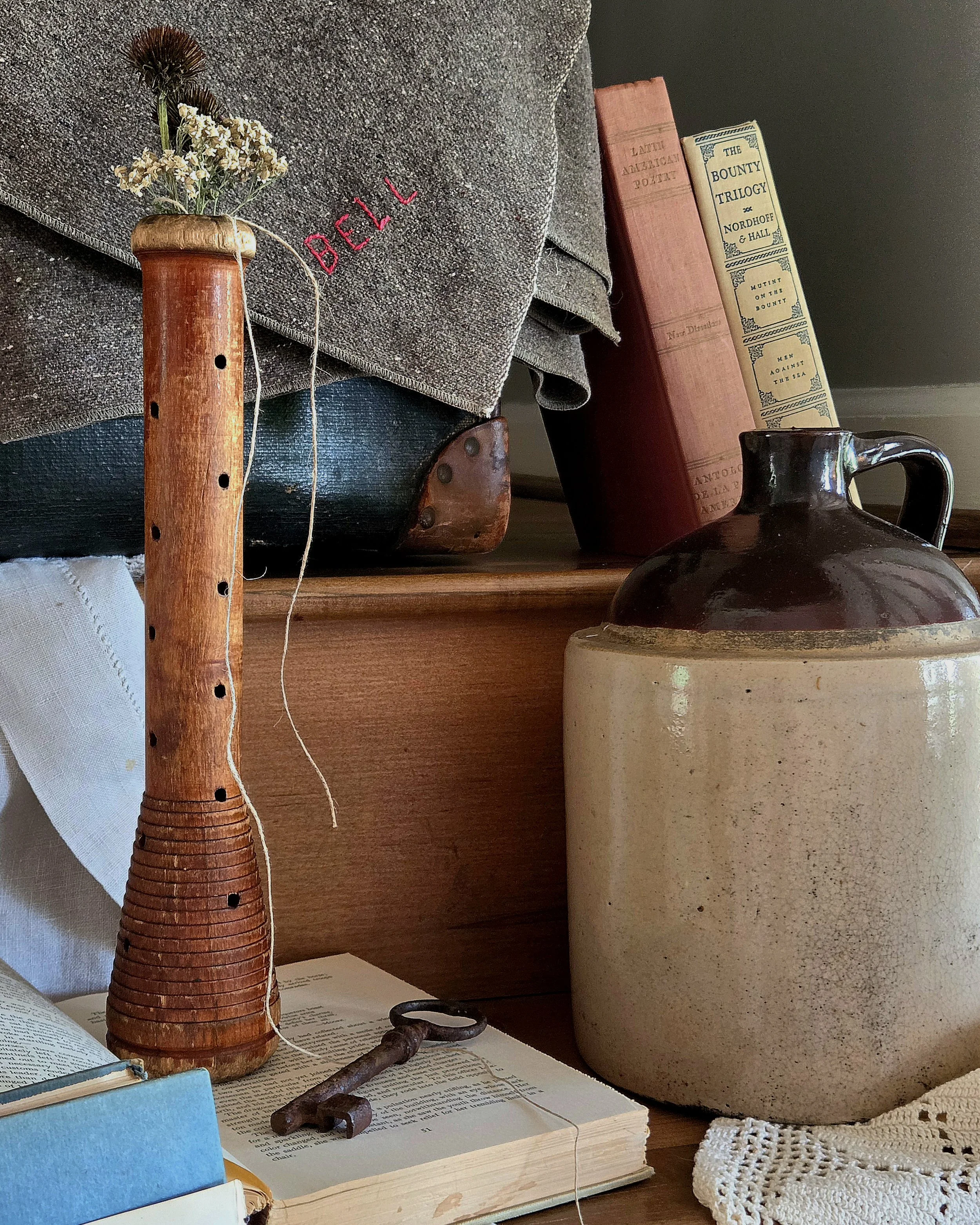 Image 7 of 9
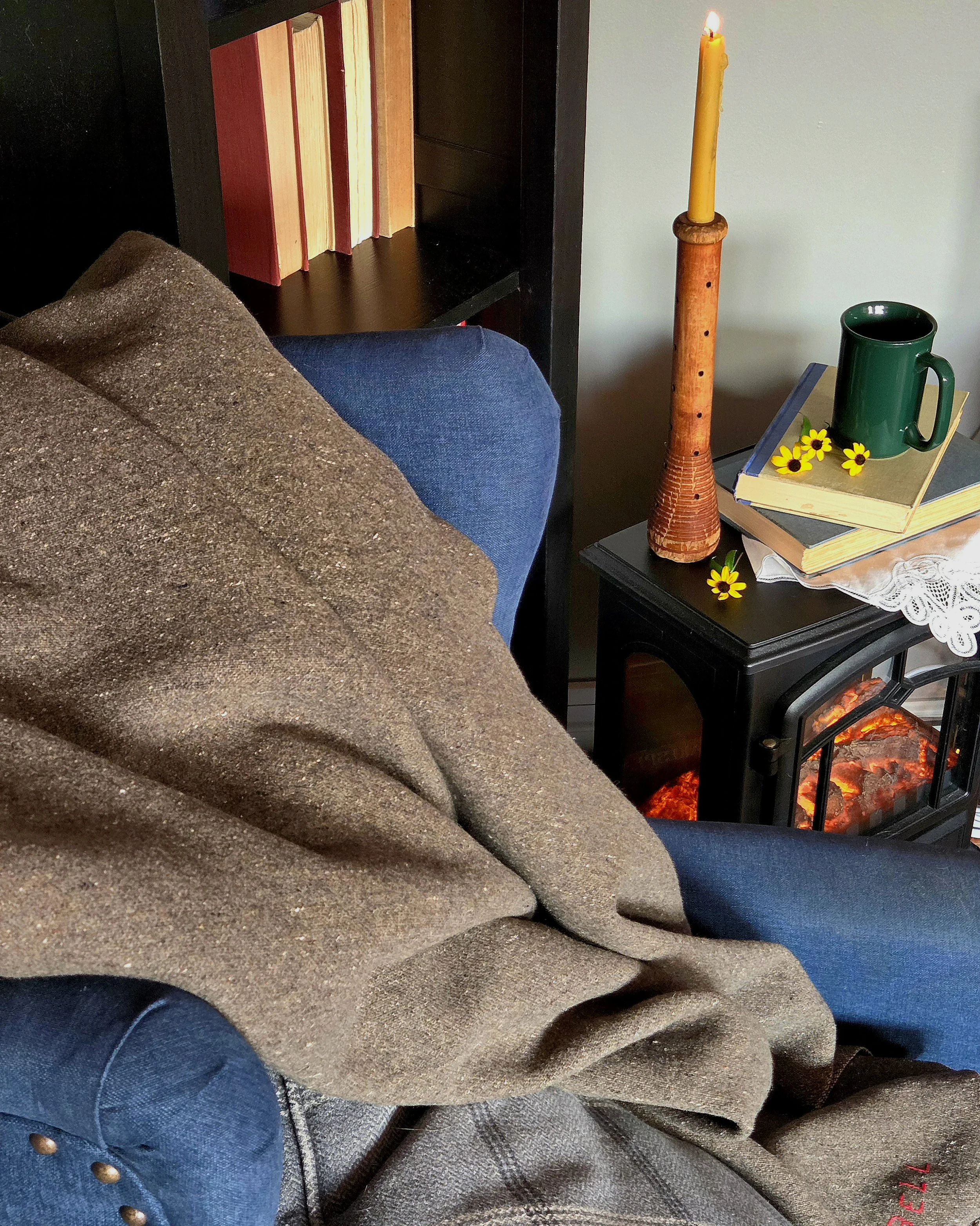 Image 8 of 9
 Image 9 of 9