This handsome late nineteenth-century steamer trunk offers a remarkable glimpse into the practical world of transatlantic travel, with its materials, fittings, labels, and surviving travel markings preserving traces of both its manufacture and its journey.
The trunk is constructed from heavy, thick bridle hide leather with hand-stitched welted edges, molded leather corner caps, leather straps with roller buckles, and water-resistant coated canvas panels. Portions of the composite material are consistent with period materials known as Rexine, Pegamoid, or Pantasote. These details point to a substantial piece of premium travel luggage rather than an ordinary utilitarian trunk.
Its provenance can be traced through the original labels and hardware. The Army & Navy Co-operative Society label dates the trunk broadly to 1871–1934, while the American Line travel label and Liverpool–Philadelphia route narrow the possibilities considerably. Most significantly, the leather top handle bears an oval "CANE" stamp and the number "9971," identifying J.W. Cane Ltd., a maker of premium leather goods and trunk hardware. Taken together with the typography, company addresses, and other surviving details, these markings place the trunk most convincingly in the period around 1893–1900.
The American Line label records a State Room No. of 14, while faded handwriting appears to follow the printed word "Sailing." Although the writing is too faded to identify with certainty, it may represent the name of the ship on which the trunk traveled. Several vessels operated on the Liverpool–Philadelphia route during this period, including the Pennsylvania, Ohio, Indiana, and Illinois, as well as ships transferred from the Red Star Line. The surviving marks therefore offer an intriguing possibility of a specific transatlantic journey, even if the evidence is not sufficient to make a definitive identification.
The interior provides another clue to the trunk's original owner. It is fully lined in beige linen canvas and retains wooden support rails along the sides that would originally have held a shallow, removable tray for starched dress shirts, detachable collars, and silk neckties. The simple lining and shallow tray arrangement are consistent with luggage intended for a gentleman's wardrobe rather than a lady's, whose traveling garments generally required deeper storage.
Additional labels and markings suggest the trunk's journey did not end at the Philadelphia docks. A faded sticker on the lower portion appears to reference a train station, consistent with the trunk being transferred to a train after arriving in Philadelphia. Another partially preserved sticker with green border may have served as a color-coded classification or customs marking. These small remnants of handling are part of what makes the piece so compelling: rather than merely resembling a nineteenth-century travel trunk, it retains physical evidence of the systems through which people, luggage, and goods moved across the Atlantic.
Today, this substantial trunk makes a striking storage or display piece for a collected interior, dressing room, library, study, or travel-inspired space. Its worn leather, aged labels, and surviving hardware preserve the marks of use while its construction and provenance offer an unusually tangible connection to the golden age of transatlantic steamship travel.
DETAILS
Date: ca. 1893–1902
Origin: Made in Wales
Maker/Hardware: J.W. Cane Ltd. (CANE 9971 handle stamp); Army & Navy Co-operative Society label
Provenance: American Line Liverpool–Philadelphia route
Medium: Heavy bridle hide leather, coated canvas, wood, linen canvas, brass/metal hardware
Construction: Hand-stitched welted leather edges; molded leather corner caps; leather strap closures with roller buckles
Interior: Beige linen canvas lining with original wooden support rails for removable clothing tray
Measurements:
Style: Victorian Travel Trunk, Antique Luggage, Transatlantic Travel, English Country Decor, European Country Decor, Collected Interiors, Library Decor, Study Decor, Vintage Storage
CARE
Handle carefully, particularly by the leather straps, handle, and remaining hardware. Keep indoors in a dry environment away from excessive humidity, direct sunlight, and significant temperature fluctuations. The aged leather and other original materials should not be aggressively cleaned or conditioned without appropriate conservation guidance.
CONDITION NOTE
This antique steamer trunk shows substantial evidence of age and use, including surface wear, scuffing, discoloration, and wear to the original leather and coated canvas materials. The bottom portion of the main lock is missing. The upper leather portion of the left vertical strap is missing, although the remaining strap and roller buckle are intact. The leather, labels, stickers, and interior lining all exhibit age-related wear and fading. The handwriting and portions of the original travel labels are significantly faded, but important details remain legible, including the State Room No. 14 and the J.W. Cane handle marking. Please examine all listing photographs carefully for condition and additional details. The surviving wear and travel markings are part of the object's historical character.
This handsome late nineteenth-century steamer trunk offers a remarkable glimpse into the practical world of transatlantic travel, with its materials, fittings, labels, and surviving travel markings preserving traces of both its manufacture and its journey.
The trunk is constructed from heavy, thick bridle hide leather with hand-stitched welted edges, molded leather corner caps, leather straps with roller buckles, and water-resistant coated canvas panels. Portions of the composite material are consistent with period materials known as Rexine, Pegamoid, or Pantasote. These details point to a substantial piece of premium travel luggage rather than an ordinary utilitarian trunk.
Its provenance can be traced through the original labels and hardware. The Army & Navy Co-operative Society label dates the trunk broadly to 1871–1934, while the American Line travel label and Liverpool–Philadelphia route narrow the possibilities considerably. Most significantly, the leather top handle bears an oval "CANE" stamp and the number "9971," identifying J.W. Cane Ltd., a maker of premium leather goods and trunk hardware. Taken together with the typography, company addresses, and other surviving details, these markings place the trunk most convincingly in the period around 1893–1900.
The American Line label records a State Room No. of 14, while faded handwriting appears to follow the printed word "Sailing." Although the writing is too faded to identify with certainty, it may represent the name of the ship on which the trunk traveled. Several vessels operated on the Liverpool–Philadelphia route during this period, including the Pennsylvania, Ohio, Indiana, and Illinois, as well as ships transferred from the Red Star Line. The surviving marks therefore offer an intriguing possibility of a specific transatlantic journey, even if the evidence is not sufficient to make a definitive identification.
The interior provides another clue to the trunk's original owner. It is fully lined in beige linen canvas and retains wooden support rails along the sides that would originally have held a shallow, removable tray for starched dress shirts, detachable collars, and silk neckties. The simple lining and shallow tray arrangement are consistent with luggage intended for a gentleman's wardrobe rather than a lady's, whose traveling garments generally required deeper storage.
Additional labels and markings suggest the trunk's journey did not end at the Philadelphia docks. A faded sticker on the lower portion appears to reference a train station, consistent with the trunk being transferred to a train after arriving in Philadelphia. Another partially preserved sticker with green border may have served as a color-coded classification or customs marking. These small remnants of handling are part of what makes the piece so compelling: rather than merely resembling a nineteenth-century travel trunk, it retains physical evidence of the systems through which people, luggage, and goods moved across the Atlantic.
Today, this substantial trunk makes a striking storage or display piece for a collected interior, dressing room, library, study, or travel-inspired space. Its worn leather, aged labels, and surviving hardware preserve the marks of use while its construction and provenance offer an unusually tangible connection to the golden age of transatlantic steamship travel.
DETAILS
Date: ca. 1893–1902
Origin: Made in Wales
Maker/Hardware: J.W. Cane Ltd. (CANE 9971 handle stamp); Army & Navy Co-operative Society label
Provenance: American Line Liverpool–Philadelphia route
Medium: Heavy bridle hide leather, coated canvas, wood, linen canvas, brass/metal hardware
Construction: Hand-stitched welted leather edges; molded leather corner caps; leather strap closures with roller buckles
Interior: Beige linen canvas lining with original wooden support rails for removable clothing tray
Measurements:
Style: Victorian Travel Trunk, Antique Luggage, Transatlantic Travel, English Country Decor, European Country Decor, Collected Interiors, Library Decor, Study Decor, Vintage Storage
CARE
Handle carefully, particularly by the leather straps, handle, and remaining hardware. Keep indoors in a dry environment away from excessive humidity, direct sunlight, and significant temperature fluctuations. The aged leather and other original materials should not be aggressively cleaned or conditioned without appropriate conservation guidance.
CONDITION NOTE
This antique steamer trunk shows substantial evidence of age and use, including surface wear, scuffing, discoloration, and wear to the original leather and coated canvas materials. The bottom portion of the main lock is missing. The upper leather portion of the left vertical strap is missing, although the remaining strap and roller buckle are intact. The leather, labels, stickers, and interior lining all exhibit age-related wear and fading. The handwriting and portions of the original travel labels are significantly faded, but important details remain legible, including the State Room No. 14 and the J.W. Cane handle marking. Please examine all listing photographs carefully for condition and additional details. The surviving wear and travel markings are part of the object's historical character.
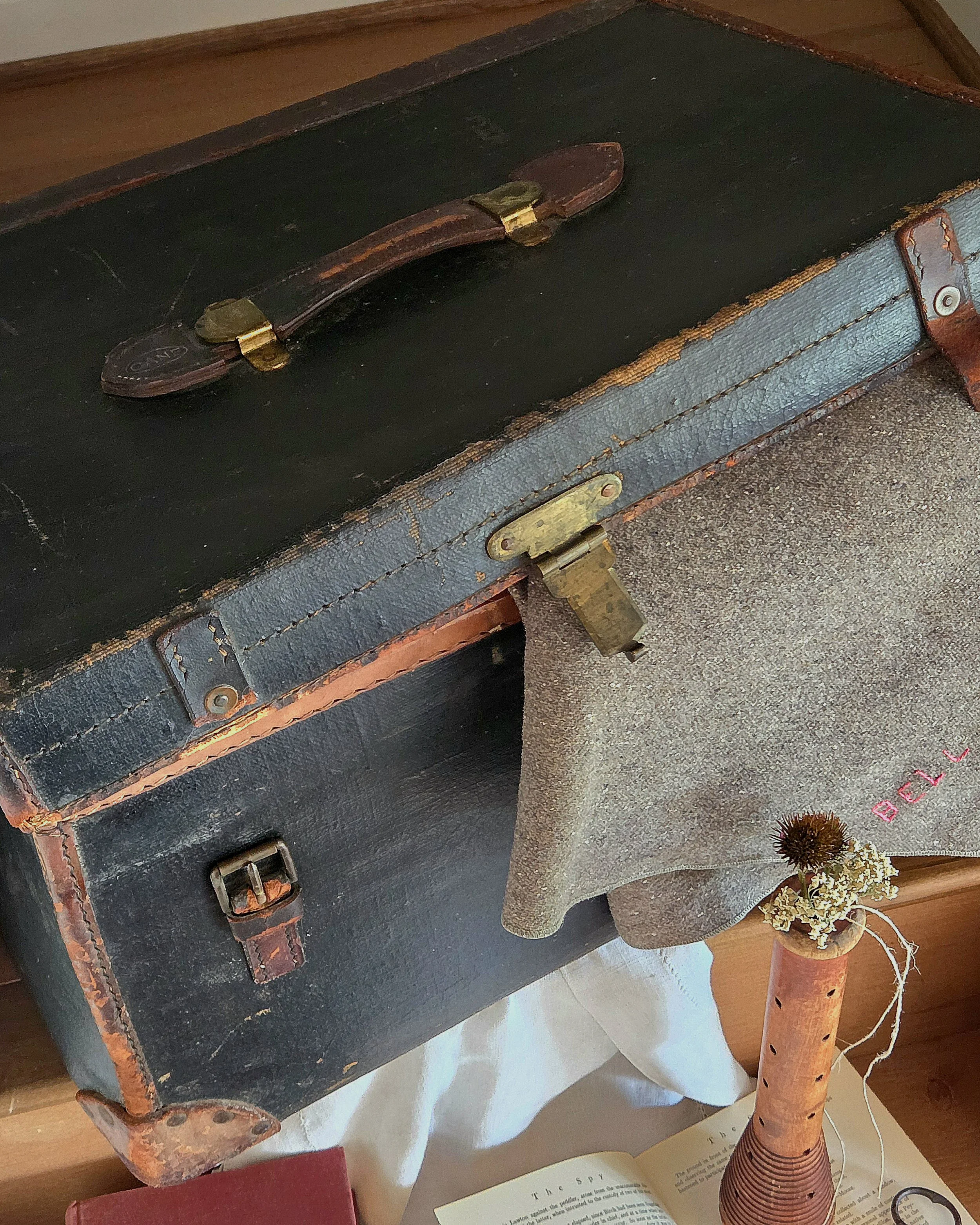 Image 1 of 25
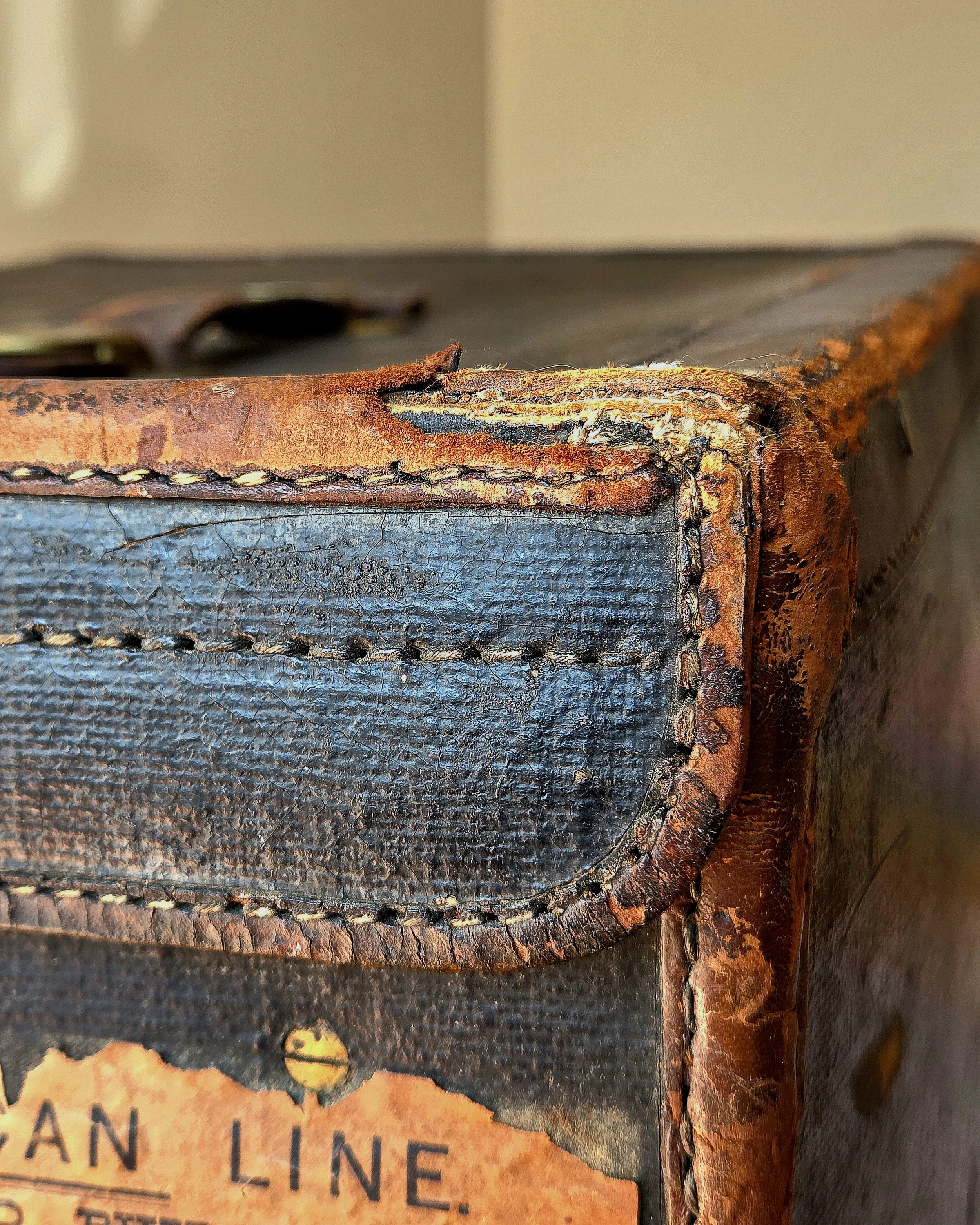 Image 2 of 25
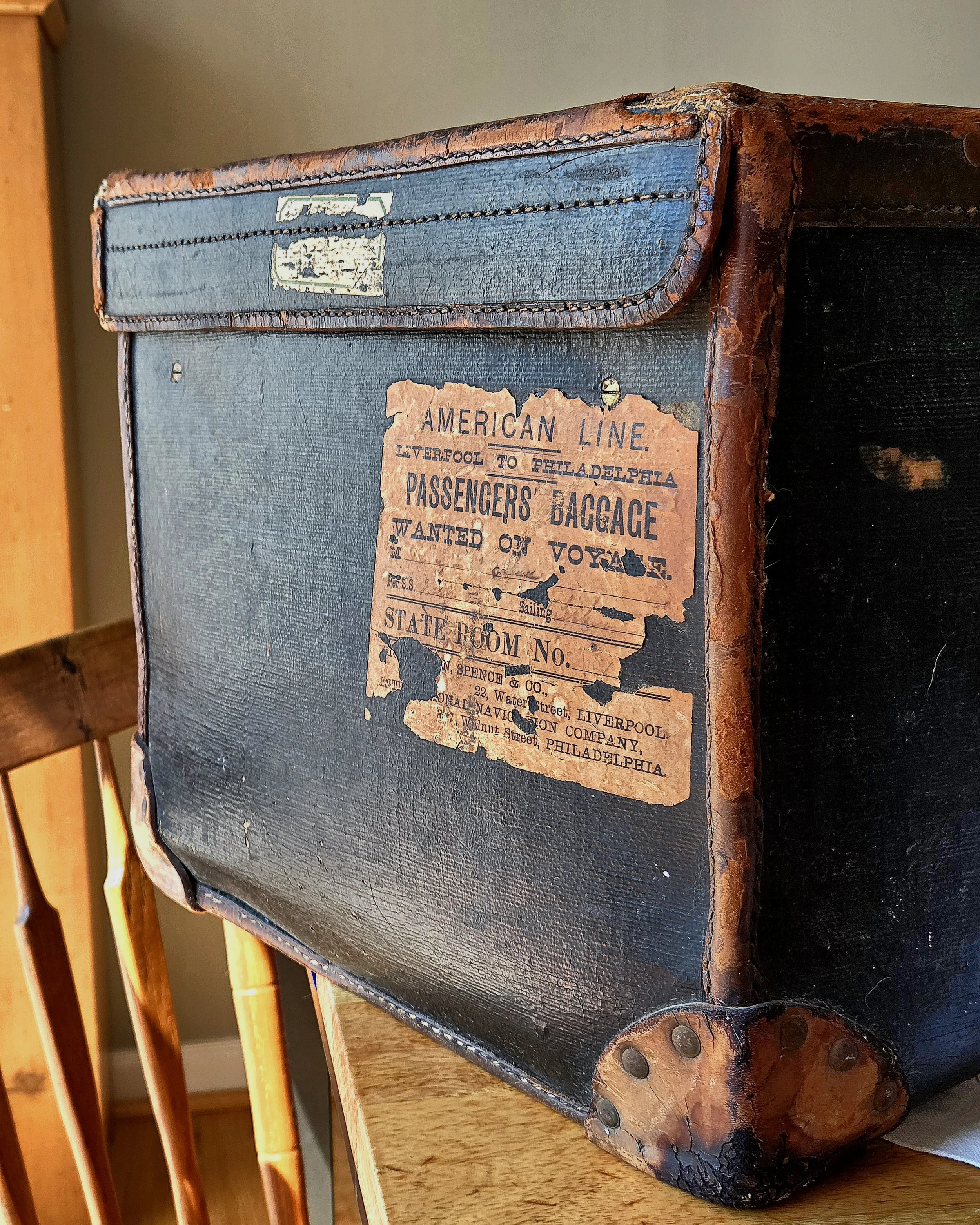 Image 3 of 25
 Image 4 of 25
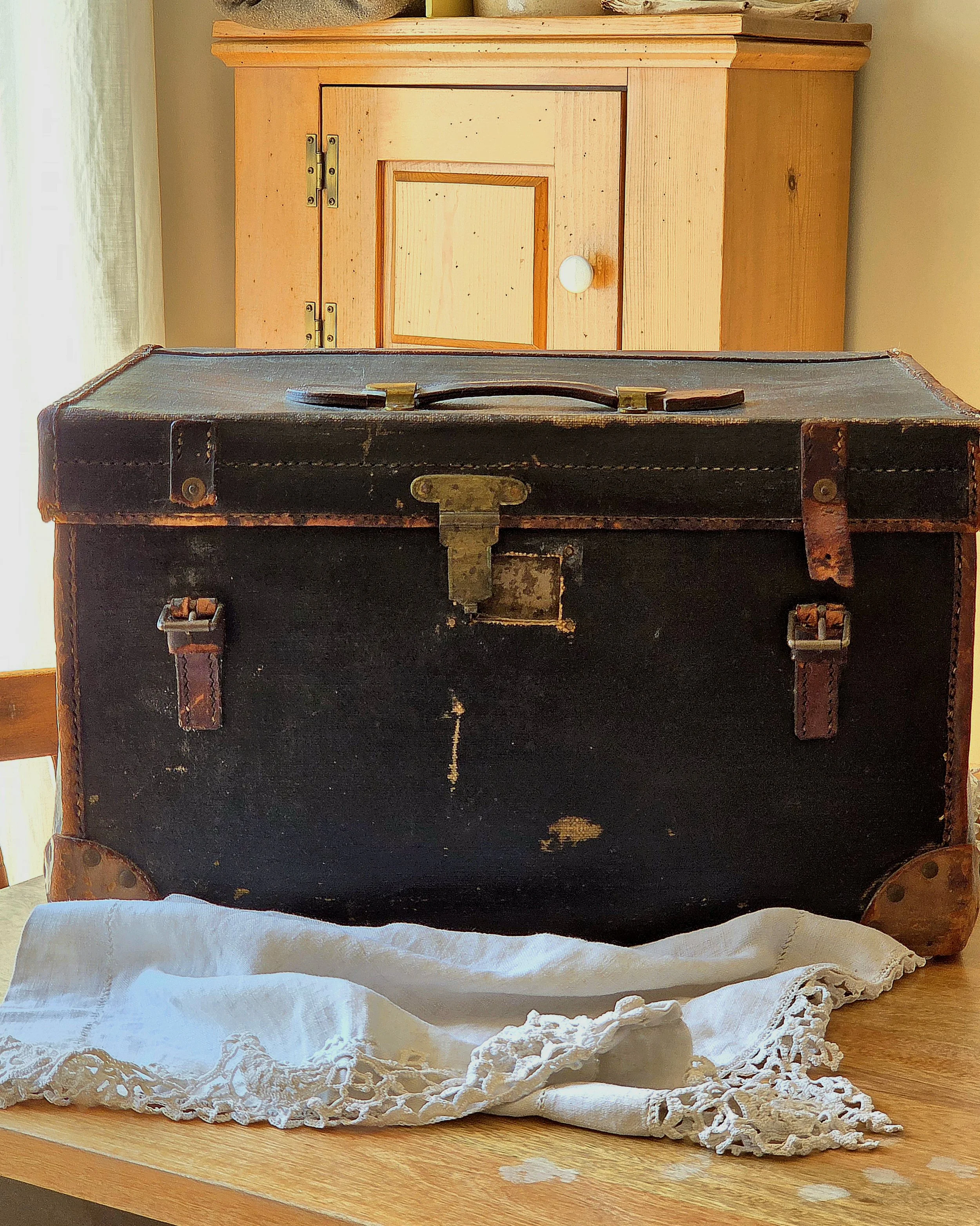 Image 5 of 25
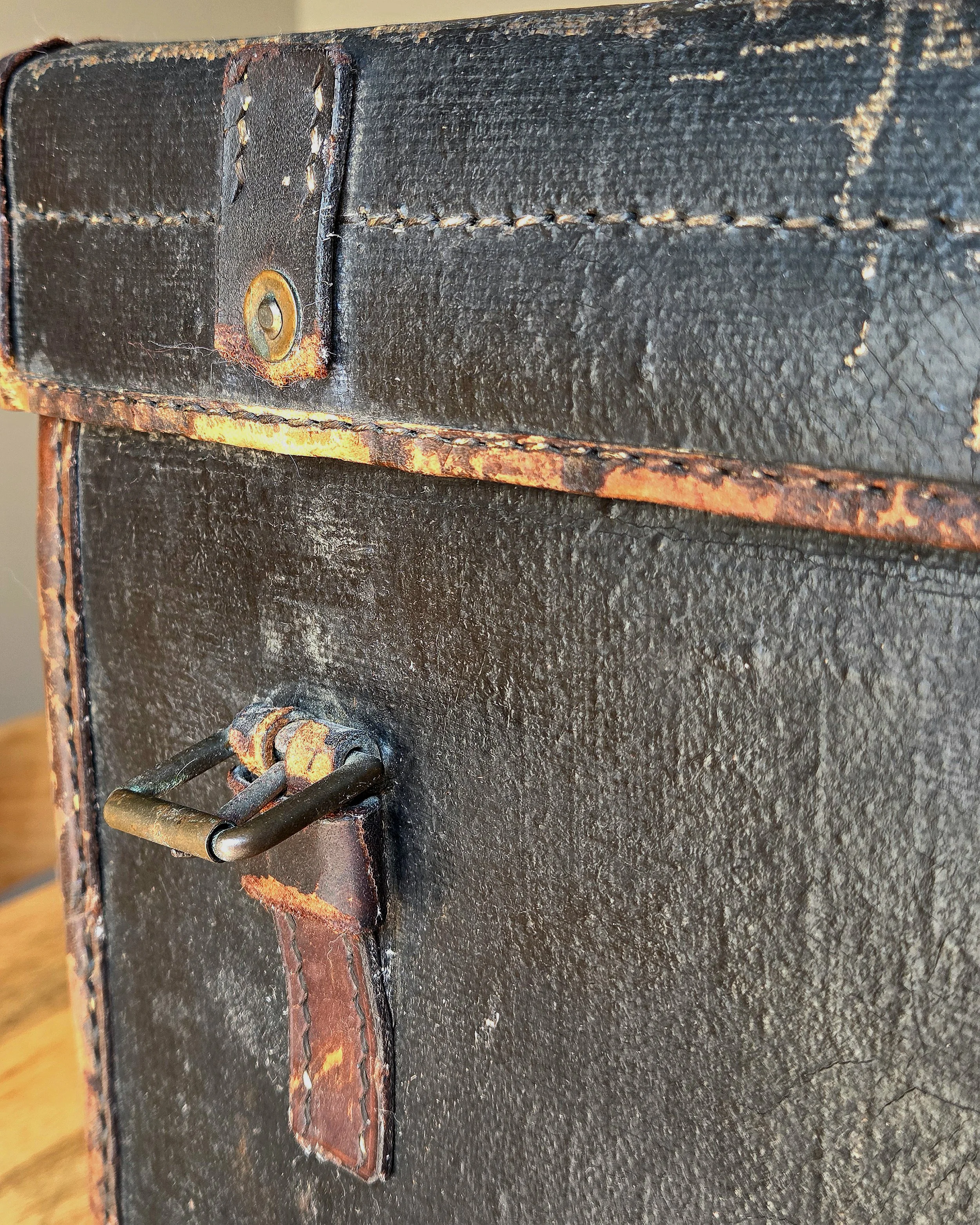 Image 6 of 25
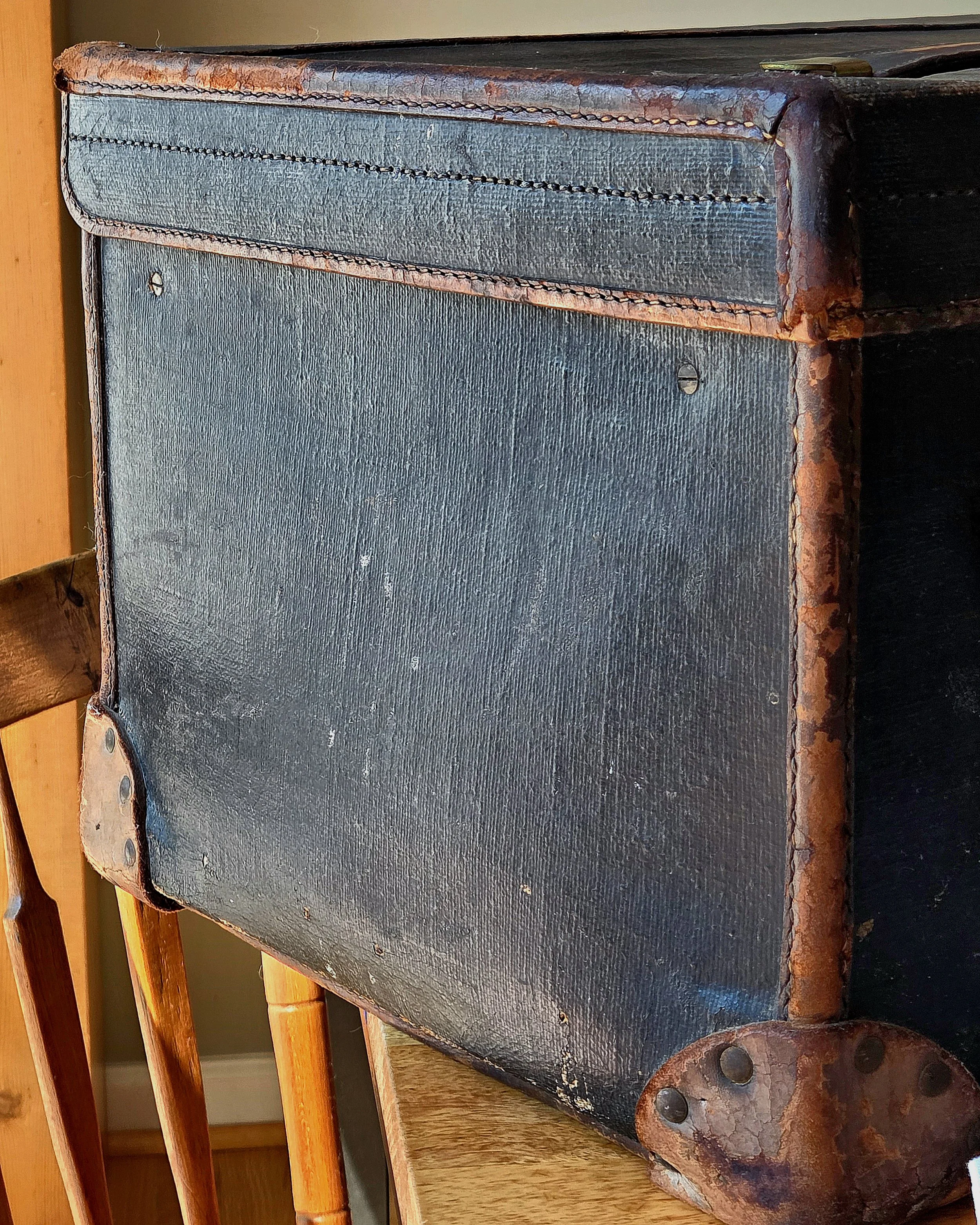 Image 7 of 25
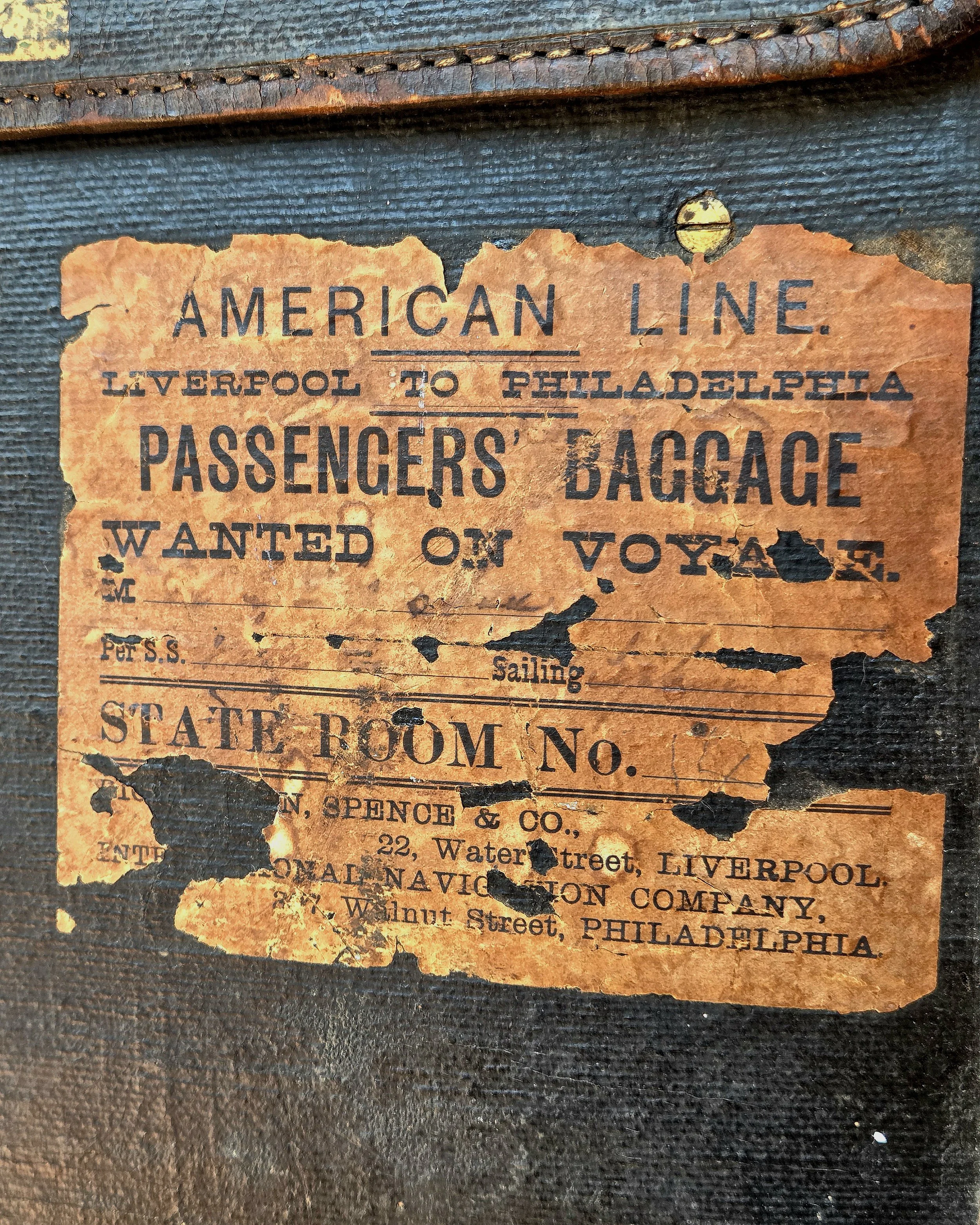 Image 8 of 25
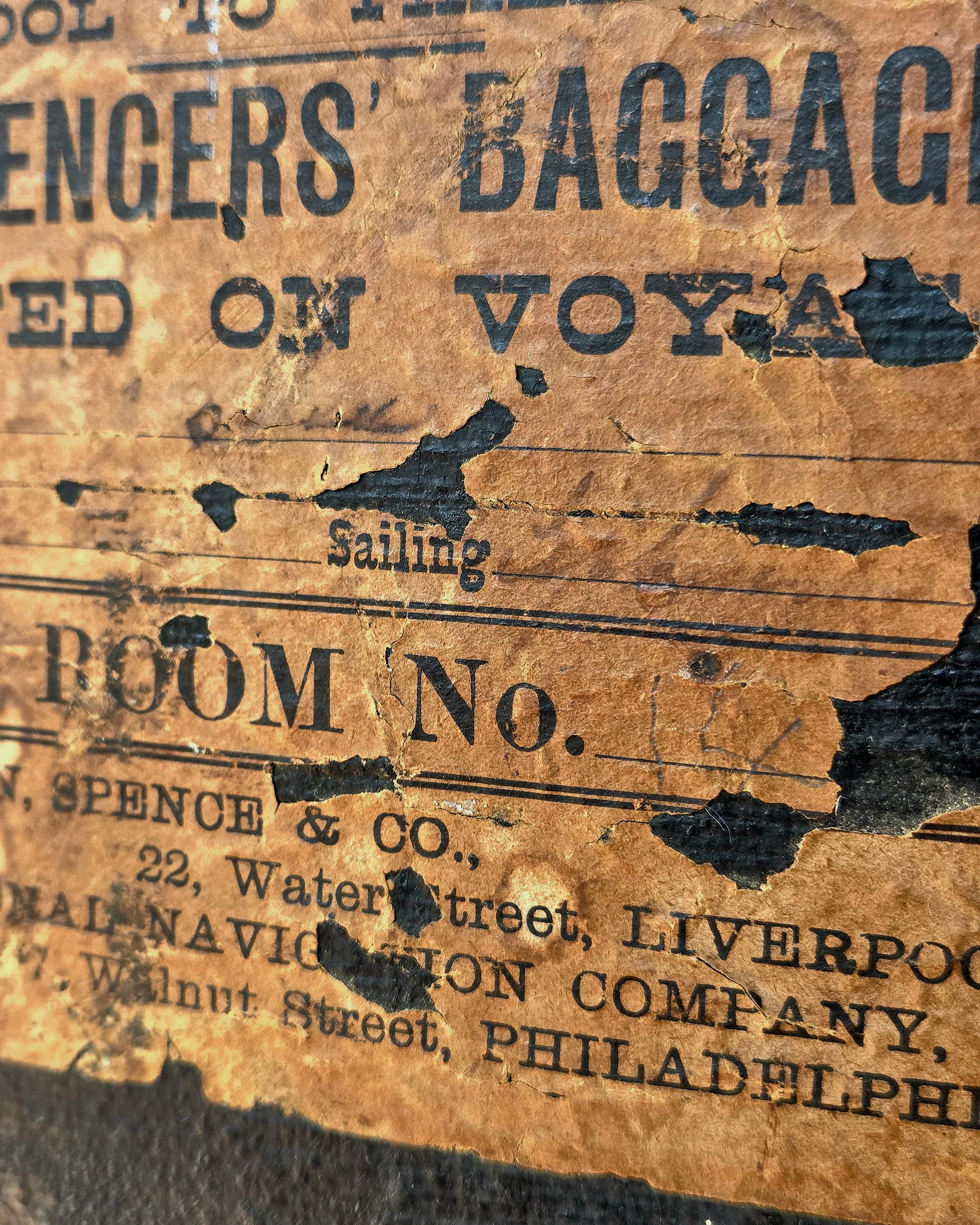 Image 9 of 25
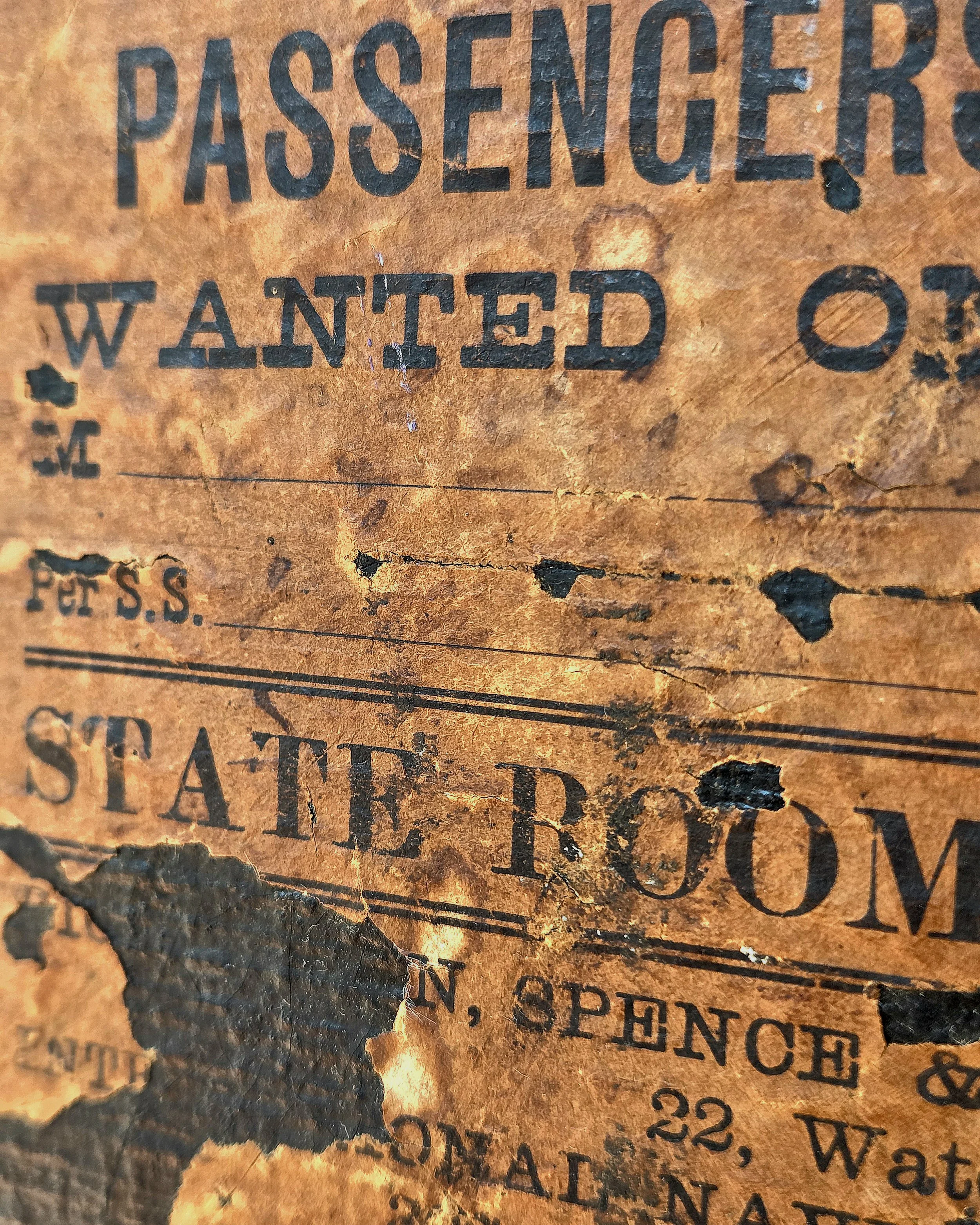 Image 10 of 25
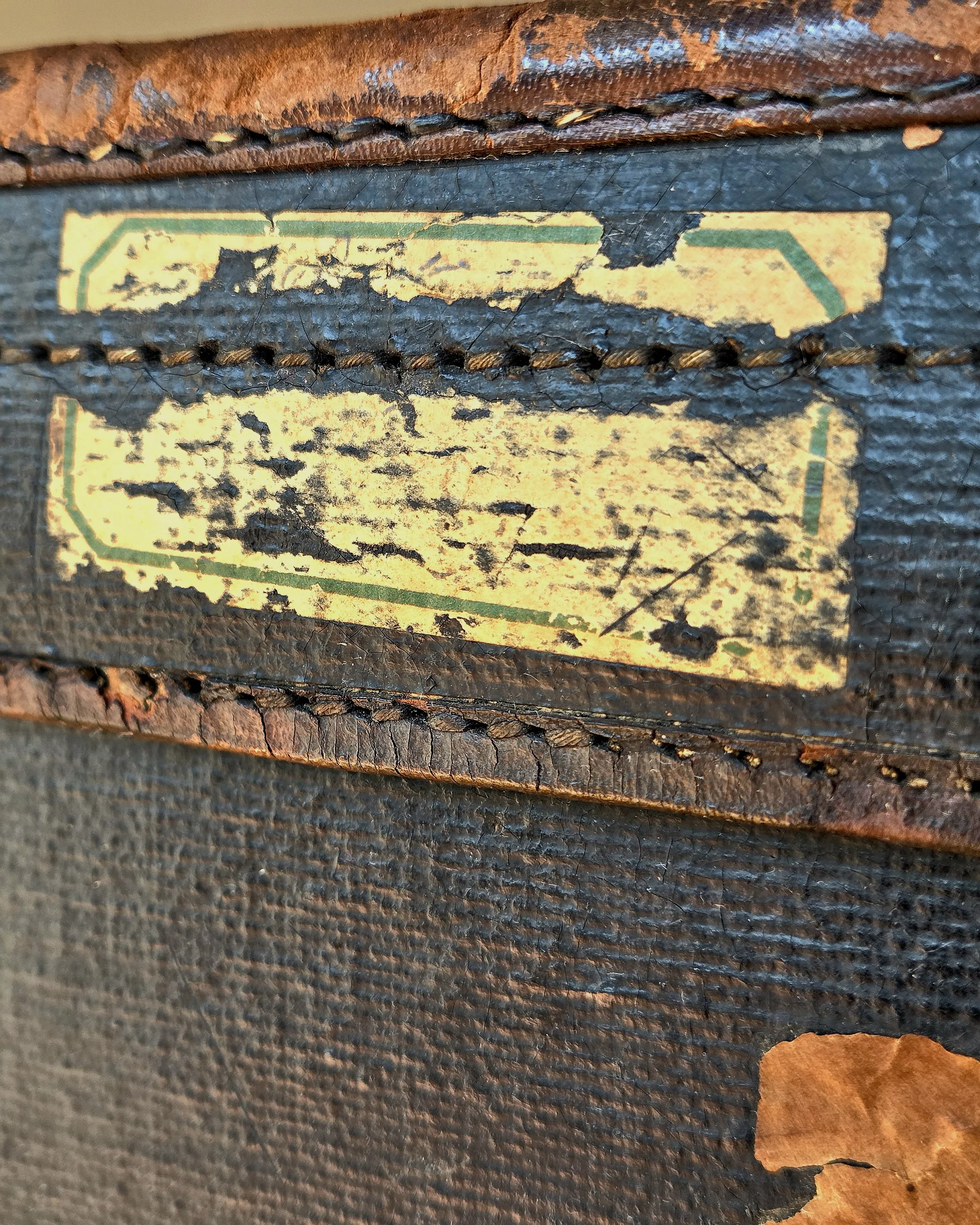 Image 11 of 25
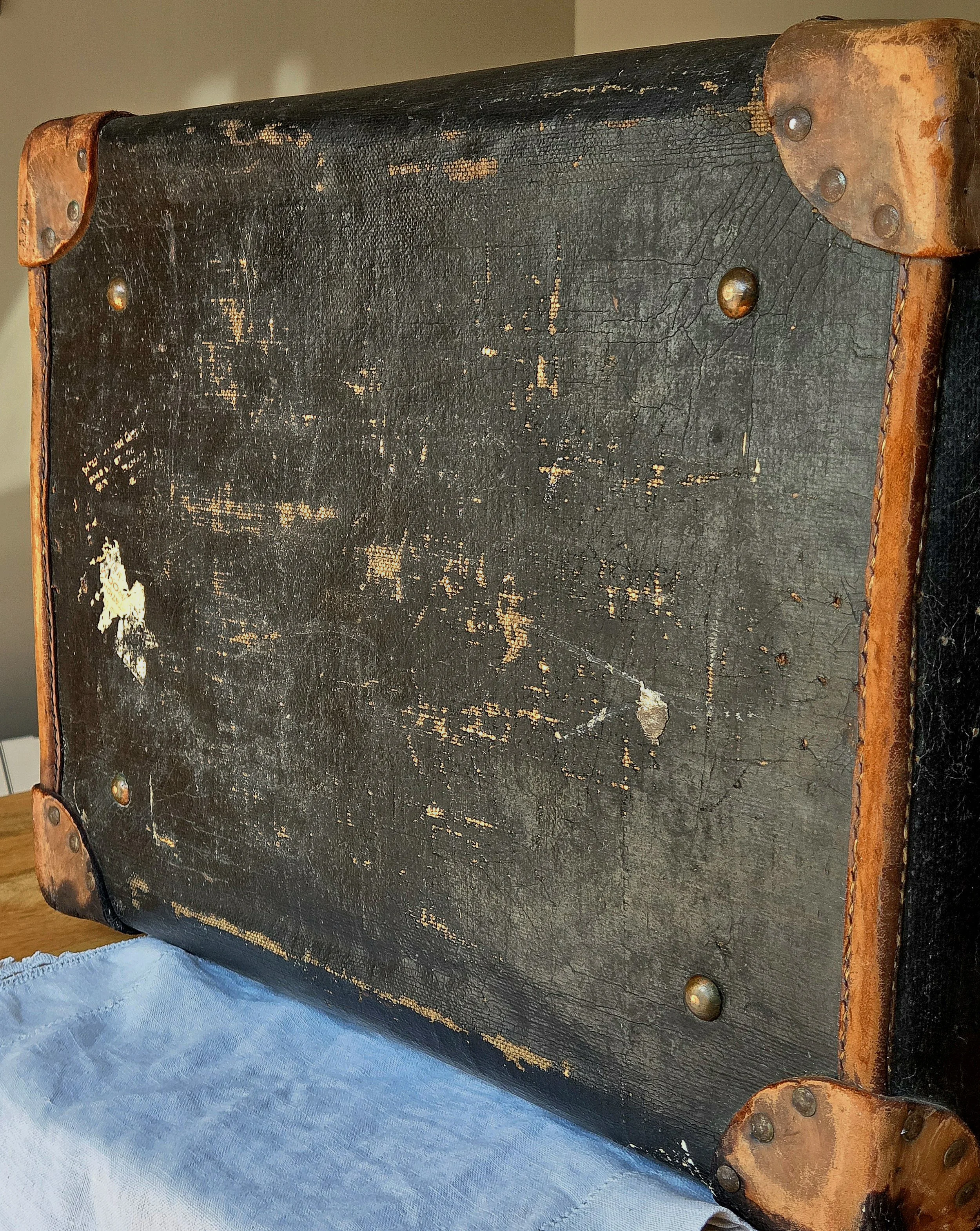 Image 12 of 25
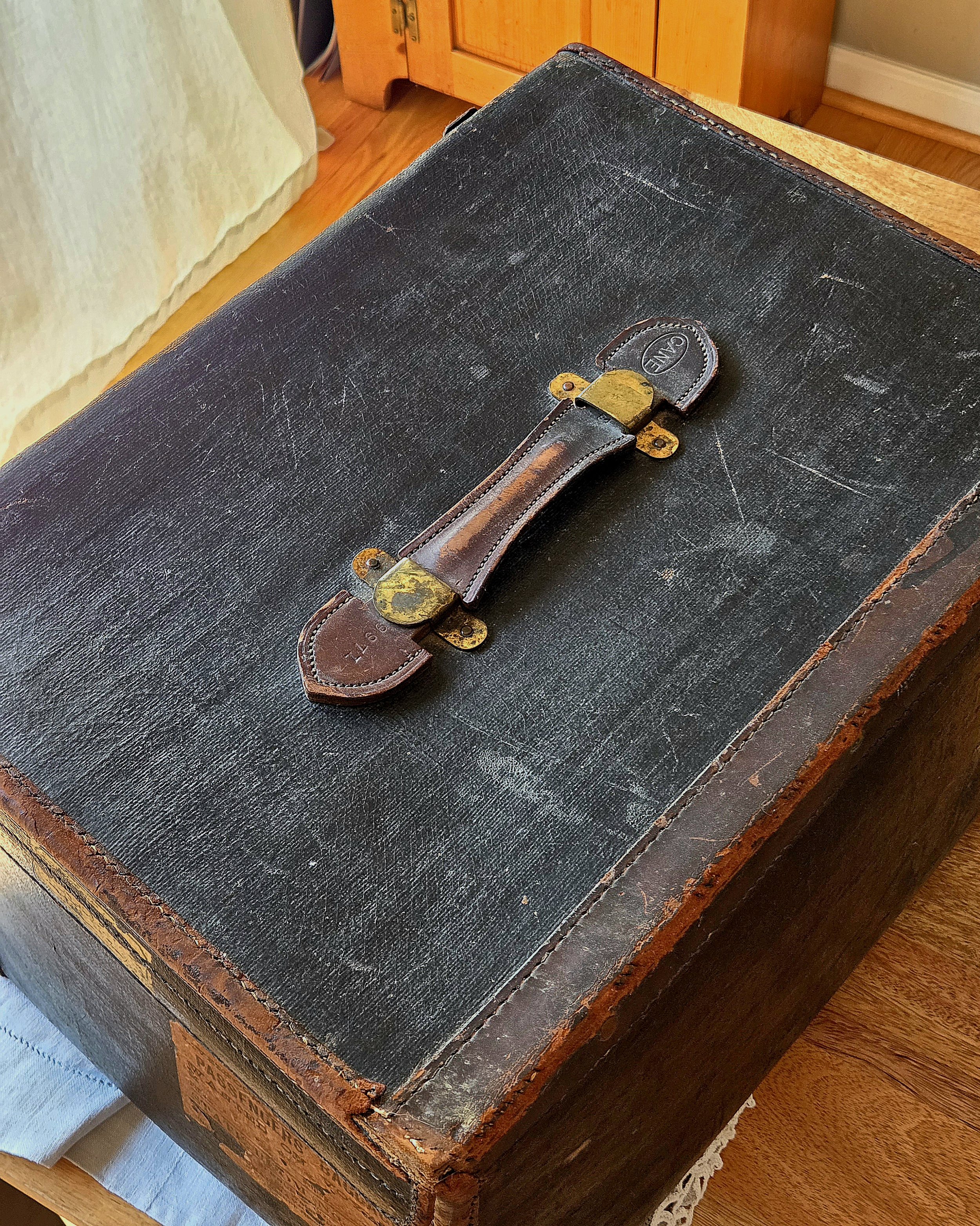 Image 13 of 25
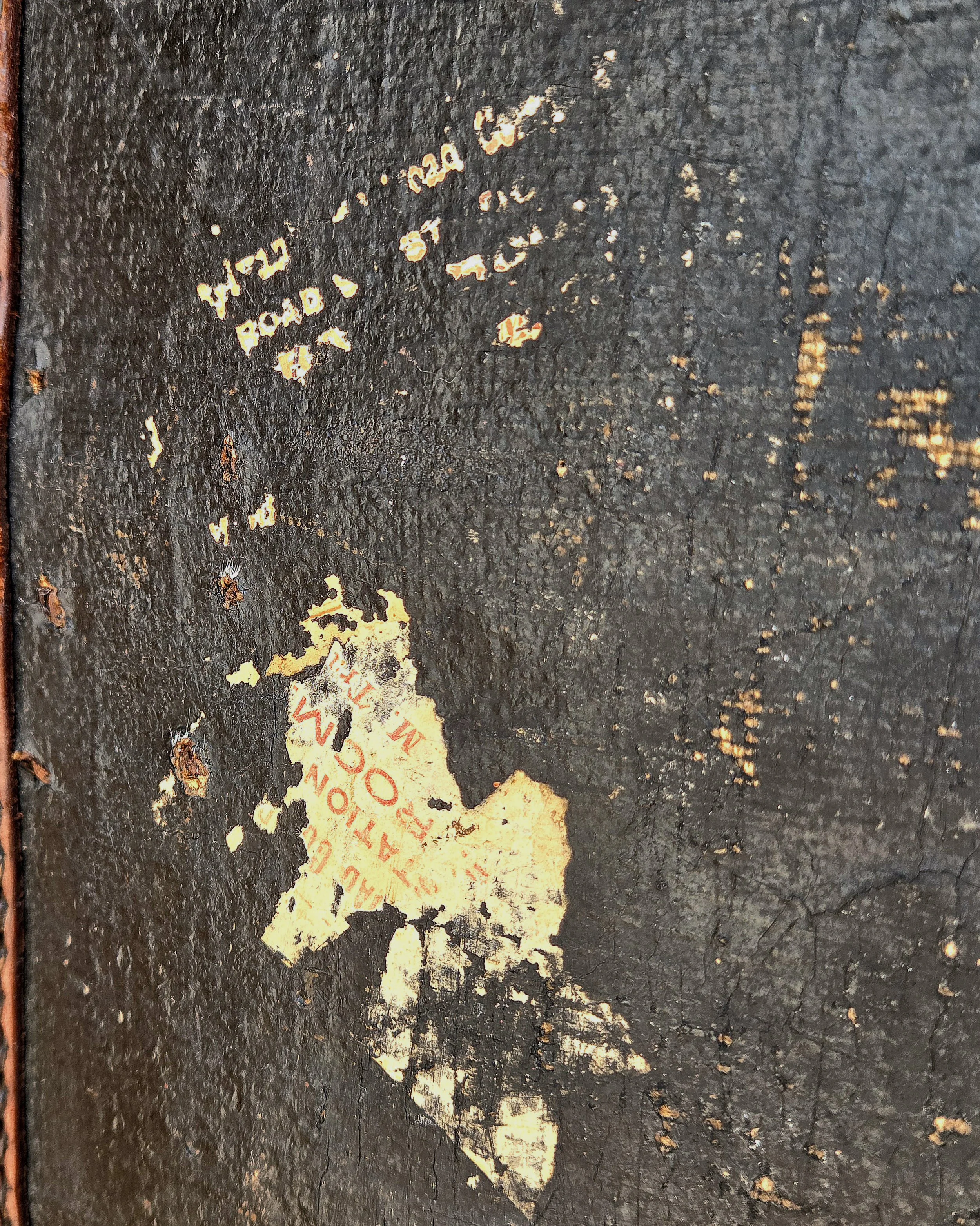 Image 14 of 25
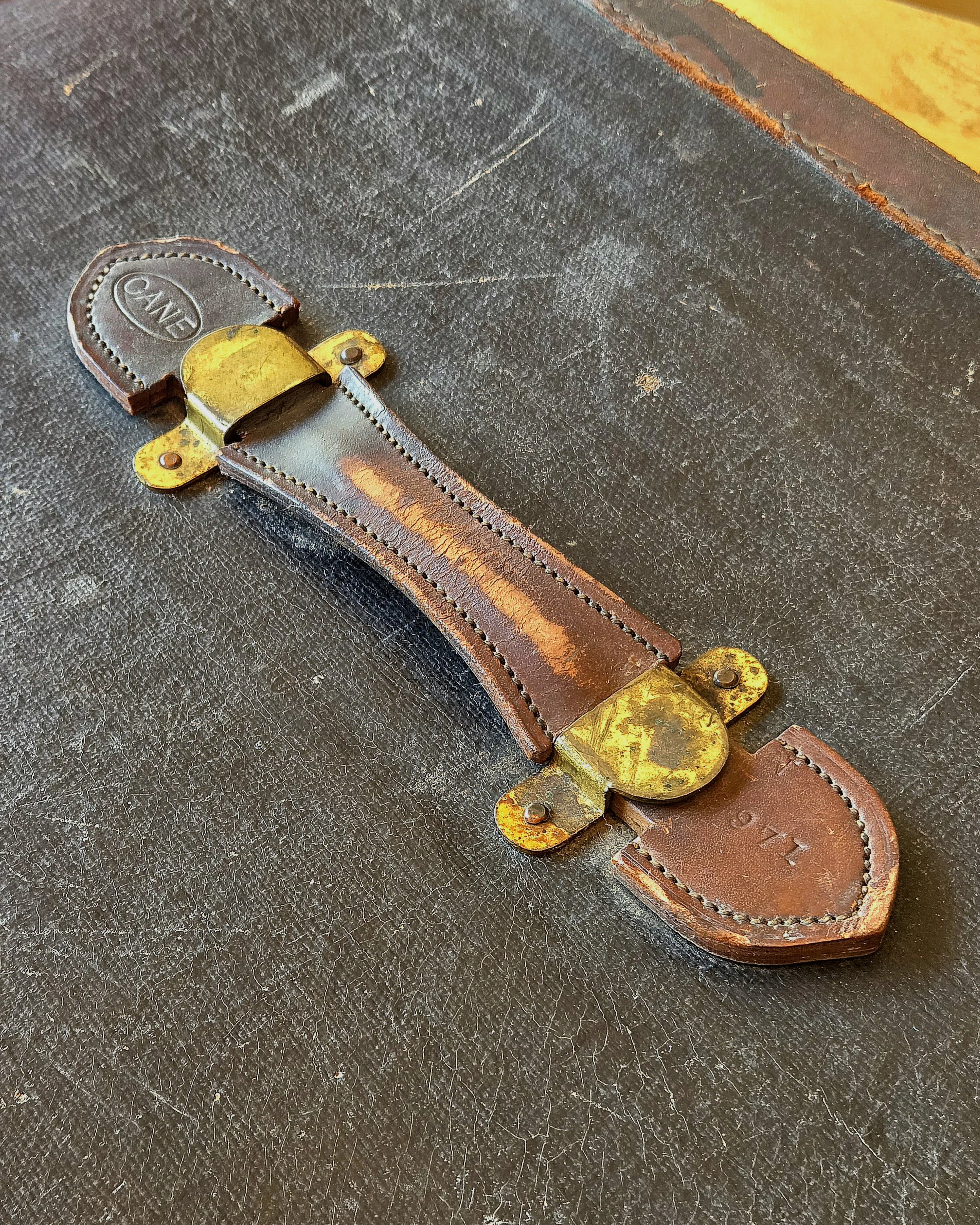 Image 15 of 25
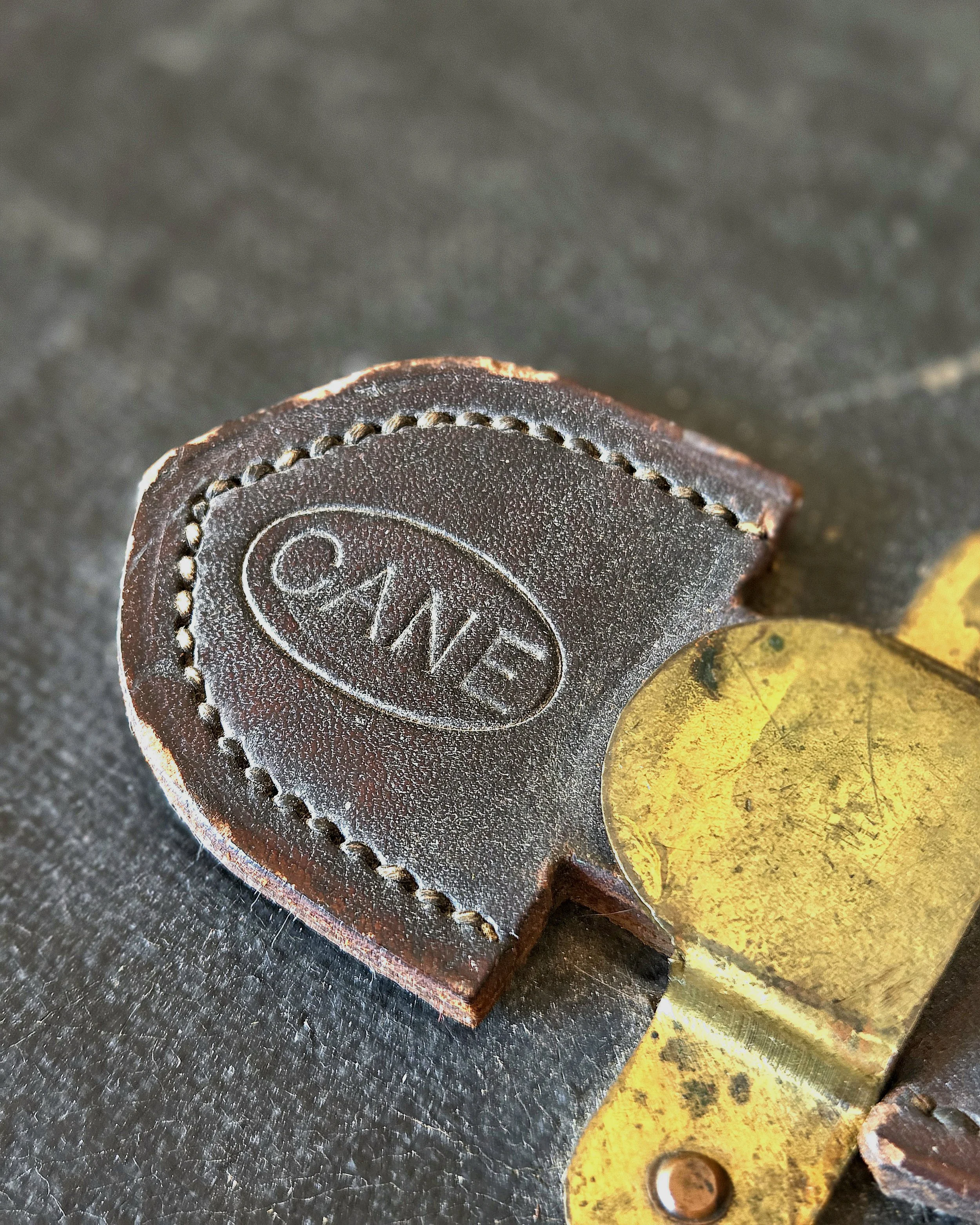 Image 16 of 25
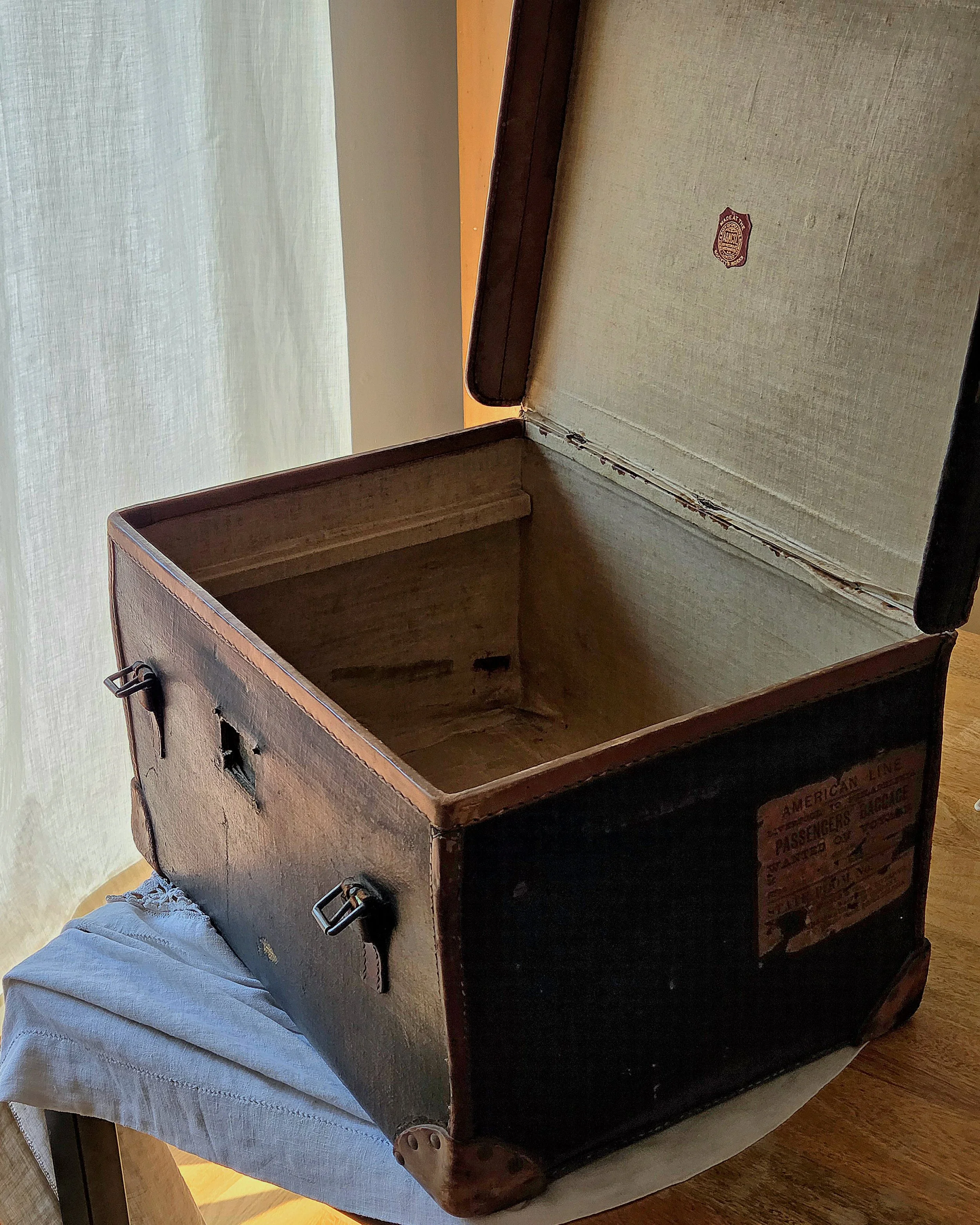 Image 17 of 25
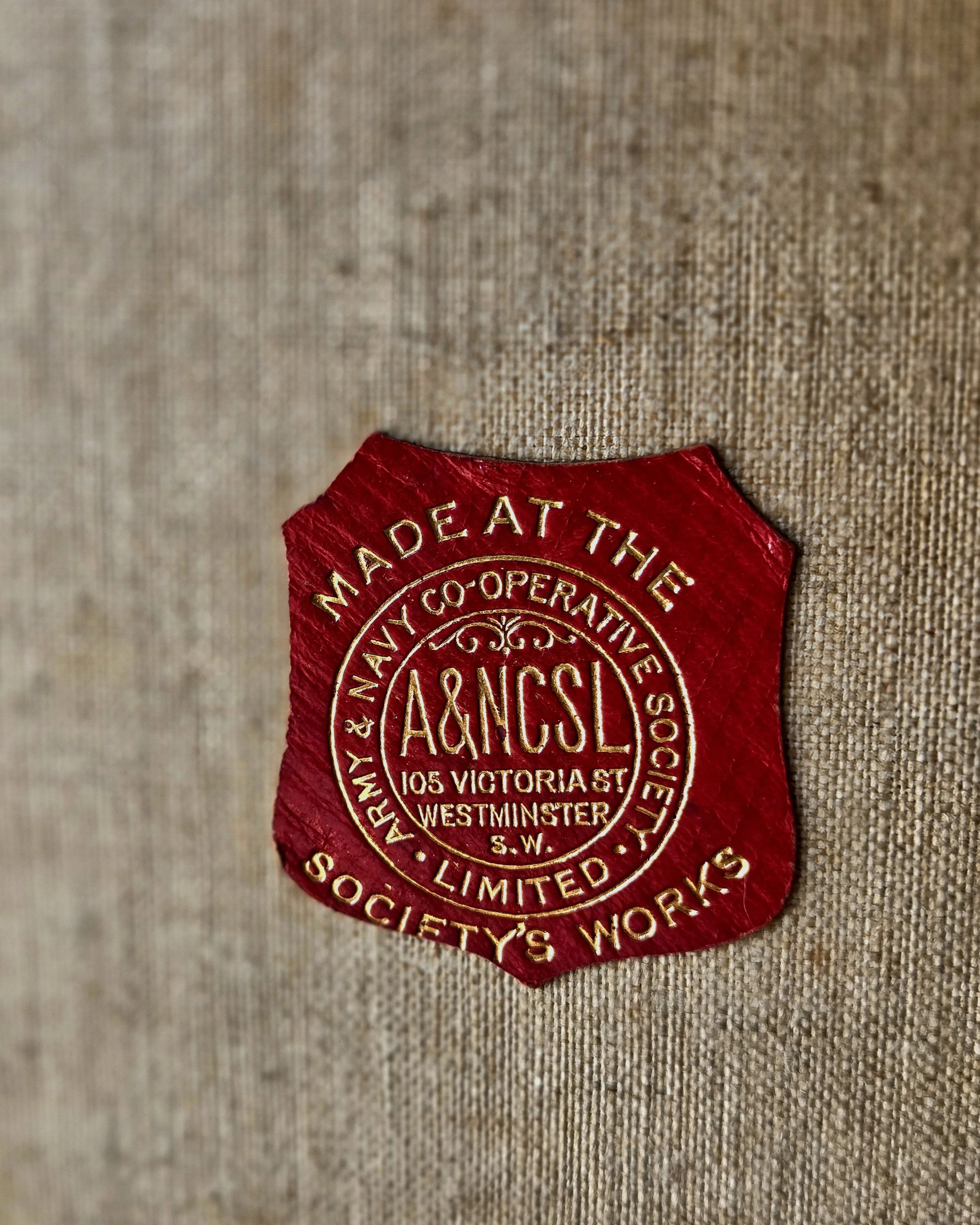 Image 18 of 25
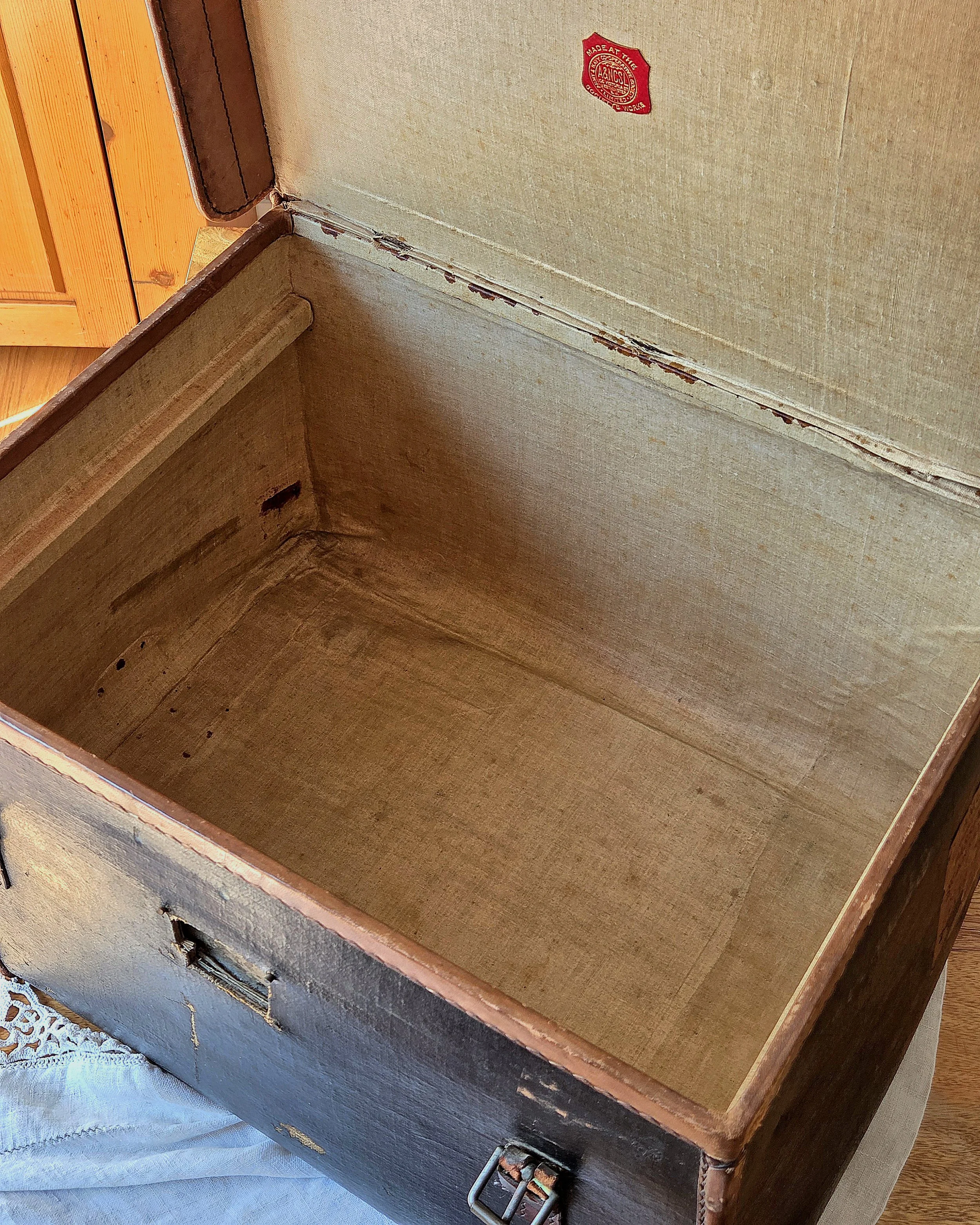 Image 19 of 25
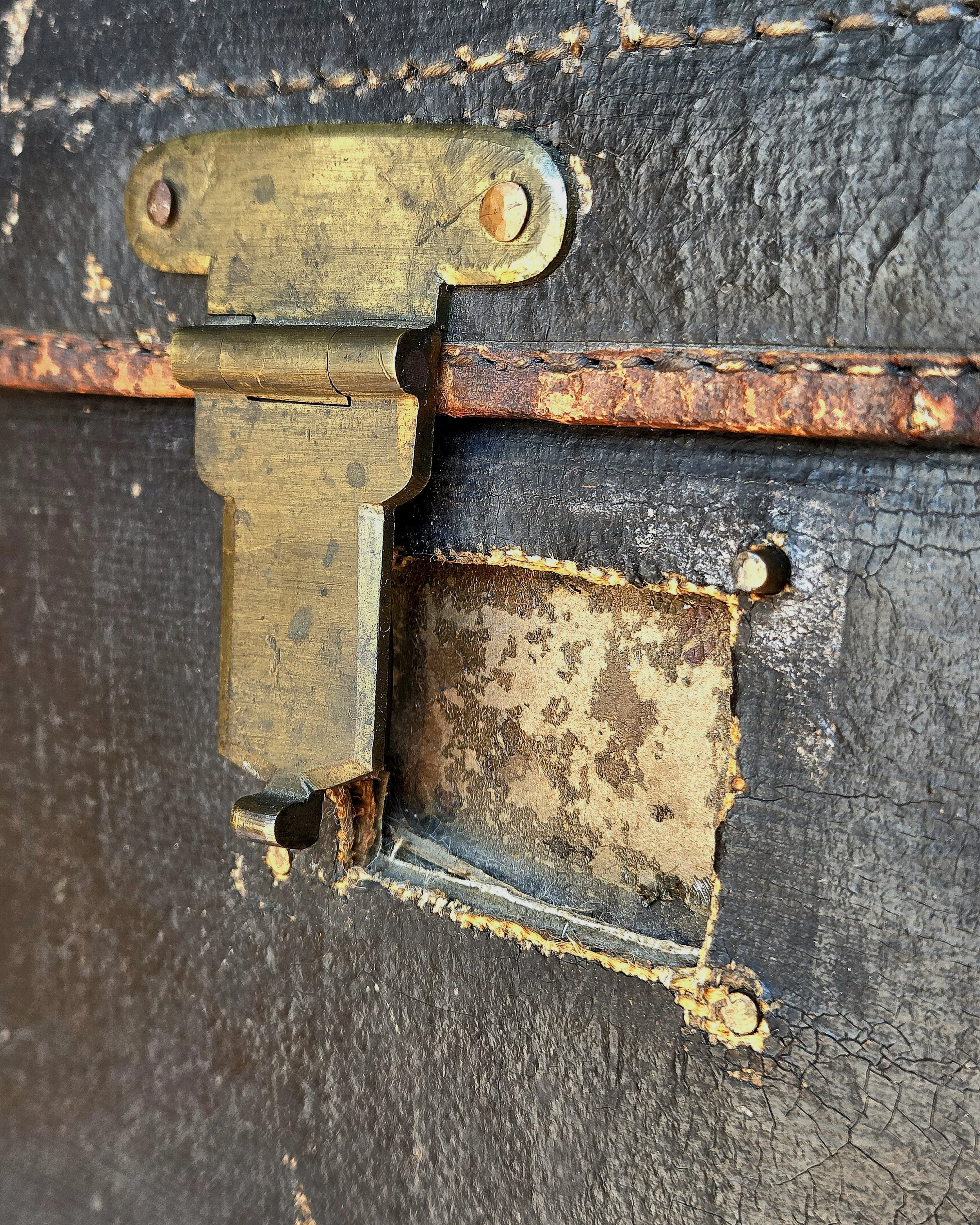 Image 20 of 25
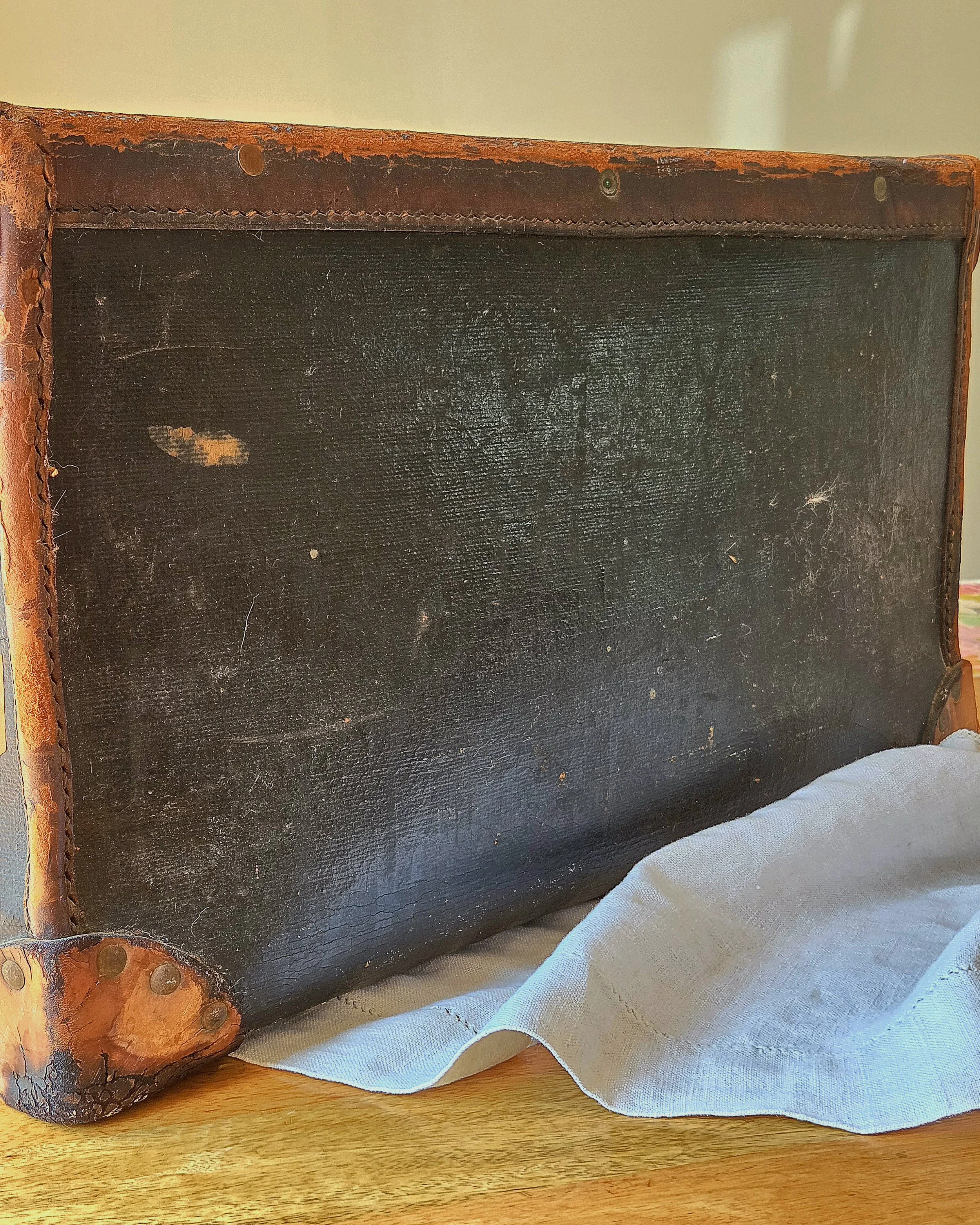 Image 21 of 25
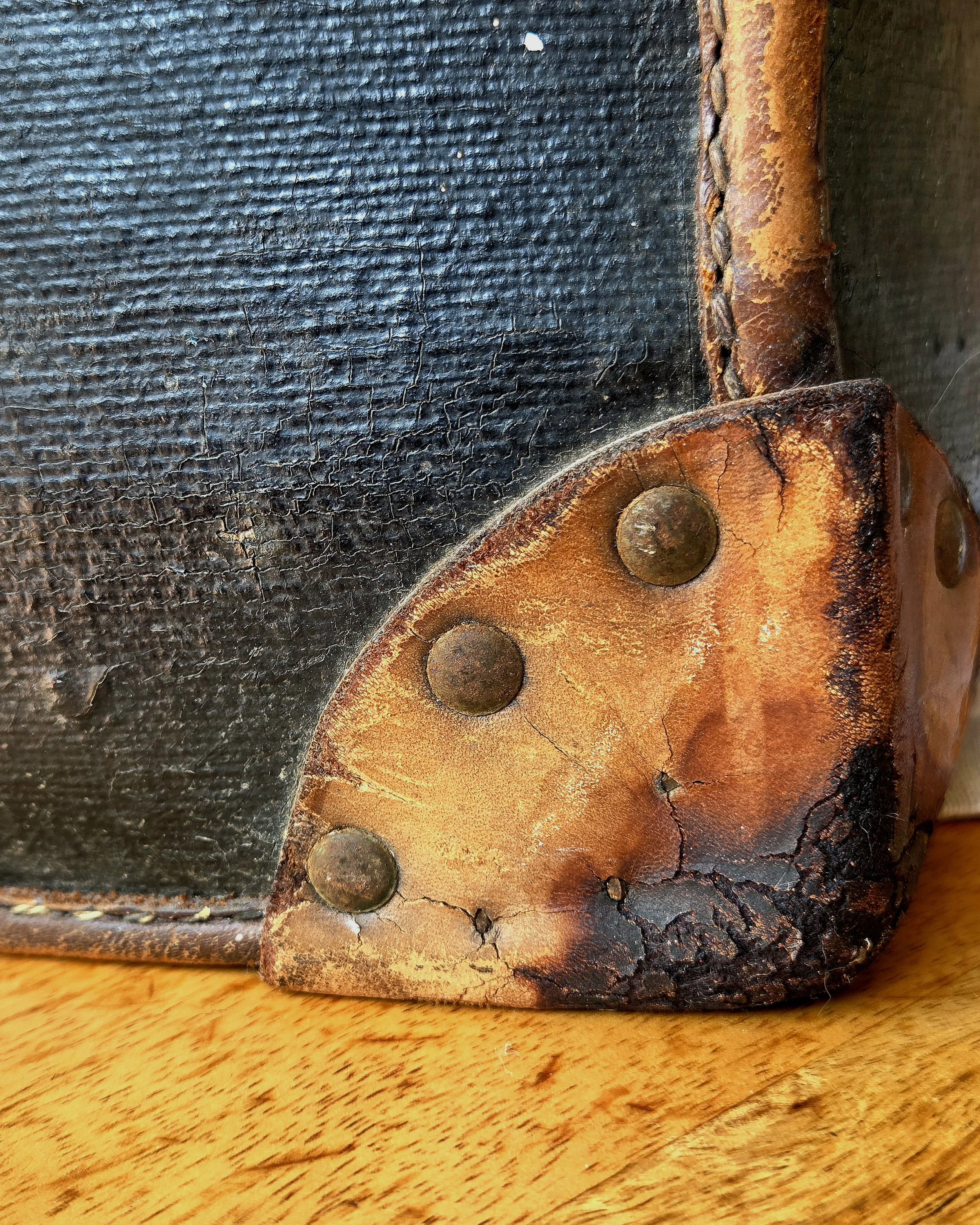 Image 22 of 25
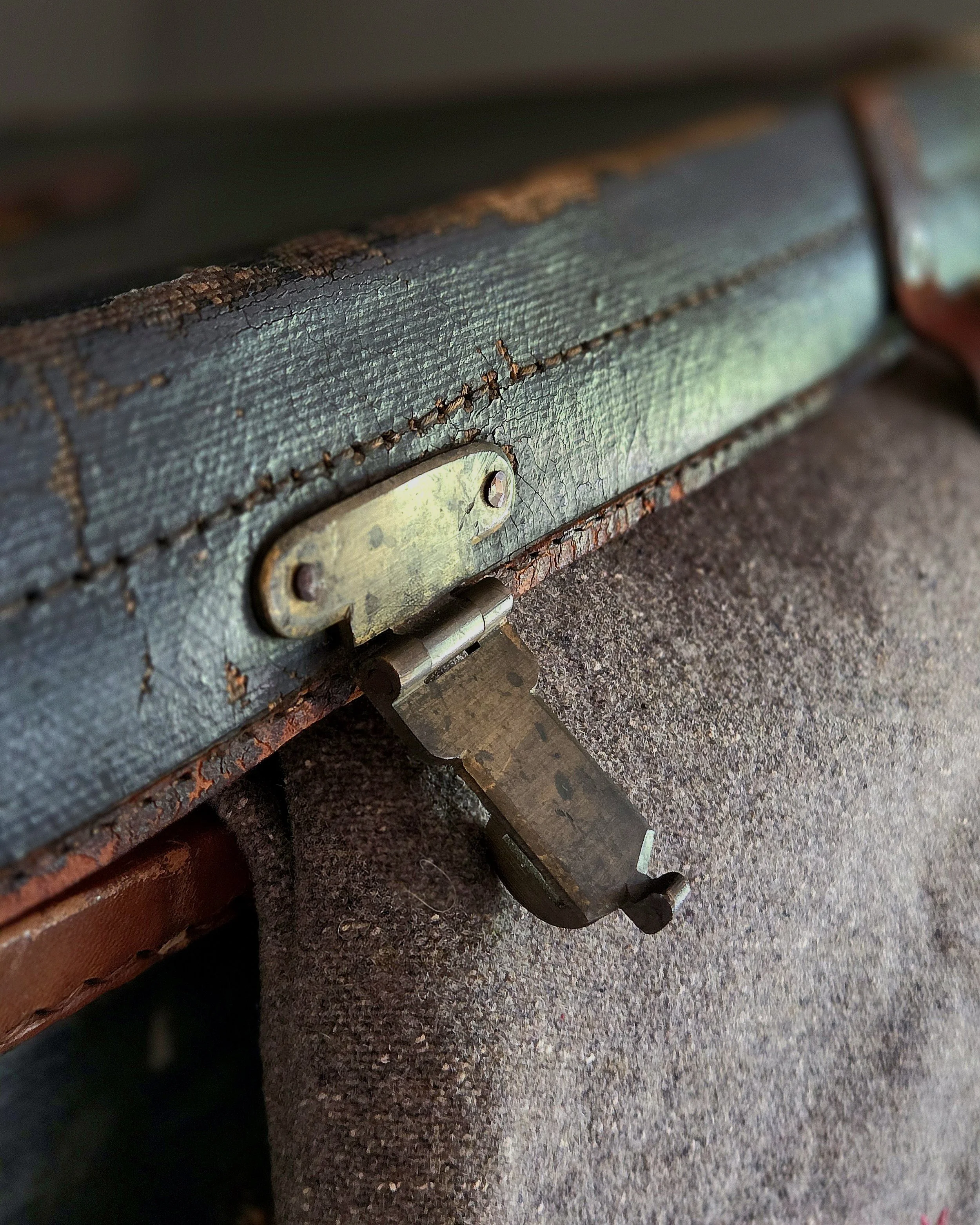 Image 23 of 25
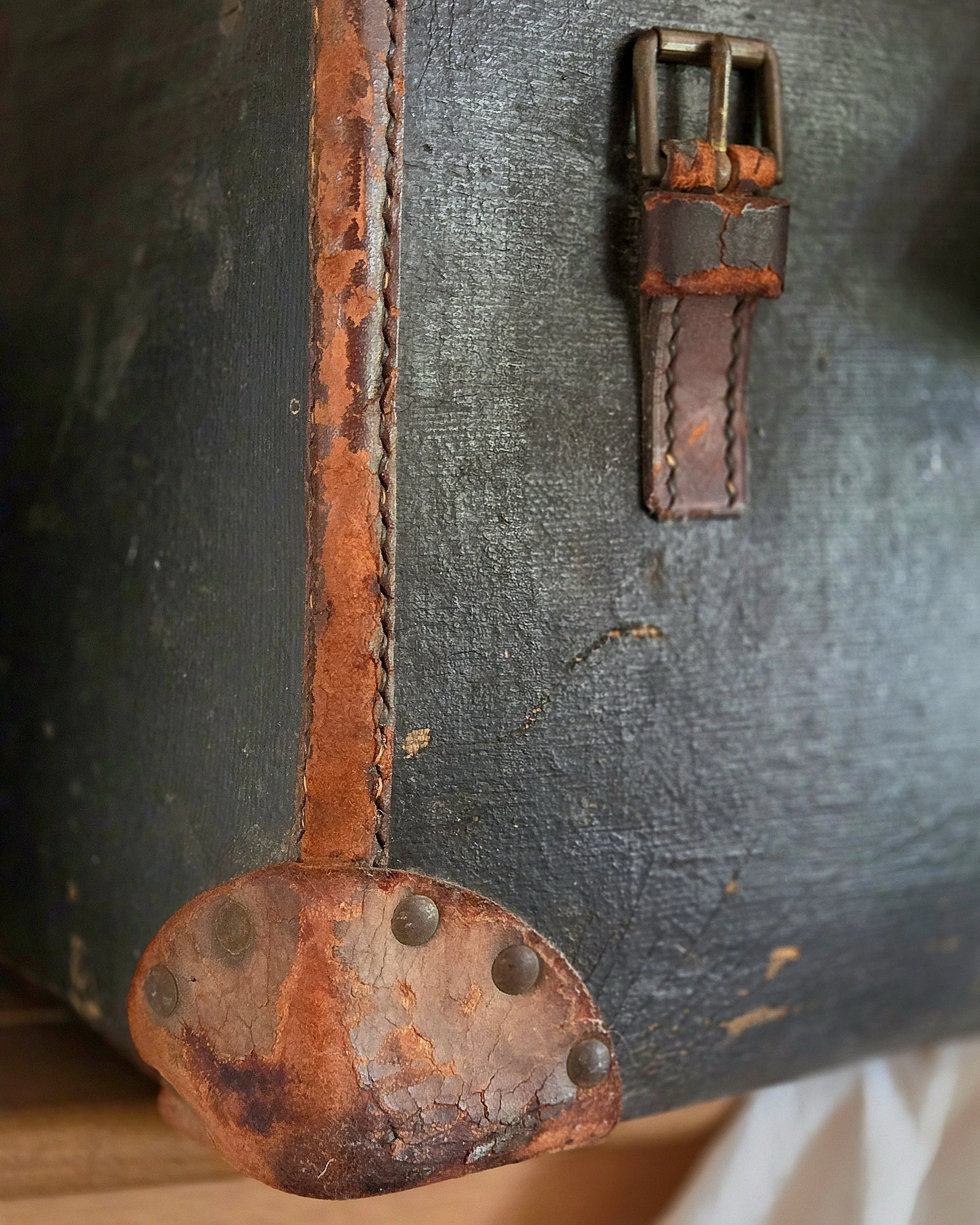 Image 24 of 25
 Image 25 of 25