This substantial american stoneware vessel is a beautiful example of nineteenth-century utilitarian pottery, combining a rich Albany-style brown slip glaze with the practical qualities that made heavy stoneware so useful in everyday life.
The upper portion is finished in a deep chocolate-brown Albany-style slip glaze with a glossy surface, contrasting with the cream-colored stoneware walls below. A distinct flat "shelf" marks the transition between the two sections, while the cream-colored surface retains characteristic age-related crazing. The straight cylindrical form reflects a later nineteenth-century approach to stoneware production, when more regular shapes became increasingly useful for stacking, storing, and shipping.
Its original flush cork and spigot hole provide important clues to its original purpose. The cork would have helped keep out debris, reduce spills and exposure to air, and preserve the contents, while the opening near the base would have accommodated a tap or spigot for dispensing liquid. Most likely, this vessel served as a household water cooler, with its thick stoneware walls naturally helping to keep water cool. Similar vessels could also have been useful at work sites or carried along for travel where a durable, cool storage vessel was needed.
Its form would not, however, have been limited to water. Comparable stoneware containers could be used in taverns, general stores, and households for dispensing or storing liquids in quantity, including cooking oil and spirits. The surviving fittings therefore preserve a glimpse into a period when a single sturdy vessel could serve a variety of practical purposes depending on its setting.
The underside retains clear striations left when the vessel was removed from the potter's wheel during production, while the handle was applied separately by hand. These marks of manufacture offer a direct connection to the potter's work and are a reminder that even ordinary household objects were shaped through individual acts of craft.
Today, its scale, weight, warm brown glaze, and wonderfully utilitarian character make it particularly well suited to a collected kitchen, pantry, garden room, country house interior, or display of historic domestic objects. Whether appreciated as a former water cooler or simply as an evocative piece of nineteenth-century stoneware, it carries the quiet beauty of an object made to be used.
DETAILS
Date: ca. 1900-1920
Origin: United States
Medium: Hand-thrown stoneware with Albany-style slip glaze
Features: Original flush cork; spigot opening near base; hand-applied handle
Measurements: 10.5 inches tall; 7 inch diameter base
Style: Antique Stoneware, Primitive Decor, Country Kitchen, English Country Style, American Country Decor, Farmhouse Decor, Collected Interiors
CARE
Handle with care due to the weight and age of the stoneware. Keep indoors or in a protected, dry location. Avoid sudden temperature changes and prolonged exposure to moisture. Do not use the original cork or spigot opening for food or beverage storage unless the vessel has been professionally evaluated for safe contemporary use.
CONDITION NOTE
This antique stoneware vessel exhibits age-appropriate wear, including characteristic crazing to the cream-colored stoneware, surface variations, and minor marks consistent with its history of use and storage. There is one more visible chip on the spout (see photos). The original flush cork is present, and the spigot opening remains visible near the base. The underside retains pronounced striations from the original throwing and removal process, and the handle shows evidence of being hand applied. Please examine the listing photographs carefully for additional condition details. These signs of age and manufacture are part of the object's character and appeal.
This substantial american stoneware vessel is a beautiful example of nineteenth-century utilitarian pottery, combining a rich Albany-style brown slip glaze with the practical qualities that made heavy stoneware so useful in everyday life.
The upper portion is finished in a deep chocolate-brown Albany-style slip glaze with a glossy surface, contrasting with the cream-colored stoneware walls below. A distinct flat "shelf" marks the transition between the two sections, while the cream-colored surface retains characteristic age-related crazing. The straight cylindrical form reflects a later nineteenth-century approach to stoneware production, when more regular shapes became increasingly useful for stacking, storing, and shipping.
Its original flush cork and spigot hole provide important clues to its original purpose. The cork would have helped keep out debris, reduce spills and exposure to air, and preserve the contents, while the opening near the base would have accommodated a tap or spigot for dispensing liquid. Most likely, this vessel served as a household water cooler, with its thick stoneware walls naturally helping to keep water cool. Similar vessels could also have been useful at work sites or carried along for travel where a durable, cool storage vessel was needed.
Its form would not, however, have been limited to water. Comparable stoneware containers could be used in taverns, general stores, and households for dispensing or storing liquids in quantity, including cooking oil and spirits. The surviving fittings therefore preserve a glimpse into a period when a single sturdy vessel could serve a variety of practical purposes depending on its setting.
The underside retains clear striations left when the vessel was removed from the potter's wheel during production, while the handle was applied separately by hand. These marks of manufacture offer a direct connection to the potter's work and are a reminder that even ordinary household objects were shaped through individual acts of craft.
Today, its scale, weight, warm brown glaze, and wonderfully utilitarian character make it particularly well suited to a collected kitchen, pantry, garden room, country house interior, or display of historic domestic objects. Whether appreciated as a former water cooler or simply as an evocative piece of nineteenth-century stoneware, it carries the quiet beauty of an object made to be used.
DETAILS
Date: ca. 1900-1920
Origin: United States
Medium: Hand-thrown stoneware with Albany-style slip glaze
Features: Original flush cork; spigot opening near base; hand-applied handle
Measurements: 10.5 inches tall; 7 inch diameter base
Style: Antique Stoneware, Primitive Decor, Country Kitchen, English Country Style, American Country Decor, Farmhouse Decor, Collected Interiors
CARE
Handle with care due to the weight and age of the stoneware. Keep indoors or in a protected, dry location. Avoid sudden temperature changes and prolonged exposure to moisture. Do not use the original cork or spigot opening for food or beverage storage unless the vessel has been professionally evaluated for safe contemporary use.
CONDITION NOTE
This antique stoneware vessel exhibits age-appropriate wear, including characteristic crazing to the cream-colored stoneware, surface variations, and minor marks consistent with its history of use and storage. There is one more visible chip on the spout (see photos). The original flush cork is present, and the spigot opening remains visible near the base. The underside retains pronounced striations from the original throwing and removal process, and the handle shows evidence of being hand applied. Please examine the listing photographs carefully for additional condition details. These signs of age and manufacture are part of the object's character and appeal.
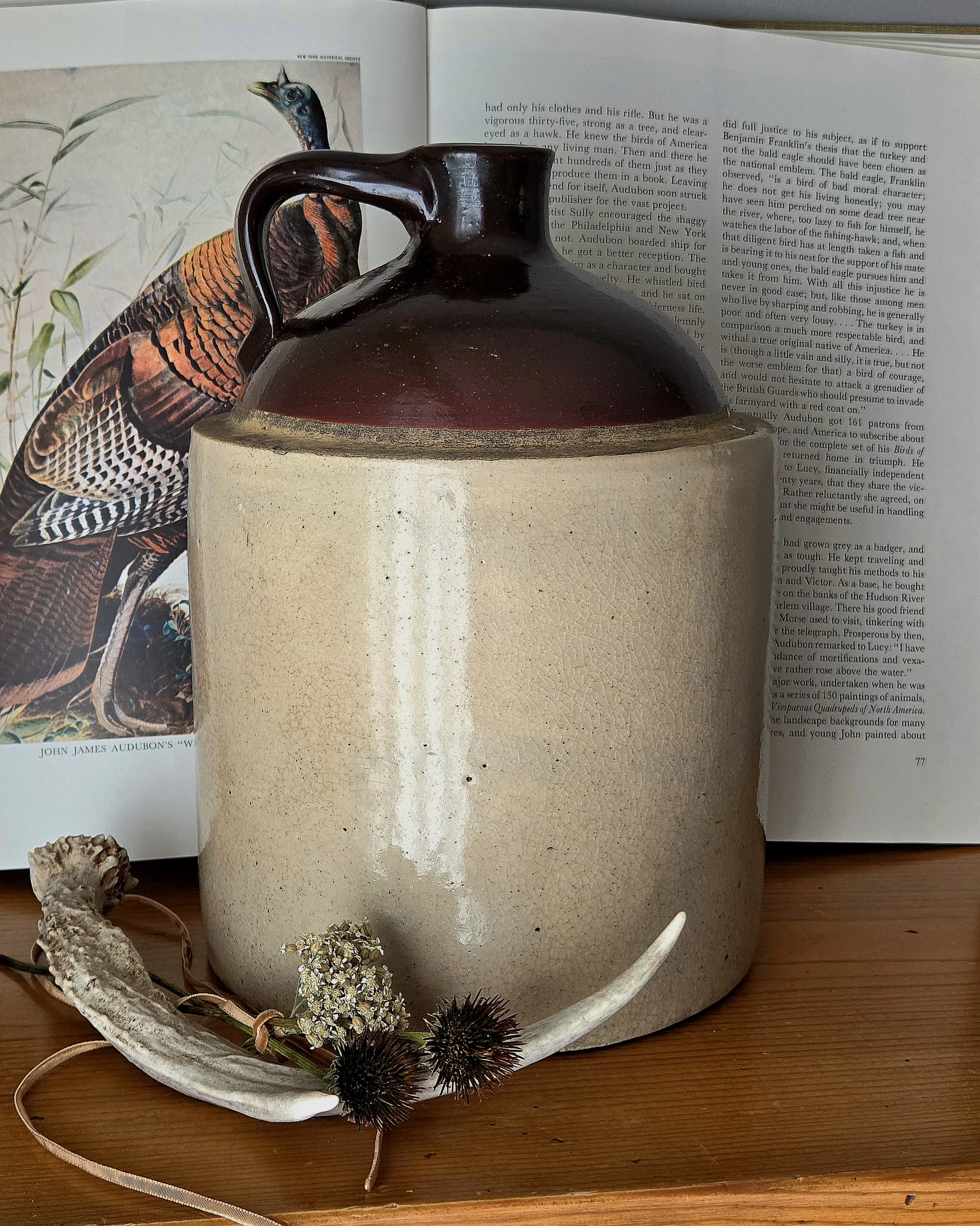 Image 1 of 16
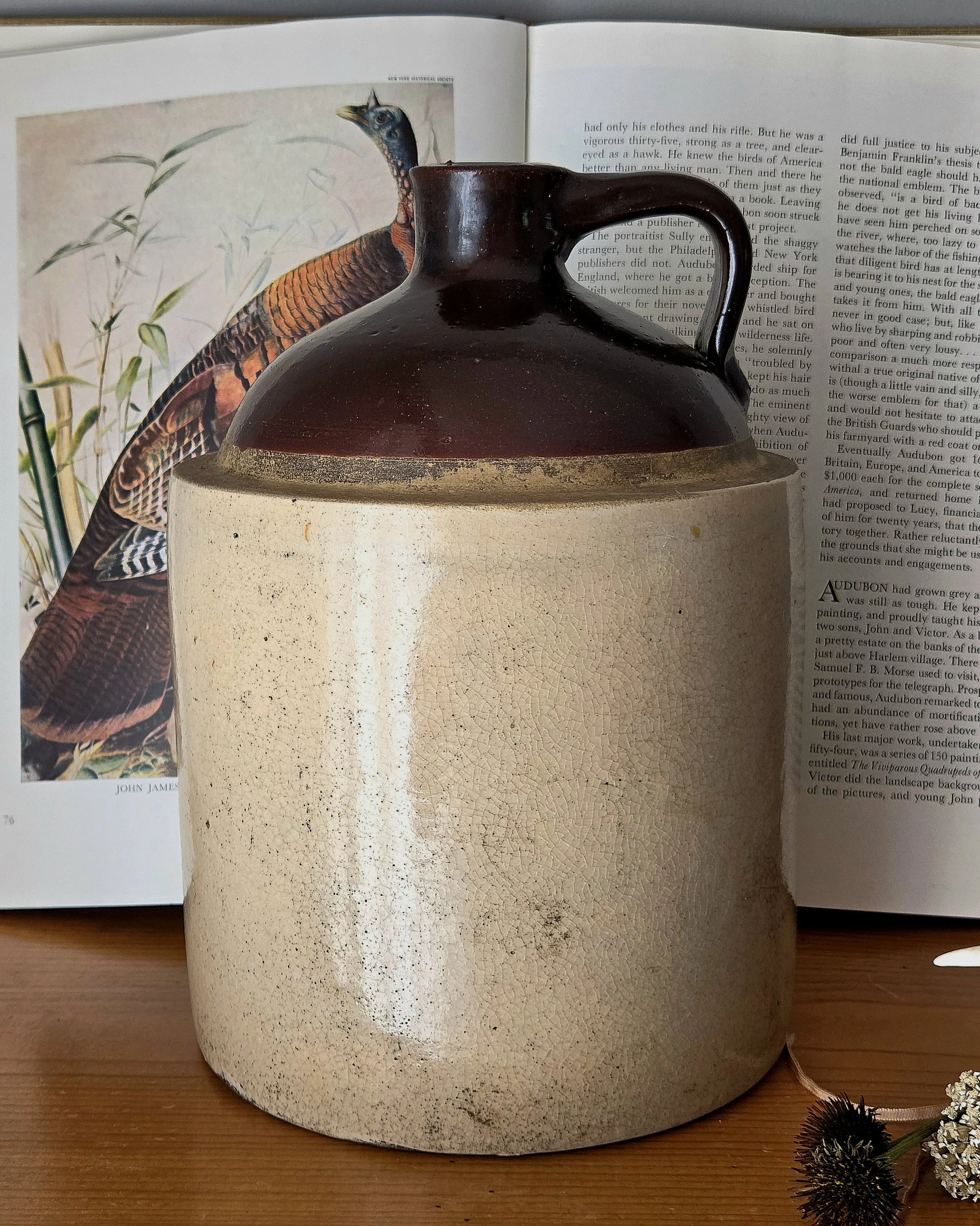 Image 2 of 16
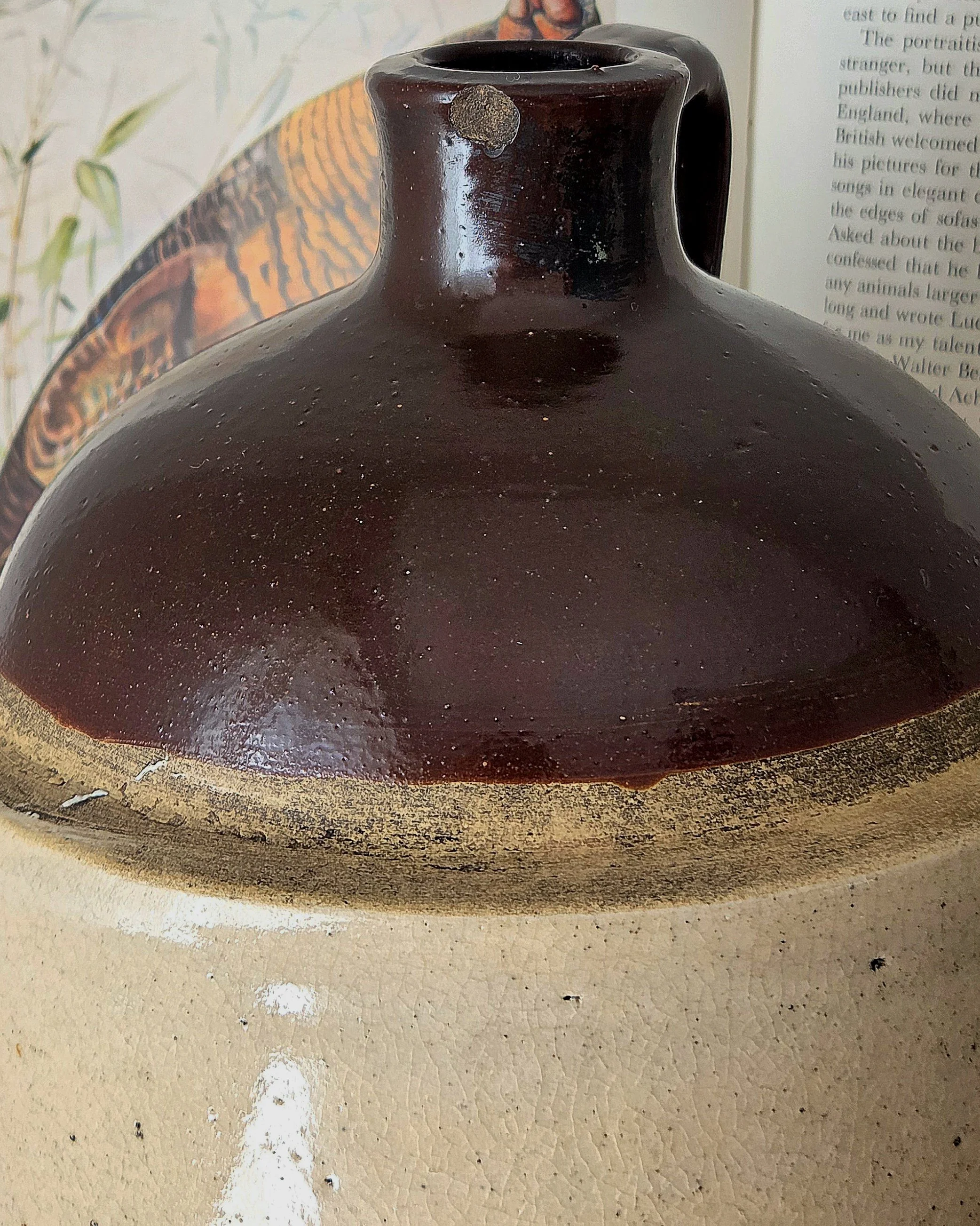 Image 3 of 16
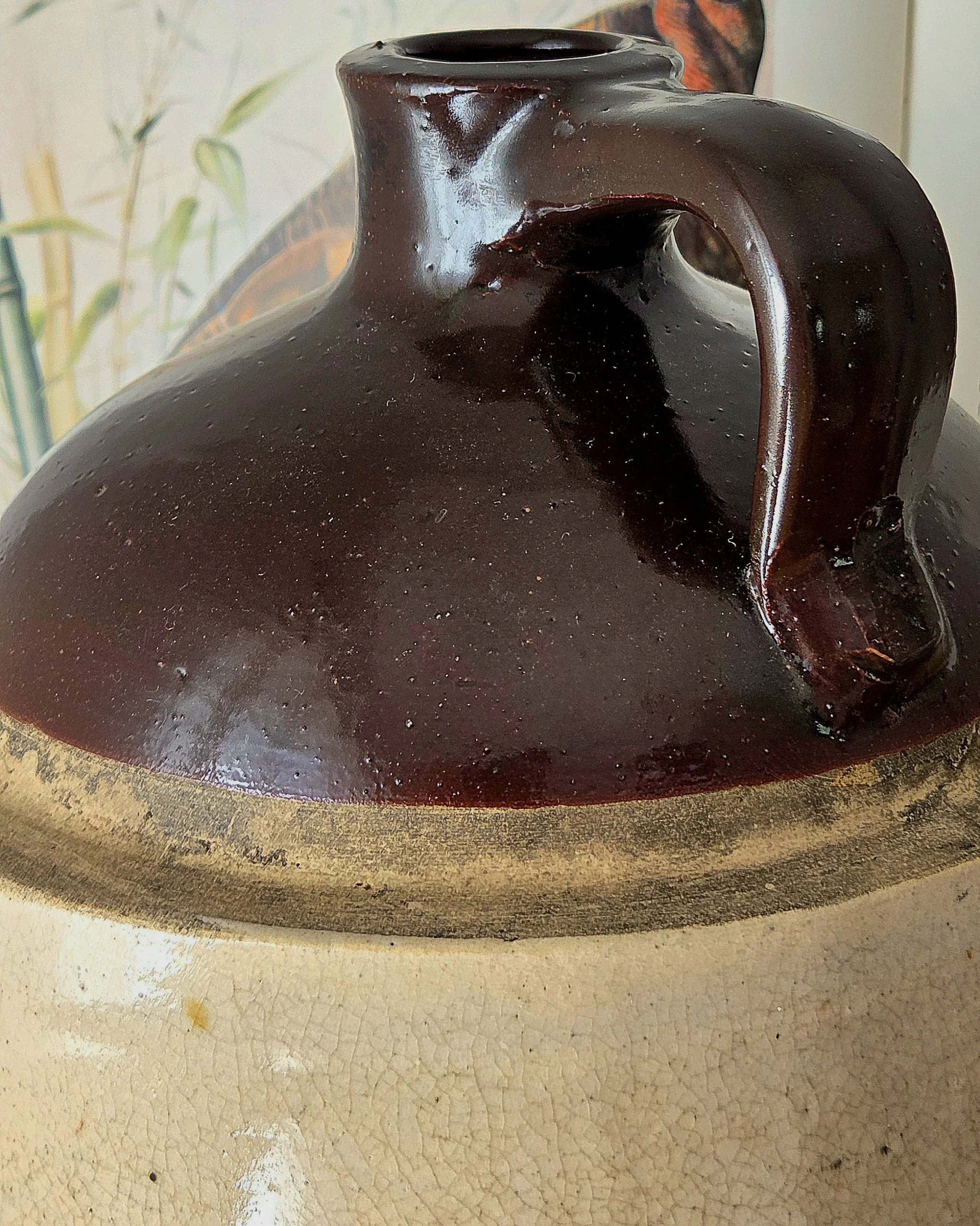 Image 4 of 16
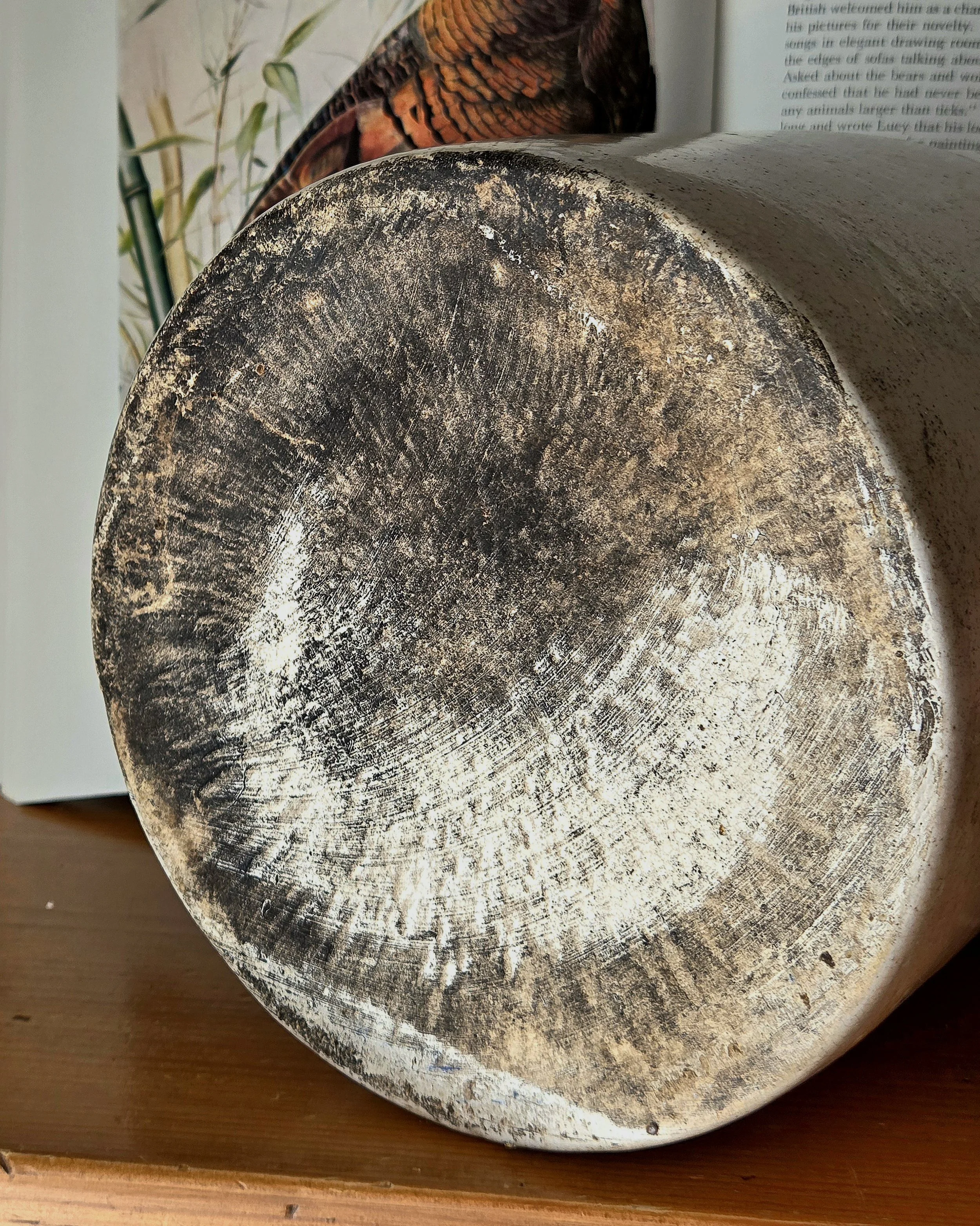 Image 5 of 16
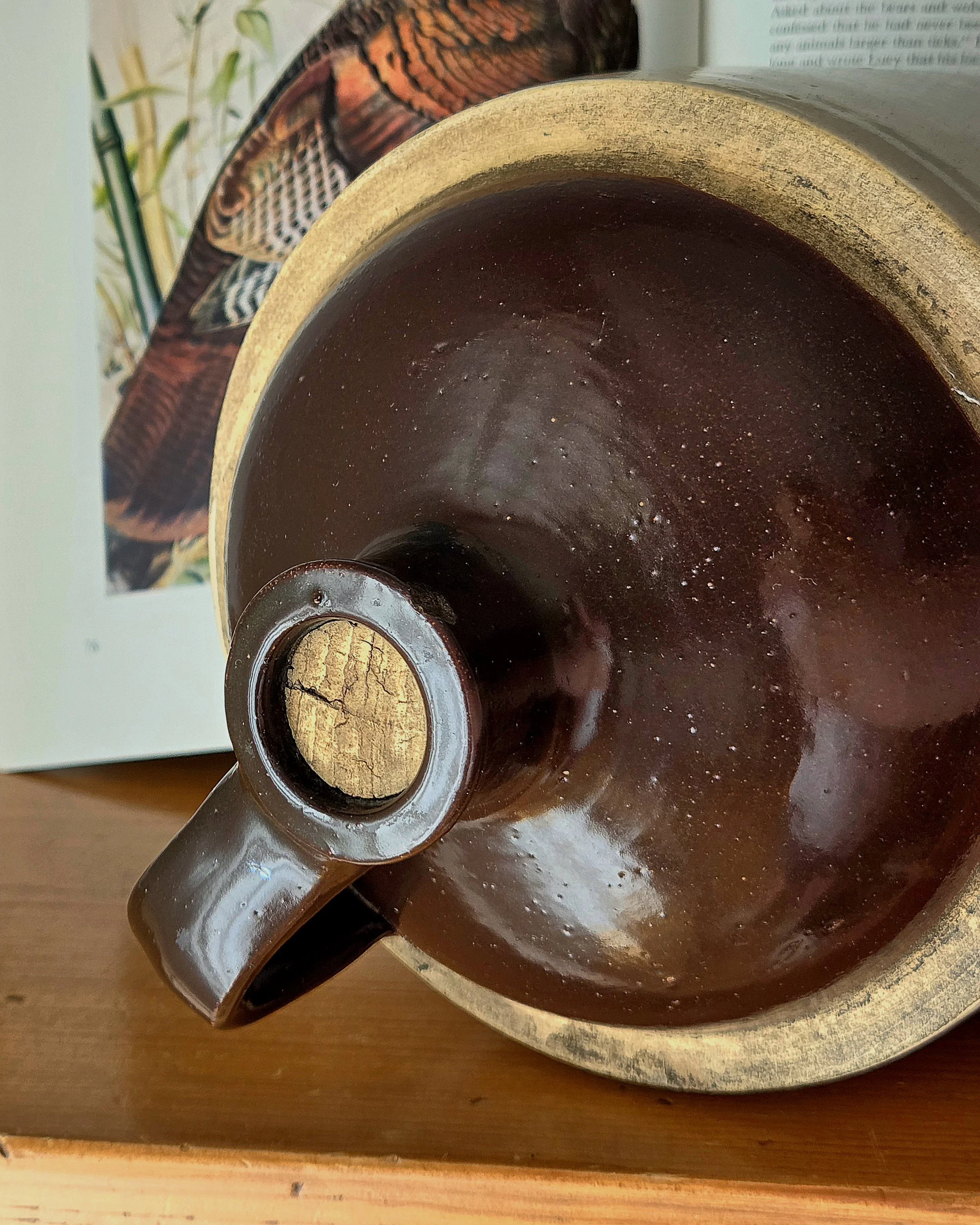 Image 6 of 16
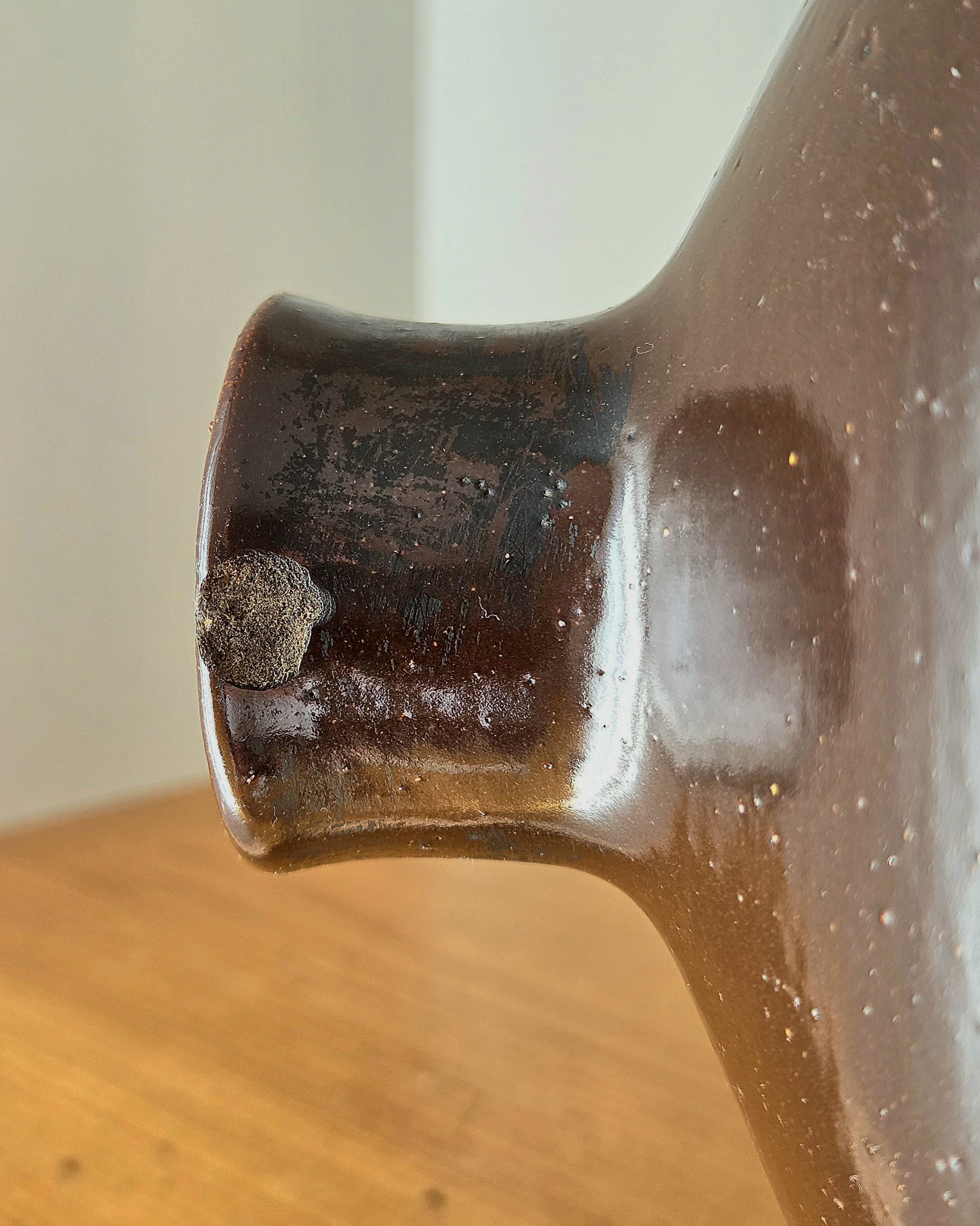 Image 7 of 16
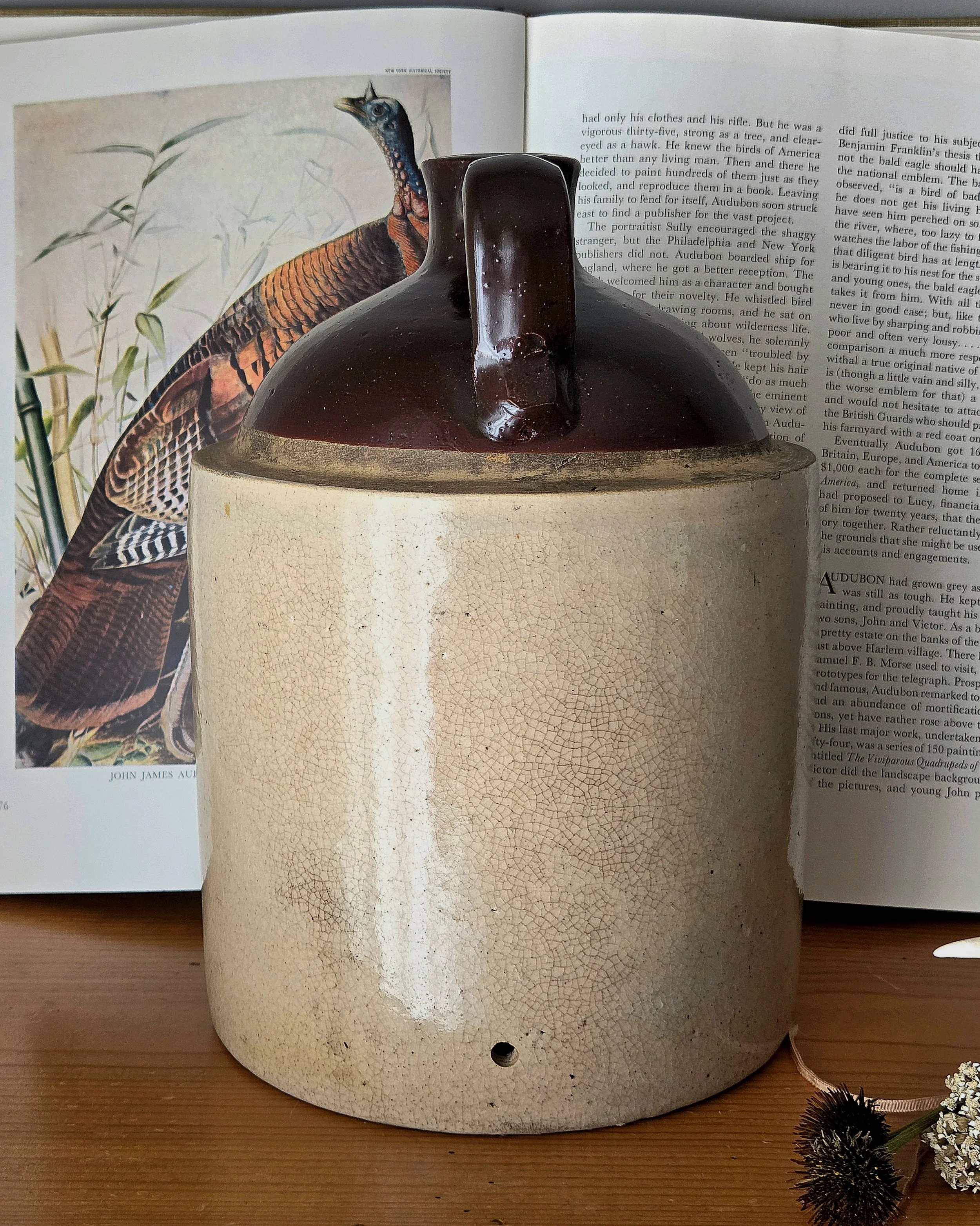 Image 8 of 16
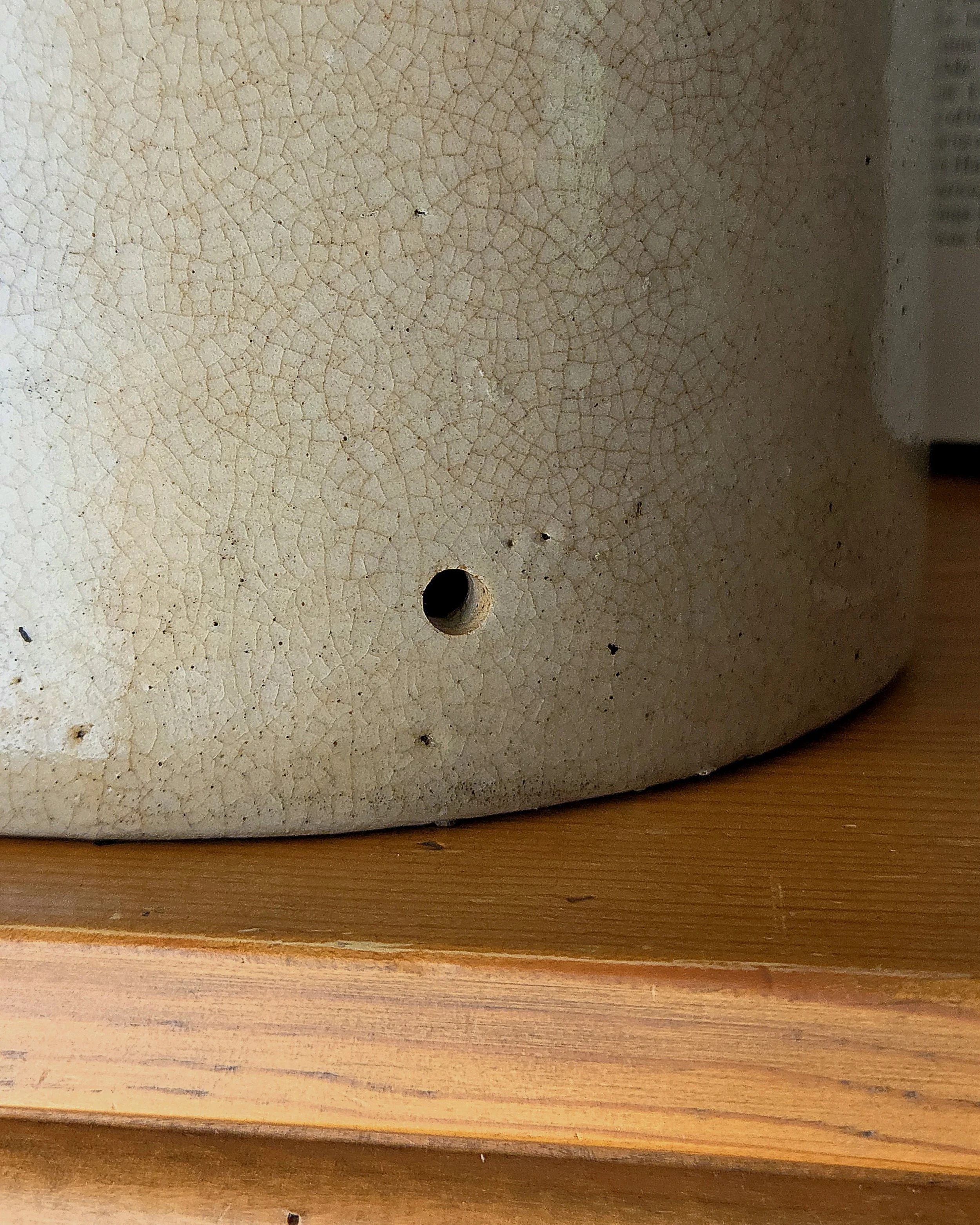 Image 9 of 16
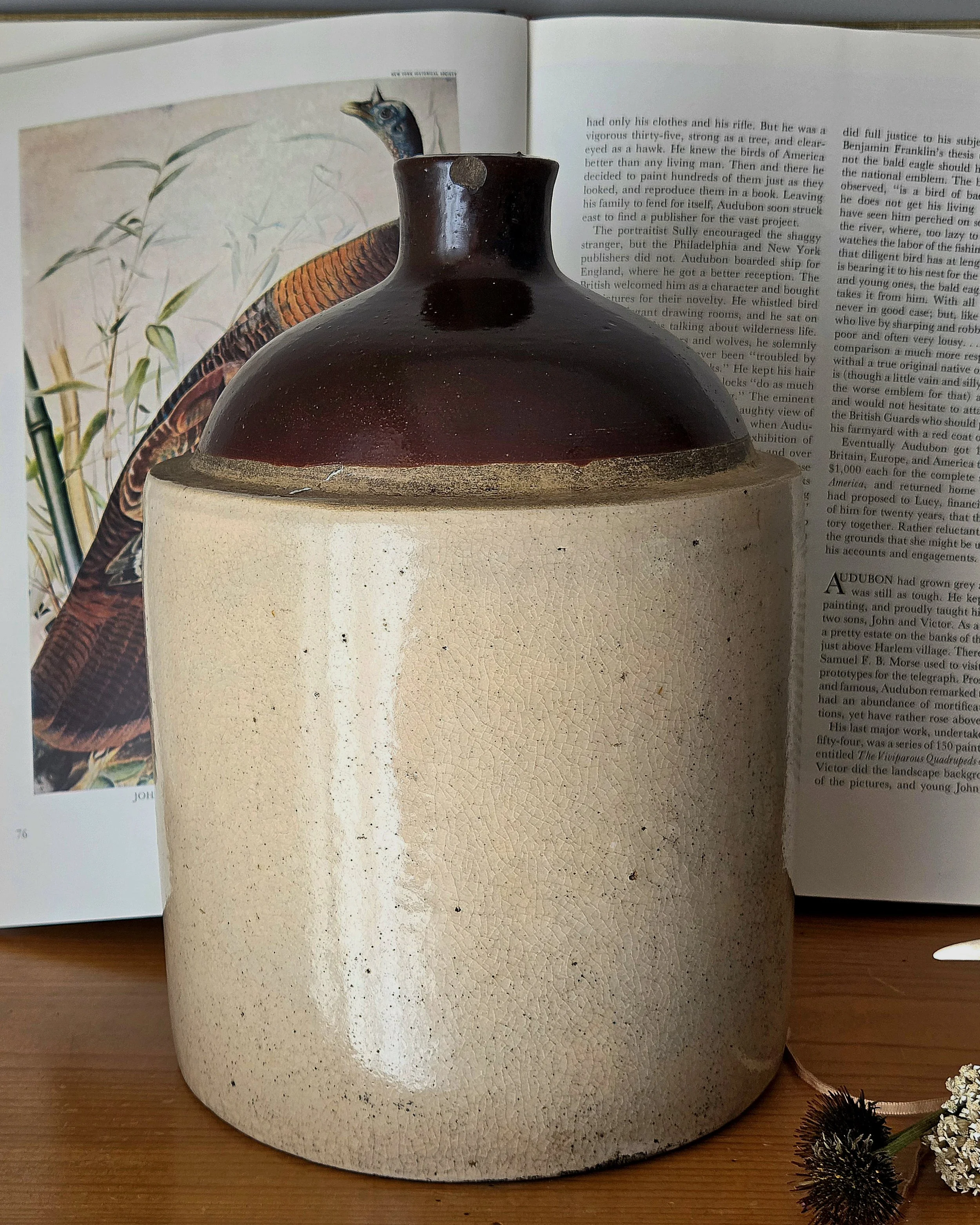 Image 10 of 16
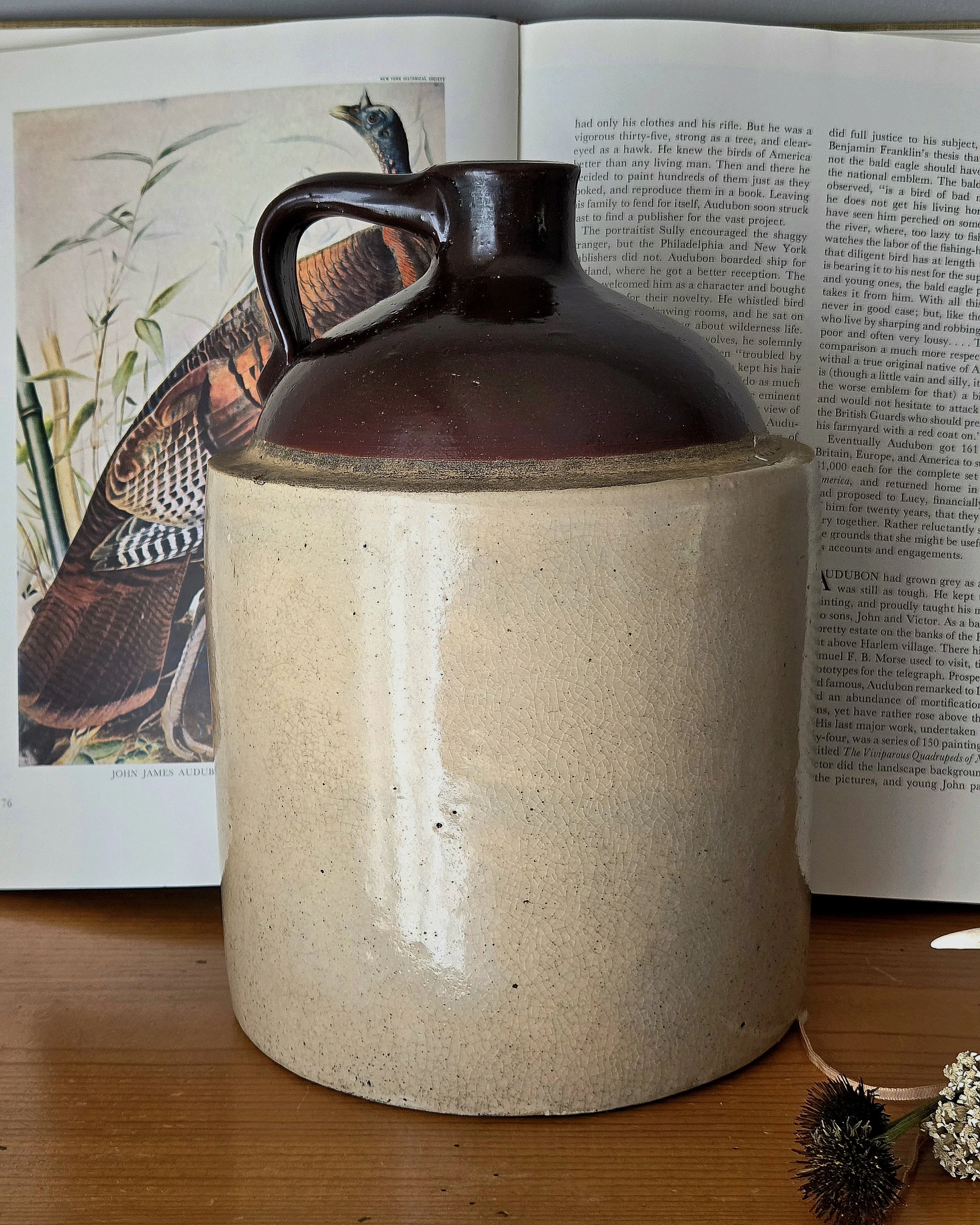 Image 11 of 16
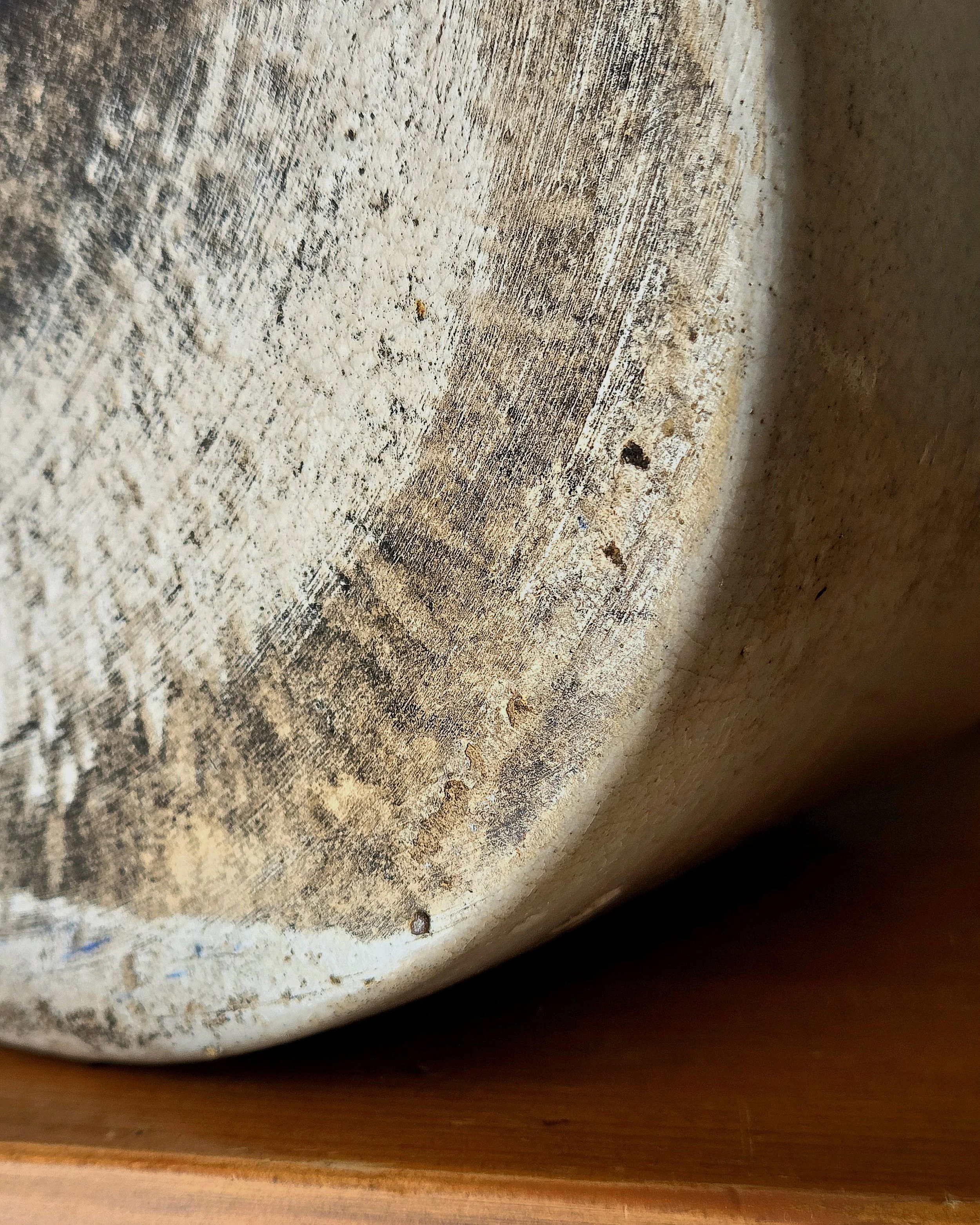 Image 12 of 16
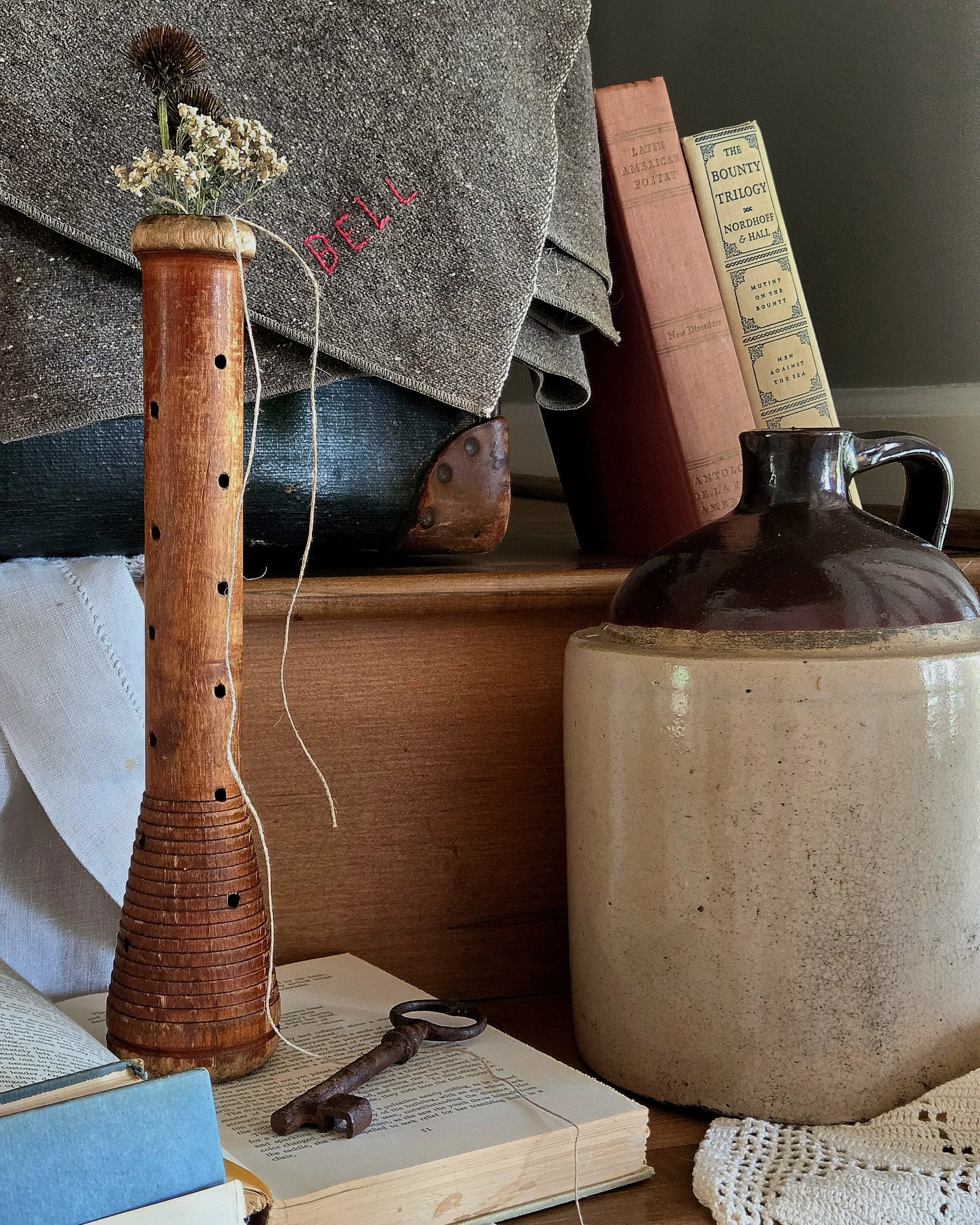 Image 13 of 16
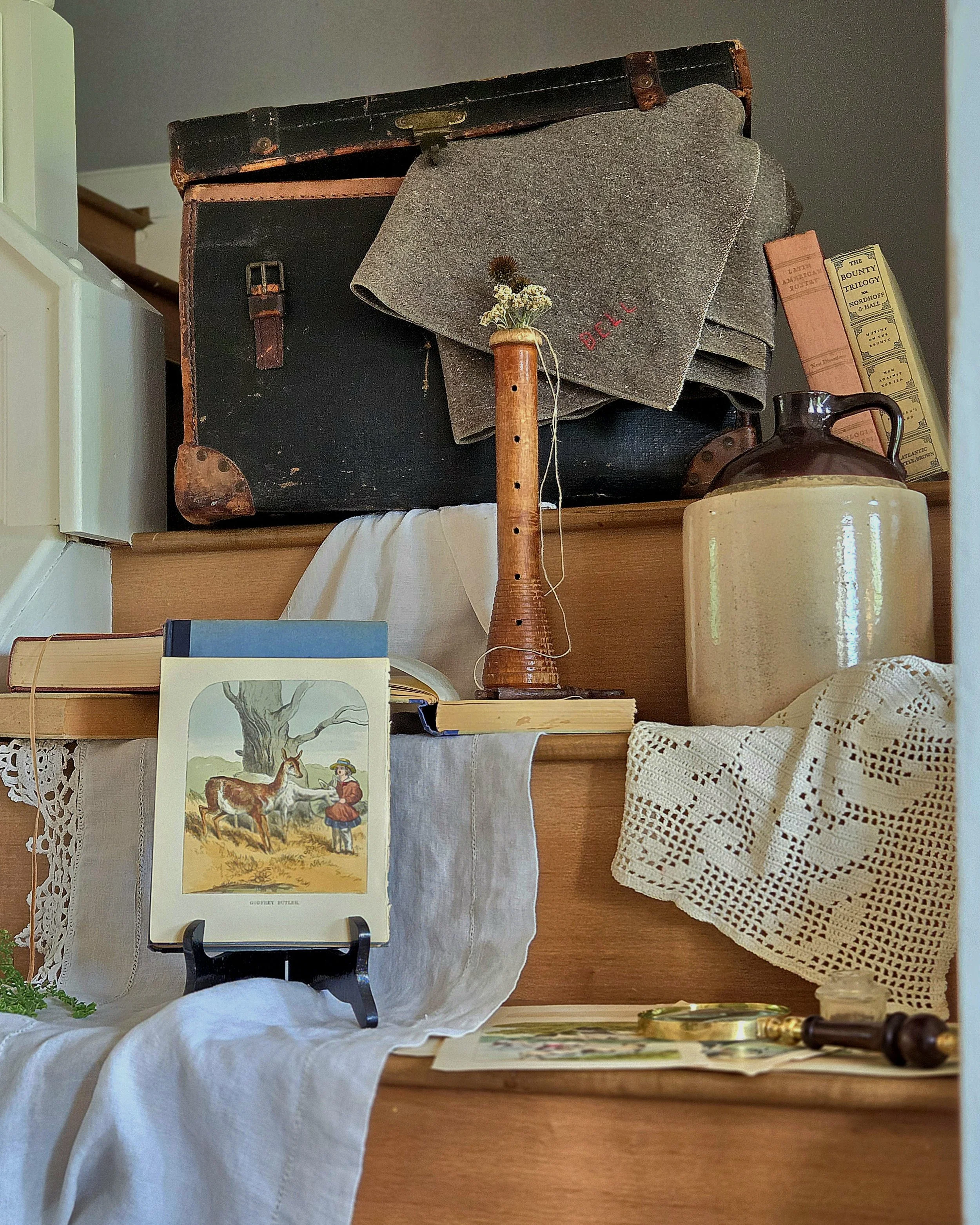 Image 14 of 16
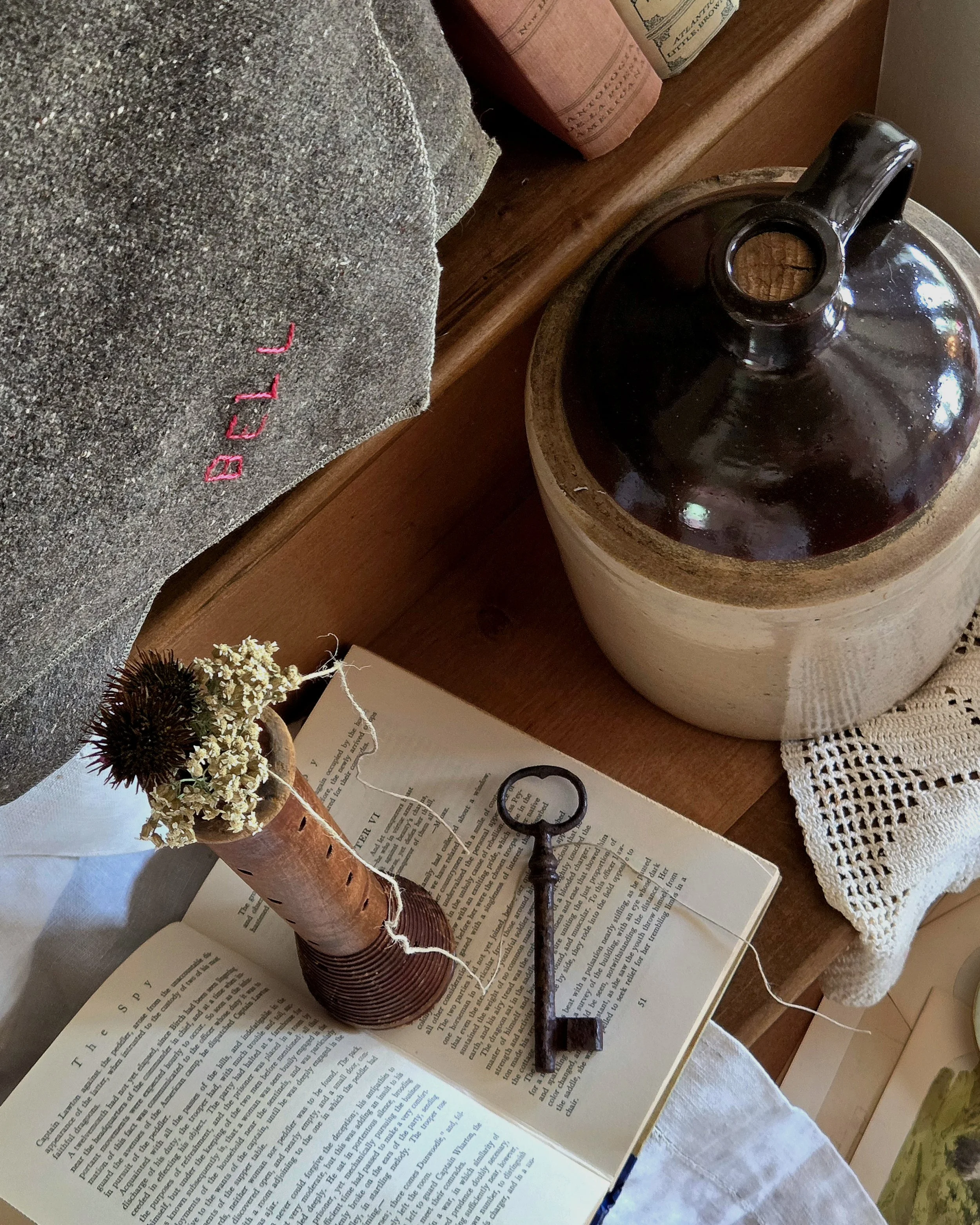 Image 15 of 16
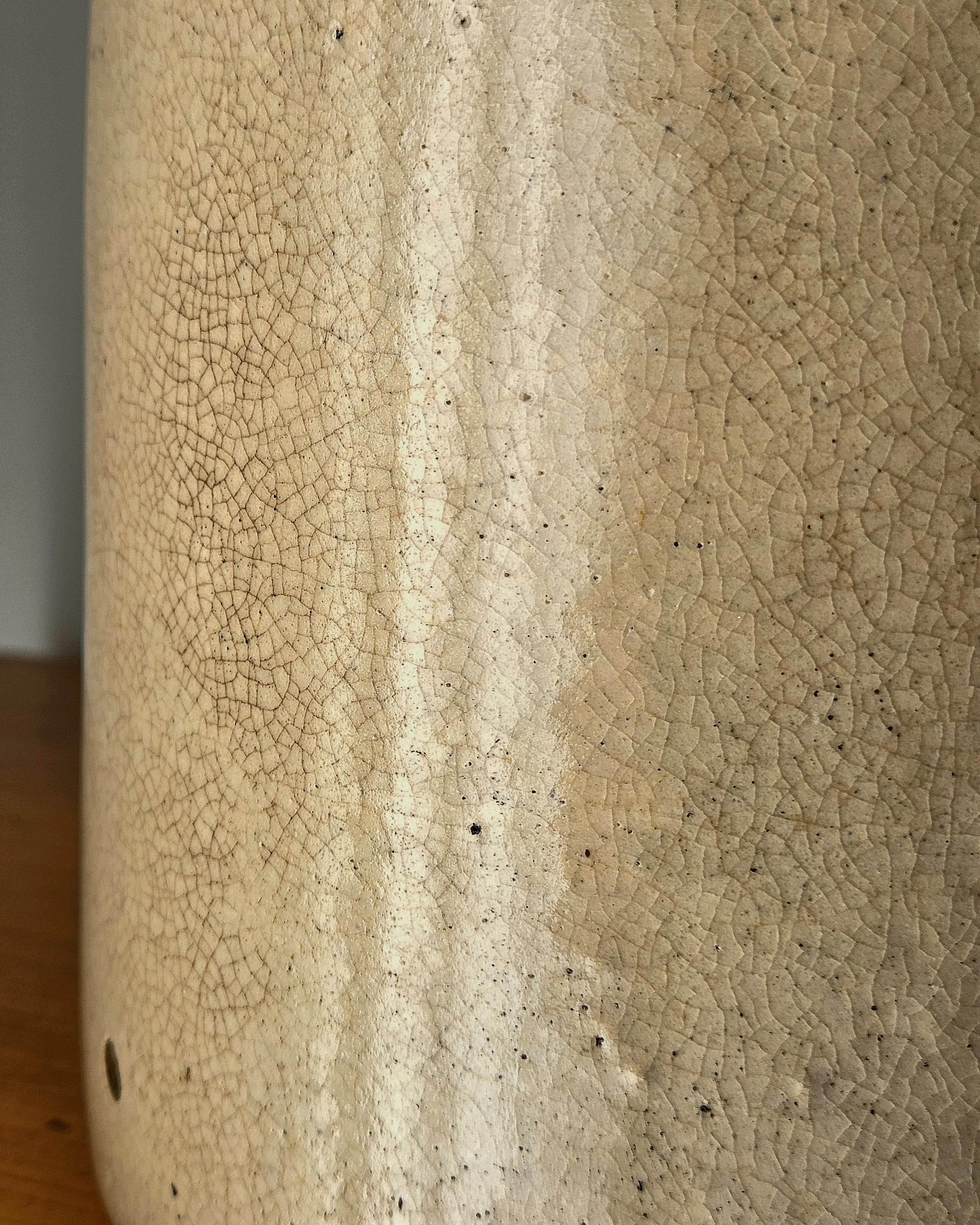 Image 16 of 16