This antique skeleton key offers a glimpse into the craftsmanship of nineteenth-century English lockmaking—and the unexpected journeys that bring historic objects into new collections. Although discovered in Valencia's historic Old Town, this key was manufactured in Wolverhampton, England by the James Gibbons company, a maker known for producing high-quality locksets during the Victorian era.
The maker's mark remains clearly visible on the looped handle, reading "GIBBONS" and "WHAMPTON," identifying its origin with the Gibbons manufacturing works in Wolverhampton. During the nineteenth century, Gibbons produced decorative and secure lock hardware for domestic and commercial interiors, including locks used in offices, master bedrooms, and fine furniture such as roll-top desks.
Beyond its practical purpose, this key reflects the decorative possibilities of Victorian hardware. The shaft features two baluster collars, while the H-shaped bit at the end reveals the precision required to create a functional locking mechanism. Today, these architectural and domestic details have made antique skeleton keys popular among collectors and interior designers seeking objects with craftsmanship and history.
Whether displayed alongside antique books, mounted in a shadow box, arranged as part of a collected vignette, or incorporated into a decorative grouping, this small object carries the story of both its maker and the places it has traveled.
Details
Date: ca. 1840–1865
Origin: Wolverhampton, England
Found: Valencia, Spain
Maker: James Gibbons, Wolverhampton
Medium: steel skeleton key
Measurements: 3 inches long
Care
Handle carefully. Preserve the existing patina and avoid polishing with abrasive materials, which may remove evidence of age and use. Display indoors and avoid prolonged exposure to moisture.
Condition
This historic key has age-appropriate wear and surface patina consistent with its nineteenth-century origins. The maker's mark remains legible, and the key retains its original decorative details. Variations in surface color and texture are part of the object's history and contribute to its character.
This antique skeleton key offers a glimpse into the craftsmanship of nineteenth-century English lockmaking—and the unexpected journeys that bring historic objects into new collections. Although discovered in Valencia's historic Old Town, this key was manufactured in Wolverhampton, England by the James Gibbons company, a maker known for producing high-quality locksets during the Victorian era.
The maker's mark remains clearly visible on the looped handle, reading "GIBBONS" and "WHAMPTON," identifying its origin with the Gibbons manufacturing works in Wolverhampton. During the nineteenth century, Gibbons produced decorative and secure lock hardware for domestic and commercial interiors, including locks used in offices, master bedrooms, and fine furniture such as roll-top desks.
Beyond its practical purpose, this key reflects the decorative possibilities of Victorian hardware. The shaft features two baluster collars, while the H-shaped bit at the end reveals the precision required to create a functional locking mechanism. Today, these architectural and domestic details have made antique skeleton keys popular among collectors and interior designers seeking objects with craftsmanship and history.
Whether displayed alongside antique books, mounted in a shadow box, arranged as part of a collected vignette, or incorporated into a decorative grouping, this small object carries the story of both its maker and the places it has traveled.
Details
Date: ca. 1840–1865
Origin: Wolverhampton, England
Found: Valencia, Spain
Maker: James Gibbons, Wolverhampton
Medium: steel skeleton key
Measurements: 3 inches long
Care
Handle carefully. Preserve the existing patina and avoid polishing with abrasive materials, which may remove evidence of age and use. Display indoors and avoid prolonged exposure to moisture.
Condition
This historic key has age-appropriate wear and surface patina consistent with its nineteenth-century origins. The maker's mark remains legible, and the key retains its original decorative details. Variations in surface color and texture are part of the object's history and contribute to its character.
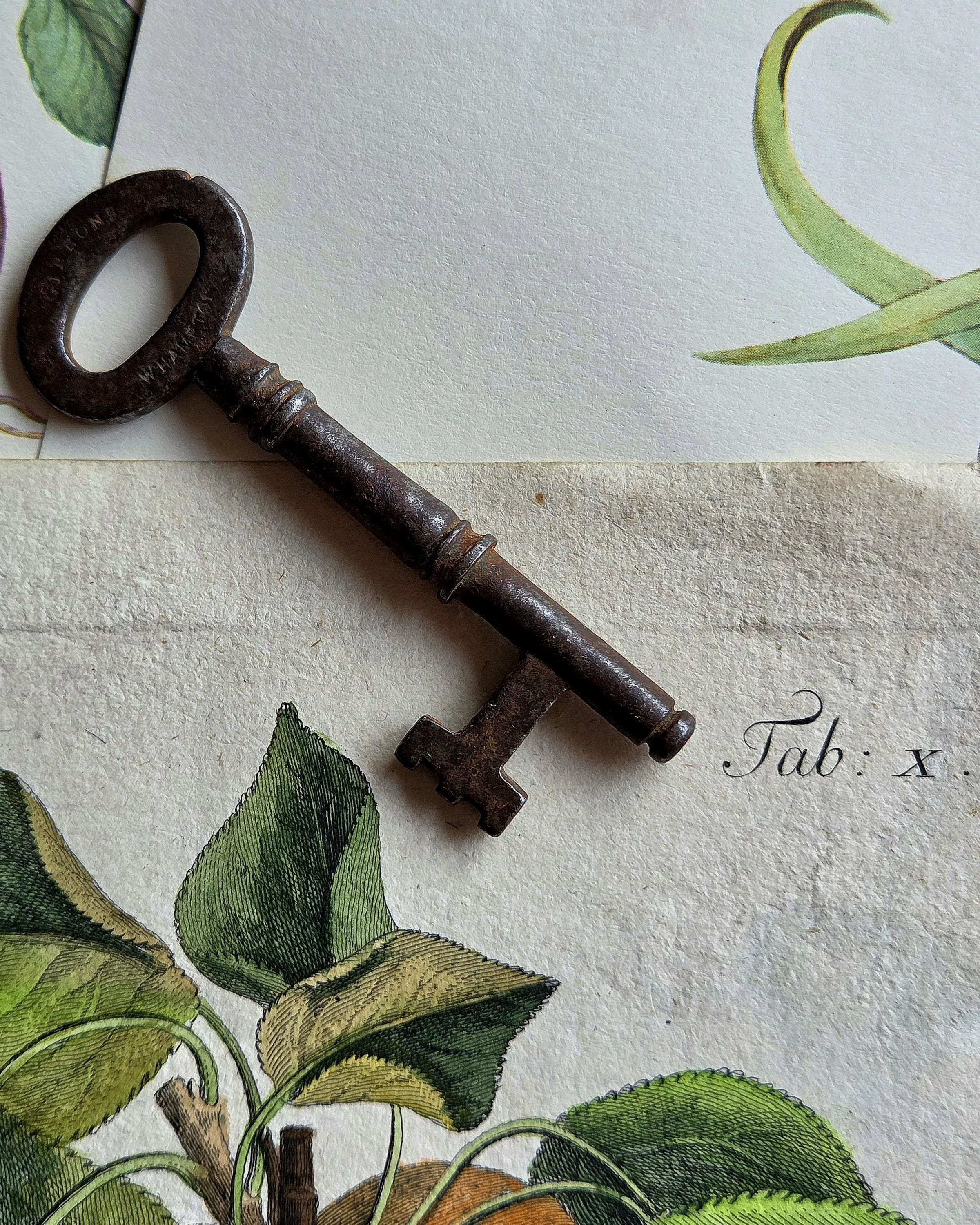 Image 1 of 8
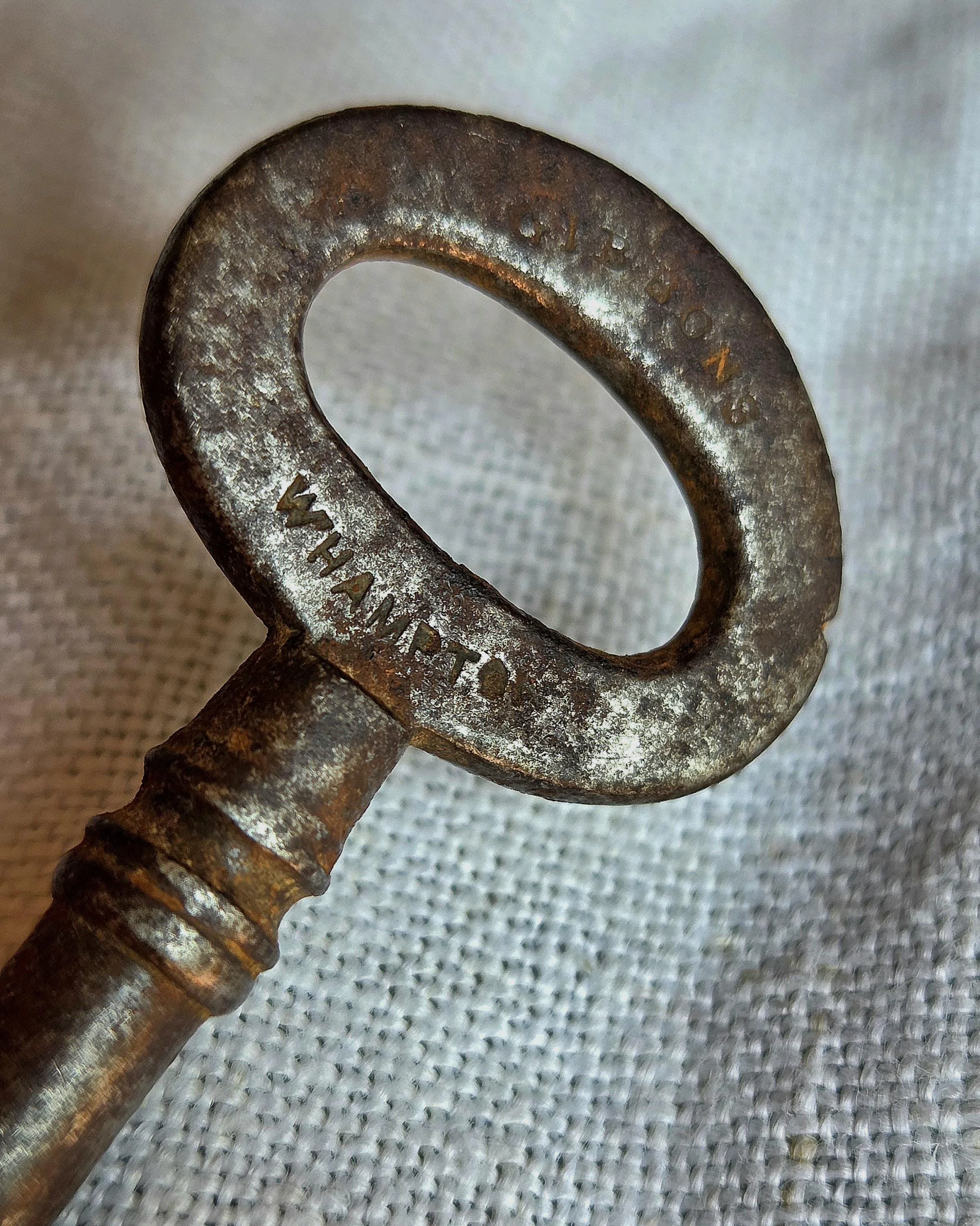 Image 2 of 8
 Image 3 of 8
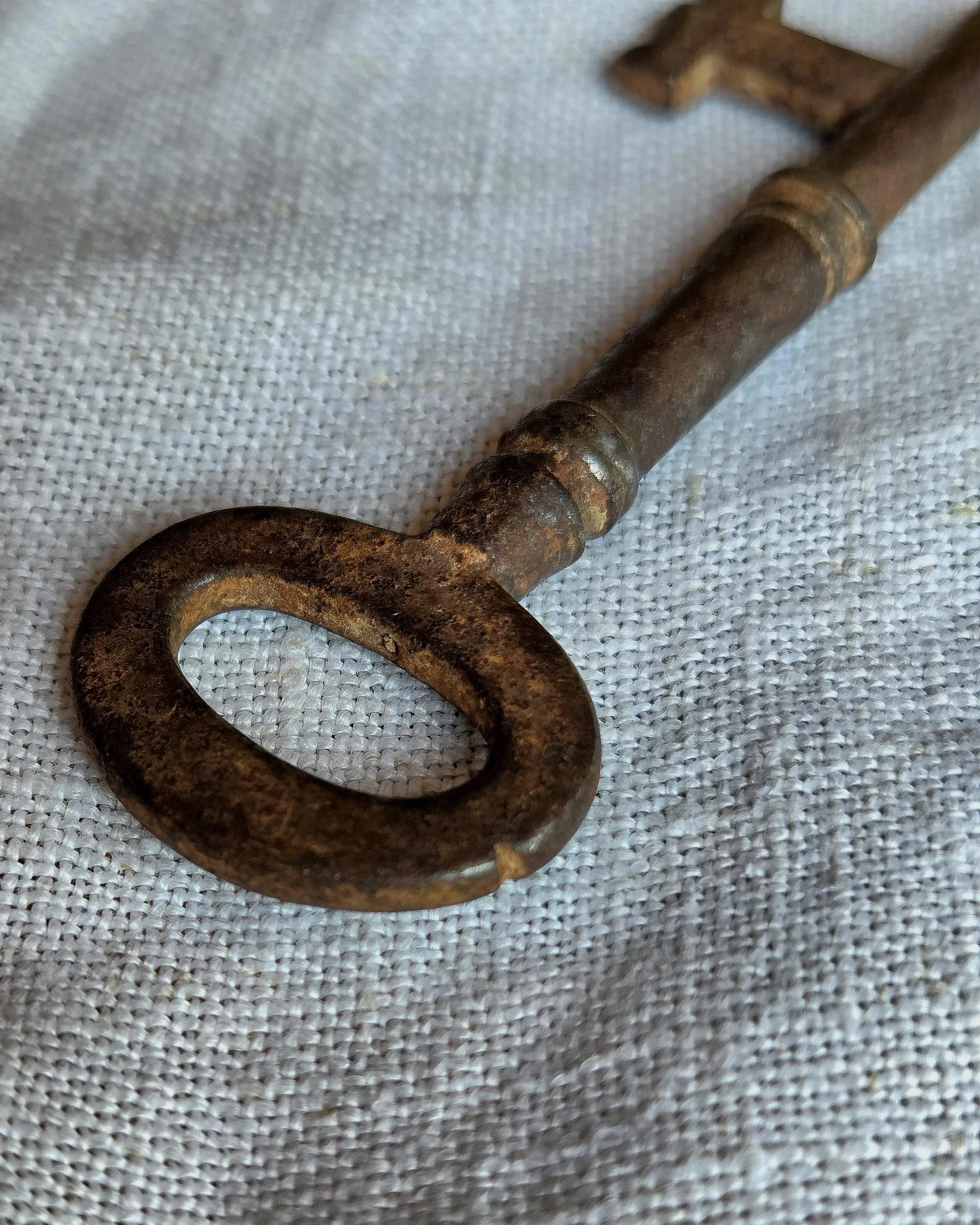 Image 4 of 8
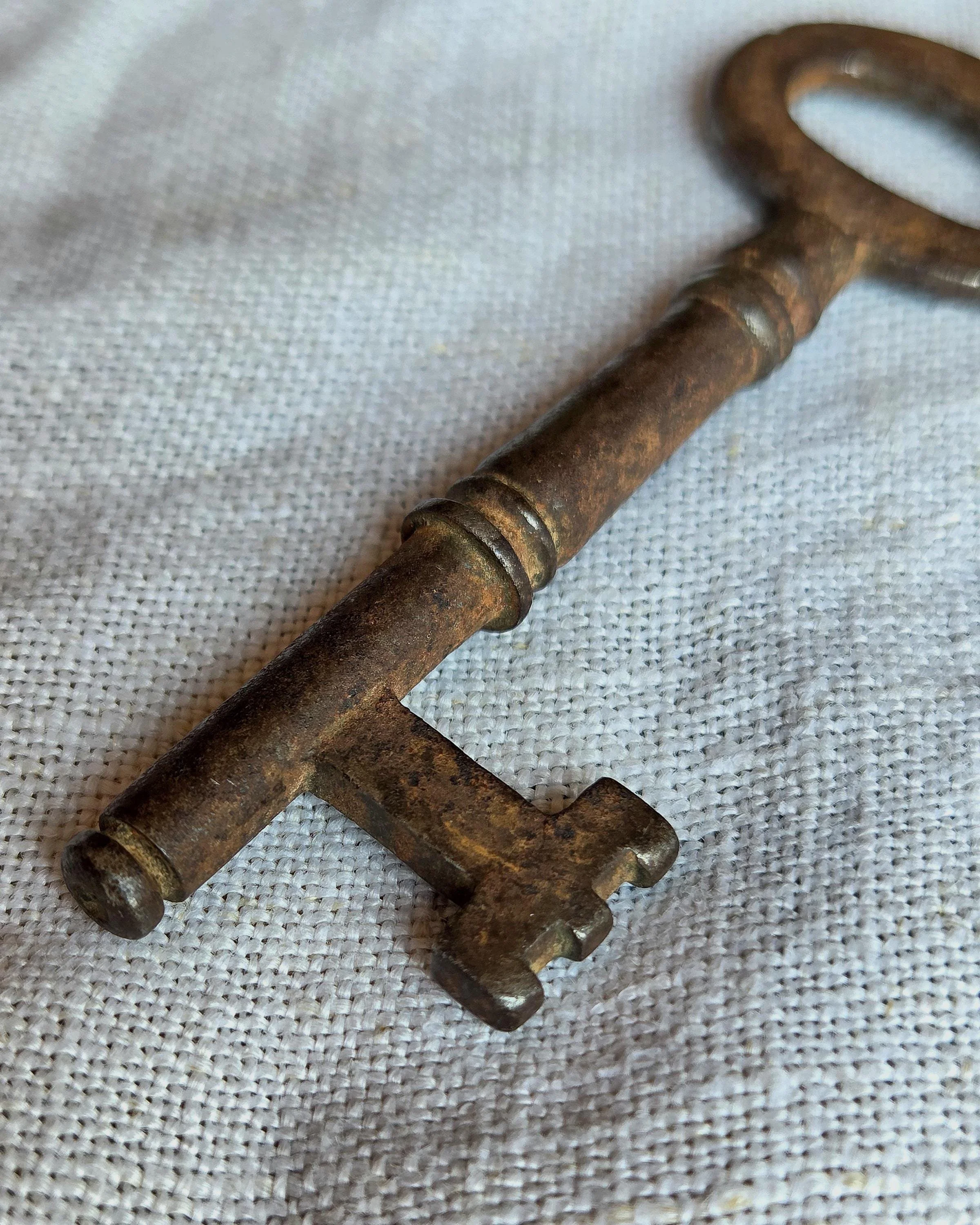 Image 5 of 8
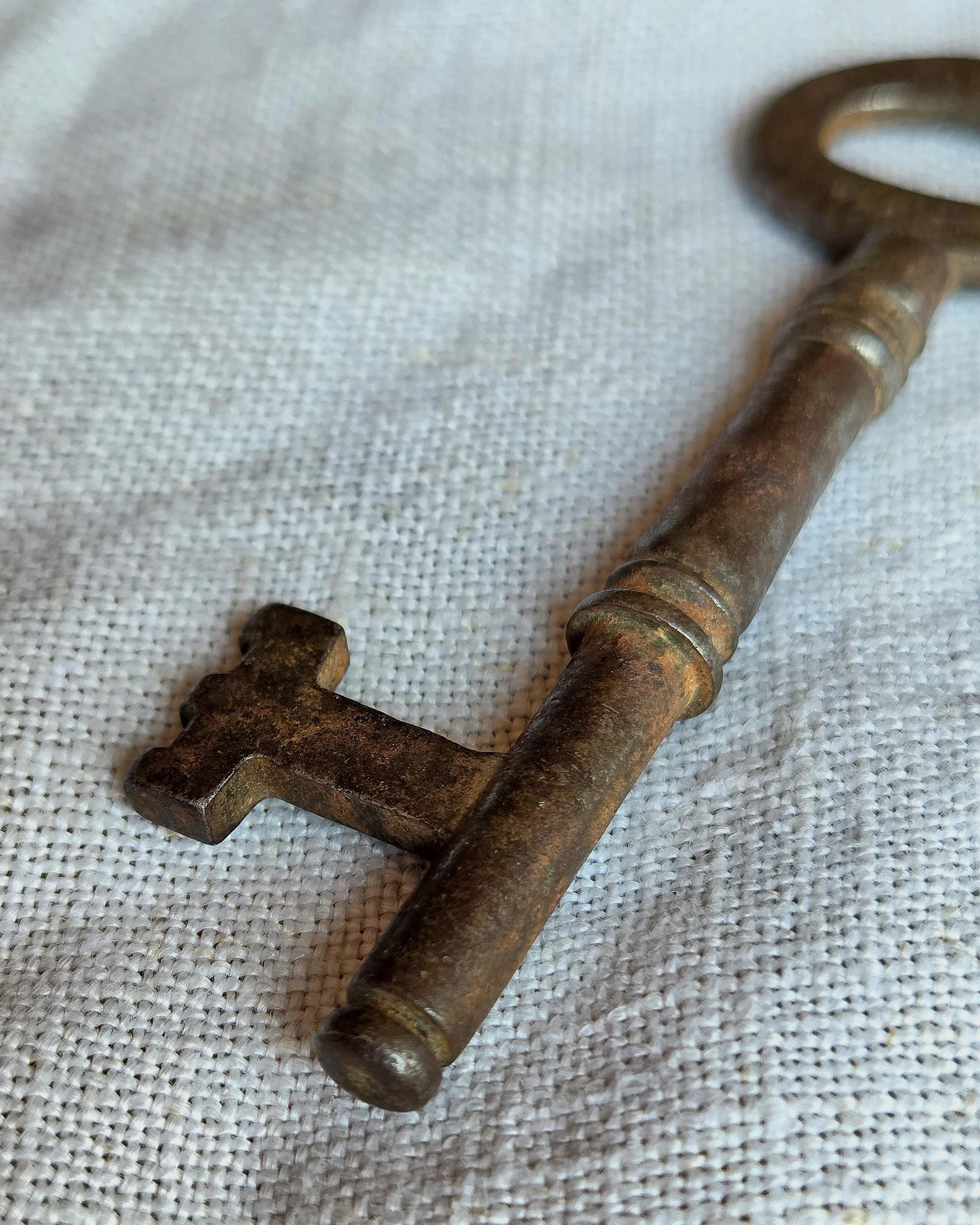 Image 6 of 8
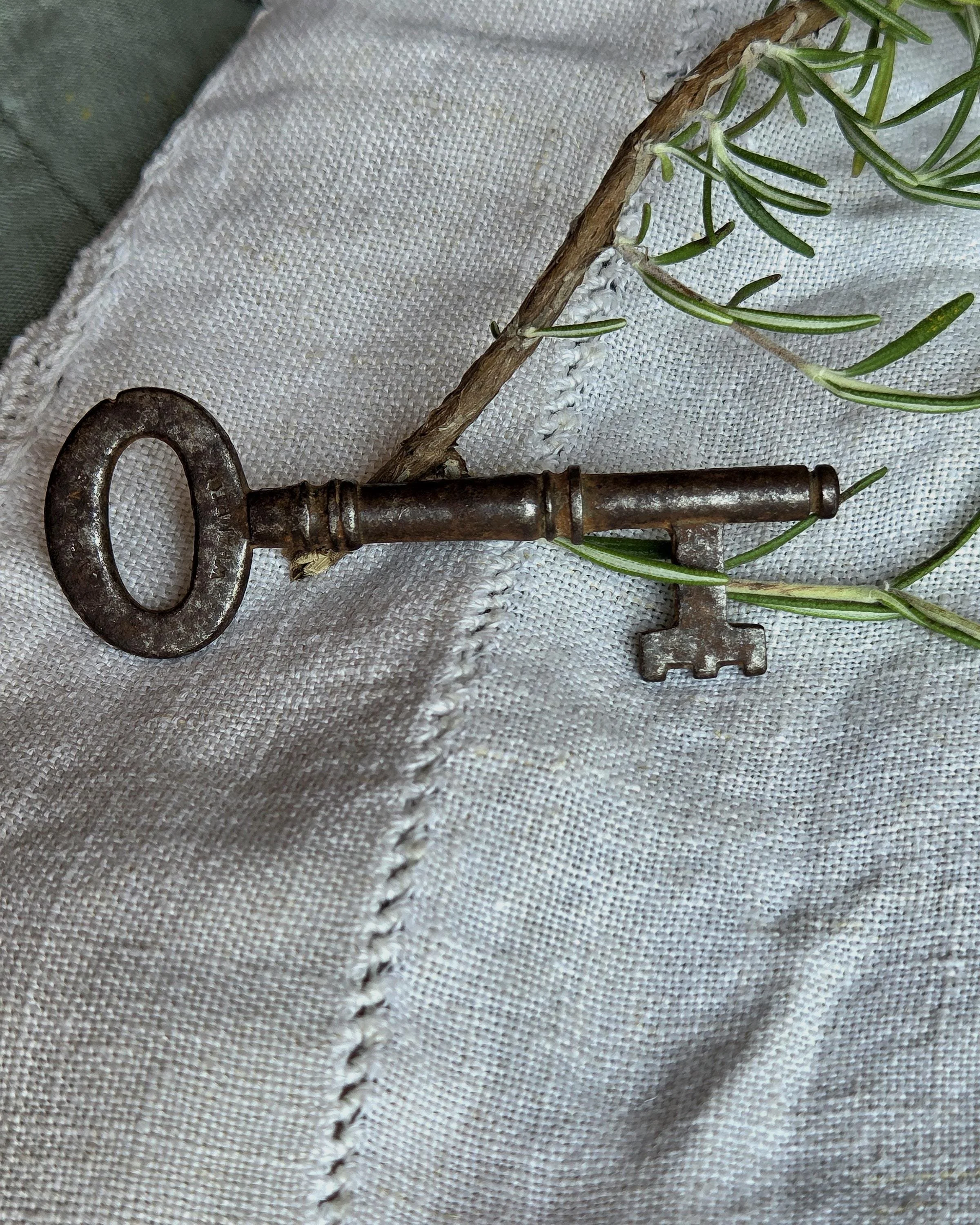 Image 7 of 8
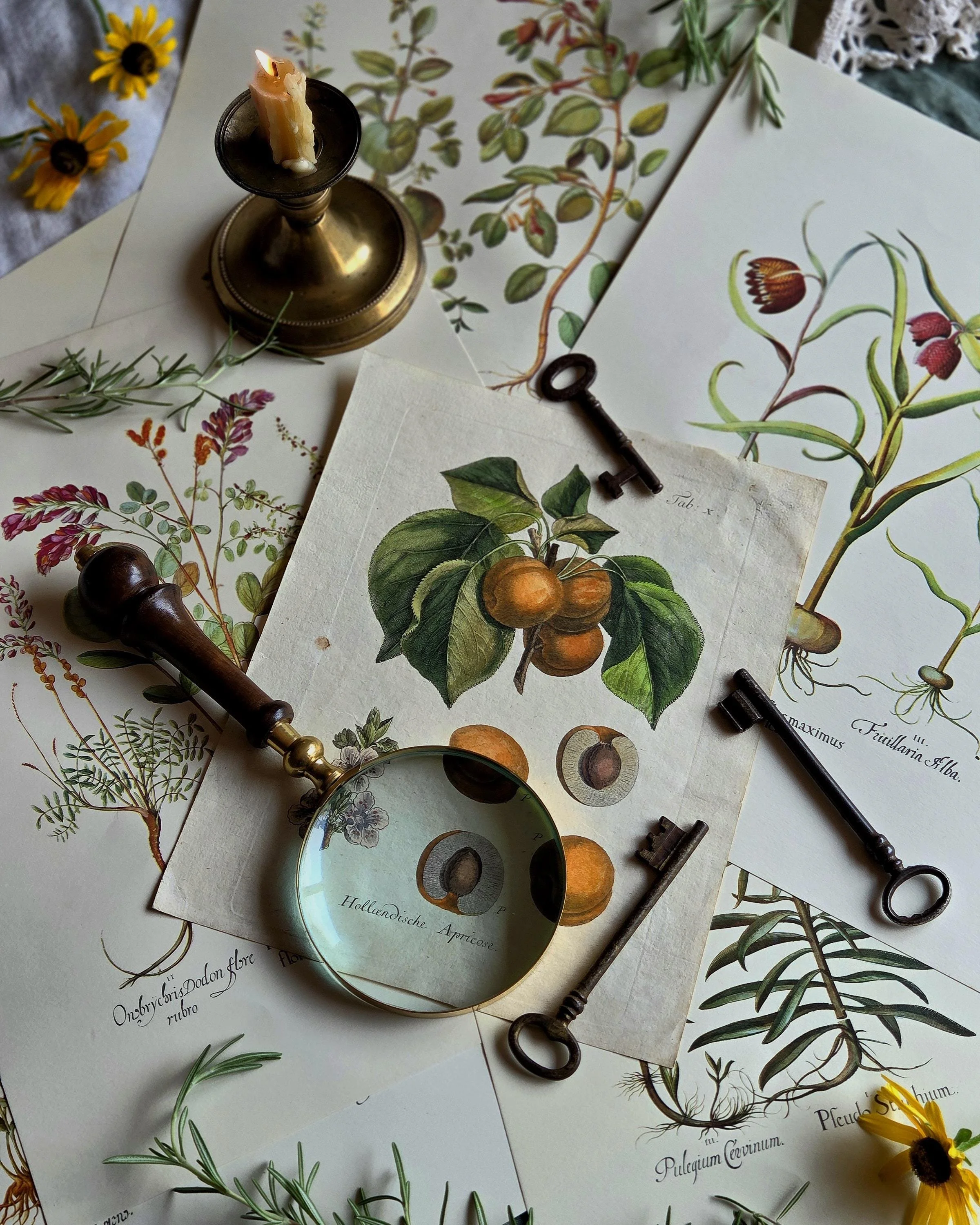 Image 8 of 8