This hand-painted Talavera de la Reina blue and white vase captures a moment when centuries-old Spanish ceramic traditions were being reintroduced to a new generation of collectors and travelers in the mid twentieth century.
Created in a traditional workshop setting in Spain, this vessel was hand thrown, painted, and fired using techniques inspired by the historic ceramics of Talavera de la Reina. Its expressive cobalt blue decoration features freehand floral motifs and traditional cross-hatching, while subtle brown markings beneath the glaze reveal mineral variations in the clay that emerged during firing.
Rather than being flaws, these natural variations were part of the character of handmade ceramics—visible evidence of the relationship between the potter, the material, and the firing process. Each mark distinguishes the piece from the uniform surfaces of factory-produced wares and preserves the personality of the original craft.
The remnants of red wax on the base offer another glimpse into its history. During the mid twentieth century, traditional craft workshops frequently used this brightly colored wax to attach price labels directly to finished pieces, leaving behind traces of the object’s journey from artisan workshop to home.
With its connection to historic Spanish ceramic traditions, this vase brings warmth to a collected interior, styled among books, botanical elements, or other handcrafted objects.
Details
Date: ca. 1950s–1970s
Origin: Spain
Medium: Hand-painted ceramic
Technique: Hand thrown, painted, and fired
Measurements: 5 x 6 inches (at widest point); 3 inch diameter (rim)
Care
Dust gently with a soft cloth. Avoid soaking or sudden temperature changes. Handle with care due to age and minor rim wear.
Condition
This vintage ceramic piece has age-appropriate wear, including minor rim wear and a small area where the painted decoration has been interrupted along the edge (shown in photographs). The surface variations, hand-painted details, and subtle irregularities are part of the character of a handmade ceramic object.
This hand-painted Talavera de la Reina blue and white vase captures a moment when centuries-old Spanish ceramic traditions were being reintroduced to a new generation of collectors and travelers in the mid twentieth century.
Created in a traditional workshop setting in Spain, this vessel was hand thrown, painted, and fired using techniques inspired by the historic ceramics of Talavera de la Reina. Its expressive cobalt blue decoration features freehand floral motifs and traditional cross-hatching, while subtle brown markings beneath the glaze reveal mineral variations in the clay that emerged during firing.
Rather than being flaws, these natural variations were part of the character of handmade ceramics—visible evidence of the relationship between the potter, the material, and the firing process. Each mark distinguishes the piece from the uniform surfaces of factory-produced wares and preserves the personality of the original craft.
The remnants of red wax on the base offer another glimpse into its history. During the mid twentieth century, traditional craft workshops frequently used this brightly colored wax to attach price labels directly to finished pieces, leaving behind traces of the object’s journey from artisan workshop to home.
With its connection to historic Spanish ceramic traditions, this vase brings warmth to a collected interior, styled among books, botanical elements, or other handcrafted objects.
Details
Date: ca. 1950s–1970s
Origin: Spain
Medium: Hand-painted ceramic
Technique: Hand thrown, painted, and fired
Measurements: 5 x 6 inches (at widest point); 3 inch diameter (rim)
Care
Dust gently with a soft cloth. Avoid soaking or sudden temperature changes. Handle with care due to age and minor rim wear.
Condition
This vintage ceramic piece has age-appropriate wear, including minor rim wear and a small area where the painted decoration has been interrupted along the edge (shown in photographs). The surface variations, hand-painted details, and subtle irregularities are part of the character of a handmade ceramic object.
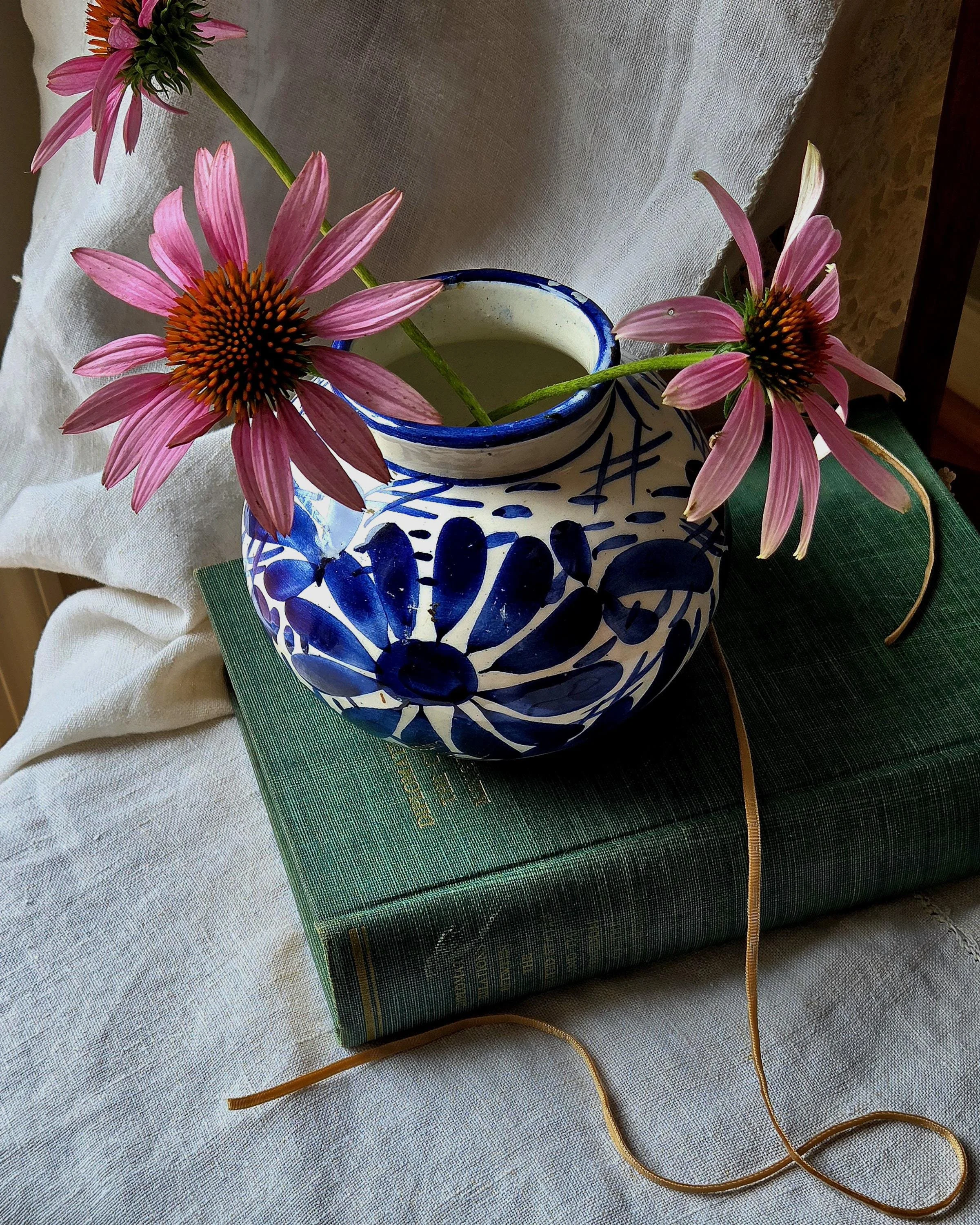 Image 1 of 14
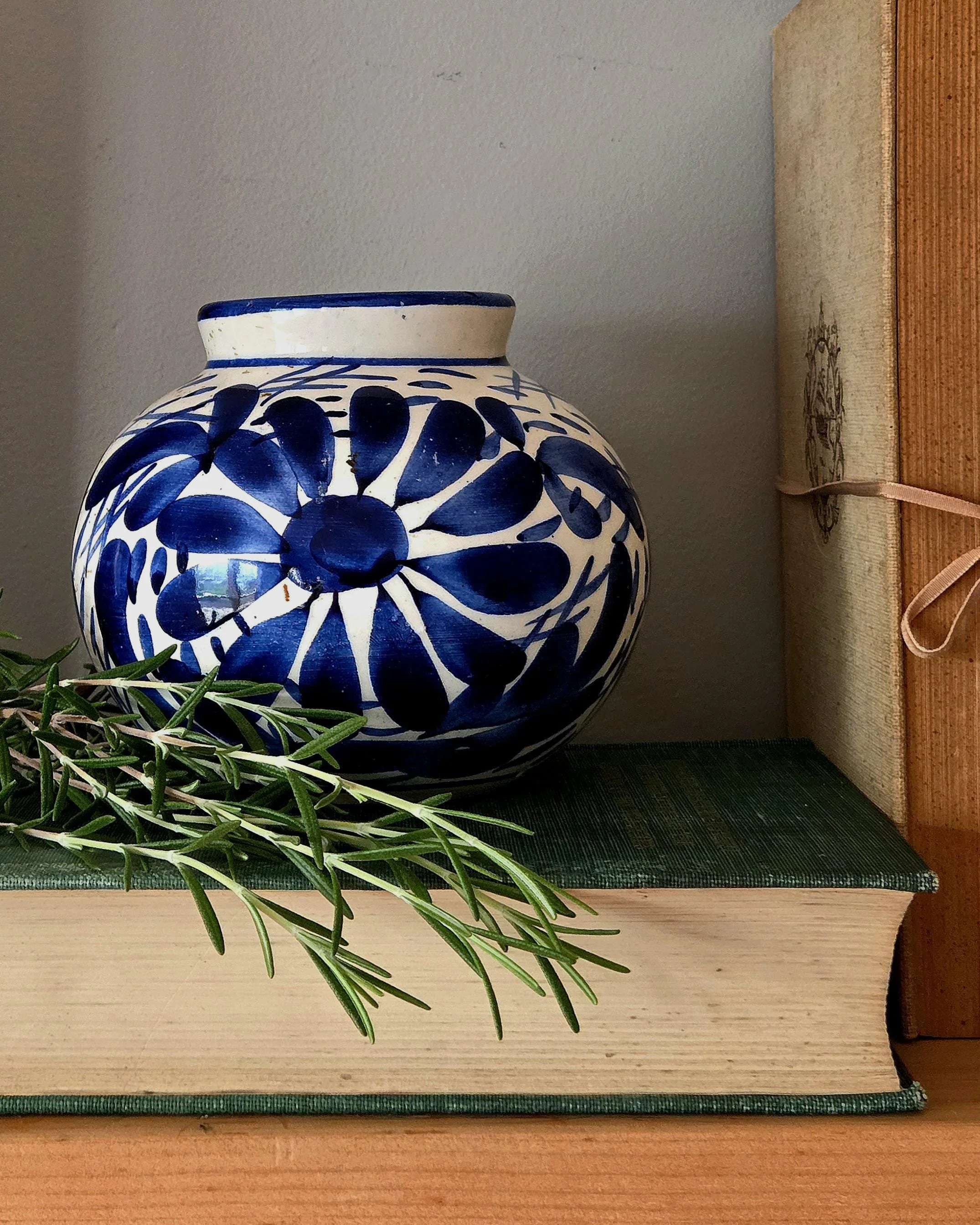 Image 2 of 14
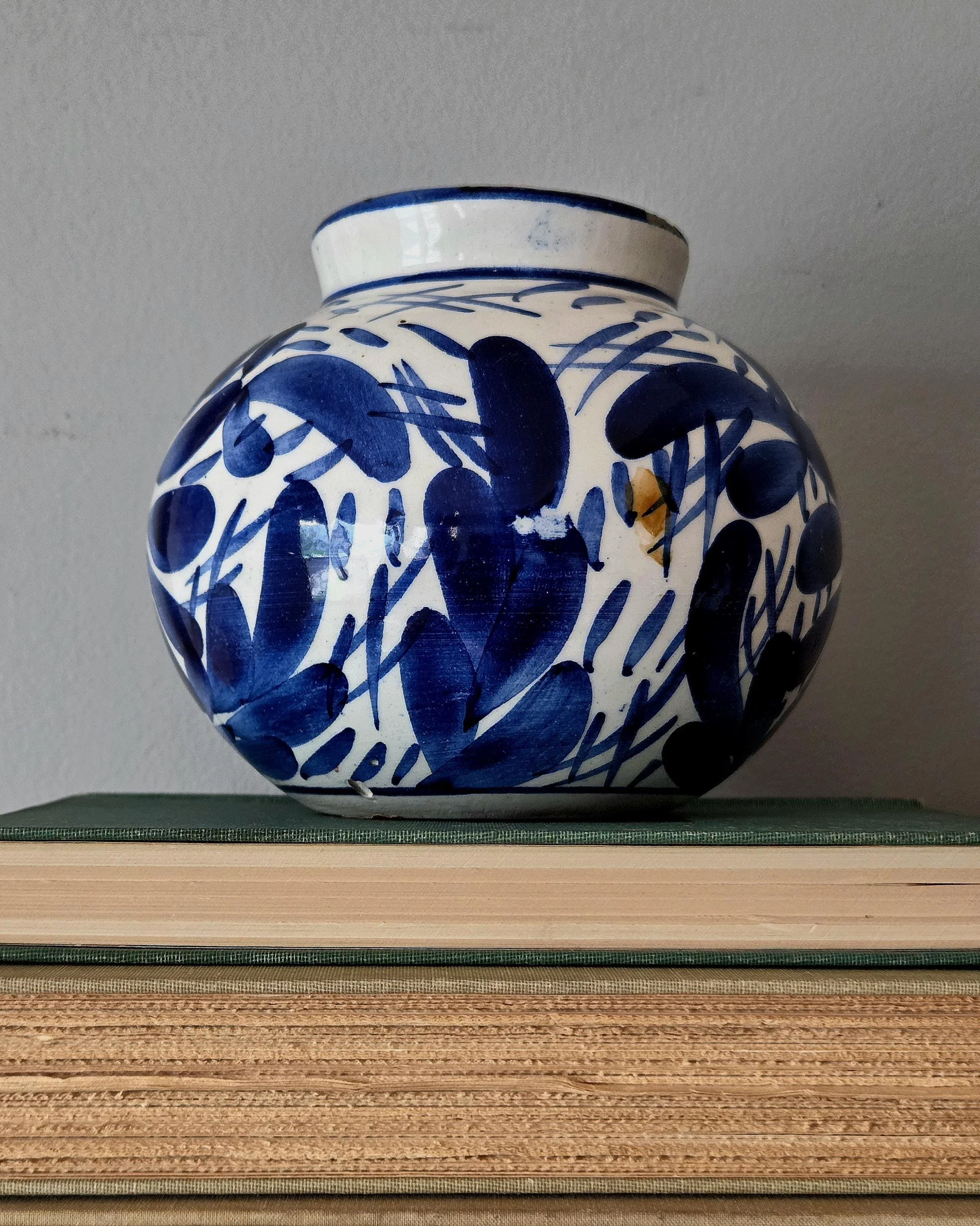 Image 3 of 14
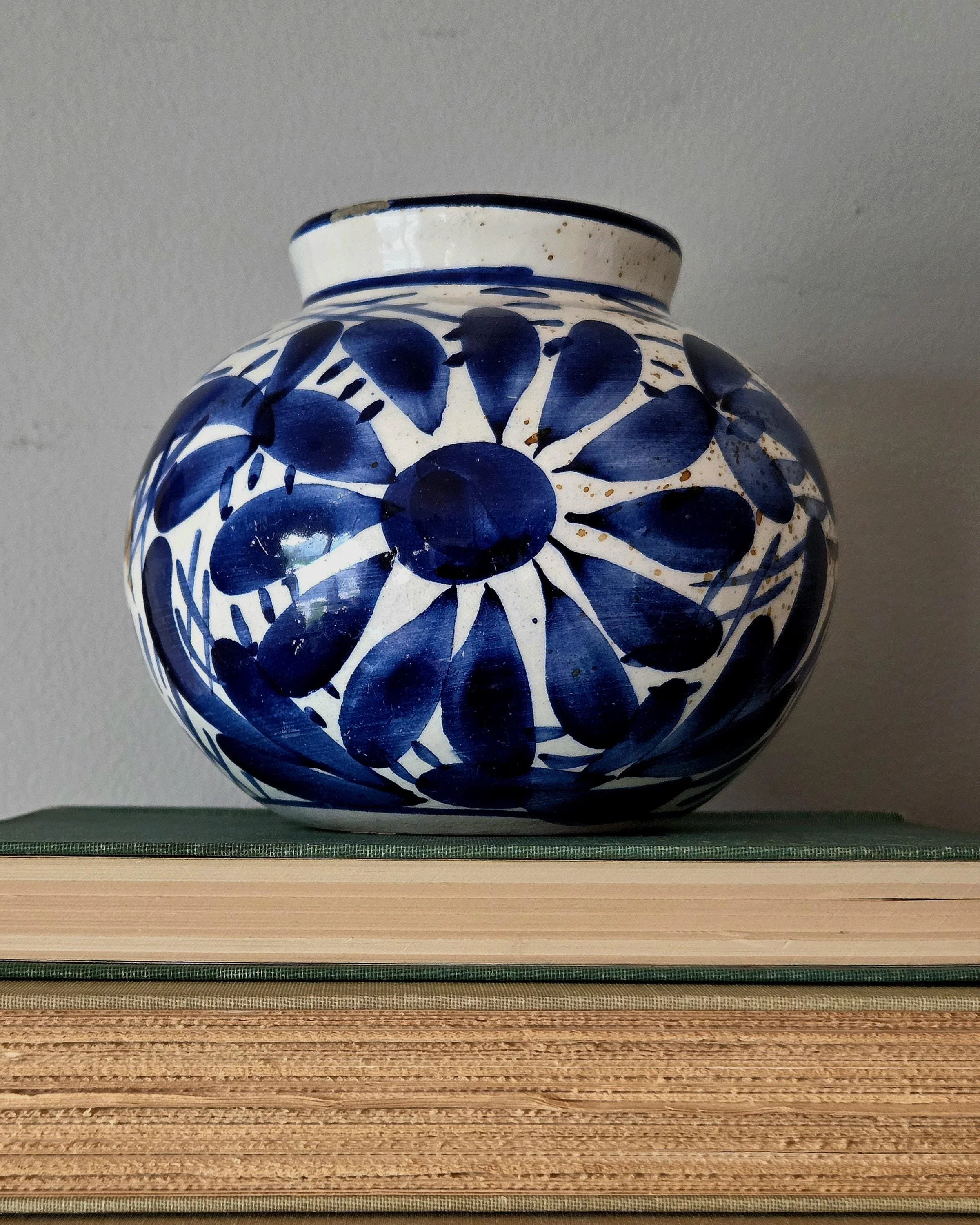 Image 4 of 14
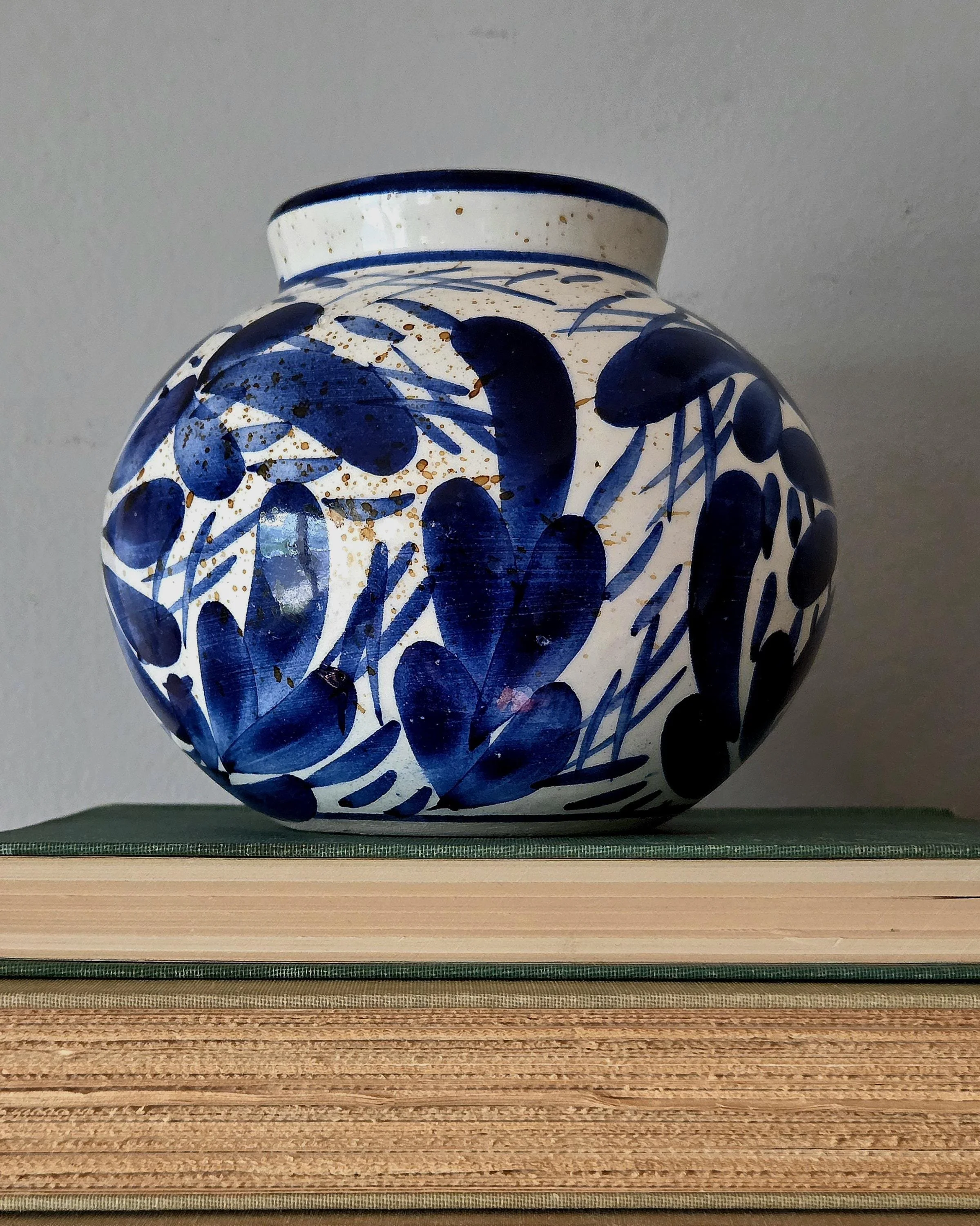 Image 5 of 14
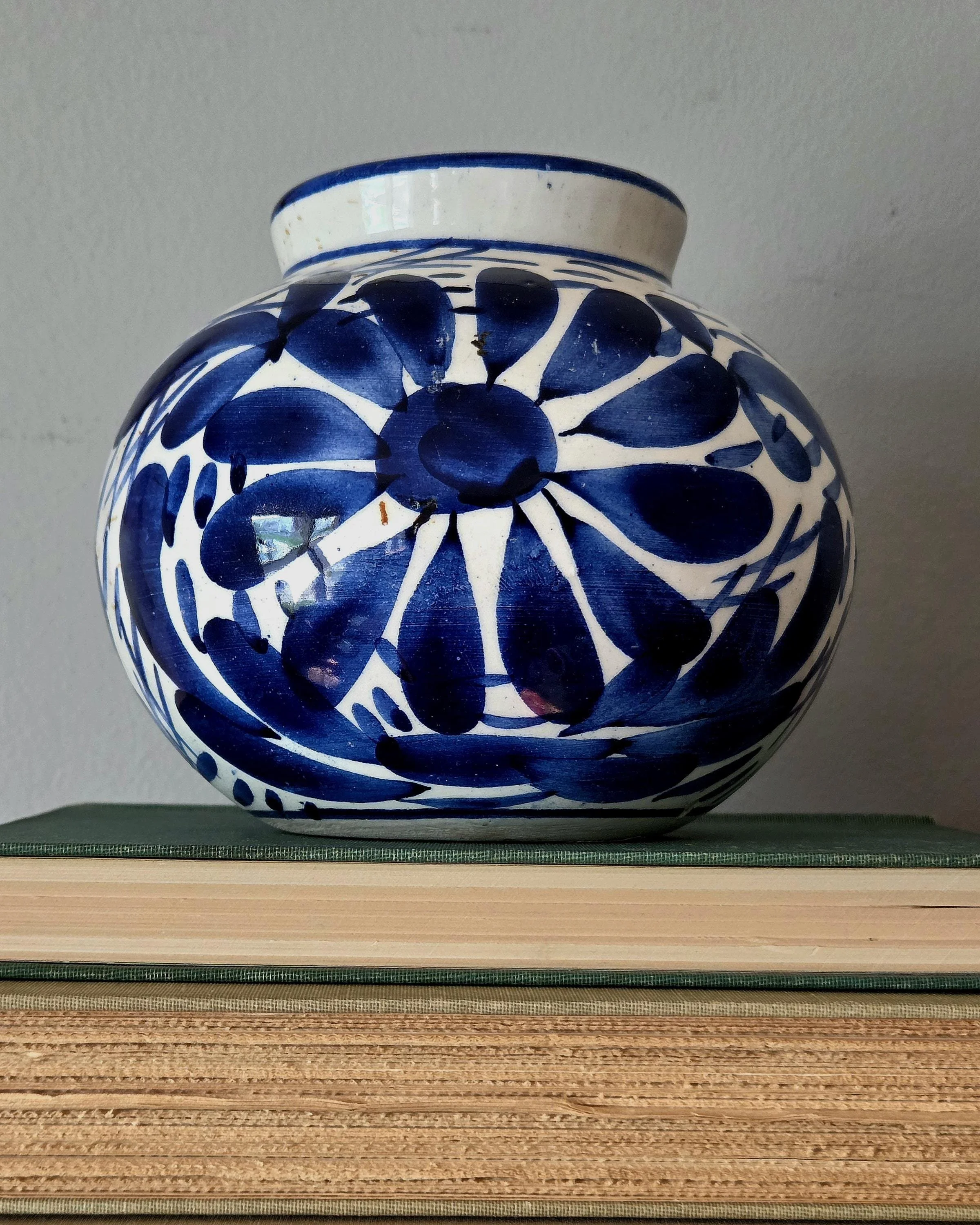 Image 6 of 14
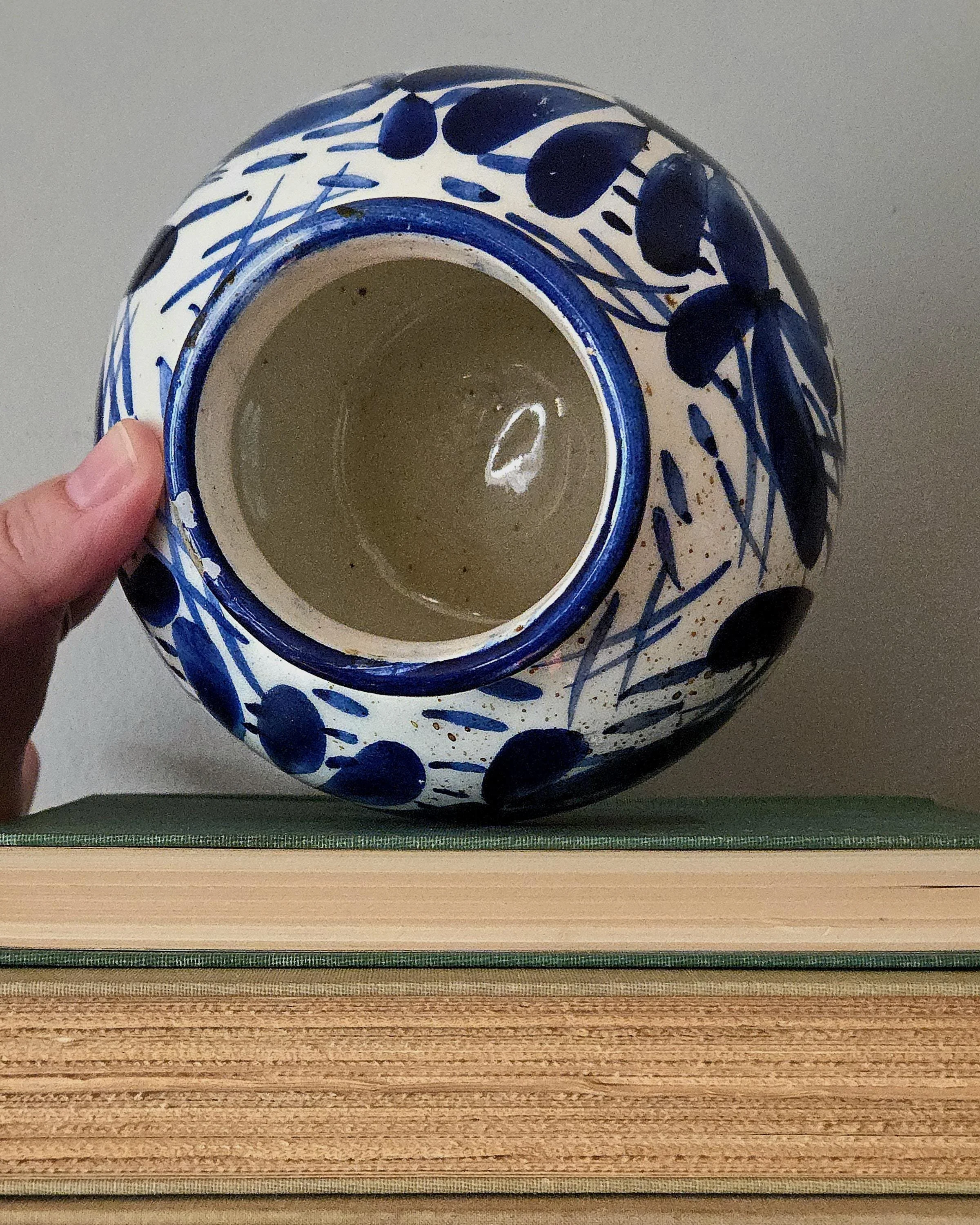 Image 7 of 14
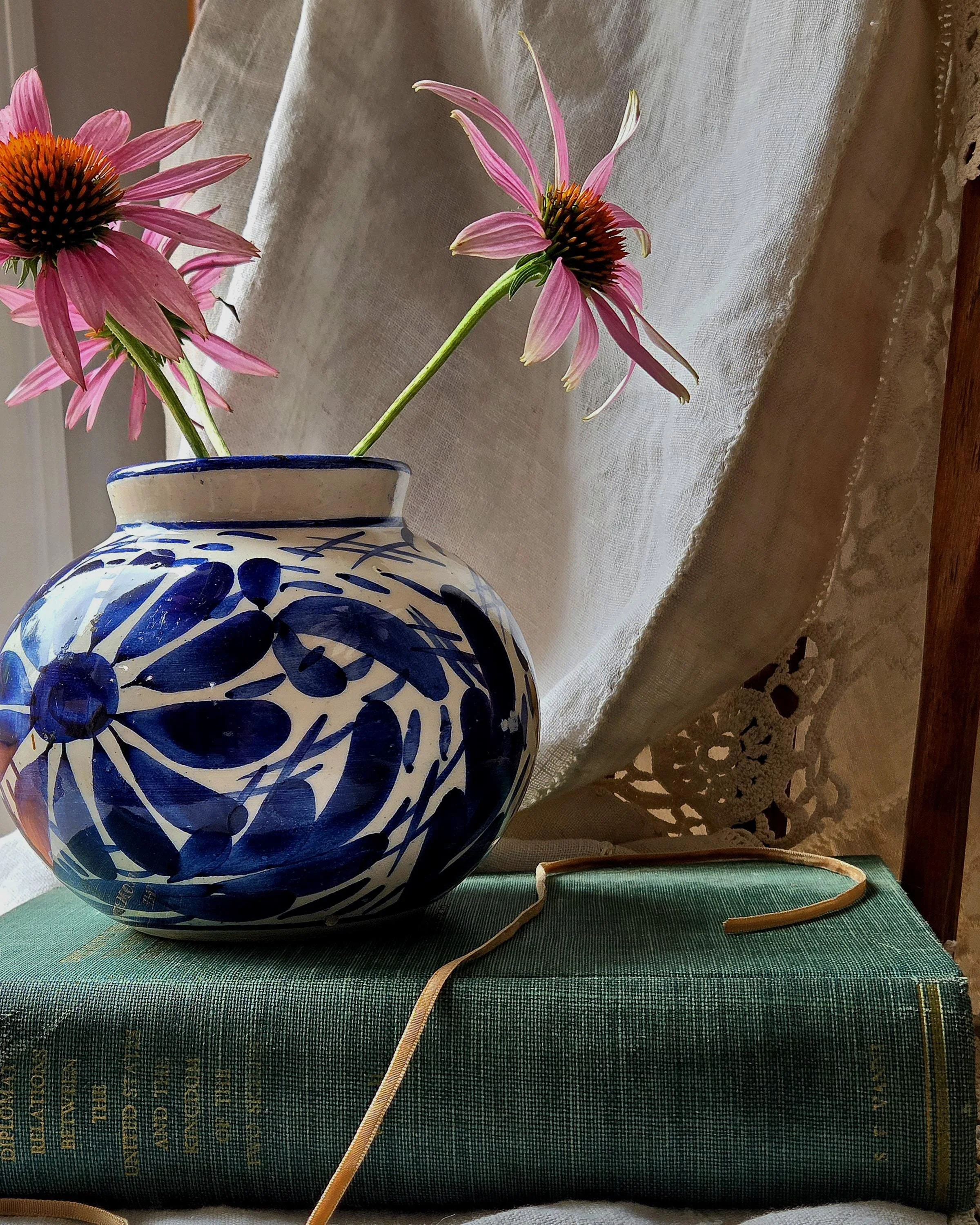 Image 8 of 14
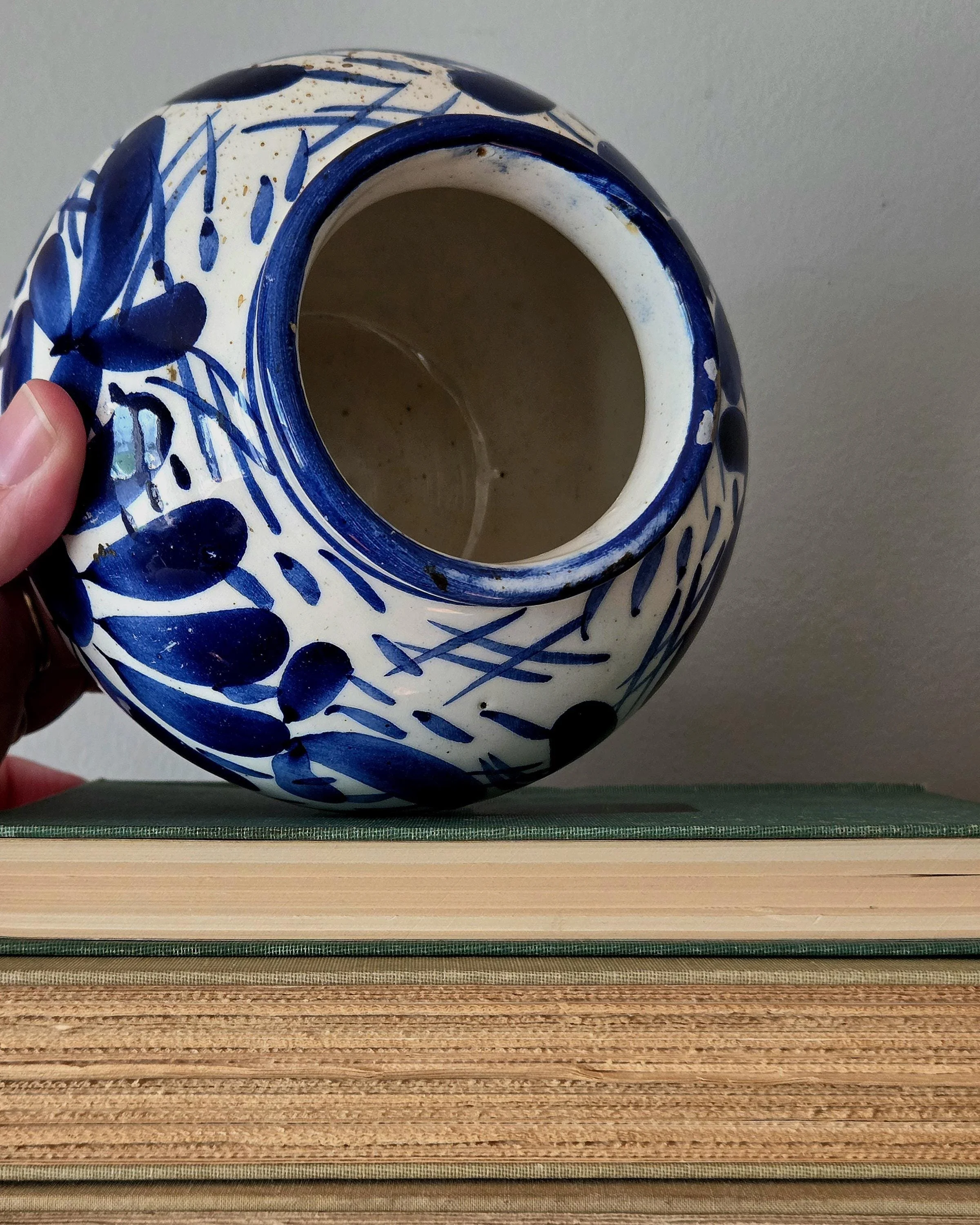 Image 9 of 14
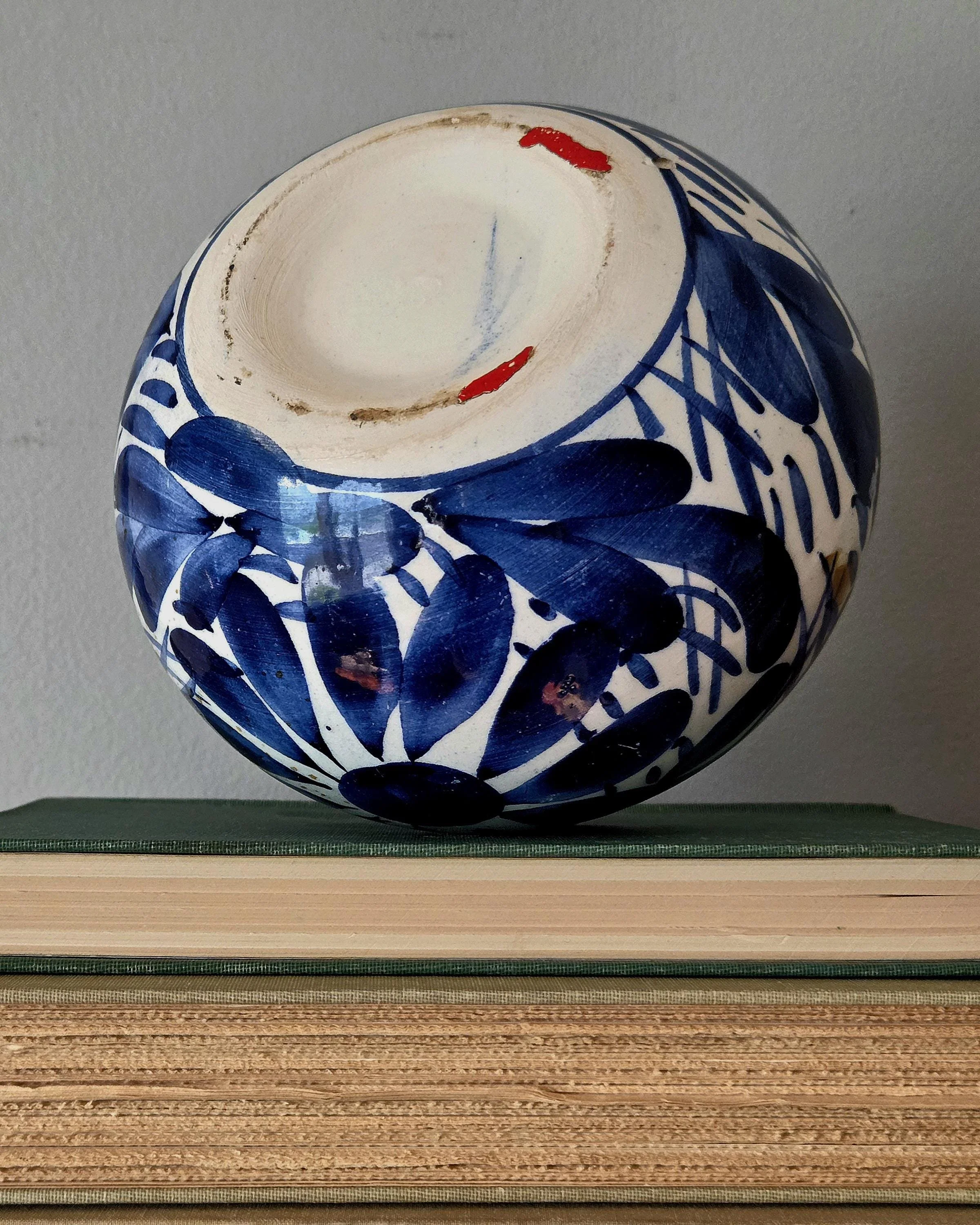 Image 10 of 14
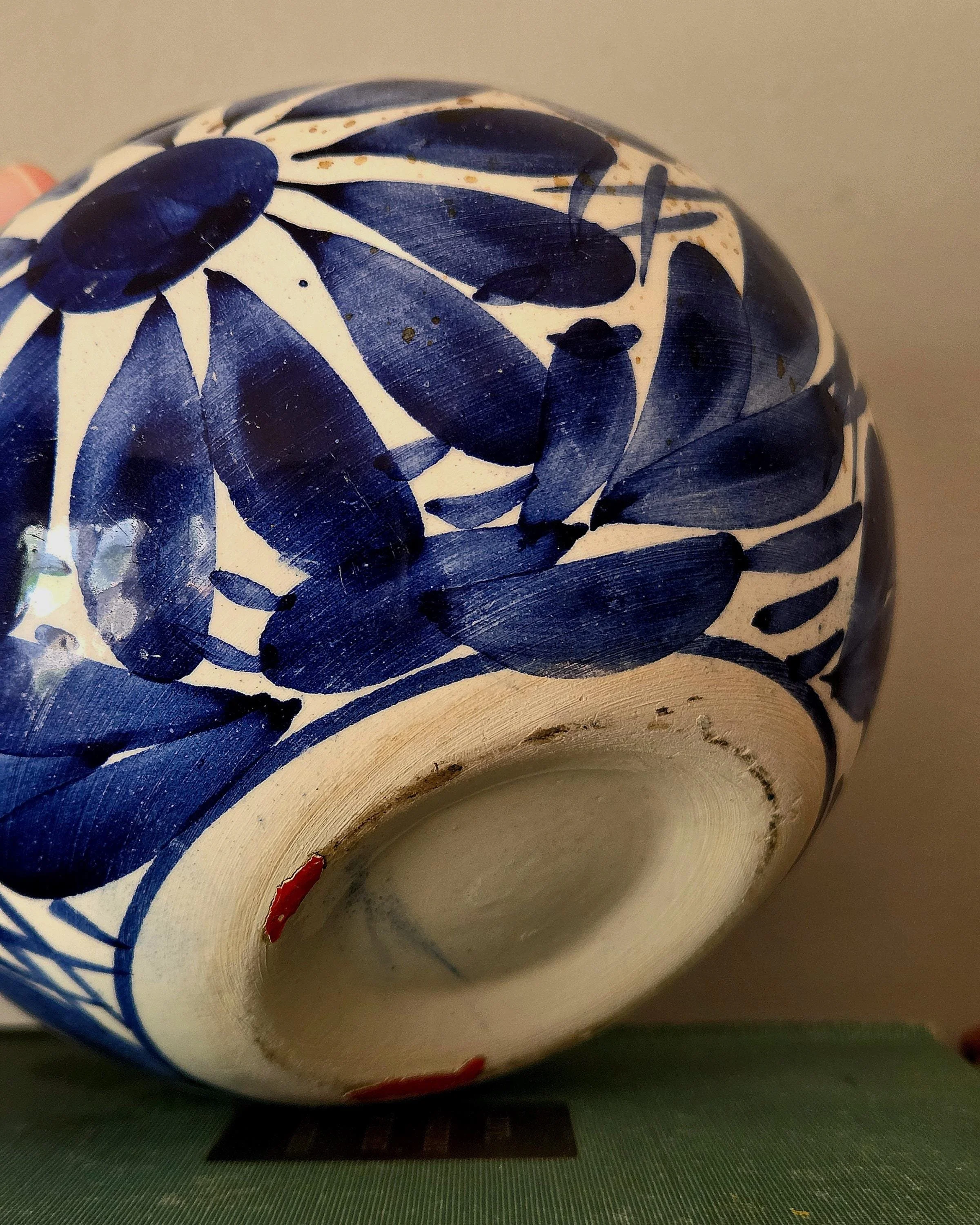 Image 11 of 14
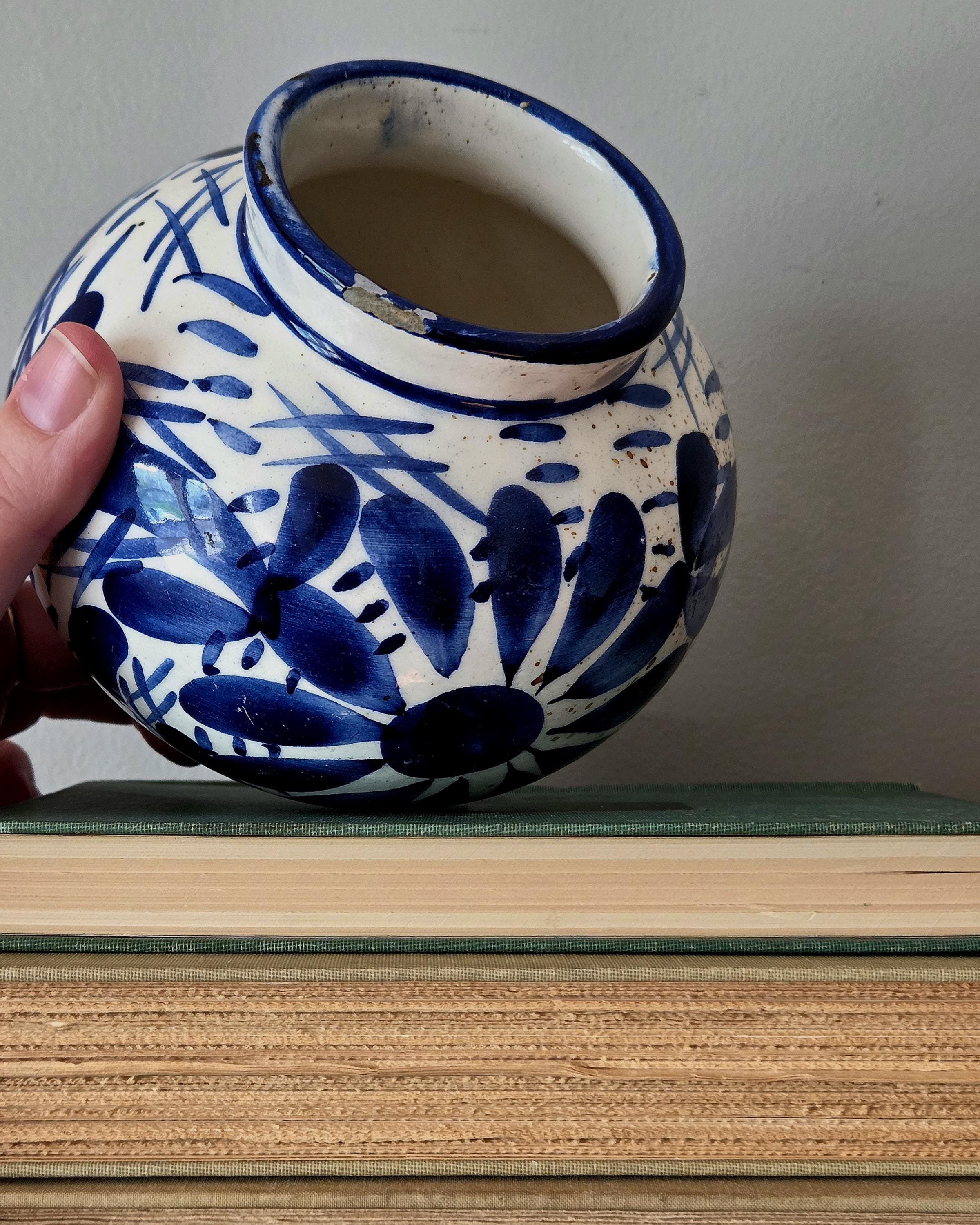 Image 12 of 14
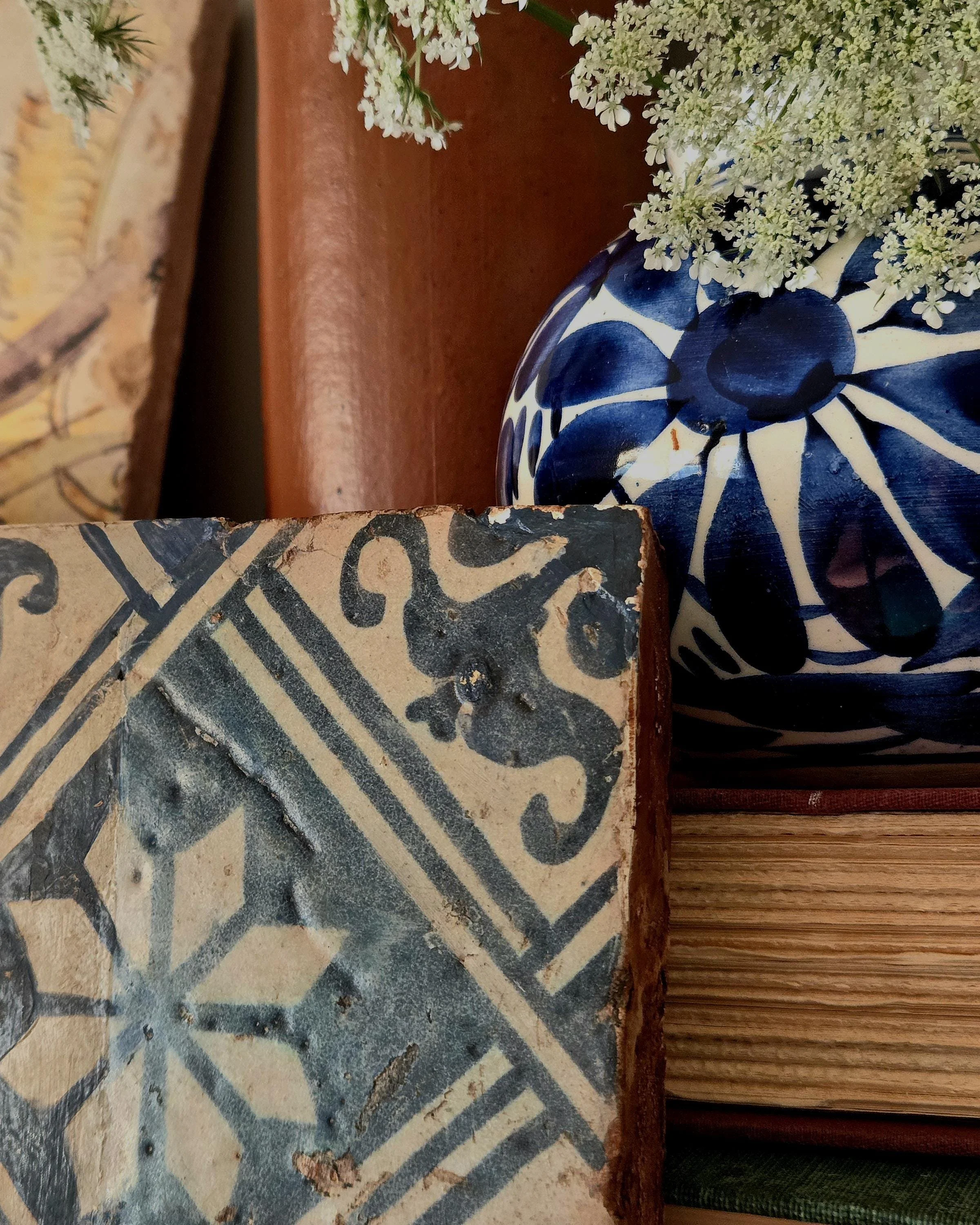 Image 13 of 14
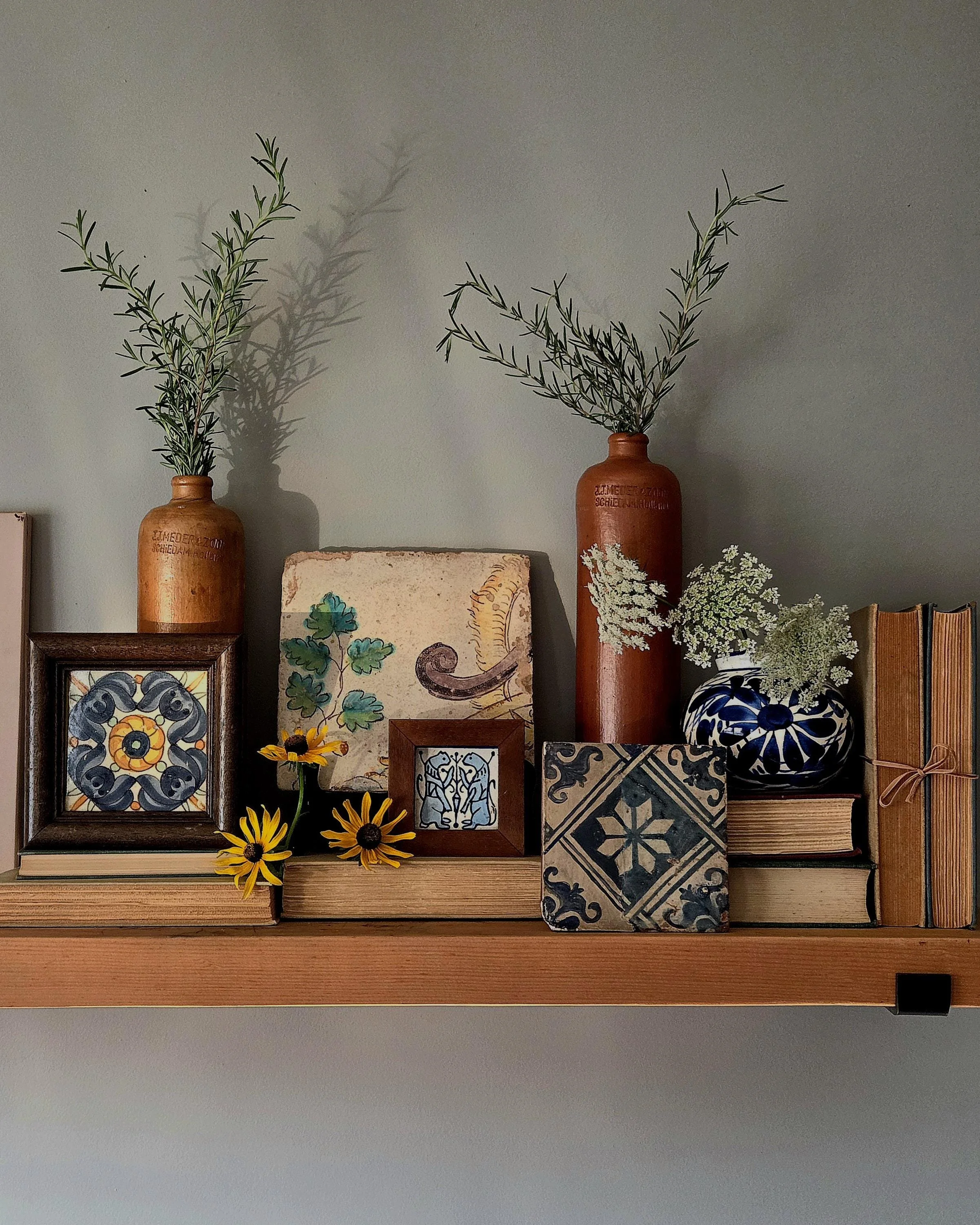 Image 14 of 14